Walls & Ceilings logo
search
cart
facebook twitter linkedin youtube youtube Spotify Podcasts Apple Podcasts Spotify Podcasts Apple Podcasts
  • Sign In
  • Create Account
  • Sign Out
  • My Account
Walls & Ceilings logo
  • NEWS
  • TOPICS
    • Drywall
    • Stucco/EIFS
    • Ceilings
    • Steel Framing
    • Fireproofing
    • Interior Plaster
    • Building Envelope
    • Insulation
    • Technology
    • Interior
    • Exterior
    • Women In Construction
  • COLUMNS
    • Up Front
    • All Things Gypsum
    • Art & Craft of Plastering
    • Stucco Stop
    • Steel Deal
    • Industry Voices
  • PRODUCTS
    • Buzz Guide
  • EVENTS
    • Industry Events
    • Webinars
    • BUILD Expo
  • MEDIA
    • Videos
    • Podcasts
    • Photo Galleries
    • BUILD26 Videos
    • Take our Quiz!
    • Infographics
  • EXCLUSIVE
    • Newsletters
    • Top 50 Contractors
    • Contractor of the Year
    • State of the Industry
    • W&C Store
    • Market Research
    • CEUs
    • Sponsor Insights
    • Custom Content & Marketing Services
  • DIRECTORY
  • EMAGAZINE
    • eMagazine
    • Advertise
    • Archive Issues
  • SIGN UP!
Columns

All things gypsum: Gypsum Board Sound Control Systems
By Michael Gardner
October 1, 2006
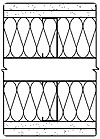
Illustration 1: Double row of steel studs with double layer of 5/8-inch gypsum board on outside surfaces and insulation in stud cavities.


One of gypsum board's many qualities that make it the most popular material for partitioning interior spaces is its inherent sound attenuating properties. Gypsum board contains sufficient mass to inhibit most low frequency sound waves and has sufficient resiliency to inhibit sound waves at the higher frequencies. In other words, gypsum board reduces the sound passing through it at both ends of the frequency spectrum.

Gypsum board is produced in a variety of thicknesses and each thickness is effective at blocking a different range of frequencies. So, for optimum sound blocking, several layers of gypsum board, each a different thickness, is ideal. This concept is simple enough but putting it to good use requires using one of several sound-reducing approaches.

Sound Transmission Classes

If you've been reading this column for the last several months, you are aware that the Gypsum Association has recently published the 18th edition of its Fire Resistance Design Manual. Previously, we've discussed some of the new fire-resistive designs that appear in the manual but until now, we haven't focused on one of the other main features of the manual-the sound control information. Many of the listings in the manual not only show the fire-resistance rating of a design but also its sound control properties. In most cases, this appears as a sound transmission class rating.

An STC rating is a number that represents an average of a system's sound dampening properties. Occasionally, you will also see a field sound transmission class rating, which, as the name suggests, is the sound transmission class rating for a building assembly that has been determined in the field or under conditions differing slightly from those in the lab. The higher the STC or FSTC rating, the more sound that is prevented from passing through to the adjoining areas.

The ratings for these sound transmission classes are determined by tests conducted according to procedures set forth in either ASTM E 90, "Standard Test Method for Laboratory Measurement of Airborne Sound Transmission Loss of Building Partitions," which is the procedure for measuring the sound transmission loss in a laboratory, or ASTM E 336, "Standard Test Method for Measurement of Airborne Sound Insulation in Buildings," which is the procedure for measuring sound transmission loss in the field.

Blocking Overhead Noise

STC and FSTC ratings apply to walls, partitions and various ceiling assemblies, which are the main players in preventing sounds, such as loud conversation or music from traveling room-to-room. However, the sound of foot traffic also travels through floor-ceiling assemblies. The measurement for this variety of sound transfer is the Impact Insulation Classification, which is determined by the procedures set forth in ASTM E 492, "Standard Test Method for Laboratory Measurement of Impact Sound Transmission Through Floor-Ceiling Assemblies Using the Tapping Machine." The higher the IIC, the lower the amount of sound that is transferred into the area below.

Section IV of GA-600 is an index to the systems listed in the manual by STC rating. The designs in this index are grouped by their assembly type (e.g. non-combustible walls and partitions, wood-framed walls and partitions, shaft walls and area separation walls) and STC range. The higher STC numbers show the most sound-dampening designs.
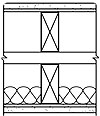
Illustration 2: Double row of wood studs with a base layer of 1/4-inch gypsum board and a top layer of 1/2-inch gypsum board on each outside surface and insulation in one stud cavity.

Sound Rated Designs

One of the higher rated designs (55 to 59 STC) that appears in the new edition of GA-600 bears GA file number WP 1516. This generic design uses several sound-deadening devices, which include a double row of steel studs, glass fiber insulation in the stud cavities, and two layers of 5/8-inch thick gypsum board that are screw-attached to the steel studs. The joints in the different layers of wallboard are staggered by 24 inches, which impedes the passage of sound.

The use of the double stud wall creates a dead air space that prevents direct sound transmission between the two wall surfaces. The insulation in the stud cavities of each row of studs also helps absorb some of the sound and the double layer of 5/8-inch wallboard on each side of the wall presents a large mass that dissipates much of the sound. (See Illustration 1.)

Another generic design with a similar sound rating bears GA file number WP 5510. This design uses a double row of wood studs, a base layer of 1/4-inch gypsum wallboard on the exposed side of each row of studs, a face layer of 1/2-inch gypsum wallboard that is applied over the base layer and 11⁄2 inches of mineral fiber insulation between the studs. This design uses the air gap between the two rows of studs to trap unwanted sound and two layers of gypsum board that are different thicknesses to reduce two different bandwidths of sound that pass through the assembly. The mineral fiber insulation also helps to absorb the reflection of the sound that enters the air gap between the rows of studs. (See Illustration 2.)
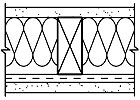
Illustration 3: Single row of wood studs with resilient channels on one side with a layer of 5/8-inch gypsum board on each surface and insulation in the stud cavity.
Another sound reducing method is depicted in GA file WP 3242. This design uses resilient channels on one side of wood studs to create a spring-like, sound-dampening cushion that serves to detach the gypsum board panels from the studs, thus minimizing the number of locations at which sound might transfer into the stud cavity. The resilient channels are screw-attached at right angles to wood studs at 16-inch intervals. One layer of 5/8-inch gypsum wallboard is then screw-attached to the resilient channels. Sound vibrations absorbed by the membrane are greatly dissipated before reaching the studs as they pass through the resilient channels.

Glass fiber or mineral fiber insulation further dampens the sound in the wall cavities. And finally, an additional layer of 5/8-inch wallboard is screw-attached to the other side of the studs, which creates the last barrier to the sound passing into the adjoining area. This design carries a 50 to 54 STC rating. (See Illustration 3.)

The generic floor-ceiling system depicted in GA file FC4370 offers both an STC rating of 45 to 49 and an IIC rating of 39. To achieve this level of sound reduction between floor levels, resilient channels are screw-attached at right angles to steel floor joists at 16-inch intervals. Two layers of 1/2-inch gypsum board are then screw-attached to the resilient channels. The joints of the two gypsum board layers are staggered to prevent the passage of sound. Glass fiber insulation placed between the joists reduces noise in the joist cavities. (See Illustration 4.)
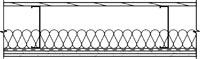
Illustration 4: Steel joists with resilient channels supporting two layers of 1/2-inch gypsum board with insulation in the joist cavity.
Sound is like water in the sense that it will take the path of least resistance in an attempt to move from one location to another location. Therefore, to ensure that unwanted sound does not go around or "flank" a sound-reducing system, all cracks or openings that sound could pass through must be sealed. This includes caulking around any opening, including electrical boxes, pipes, ducts, vents and so on. Also, all joints and junctions where the wall or ceiling membrane abuts another surface must be airtight; otherwise, unwanted sound can pass through these openings.

For additional information on this topic, Section III in GA-600 offers a brief but thorough discussion of these principles and techniques.

This is just a small sampling of the designs available for reducing the transmission of sound from one area to the next. Each of these designs employs several techniques for reducing unwanted sound and if followed carefully, will provide a much quieter environment. As with a fire-rated system, quality construction techniques must be incorporated for a sound control system to function as tested and the prescribed materials must be incorporated into the constructed system.

Share This Story

Looking for a reprint of this article?
From high-res PDFs to custom plaques, order your copy today!

Michael Gardner is the president of M Gardner Services LLC, a consulting firm that assists organizations with issues involving industry standards and building codes, meeting management, and external collaboration and outreach. Prior to establishing MGS, he was the executive vice president of Compliance Programs for the International Code Council. He is also the former CEO of the Gypsum Association, currently serves as a special technical advisor to the Wall & Ceiling Alliance and can be reached at michael@mgardnerservices.com.

Recommended Content

JOIN TODAY
To unlock your recommendations.

Already have an account? Sign In

  • Abercrombie & Fitch

    EIFS in 2026: How Specialty Finishes Are Redefining Exterior Wall Systems

    As building codes, owner expectations, and design demands...
    Stucco/EIFS
    By: Regi Mendoza
  • proper air and vapor control

    From Energy Efficiency to Moisture Management: Why Air and Vapor Control Matter

    How proper air and vapor control within building...
    Building Envelope
    By: Benjamin Meyer AIA, LEED AP
  • Linear Metal Ceiling Beam Baffles

    Top 25 Ceiling Contractors of 2026

    Suspended ceilings demand precision, code compliance and...
    Ceilings
    By: John Wyatt and Tanja Kern
You must login or register in order to post a comment.

Report Abusive Comment

Manage My Account
  • eMagazine Subscription
  • Newsletters
  • Online Registration
  • Manage My Preferences
  • Subscription Customer Service

More Videos

Sponsored Content

Sponsored Content is a special paid section where industry companies provide high quality, objective, non-commercial content around topics of interest to the Walls & Ceilings audience. All Sponsored Content is supplied by the advertising company and any opinions expressed in this article are those of the author and not necessarily reflect the views of Walls & Ceilings or its parent company, BNP Media. Interested in participating in our Sponsored Content section? Contact your local rep!

close
  • medical professionals moving a patient on a stretcher through the halls of a medical building
    Sponsored byNational Gypsum Company

    What Does High Performance Mean When It Comes To Gypsum Boards?

Popular Stories

Linear Metal Ceiling Beam Baffles

Top 25 Ceiling Contractors of 2026

Wichita Biomedical Campus

Wichita Drywall Worker Dies After Scaffolding Fall

Construction workers in safety vests install drywall

Gypsum Sales Hold Amid Market Shifts in the U.S.

QXO Just Changed the Game-Here's What Contractors Are Asking

QXO Just Changed the Game-Here's What Contractors Are Asking

Events

June 24, 2026

The Bright Side & Benefits of Designing with Integrated Lighting

Credits 1 AIA LU/HSW; 0.1 ICC CEU

This course will explore the pivotal role architects and lighting design play in creating safer, more sustainable spaces. Learn how to avoid common lighting mistakes and make informed decisions that create the best visual environment for occupants. 

January 1, 2030

Webinar Sponsorship Information

For webinar sponsorship information, visit www.bnpevents.com/webinars or email webinars@bnpmedia.com.

See our full library of webinars

View All Submit An Event

Products

2026 National Painting Cost Estimator

2026 National Painting Cost Estimator

See More Products

Related Articles

  • All Things Gypsum: Gypsum Board and Water

    See More
  • All Things Gypsum: Using Gypsum Board as a Thermal Barrier

    See More
  • All Things Gypsum: Hard Gypsum Board

    See More

Related Products

See More Products
  • 1118749847.jpg

    The Gypsum Construction Handbook, 7th Edition

  • 0470872616.jpg

    Sustainable Renovation: Strategies for Commercial Building Systems and Envelope

See More Products

Related Directories

  • National Gypsum Co.

    National Gypsum Company is the exclusive service provider of reliable, high-performance building products manufactured by its affiliate companies and marketed under the Gold Bond, ProForm, and PermaBASE brands. The National Gypsum name has been synonymous with high-quality, innovative products and exceptional customer service since 1925.
  • PABCO Gypsum

    Family owned and operated, PABCO Gypsum has been providing top quality gypsum wallboard products and superior customer service throughout North America for nearly 50 years. The company produces a broad range of gypsum drywall products for residential and commercial applications including mold, fire, sound and impact-resistant boards. This includes QuietRock, the first and most technically advanced sound reducing drywall panel in the industry. PABCO Gypsum, along with PABCO Paper and Roofing Products are divisions of PABCO Building Products LLC that services the building industry in the United States and Canada.
×

Connect with the industry’s leading resource for unparalleled insights and education.

Join thousands of industry professionals today. Shouldn’t you know what they know?

JOIN NOW
  • RESOURCES
    • Advertise
    • Contact Us
    • Directories
    • Store
    • Want More
  • SIGN UP TODAY
    • Create Account
    • eMagazine
    • Newsletters
    • Customer Service
    • Manage Preferences
  • SERVICES
    • Marketing Services
    • Reprints
    • Market Research
    • List Rental
    • Survey/Respondent Access
  • STAY CONNECTED
    • LinkedIn
    • Facebook
    • Instagram
    • YouTube
    • X
  • PRIVACY
    • PRIVACY POLICY
    • TERMS & CONDITIONS
    • DO NOT SELL MY PERSONAL INFORMATION
    • PRIVACY REQUEST
    • ACCESSIBILITY

Copyright ©2026. All Rights Reserved BNP Media, Inc. and BNP Media II, LLC.

Design, CMS, Hosting & Web Development :: ePublishing