Fenestration Frustration
Windows. Mention the word to the average citizen and they assume you are talking computers. To people in the construction industry, we think of the original windows. You can’t get around windows. All buildings have them, the code requires them, and talk about styles and variations? Home and business owners have a seemingly unlimited selection of styles and materials from which to choose. It can truly be a dizzying experience. Today, the same is true for contractors who install them with regards to flashing. There seems to be an unlimited number of methods on how to flash a window. As a contractor, the $60,000 question is “Which is the Right Way?”
I have given many seminars on flashing procedures for windows and it seems the same scenario repeats itself at almost every seminar. It does not matter what I think is best or what you think is best or how you have done it for umpteen years. What matters are two facts;
• Does it work to keep water out?
• Can you defend the flashing procedure in a court of law?
THE EXECUTIVE SUMMARY
I love the executive summary. This is for people so busy, they only have time to read a paragraph or two to get the gist of the article; here it is:If you or your company have created a new technique or a twist to the flashing procedures for installing a window, you have the burden to prove your flashing method works. It is really that simple. If, on the other hand, you choose a standard from a respected authoritative source and follow that procedure (not kind of follow, but strictly adhere to), you are standing on solid legal ground.
So my answer to the fellow looking for validation of his favorite flashing method is “That sounds great and I am sure you can find a authoritative source to back up your method.” Go forth and find that source, perhaps the American Architectural Manufacturers Association standard 2400, or maybe ASTM E 2112 may be your standard. You can use Robert Bateman’s book “Nail On Windows,” or the manufacturer’s instructions (window or flashing manufacturer), be it the siding manufacturer or the window manufacturer. Each of the above is respected in a court of law as an authority and standard for window flashing. On your own, you are not.
If your favorite method to flash a window is based on sound construction and architectural practices, there will most likely be a recognized authority that backs your method of flashing. If you want to use that method, seek out the back up for it, study the procedures and follow them “to the letter.” Train your people to follow this procedure as well. Document the procedure with photographs. This will be especially helpful when the building owner sells and the buyer’s home inspector questions the flashing around the windows. Remember, this is all under the siding and tearing it off may be required to verify what was done to install the window unless you can “prove” your methods through photographic evidence.
Installing a window and flashing that window should follow an established standard. The AAMA 2400-02 Standard Practice For Installing Windows with a Mounting Flange in Stud Frame Construction is as good a standard to follow as any. It is nationally recognized and not overly burdensome to window installers. Getting a copy of AAMA 2400-02 is not difficult. Most window manufacturers offer the document on their Web site. This is an important fact because in litigation the excuse that “how would I get my hands on this obscure unknown document” will not hold up when it is readily available to the public.
THIRD-PARTY CONSULTANTS
Now you are on site and there is a Building Envelope Consultant who has his “magic” way to flash a window. You think he is crazy and prefer to stay with your proven standard, again, a recognized authority. State that concern to the consultant, in writing if need be, and then do as directed. Here is a sample of what could be sent to the General Contractor or Building Envelope Consultant:Dear Sirs
It has come to our attention that the window flashing procedure detailed by your Architect, Designer and/or Building Envelope Specialist is not a recognized procedure we could find from an authoritative source (i.e. ASTM, AAMA, etc). We understand that this person/company is an expert at this type of flashing and we will follow the procedures as laid out per the expertise of this person. Our company would like to go on record as preferring a more traditional and established flashing per such as …(insert your favorite based on AAMA, ASTM, or other).
As a board member for the Seattle Building Enclosure Council, the letter could be very critical for defending yourself if two or more parties go into litigation over a building and flashing the windows is a concern. Most contractors are under the mistaken belief that if a building envelope expert has been retained for the project, they are automatically protected. After all, there was an expert on site, right? How could we get sued? It is not uncommon to see flashing procedures so complicated that the contractor stands little to no chance of getting it right.
WINDOW TESTING
When it comes to the windows we work with, it is the American Architectural Manufacturers Association and not Microsoft that is king.There are a variety of test standards for windows and doors. There are tests for water penetration, air infiltration, structural design and energy efficiency of windows. The most important part of the window testing may depend on where you live. For example, in Seattle the water penetration test is a primary concern to designers. In Phoenix, the solar heat gain rating would probably be more of a concern. In Florida and Louisiana, the concern is wind-borne debris and water penetration.
One window that may be perfect for one region of the country may not be suitable for another region. The AAMA labels help consumers and architects select the most appropriate window for their region and building. Designers and general contractors should understand the basic components of an AAMA label.
AAMA sets the minimum manufacturing standards and testing requirements for the window manufacturers. This includes ratings for structural, water penetration, air leakage and energy efficiency.
WATER TESTING
One of the most controversial tests is the water penetration test. This is how the testing process typically works: Window manufacturers send samples of their windows to a lab for AAMA testing to provide documented compliance with an AAMA standard. Once the window has passed the appropriate test, the window manufacturer can place a gold or silver AAMA label on their products. It should be noted that not all windows are tested, pass or receive AAMA labels.Laboratory test criteria are not intended to be used for installed windows in a building. While this may not seem important, more field testing of windows is likely in the future on multi-family projects. For example, in Washington State, a recently passed state law requires condominium developers to test a percentage of in situ windows. Other states have adopted similar laws or are certainly beginning to entertain the passage of the law.
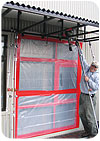
The industry recognized field test method for installed windows is AAMA 502-02, The Voluntary Specification for Field Testing of Windows and Sliding Glass Doors. The AAMA specification test is based on American Society of Testing Materials E 783 and ASTM E 1105. The testing is much more complicated than merely spraying water and watching for leaks. All tests require the specimen to be tested under pressure. This requires the construction of a test chamber around the window to create desired air pressure across the window. The intent is to recreate a storm condition where the differential in pressure from outside to inside the structure can draw water through what seems an airtight seal. ASTM sets the pressure rating required for minimal testing and that number can change depending on the performance class rating on the AAMA label. There are two basic methods of testing in-place windows:
• Method A: Test only the window product
• Method B: Test the window and the joint and adjacent wall construction.
Window testing should only be done per AAMA standards and it is recommended to use an AAMA accredited laboratory for testing. AAMA labs understand the calibration requirements for the equipment they use and the test parameters of ASTM E 1105.
TILT AND TURN WINDOWS
The tilt and turn window is a relatively new product for the United States, but they are really cool. They originated in Europe and can open like a casement window or, if you turn the handle the other way, they open like an awning. They can even be easily removed from the frame. I spend a fair amount of time in Europe and have always loved those windows. I spent so much time playing with the windows opening and closing them, the Europeans thought I was strange. There is a problem, though.The windows must be perfectly square to function properly. The problem is that in the United States we use a lot of wood-framed walls that tend to shrink just a bit after about a year or so. This can cause the opening to be out of square just enough to bind the window. In Europe, most construction is masonry and masonry does not shrink like wood. This condition is exacerbated by the fact the tilt and turn windows tend to weigh two to three times as much as the more conventional windows used in America. The problem gets worse when you consider how we in America tend to hang our windows on the wall. While in Europe, the window is set into the masonry opening. Some European window companies have been very frustrated with the results they have experienced introducing their product line into the American market place.
The tilt and turn window is a great upgrade, as long as contractors are aware of the special needs for installing them. The most common installation mistake is a failure to follow manufacturers recommendations to properly strap and shim the window. Experienced window installers may review the manufacturer’s installation instructions and assume the strapping and shimming is excessive. The installer has installed thousands of windows and has never had to do this apparent excessive installation bracing, and never had a problem in 20 years. Nothing gets an owner more upset than spending a lot of money on a cool window that doesn’t work in a year.
Well, except maybe leaks.
Looking for a reprint of this article?
From high-res PDFs to custom plaques, order your copy today!