ICFS BLOCKED, Locked and No Smoking Barrels
High-tech demands and needs of tomorrow’s buildings can be addressed by ICFs’ adaptable and energy-efficient wall systems.
It can be said that a wall is a wall. Today there are thousands of permutations on the basic wall. Wood frame, steel stud, masonry block, straw bale, structural insulated panels, precast, and insulated concrete forms all perform the same function. They all provide an envelope of protection from wind, rain, snow, tornados, hurricanes, fires, and other extreme weather.
Today, walls have to provide more than just shelter from the elements. Walls have layers of complexity weaved into their fabric to achieve these basic yet lofty requirements of a building’s enclosure envelope. Walls have to provide the solid performance of energy efficiency, moisture protection, durability, sustainability, design flexibility, color, shape, and all at a minimal cost.
Add to those basic requirements the need for adaptability. The challenge we face today is that of preparedness and adaptability for the future. Change is a constant we all face together. This message is made clear on the YouTube videos, “Shift Happens.” The videos are laced with startling facts about change. The buildings we build will have to be adaptable to these changes.
Our buildings are going through the same connectivity revolution. Buildings need to change and adapt for tomorrow’s needs. To be sustainable, building design must be flexible and address the constant need to adapt. ICFs deliver all of these requirements and they do it with just three components: steel, stone and foam. ICFs deliver to the trades a ready-to-finish, insulated wall system.
The New Jersey Carpenter Contractor Trust years ago developed an outreach ICF training program “Seminar 0103” for architects that they still offer today (www.buildunion.net/workshop.asp). The Carpenter Workshop’s mission is to share the experience of today’s hard-working union construction professionals, their training, and job site productivity with design professionals.
 In 2003, with its first ICF training seminar for
the New York design community, more than 50 architects attended the eight-hour
hands-on classroom training session. The architects built walls, stacked and
cut ICF blocks, set rebar, and built window and door bucks.
In 2003, with its first ICF training seminar for
the New York design community, more than 50 architects attended the eight-hour
hands-on classroom training session. The architects built walls, stacked and
cut ICF blocks, set rebar, and built window and door bucks.
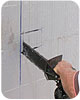
After the walls were assembled, the designers installed the services into the ICF wall using the at the time, state-of-the-art tools. The specialty tools consisted of a modified chainsaw with depth stop, a side grinder to grind into the foam and nick the concrete, and a hot knife for clean and precise (but slow) cutting.
The architects, while discussing the attributes of the ICFs, raised a question about the superfluousness of the foam once the concrete is cured. To this it was agreed that the real strength of the wall is the concrete core, and the EPS foam is merely structural air that serves only to contain the concrete until it is cured. The architects, covered in foam dust, suggested that there should be a better way to install services into the wall.

ICF contractors, who turnkey the structural shell package, are looking to control as many costs of the construction process as they can. This is even more critical in today’s ultra-competitive market in which installers travel hundreds of miles from their home base to build. The hidden cost of hiring and training new subcontractors is often overlooked as an added cost.
 Although ICFs have hundreds of thousands of
structures in place, they are still relatively new to the general construction
trades. ICF professionals are tasked to teach hands-on training courses to all
of these new subcontractors on the job. Finding and retaining quality subs is one
of the most pressing issues that ICF installers deal with when building with
the system. Most electricians with commercial or industrial experience are not
going to be familiar with the ICF big blank white wall, which makes getting
qualified bids a challenge.
Although ICFs have hundreds of thousands of
structures in place, they are still relatively new to the general construction
trades. ICF professionals are tasked to teach hands-on training courses to all
of these new subcontractors on the job. Finding and retaining quality subs is one
of the most pressing issues that ICF installers deal with when building with
the system. Most electricians with commercial or industrial experience are not
going to be familiar with the ICF big blank white wall, which makes getting
qualified bids a challenge.
The e-channel shifts some of the control back to the ICF contractor. A pre-installed electrical channel eases the electrician’s bidding fear factor. Electricians familiar with an open electrical raceway, and its ability to simplify their workload, will be more competitive with their bidding. The channel reduces the labor-intensive need to gouge out the foam with inefficient tools.
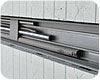
 The e-channel is an extruded vinyl chase for
insulating concrete wall systems. The channel, installed by the ICF
professional, streamlines job site control and coordination. The sub trades
that follow get a hassle-free, open channel in which to install the building’s
varied services. The e-channel delivers labor savings to the electrician. Now,
it becomes a simple matter of placing the conduit into the pre-existing
channels and pulling wire.
The e-channel is an extruded vinyl chase for
insulating concrete wall systems. The channel, installed by the ICF
professional, streamlines job site control and coordination. The sub trades
that follow get a hassle-free, open channel in which to install the building’s
varied services. The e-channel delivers labor savings to the electrician. Now,
it becomes a simple matter of placing the conduit into the pre-existing
channels and pulling wire.
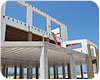 Change is happening on even shorter time lines,
and change will only accelerate in the future. The e-channel is designed to
make upgrades possible. ICF buildings will last 200 years or more, and no one
knows or can predict how building use will change. There is a responsibility to
invest into the built infrastructure now, and make buildings adaptable for
future generations. W
Change is happening on even shorter time lines,
and change will only accelerate in the future. The e-channel is designed to
make upgrades possible. ICF buildings will last 200 years or more, and no one
knows or can predict how building use will change. There is a responsibility to
invest into the built infrastructure now, and make buildings adaptable for
future generations. W
The different services that can run through the channel in ICF wall systems.
It can be said that a wall is a wall. Today there are thousands of permutations on the basic wall. Wood frame, steel stud, masonry block, straw bale, structural insulated panels, precast, and insulated concrete forms all perform the same function. They all provide an envelope of protection from wind, rain, snow, tornados, hurricanes, fires, and other extreme weather.
Today, walls have to provide more than just shelter from the elements. Walls have layers of complexity weaved into their fabric to achieve these basic yet lofty requirements of a building’s enclosure envelope. Walls have to provide the solid performance of energy efficiency, moisture protection, durability, sustainability, design flexibility, color, shape, and all at a minimal cost.
Add to those basic requirements the need for adaptability. The challenge we face today is that of preparedness and adaptability for the future. Change is a constant we all face together. This message is made clear on the YouTube videos, “Shift Happens.” The videos are laced with startling facts about change. The buildings we build will have to be adaptable to these changes.
This is a dangerous alternative to running
services.
TECHNOLOGY AND CONSTRUCTION
How quickly did you adopt mobile phone connectivity? Is your cell phone Internet and e-mail capable? More companies are now connecting with you 24/7 through your phone with Internet, Twitter, Facebook, and other social media.Our buildings are going through the same connectivity revolution. Buildings need to change and adapt for tomorrow’s needs. To be sustainable, building design must be flexible and address the constant need to adapt. ICFs deliver all of these requirements and they do it with just three components: steel, stone and foam. ICFs deliver to the trades a ready-to-finish, insulated wall system.
The New Jersey Carpenter Contractor Trust years ago developed an outreach ICF training program “Seminar 0103” for architects that they still offer today (www.buildunion.net/workshop.asp). The Carpenter Workshop’s mission is to share the experience of today’s hard-working union construction professionals, their training, and job site productivity with design professionals.
Installing a channel in the block.
After the walls were assembled, the designers installed the services into the ICF wall using the at the time, state-of-the-art tools. The specialty tools consisted of a modified chainsaw with depth stop, a side grinder to grind into the foam and nick the concrete, and a hot knife for clean and precise (but slow) cutting.
The architects, while discussing the attributes of the ICFs, raised a question about the superfluousness of the foam once the concrete is cured. To this it was agreed that the real strength of the wall is the concrete core, and the EPS foam is merely structural air that serves only to contain the concrete until it is cured. The architects, covered in foam dust, suggested that there should be a better way to install services into the wall.
Infield installation of the e-channel.
THE GOSPEL OF ICF CONSTRUCTION
Coordinating new subcontractors unfamiliar with ICF construction can be challenging, especially with electrical and plumbing work.ICF contractors, who turnkey the structural shell package, are looking to control as many costs of the construction process as they can. This is even more critical in today’s ultra-competitive market in which installers travel hundreds of miles from their home base to build. The hidden cost of hiring and training new subcontractors is often overlooked as an added cost.
The e-channel shifts some of the control back to the ICF contractor. A pre-installed electrical channel eases the electrician’s bidding fear factor. Electricians familiar with an open electrical raceway, and its ability to simplify their workload, will be more competitive with their bidding. The channel reduces the labor-intensive need to gouge out the foam with inefficient tools.
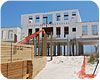
A beachfront home that is built to withstand
hurricanes. The ICF home is built on stilts in the Gulf Coast.
Looking for a reprint of this article?
From high-res PDFs to custom plaques, order your copy today!