Bear the Weight
With cold-formed steel, largest student housing construction project in U.S. history is completed.
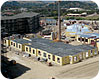
By any owner’s standard, the true measure of a successful construction project is one that finishes on time and within budget. Any other scenario can turn into a real nightmare. But when a project the scale of Poly Canyon Village-820,000 square feet with 11,000 load-bearing wall panels-manages to shave six months off the original 20-month schedule, it’s more like a dream come true.
Spanning 30 acres at the base of the picturesque Poly Canyon, the Poly Canyon project is comprised of nine buildings, four and five stories over slabs or podiums, and adds nearly 2,700 new beds to California Polytechnic State University (Cal Poly) in San Luis Obispo, Calif.
Poly Canyon Village is the largest cold-formed steel load-bearing project in California and the most sizable student housing complex ever undertaken by an American university in a single construction project. How did this project finish so early?
 STEEL WINS
Cold-formed steel, wood, and concrete masonry units were all initially considered for the project, but when the final decision came down to two designs (conventional wood and steel framing) steel won out.
“Steel framing was selected based on superior quality, performance, and other benefits to the owner such as lower construction costs, and it’s non-combustible,” says Kevin Greer, project executive from KHS&S Contractors Inc.
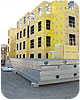
“Cold-formed steel framing was the primary factor in this job’s success,” says Mark Blackmon of Clark Design/Build of California, Inc. in Oakland, Calif. “The flexibility to pre-fabricate panels off-site definitely contributed to the project’s success, and the speed at which KHS&S was able to install the structures on site allowed for all the subcontractors to be productive.”
He also added that the efficiencies gained through pre-fabrication made it possible to start several components in several places at the same time, which significantly cut down on any potential downtime for workers and subcontractors. “We actually became a job where if a company didn’t have a lot of work, they could send them over here because we had plenty of places people could go and be productive.”
Jeff Heller, the program manager for Brookwood Program Management, agrees that the accelerated construction schedule resulting from steel framing’s panelization system was responsible for the earlier completion date that also resulted in saving money.
“There are a lot of cost advantages to finishing a project early. You save on labor which also reduces all of your overhead costs,” he says.
 EARLY WRAP-UP
Wrapping up sooner can have other far-reaching cost advantages. According to Kevin Greer, the savings for Poly Canyon Village went beyond salaries. “Nearly all of the contractors on the project (about 100) were not local, so there were definite savings on housing costs, per diems and other expenses.”
Owners can also save on course of construction insurance costs, and reduce exposure to liability. Scott Bloom of Cal Poly’s Facilities Planning and Capital Projects department says that a faster construction schedule provides a risk benefit to the university. “Since the second phase of the project has been limited to interior installation, the potential of a student being hurt in proximity to the second phase of construction is reduced,” Bloom says, while also affirming the university’s satisfaction with the project’s success and the decision to go with cold-formed steel.
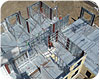
The wall framing used four-inch studs of 33- to 68-mil thickness. The thicker 68-mil studs were used at the ground floor and the stud thickness decreased as additional floors were added. PACO steel columns and Sure-Board were employed for the shear walls. Floor framing was accomplished with Dietrich TradeReady steel floor joists with 9/16-inch shallow metal decking, and USG Levelrock was poured one inch over the top flute of the decking for the finished floor. Roof framing was done with ITW TrusSteel trusses fabricated by Pacific Coast Truss Fabricator a CEMCO Company with fire-treated structural plywood.
In addition to the design criteria calling for Type II, one-hour fire rating for multi-story residential construction, another significant reason the university ultimately chose steel was its mandatory requirement that the project be LEED-certified. At the conclusion of the second phase, the process for submitting for LEED certification began. Tegan Sullivan of Clark Design/Build, who has served as the captain for the team, confirms the LEED certification requirement is one of the biggest reasons steel framing was selected.
“When they were deciding how they would build, cold-formed steel and the panelization process was attractive because of the off-site plant,” Sullivan says. In addition to qualifying for LEED credit because of steel’s recycled content, there are also points when multiple components come together in a factory-with one being that the manufacturing plant is located within 500 miles of the job site. “Cold-formed steel has such a high recycled material content and it would give them the most points.”
The project achieved a LEED Gold Certification.
VILLAGE GREEN SOCIETY
By all accounts, Poly Canyon Village has been a resounding success. In fact, Greer says the entire project could have been turned over a year early but the lead time for some of the furnishings, retail build-out and training of facility managers was not enough to advertise and lease the rooms. Still, he says such a positive outcome was not so easy to come by, because of a number of complicated logistics and design criteria specifying Type II construction, mandatory LEED certification, and gabled roof framing.
“The logistics of the project should have scared most people away,” Greer says. “Who wants to do a two-and-a-half-year project 250 miles away from your home base of operations, especially when you are counting on hiring 100 new tradesmen who have never even seen a load-bearing job?”
Poly Canyon Village could have easily become mired in the complexities of the logistics and design requirements. Instead, the inherent efficiencies cold-formed steel brings to the table through an automated system like panelization, has helped shave several months off the original completion date.
For Blackmon, while this was his first experience working with cold-formed steel, it went so well he is already promoting the system for other Clark projects similar in nature.
“I would absolutely use this system again, especially for these kinds of projects,” Blackmon says. “The manpower on site along with the faster construction schedule makes the system with cold-formed steel ideal for low-rise and mid-rise multifamily construction projects.”
With the project completion in October 2009, Poly Canyon Village is an impressive apartment development and new home for Cal Poly students with amenities including a swimming pool, community center and a central retail plaza.
For additional information on this project and how cold-formed steel framing can be used to increase a project’s return on investment in other multifamily, midrise and hospitality load-bearing applications nationwide, contact the Steel Framing Alliance for other valuable information, including design standards, how-to guides and solutions for your next project. W&C
By any owner’s standard, the true measure of a successful construction project is one that finishes on time and within budget. Any other scenario can turn into a real nightmare. But when a project the scale of Poly Canyon Village-820,000 square feet with 11,000 load-bearing wall panels-manages to shave six months off the original 20-month schedule, it’s more like a dream come true.
Spanning 30 acres at the base of the picturesque Poly Canyon, the Poly Canyon project is comprised of nine buildings, four and five stories over slabs or podiums, and adds nearly 2,700 new beds to California Polytechnic State University (Cal Poly) in San Luis Obispo, Calif.
Poly Canyon Village is the largest cold-formed steel load-bearing project in California and the most sizable student housing complex ever undertaken by an American university in a single construction project. How did this project finish so early?
Cold-formed steel, wood, and concrete masonry units were all initially considered for the project, but when the final decision came down to two designs (conventional wood and steel framing) steel won out.
“Steel framing was selected based on superior quality, performance, and other benefits to the owner such as lower construction costs, and it’s non-combustible,” says Kevin Greer, project executive from KHS&S Contractors Inc.
“Cold-formed steel framing was the primary factor in this job’s success,” says Mark Blackmon of Clark Design/Build of California, Inc. in Oakland, Calif. “The flexibility to pre-fabricate panels off-site definitely contributed to the project’s success, and the speed at which KHS&S was able to install the structures on site allowed for all the subcontractors to be productive.”
He also added that the efficiencies gained through pre-fabrication made it possible to start several components in several places at the same time, which significantly cut down on any potential downtime for workers and subcontractors. “We actually became a job where if a company didn’t have a lot of work, they could send them over here because we had plenty of places people could go and be productive.”
Jeff Heller, the program manager for Brookwood Program Management, agrees that the accelerated construction schedule resulting from steel framing’s panelization system was responsible for the earlier completion date that also resulted in saving money.
“There are a lot of cost advantages to finishing a project early. You save on labor which also reduces all of your overhead costs,” he says.
Wrapping up sooner can have other far-reaching cost advantages. According to Kevin Greer, the savings for Poly Canyon Village went beyond salaries. “Nearly all of the contractors on the project (about 100) were not local, so there were definite savings on housing costs, per diems and other expenses.”
Owners can also save on course of construction insurance costs, and reduce exposure to liability. Scott Bloom of Cal Poly’s Facilities Planning and Capital Projects department says that a faster construction schedule provides a risk benefit to the university. “Since the second phase of the project has been limited to interior installation, the potential of a student being hurt in proximity to the second phase of construction is reduced,” Bloom says, while also affirming the university’s satisfaction with the project’s success and the decision to go with cold-formed steel.
The wall framing used four-inch studs of 33- to 68-mil thickness. The thicker 68-mil studs were used at the ground floor and the stud thickness decreased as additional floors were added. PACO steel columns and Sure-Board were employed for the shear walls. Floor framing was accomplished with Dietrich TradeReady steel floor joists with 9/16-inch shallow metal decking, and USG Levelrock was poured one inch over the top flute of the decking for the finished floor. Roof framing was done with ITW TrusSteel trusses fabricated by Pacific Coast Truss Fabricator a CEMCO Company with fire-treated structural plywood.
In addition to the design criteria calling for Type II, one-hour fire rating for multi-story residential construction, another significant reason the university ultimately chose steel was its mandatory requirement that the project be LEED-certified. At the conclusion of the second phase, the process for submitting for LEED certification began. Tegan Sullivan of Clark Design/Build, who has served as the captain for the team, confirms the LEED certification requirement is one of the biggest reasons steel framing was selected.
“When they were deciding how they would build, cold-formed steel and the panelization process was attractive because of the off-site plant,” Sullivan says. In addition to qualifying for LEED credit because of steel’s recycled content, there are also points when multiple components come together in a factory-with one being that the manufacturing plant is located within 500 miles of the job site. “Cold-formed steel has such a high recycled material content and it would give them the most points.”
The project achieved a LEED Gold Certification.
VILLAGE GREEN SOCIETY
By all accounts, Poly Canyon Village has been a resounding success. In fact, Greer says the entire project could have been turned over a year early but the lead time for some of the furnishings, retail build-out and training of facility managers was not enough to advertise and lease the rooms. Still, he says such a positive outcome was not so easy to come by, because of a number of complicated logistics and design criteria specifying Type II construction, mandatory LEED certification, and gabled roof framing.
“The logistics of the project should have scared most people away,” Greer says. “Who wants to do a two-and-a-half-year project 250 miles away from your home base of operations, especially when you are counting on hiring 100 new tradesmen who have never even seen a load-bearing job?”
Poly Canyon Village could have easily become mired in the complexities of the logistics and design requirements. Instead, the inherent efficiencies cold-formed steel brings to the table through an automated system like panelization, has helped shave several months off the original completion date.
For Blackmon, while this was his first experience working with cold-formed steel, it went so well he is already promoting the system for other Clark projects similar in nature.
“I would absolutely use this system again, especially for these kinds of projects,” Blackmon says. “The manpower on site along with the faster construction schedule makes the system with cold-formed steel ideal for low-rise and mid-rise multifamily construction projects.”
With the project completion in October 2009, Poly Canyon Village is an impressive apartment development and new home for Cal Poly students with amenities including a swimming pool, community center and a central retail plaza.
For additional information on this project and how cold-formed steel framing can be used to increase a project’s return on investment in other multifamily, midrise and hospitality load-bearing applications nationwide, contact the Steel Framing Alliance for other valuable information, including design standards, how-to guides and solutions for your next project. W&C
Looking for a reprint of this article?
From high-res PDFs to custom plaques, order your copy today!