Web Exclusive: Condo Ceiling Complexity
When the owner of a new luxury residence wanted a ‘jaw-dropping’ ceiling, he chose unique shapes in drywall.

When John Lawton Jeffcoat III signed the papers two years ago for his $2 million penthouse condominium in southern Orlando, Fla., he knew he wanted to turn his new home into a showplace.
“I wanted to do something jaw-dropping and breathtaking on the ceiling of the great room,” Jeffcoat explained. After doing some research on the latest and greatest in ceiling technology on the Internet, he called Walls & Ceilings looking for advice. “I asked to be directed to a local drywall contractor in the Orlando area who could handle the complex decorative work of a sculpted and soffited multi-layered geometric pattern of drywall design on the ceiling of the great room,” he said.
Jeffcoat’s residence, which was finished in February, is the largest penthouse condo in South Orlando and is located in an upscale gated community, Vizcaya.
“I had laid out on a grid some design ideas of what I wanted to accomplish for the ceiling,” Jeffcoat explained, noting that he enjoyed collaborating with Jarvis before the work began. “We sketched out some other designs. They had some alternate, more practical ideas.”
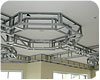
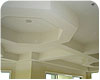
In the L-shaped great room, which measures 32 by 25 feet, Jeffcoat wanted a series of three octagonal soffits (measuring 11.5 inches wide by 12 inches) in a network of crosses. A big challenge was placing the design around the unmovable fire sprinklers that had to be fully exposed in the ceiling. “It was amazing that our design fell in such a way that it avoided sprinkler heads,” Jeffcoat said. One air conditioning vent had to be moved, by simply changing it from outward-facing to downward-facing vent to accommodate the soffit.
 Three other
rooms had simpler ceiling designs; a single octagon in the middle of a cross in
the bedroom, a single circle in the middle of an “x” in the home office, and a
“tic-tac-toe” design in the library.
Three other
rooms had simpler ceiling designs; a single octagon in the middle of a cross in
the bedroom, a single circle in the middle of an “x” in the home office, and a
“tic-tac-toe” design in the library.
Ken Weber, D.J.'s Drywall framing supervisor of 12 years, worked on the project with his colleague, David Wells. “Mr. Jeffcoat knew exactly what he wanted to have done,” Weber explained. “We worked with his drawings and made a few minor adjustments. It's wasn't a hard job, but it was very time-consuming.”
He explained that the biggest challenge during the two-week project was measuring and installing the hexagons. “We've done just about everything else before. We do a lot of arches and checkerboard and barrel ceilings, but never did a hexagon before.”
Jeffcoat was on the job site when the ceiling project began and worked with Weber and Wells as they first marked the exact locations for the ceiling soffits on the unfinished concrete floor of the great room.

Weber and Wells then located the ceiling joists, and screwed the 1 5/8-inch 20-gauge steel studs into them. In those instances where there were no joists, they cut holes in the existing ceilings, put in wood, and then patched the holes. Half-inch drywall was used on the straight sections in all the ceiling designs. For the rounds, Weber said he used a different process. “We just made a template on the floor. We then took a piece of plywood and screwed the track to the plywood, and then screwed the plywood with the track to the ceilings. Then, for the bottom of that shape, we made the same thing out of drywall, then put it up on the ceiling,” Weber said, adding that for flexibility, quarter-inch drywall was used for the rounds. Weber used square-edge and bullnose vinyl corner bead manufactured by Trim-Tex.
For the final finish, a combination of orange peel and knockdown textured finish was sprayed on all the ceilings. Jeffcoat selected two colors, a light chocolate on the ceilings, with the octagons and beams painted antique white.
Jeffcoat said he couldn't be more pleased with the final result and is glad he spent time educating himself about design possibilities. “Most people don't think of drywall as being something that can be decorative. They think of it only as a ceiling or partition. But you really are limited only by your imagination and your pocketbook. You can take an otherwise plain ceiling and do things that are much more spectacular than you could ever do with crown molding,” he said. “You can create all kinds of patterns that go so far beyond what you think of trim, such as wainscoting and corbels.”
Visitors to his condo, he said, are quite impressed. “The effect is striking. People jokingly say that they don't know whether to look out the windows at the 10-mile panoramic views, or up at the ceiling at the finely crafted and painted drywall work.”
When John Lawton Jeffcoat III signed the papers two years ago for his $2 million penthouse condominium in southern Orlando, Fla., he knew he wanted to turn his new home into a showplace.
“I wanted to do something jaw-dropping and breathtaking on the ceiling of the great room,” Jeffcoat explained. After doing some research on the latest and greatest in ceiling technology on the Internet, he called Walls & Ceilings looking for advice. “I asked to be directed to a local drywall contractor in the Orlando area who could handle the complex decorative work of a sculpted and soffited multi-layered geometric pattern of drywall design on the ceiling of the great room,” he said.
Jeffcoat’s residence, which was finished in February, is the largest penthouse condo in South Orlando and is located in an upscale gated community, Vizcaya.
SELECTING THE CONTRACTOR
W&C Publisher Amy Tuttle talked with Jeffcoat about his project in 2006, and gave him a list of drywall contractors in the Orlando area who subscribe to the magazine. After what Jeffcoat called “extensive discussions” in several meetings with Dennis Jarvis of D.J.'s Drywall in Orlando, he hired the contractor to turn his dream into reality.“I had laid out on a grid some design ideas of what I wanted to accomplish for the ceiling,” Jeffcoat explained, noting that he enjoyed collaborating with Jarvis before the work began. “We sketched out some other designs. They had some alternate, more practical ideas.”
In the L-shaped great room, which measures 32 by 25 feet, Jeffcoat wanted a series of three octagonal soffits (measuring 11.5 inches wide by 12 inches) in a network of crosses. A big challenge was placing the design around the unmovable fire sprinklers that had to be fully exposed in the ceiling. “It was amazing that our design fell in such a way that it avoided sprinkler heads,” Jeffcoat said. One air conditioning vent had to be moved, by simply changing it from outward-facing to downward-facing vent to accommodate the soffit.
Ken Weber, D.J.'s Drywall framing supervisor of 12 years, worked on the project with his colleague, David Wells. “Mr. Jeffcoat knew exactly what he wanted to have done,” Weber explained. “We worked with his drawings and made a few minor adjustments. It's wasn't a hard job, but it was very time-consuming.”
He explained that the biggest challenge during the two-week project was measuring and installing the hexagons. “We've done just about everything else before. We do a lot of arches and checkerboard and barrel ceilings, but never did a hexagon before.”
Jeffcoat was on the job site when the ceiling project began and worked with Weber and Wells as they first marked the exact locations for the ceiling soffits on the unfinished concrete floor of the great room.
FASCINATING AND COMPLEX
“It was a fascinating and complex procedure,” Jeffcoat recalled. “We drew the series of three octagons and cross beams on the floor with chalk, and they then used lasers to project the design onto the ceiling, where they were marked. Chalk lines were snapped on the ceilings, and we had them perfectly located.”Weber and Wells then located the ceiling joists, and screwed the 1 5/8-inch 20-gauge steel studs into them. In those instances where there were no joists, they cut holes in the existing ceilings, put in wood, and then patched the holes. Half-inch drywall was used on the straight sections in all the ceiling designs. For the rounds, Weber said he used a different process. “We just made a template on the floor. We then took a piece of plywood and screwed the track to the plywood, and then screwed the plywood with the track to the ceilings. Then, for the bottom of that shape, we made the same thing out of drywall, then put it up on the ceiling,” Weber said, adding that for flexibility, quarter-inch drywall was used for the rounds. Weber used square-edge and bullnose vinyl corner bead manufactured by Trim-Tex.
For the final finish, a combination of orange peel and knockdown textured finish was sprayed on all the ceilings. Jeffcoat selected two colors, a light chocolate on the ceilings, with the octagons and beams painted antique white.
Jeffcoat said he couldn't be more pleased with the final result and is glad he spent time educating himself about design possibilities. “Most people don't think of drywall as being something that can be decorative. They think of it only as a ceiling or partition. But you really are limited only by your imagination and your pocketbook. You can take an otherwise plain ceiling and do things that are much more spectacular than you could ever do with crown molding,” he said. “You can create all kinds of patterns that go so far beyond what you think of trim, such as wainscoting and corbels.”
Visitors to his condo, he said, are quite impressed. “The effect is striking. People jokingly say that they don't know whether to look out the windows at the 10-mile panoramic views, or up at the ceiling at the finely crafted and painted drywall work.”
Looking for a reprint of this article?
From high-res PDFs to custom plaques, order your copy today!