A Clockwork Form
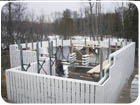
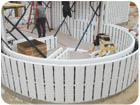
Photos courtesy of Arxx.
A little more than 40 years ago, the concept of a foam insulating concrete form was nothing more than a thought in an enterprising inventor's head. In the early-'60s, no one would have given odds that a newly created concrete form made of slender pieces of foam held together by a metal web would succeed. The forming standard of the day were steel pan forms and there was no way anyone would have believed that would change, except Werner Gregori.
Gregori had an idea about changing the way people formed concrete. For all the good things steel forms are, they are also heavy and cumbersome. They take time to install and remove. They take up space on the job site and heavy machinery is needed to move multiple steel forms to the proper location. Most of all, they are not necessarily the best method to deliver what is designed on paper. Gregori understood this and set out to design a form that was lightweight, easy to manipulate and could be used to easily form the shapes designers developed on the drafting table.
In 1966, Gregori received his first patent for an ICF in Canada and two years later received his patent in the United States.
However, he had a problem. He had created a product that no one wanted to use. In the mind of Gregori, it was a no-brainer. The form was far and beyond a more convenient building material to use on the job site and to design with. Despite this, traditional concrete crews ridiculed the idea of pouring straight design concrete mix into anything except steel forms.
Growing the market
Today, we know that Gregori's idea of pouring concrete into a foam form has been embraced. However, several key advancements have taken place to help increase ICFs market share and acceptance. First, Gregori was not able to convince traditional concrete forming crews to use an insulating concrete form. Without individuals using the product, it would provide no usefulness and could not gain even the slightest attention from reputable forming crews. So, Gregori set out to convince foundation crews that the product could deliver the same results as concrete masonry units and removable form technology.Meanwhile, an amazing thing started to happen. Customers began to realize that their ICF basements were warmer and more comfortable. Although a primary purpose of the form was to increase productivity on the job site, ICFs were starting to gain recognition as an energy efficient building material.
As awareness about its energy efficient properties and its ease of installation began to grow, the ICFs industry's market share began to slowly increase. Over the past 40 years, the industry has had some help along the way in the form of higher energy costs and the need for installer-friendly building systems. Today, ICFs account for approximately 120 million square feet of exterior wall space installed each year, with the market growing about 20 percent per year. However, growth in the market hasn't come without challenges.
Problems emerge, problems solved
Despite ICFs overwhelming features on the job site, concrete pours in ICFs in the early days were still something of an adventure. Blowouts or holes created as a result of wet concrete creating intense pressure on the face of the form wall were routine. Blowouts take time to fix and decrease the productivity of using ICFs. Over the years, creative concrete professionals have used trial and error to reduce the hydrostatic pressure that excessive moisture exerts on the walls of the foam form. Additionally, it was discovered that by replacing traditional angular rock with smooth aggregate, the concrete mix had an easier time working its way around steel reinforcing bar (rebar) and achieving consolidation. By reducing the moisture in the mix and replacing the aggregate, ICFs were showing signs of success.Currently, a great deal of attention is paid to concrete mixes, as they can produce a multitude of benefits to the ICF installation and consumer. The use of plasticizers in concrete mixes have increased a concrete mixes' ability to flow without increasing its hydrostatic pressure. Also, using recycled materials, such as fly ash and reincorporating previously used concrete, have helped address a project's sustainability.
With renewed interest in and increased usage of ICFs, others began to look at how ancillary products could be created to make building with ICFs easier. On the job site, there were still issues of wavy walls, wood windows and doors that buckled, floor ledger systems that were nearly impossible to attach floors to and issues of how to create chases for utilities. From small steps taken by companies up to 30 years ago, giant leaps have been made. The ICF industry now has product solutions for all of these concerns, including bracing systems that produce precision straight walls, vinyl window and door buck systems that retain their original shape, floor ledger connection systems that are easy to use and tools for roughing in plumbing and electrical.
Perhaps the biggest impact on the industry has been in the design of the ICF itself. Since the creation of the first foam form in 1966, many have created improvements on Gregori's original design. First, expanded polystyrene suppliers, EPS machine and mold manufacturers and EPS producers all have worked to improve the density, fusion rate and strength of the foam. Also, engineers have provided better designs to create forms that are easier to work with and increase productivity.
Today, the ICF industry is filled with foam forms of different configurations (flat, waffle and screen grid), all of which deliver different benefits. Also, there are brick ledge, 45 degree, corner and straight forms. And whether you want to assemble the form yourself or have it delivered to the job site ready to stack, there are even panel and block systems depending on your preference.
Finally, the key to the success of any building material can be measured by the experience, professionalism and creditability of the individuals that install it. The pioneers in the ICF industry started out small, using ICFs to build foundations in Ontario and Great Lake states. As product advancements emerged, ICF contractors began making the leap to above-grade applications, both in the residential and commercial markets.
The ICF industry has been fortunate to have some very good concrete crews embrace the ICF building system over the years, many of which have produced very impressive projects throughout North America. The manufacturers understand that the success of the ICF industry rests in the success of well-trained crews. Currently, the majority of ICF companies have training courses to ensure that ICF installers have the most complete installation knowledge and training available.
The Insulating Concrete Form Association is celebrating 40 years of success of the ICF building system in 2006. Please join ICFA at its 2006 spring meeting in Norfolk, Va., and fall meeting in Milwaukee, as the industry honors the creation and success of the foam insulation concrete form.
If you read this article, please circle number 331.
Looking for a reprint of this article?
From high-res PDFs to custom plaques, order your copy today!