The "Skinny" On Prefabricated Shearwalls
New codes are being developed for light-frame construction requiring more resistance to the elements.
You must have been living in a cave the last few years to not see all the damage Mother Nature can throw at us, especially with events like Hurricane Katrina and the Northridge Earthquake. As we experience these types of natural disasters, engineers are learning more about building performance. As a result, new codes are being developed for light-frame construction that requires additional resistance to wind and seismic forces. These new code requirements have designers and contractors paying more attention to the systems that can resist these types of forces.
With site-built and prefabricated shearwalls, the force pushes horizontally on the top of the wall. The sheathing transfers the shear from the top to the bottom of the wall while holding it together to resist racking. If the bottom track of the wall is anchored to the foundation to resist sliding, the far end of the wall presses down (compression force) and the near side of the wall lifts up (tension force)-this is known as overturning.
Historically in cold-formed steel framing, shearwalls have been built using either structural sheathing material, such as OSB or plywood over the steel studs, or with coil strap “X” bracing (diagonal bracing). “X” bracing is popular for cold-formed steel framed structures in termite-prone areas or where wood structural sheathing is not commonly used. “X” bracing is typically designed by an engineer who specifies how many screws are needed at the end of each brace. Recent testing at McGill University in Montreal has helped the industry better understand the performance of “X” bracing and identify its strengths and weaknesses. In general, the wider the wall section to be braced, the better the performance. Based on test results, narrow wall “X” bracing does not perform as well.
Plywood or OSB panel sheathing can help keep a wall from racking, as long as the wall doesn’t contain large or numerous openings. In order to resist lateral forces, elements need to be installed in a wall to keep the wall from racking over. There are prescriptive requirements for this type of bracing found in the AISI Standard for Cold-Formed Steel Framing – Lateral Design Standard (S213), available at www.steelframingalliance.com.
Other methods used for shearwall construction include sheet metal shearwalls. Instead of installing wood structural panels, steel sheet sheathing is installed with the required number of screw fasteners for the edge and the field. Some proprietary products are available that have the sheet metal pre-attached to the drywall.
Whether structural sheathing or “X” braced walls are used in a project, there needs to be a holddown to transfer the overturning force to the concrete foundation. One option is to use a strap style holddown, which is embedded in the concrete. The strap portion of the holddown screws into the exterior side of the end studs of the shearwall (commonly called chord studs). Another option is to use a holddown that is installed to the chord studs inside the wall cavity. An anchor bolt is embedded into the concrete either by casting it in place or by drilling and using an adhesive. Whichever holddown is used, it’s critical that it’s installed in the right place. Quite often, bolts that are supposed to secure the shearwall are placed several inches away from where they are required for optimum load transfer. This will, of course, defeat the purpose of the shearwall.
It’s important to note that lateral-force resisting systems usually do not consist of just shearwalls. Connections to both the roof and floor diaphragms also must be considered along with the strength and stiffness of these elements.
As you can imagine, this restriction has implications throughout a building. The front of a garage, for example, typically has narrow shearwalls 2 to 3 feet wide. Narrow shearwalls also are desired to accommodate more window and door openings in a wall. However, narrow site-built shearwalls are limited to a maximum aspect ratio. They also are restricted to lower loads based on the 2:1 and 3½-4:1 aspect ratio, and they’re subject to mis-installation because of the number of components (e.g. holddown bolts, openings in sheathing, studs, etc.) needed for installation.
Traditional site-built lateral-force resisting methods (mentioned above) often do not provide the small width or the sufficient strength required to resist design forces. This is especially true in areas of the country that experience high wind and seismic loads. Because there’s a need for such narrow wall panels around garage door openings and in homes with several windows and doors, several manufacturers have developed prefabricated shearwalls.
 The
introduction of prefabricated shearwalls have helped builders deliver the types
of homes that consumers demand while giving walls the strength to stand up to
lateral forces. The Simpson Strong-Tie Wood Strong-Wall shearwall, for example,
is just 16 inches wide. The Steel Strong-Wall shearwall is even narrower at 12
inches wide, yet it’s two to three times stronger than the wood shearwall in
resisting lateral loads. In some cases, one prefabricated panel is permitted to
replace two braced panels or two prefabricated panels can replace three braced
panels. These narrow wall solutions give designers and contractors much more
design flexibility in light-frame construction.
The
introduction of prefabricated shearwalls have helped builders deliver the types
of homes that consumers demand while giving walls the strength to stand up to
lateral forces. The Simpson Strong-Tie Wood Strong-Wall shearwall, for example,
is just 16 inches wide. The Steel Strong-Wall shearwall is even narrower at 12
inches wide, yet it’s two to three times stronger than the wood shearwall in
resisting lateral loads. In some cases, one prefabricated panel is permitted to
replace two braced panels or two prefabricated panels can replace three braced
panels. These narrow wall solutions give designers and contractors much more
design flexibility in light-frame construction.
Prefabricated shearwalls also save contractors time because they typically install with a few anchor bolts and screws rather than the large number of screws required for installing structural panels or diagonal strap bracing. However, it’s important to follow the manufacturer’s recommendations for proper installation. A foundation bolt placement template needs to be used to locate and support the foundation bolts during the pouring of the slab, otherwise, a retrofit may be needed to correct the mis-installed bolts.
In addition, prefabricated walls provide reliable performance since they’re built carefully and consistently in a manufacturing facility that follows rigorous quality control processes.
Prefabricated shearwalls are among the many lateral-force resisting systems available-the trick is doing your homework to find the one that best suits your project. Prefabricated shearwalls can provide many benefits to contractors, including lower installed costs, increased design flexibility and the ability to meet stricter building codes. And chances are, if you don’t live in a cave, the house you build today may depend on a prefabricated wall to resist Mother Nature in the future. W&C
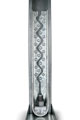
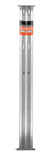
Steel
Strong-Wall shearwalls, manufactured by Simpson Strong-Tie, provide narrow
wall-bracing solutions.
You must have been living in a cave the last few years to not see all the damage Mother Nature can throw at us, especially with events like Hurricane Katrina and the Northridge Earthquake. As we experience these types of natural disasters, engineers are learning more about building performance. As a result, new codes are being developed for light-frame construction that requires additional resistance to wind and seismic forces. These new code requirements have designers and contractors paying more attention to the systems that can resist these types of forces.
The
S/HDU pre-deflected holddown provides overturning restraint.
COMMON TYPES OF LATERAL-FORCE RESISTING SYSTEMS
Lateral forces, also known as “shear,” are simply the forces caused by wind and/or seismic activity that try to push a structure over. Lateral-force resisting systems include site-built walls, diagonal bracing, prefabricated shearwalls and tension tie downs. Which system is best depends on the load required for the project.With site-built and prefabricated shearwalls, the force pushes horizontally on the top of the wall. The sheathing transfers the shear from the top to the bottom of the wall while holding it together to resist racking. If the bottom track of the wall is anchored to the foundation to resist sliding, the far end of the wall presses down (compression force) and the near side of the wall lifts up (tension force)-this is known as overturning.
Historically in cold-formed steel framing, shearwalls have been built using either structural sheathing material, such as OSB or plywood over the steel studs, or with coil strap “X” bracing (diagonal bracing). “X” bracing is popular for cold-formed steel framed structures in termite-prone areas or where wood structural sheathing is not commonly used. “X” bracing is typically designed by an engineer who specifies how many screws are needed at the end of each brace. Recent testing at McGill University in Montreal has helped the industry better understand the performance of “X” bracing and identify its strengths and weaknesses. In general, the wider the wall section to be braced, the better the performance. Based on test results, narrow wall “X” bracing does not perform as well.
Plywood or OSB panel sheathing can help keep a wall from racking, as long as the wall doesn’t contain large or numerous openings. In order to resist lateral forces, elements need to be installed in a wall to keep the wall from racking over. There are prescriptive requirements for this type of bracing found in the AISI Standard for Cold-Formed Steel Framing – Lateral Design Standard (S213), available at www.steelframingalliance.com.
Other methods used for shearwall construction include sheet metal shearwalls. Instead of installing wood structural panels, steel sheet sheathing is installed with the required number of screw fasteners for the edge and the field. Some proprietary products are available that have the sheet metal pre-attached to the drywall.
Whether structural sheathing or “X” braced walls are used in a project, there needs to be a holddown to transfer the overturning force to the concrete foundation. One option is to use a strap style holddown, which is embedded in the concrete. The strap portion of the holddown screws into the exterior side of the end studs of the shearwall (commonly called chord studs). Another option is to use a holddown that is installed to the chord studs inside the wall cavity. An anchor bolt is embedded into the concrete either by casting it in place or by drilling and using an adhesive. Whichever holddown is used, it’s critical that it’s installed in the right place. Quite often, bolts that are supposed to secure the shearwall are placed several inches away from where they are required for optimum load transfer. This will, of course, defeat the purpose of the shearwall.
It’s important to note that lateral-force resisting systems usually do not consist of just shearwalls. Connections to both the roof and floor diaphragms also must be considered along with the strength and stiffness of these elements.
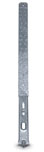
The
STHD is a typical embedded strap tie holddown.
NARROW WALL-BRACING SOLUTIONS
The new wall-bracing requirements in Section R602.10 of the 2006 International Residential Code are a result of lessons learned from Hurricane Katrina and the Northridge Earthquake. These requirements limit shearwalls to a maximum height to width (h/w) ratio of 2:1. A higher aspect ratio of 3½:1 or 4:1 may be permitted, but a reduction in shearwall strength must be taken. The concern is based on narrow, site-built shearwalls that failed during recent natural disasters due to excessive deflection. The code now requires that walls typically 8 feet high have a minimum shearwall width of 4 feet to meet the 2:1 aspect ratio.As you can imagine, this restriction has implications throughout a building. The front of a garage, for example, typically has narrow shearwalls 2 to 3 feet wide. Narrow shearwalls also are desired to accommodate more window and door openings in a wall. However, narrow site-built shearwalls are limited to a maximum aspect ratio. They also are restricted to lower loads based on the 2:1 and 3½-4:1 aspect ratio, and they’re subject to mis-installation because of the number of components (e.g. holddown bolts, openings in sheathing, studs, etc.) needed for installation.
Traditional site-built lateral-force resisting methods (mentioned above) often do not provide the small width or the sufficient strength required to resist design forces. This is especially true in areas of the country that experience high wind and seismic loads. Because there’s a need for such narrow wall panels around garage door openings and in homes with several windows and doors, several manufacturers have developed prefabricated shearwalls.
The
Steel Strong-Wall shearwall is available as narrow as 12 inches wide.
Prefabricated shearwalls also save contractors time because they typically install with a few anchor bolts and screws rather than the large number of screws required for installing structural panels or diagonal strap bracing. However, it’s important to follow the manufacturer’s recommendations for proper installation. A foundation bolt placement template needs to be used to locate and support the foundation bolts during the pouring of the slab, otherwise, a retrofit may be needed to correct the mis-installed bolts.
In addition, prefabricated walls provide reliable performance since they’re built carefully and consistently in a manufacturing facility that follows rigorous quality control processes.
Prefabricated shearwalls are among the many lateral-force resisting systems available-the trick is doing your homework to find the one that best suits your project. Prefabricated shearwalls can provide many benefits to contractors, including lower installed costs, increased design flexibility and the ability to meet stricter building codes. And chances are, if you don’t live in a cave, the house you build today may depend on a prefabricated wall to resist Mother Nature in the future. W&C
Looking for a reprint of this article?
From high-res PDFs to custom plaques, order your copy today!