High-Performance Building Envelopes: Case Study--Solar Control
Low-e glass yields major energy savings at California State University.
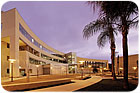
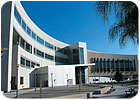
Studies show that bright buildings can produce bright students. At the new College of Business Administration at California State University-San Marcos (CSUSM), they produce significant energy savings, too. Incorporating 27 classrooms in one three-story wing and 88 faculty offices in a separate four-story wing, Markstein Hall is a light-filled, 72,500-square-foot complex designed by Gail Bouvrie, AIA, of AC Martin Partners in Los Angeles. High-tech accoutrements include teleconferencing equipment in each classroom, high-speed Internet access wired into every desk, and state-of-the-art video and acoustical components to facilitate both on-site and distance learning. Markstein Hall is also one of the first buildings in the country to feature Solarban 70XL glass, a solar control low-e glass from PPG.
AC Martin Partners was the architectural firm that designed the Joe Serna Jr. California Environmental Protection Agency Headquarters Building in Sacramento; a LEED Platinum structure that is regarded as one of the “greenest” high-rise buildings in the country.
Ken Lewis, AIA, a principal with the firm, was in charge of Markstein Hall. As a leader of such an environmentally progressive firm, one of Lewis’ goals was to make Markstein Hall as sustainable as possible, and is also one of the reasons he chose to make the building one of the first in the country to capitalize on the performance and aesthetic benefits of low-e glass.
Second is the glass’ transparency. The architectural glass combines solar control with a clear glass aesthetic. According to the company, before the introduction of Solarban 70XL glass, the highest-performing non-tinted solar control, low-e glass transmitted 70 percent of the sun’s visible light in a one-inch insulating glass unit, while blocking only 56 percent of its solar energy. The resulting LSG of 1.84 was 21 percent less than that of Solarban 70XL glass.
The potential energy savings associated with Solarban 70XL glass was highlighted in a recent study conducted by an independent energy and environmental research firm. The study compared the energy performance of six glazing configurations, including several competing solar control low-e glasses, on three common building types in nine different U.S climates. It showed that architects and building owners could cut capital investment in a building’s cooling plant by up to 26 percent when substituting Solarban 70XL glass for other solar control low-e glasses. The study also showed that building owners could anticipate ongoing energy savings of 3 to 5 percent annually for buildings constructed with Solarban 70XL glass.
Lewis estimates that by specifying the glass for Markstein Hall, he was able to lower mechanical costs for the building by $2.00 to $3.00 per square-foot. These savings were related primarily to a lower chilling capacity requirement, as well as smaller fan sizes and ducts.
Yet, these initial cost reductions were just the beginning. Working closely with San Diego Gas & Electric (SDG&E), Lewis and his building team were able to earn more than $100,000 in incentives through the utility’s Savings By Design program. According to program administrators, Markstein Hall is expected to generate annual energy savings of almost 500,000 kilowatt-hours, or approximately $75,000 per year at current energy prices. That reduction is almost 35 percent better than is required under Title 24, California’s Energy Efficiency Standards for Residential and Non-Residential Buildings. As a result, the project team earned almost $120,000 in Savings By Design incentives, including $90,000 paid directly to the building owner and another $30,000 allocated to the design team.
Markstein Hall’s energy efficiency can be attributed to a comprehensive energy management system. For example, a demand-control ventilation system takes advantages of the local ocean breezes, allowing up to 100 percent of the outside air into the building to control cooling and promote off-gassing. The system even includes carbon dioxide sensors that can trigger fresh air intake, helping students to stay alert during their studies.
Another highlight is the specification of multi-switched, multi-level lighting fixtures that combine compact fluorescent, linear fluorescent, metal halide and other fixtures with abundant natural light to provide direct and indirect light. As a result, lighting power density in Markstein Hall averages 1.00 watts per square foot, which is 15 percent less than the minimum threshold required under Title 24.
Not only does the natural light and fresh air contribute to energy savings; the combination is expected to enhance student performance as well.
The challenge fits in well with what Lewis views as a personal and firm-wide obligation to preserve and protect the environment.
“At AC Martin, one of our core beliefs is that better buildings make for a better environment,” Lewis said. “The issue of sustainability is important to us and we take it seriously because, as architects, we consider ourselves stewards of the earth.”
Based on that philosophy and a proven track record for environmentally sustainable design, Lewis’ firm was chosen to design the new Social Sciences and Management building at UC-Merced. The 90,000 square-foot building, which is scheduled to open in fall 2009, will also feature low-e glass-chosen for its appearance as well as its daylighting characteristics and environmental performance.
“I really like the look of transparent glass,” Lewis said. “It makes design much more interesting because it gives natural depth and dimensional qualities to a building. At San Marcos, the brightness and openness of the building are also critical to fostering a more pleasant and energetic learning environment.”
Incorporating 27 classrooms in one three-story wing
and 88 faculty offices in a separate four-story wing, CSUSM’s Markstein Hall is
a light-filled, 72,500-square-foot complex.
Studies show that bright buildings can produce bright students. At the new College of Business Administration at California State University-San Marcos (CSUSM), they produce significant energy savings, too. Incorporating 27 classrooms in one three-story wing and 88 faculty offices in a separate four-story wing, Markstein Hall is a light-filled, 72,500-square-foot complex designed by Gail Bouvrie, AIA, of AC Martin Partners in Los Angeles. High-tech accoutrements include teleconferencing equipment in each classroom, high-speed Internet access wired into every desk, and state-of-the-art video and acoustical components to facilitate both on-site and distance learning. Markstein Hall is also one of the first buildings in the country to feature Solarban 70XL glass, a solar control low-e glass from PPG.
AC Martin Partners was the architectural firm that designed the Joe Serna Jr. California Environmental Protection Agency Headquarters Building in Sacramento; a LEED Platinum structure that is regarded as one of the “greenest” high-rise buildings in the country.
Ken Lewis, AIA, a principal with the firm, was in charge of Markstein Hall. As a leader of such an environmentally progressive firm, one of Lewis’ goals was to make Markstein Hall as sustainable as possible, and is also one of the reasons he chose to make the building one of the first in the country to capitalize on the performance and aesthetic benefits of low-e glass.
More Light, Less Heat
Introduced at the Greenbuild 2005 International Conference and Expo, Solarban 70XL glass constitutes an advance in the architectural glass industry for two reasons. First is the glass’ solar control performance. Combined with traditional clear glass in a conventional one-inch insulating glass unit, Solarban 70XL glass blocks up to 73 percent of the sun’s solar energy, while transmitting more than 63 percent of its visible light, the company reports, resulting in a Light-to-Solar Gain (LSG) ratio of 2.33.Second is the glass’ transparency. The architectural glass combines solar control with a clear glass aesthetic. According to the company, before the introduction of Solarban 70XL glass, the highest-performing non-tinted solar control, low-e glass transmitted 70 percent of the sun’s visible light in a one-inch insulating glass unit, while blocking only 56 percent of its solar energy. The resulting LSG of 1.84 was 21 percent less than that of Solarban 70XL glass.
The potential energy savings associated with Solarban 70XL glass was highlighted in a recent study conducted by an independent energy and environmental research firm. The study compared the energy performance of six glazing configurations, including several competing solar control low-e glasses, on three common building types in nine different U.S climates. It showed that architects and building owners could cut capital investment in a building’s cooling plant by up to 26 percent when substituting Solarban 70XL glass for other solar control low-e glasses. The study also showed that building owners could anticipate ongoing energy savings of 3 to 5 percent annually for buildings constructed with Solarban 70XL glass.
A
comprehensive energy management system has helped Markstein Hall realize better
than required energy efficiency.
Real World Performance at San Marcos
Markstein Hall on the campus of CSU-San Marcos has been open only a few months. Consequently, it is not yet possible to compare its annual energy savings with those cited in the study above but, thanks in part to low-e glass, building owners were able to realize a significant and immediate payback on their initial building investment.Lewis estimates that by specifying the glass for Markstein Hall, he was able to lower mechanical costs for the building by $2.00 to $3.00 per square-foot. These savings were related primarily to a lower chilling capacity requirement, as well as smaller fan sizes and ducts.
Yet, these initial cost reductions were just the beginning. Working closely with San Diego Gas & Electric (SDG&E), Lewis and his building team were able to earn more than $100,000 in incentives through the utility’s Savings By Design program. According to program administrators, Markstein Hall is expected to generate annual energy savings of almost 500,000 kilowatt-hours, or approximately $75,000 per year at current energy prices. That reduction is almost 35 percent better than is required under Title 24, California’s Energy Efficiency Standards for Residential and Non-Residential Buildings. As a result, the project team earned almost $120,000 in Savings By Design incentives, including $90,000 paid directly to the building owner and another $30,000 allocated to the design team.
Markstein Hall’s energy efficiency can be attributed to a comprehensive energy management system. For example, a demand-control ventilation system takes advantages of the local ocean breezes, allowing up to 100 percent of the outside air into the building to control cooling and promote off-gassing. The system even includes carbon dioxide sensors that can trigger fresh air intake, helping students to stay alert during their studies.
Another highlight is the specification of multi-switched, multi-level lighting fixtures that combine compact fluorescent, linear fluorescent, metal halide and other fixtures with abundant natural light to provide direct and indirect light. As a result, lighting power density in Markstein Hall averages 1.00 watts per square foot, which is 15 percent less than the minimum threshold required under Title 24.
Not only does the natural light and fresh air contribute to energy savings; the combination is expected to enhance student performance as well.
Looking Ahead
With Markstein Hall complete and occupied, Lewis has already begun work on an even bigger campus building. In late 2005, the University of California held its first classes at Merced, a new campus just outside Fresno. The first American research university built in the 21st century, UC-Merced has ambitious goals for sustainability. In fact, the school wants to achieve energy usage that is half that of the other nine campuses throughout the University of California system.The challenge fits in well with what Lewis views as a personal and firm-wide obligation to preserve and protect the environment.
“At AC Martin, one of our core beliefs is that better buildings make for a better environment,” Lewis said. “The issue of sustainability is important to us and we take it seriously because, as architects, we consider ourselves stewards of the earth.”
Based on that philosophy and a proven track record for environmentally sustainable design, Lewis’ firm was chosen to design the new Social Sciences and Management building at UC-Merced. The 90,000 square-foot building, which is scheduled to open in fall 2009, will also feature low-e glass-chosen for its appearance as well as its daylighting characteristics and environmental performance.
“I really like the look of transparent glass,” Lewis said. “It makes design much more interesting because it gives natural depth and dimensional qualities to a building. At San Marcos, the brightness and openness of the building are also critical to fostering a more pleasant and energetic learning environment.”
Looking for a reprint of this article?
From high-res PDFs to custom plaques, order your copy today!