High-Performance Building Envelopes: High-Performance Straw Bale
The Santa Clarity Transit Maintenance Facility utilizes a unique building envelope material for its new sustainable structure.
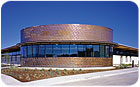
In an effort to improve air quality in the Santa Clarita Valley, the City of Santa Clarita’s municipal transit system chose to convert its entire bus fleet from diesel to Compressed Natural Gas (CNG), a conversion that required a new maintenance facility headquarters. The city sought to achieve the highest LEED rating possible for the new facility on a budget consistent with conventional buildings of the same type and size. The Santa Clarita Transit Maintenance Facility, completed in May 2006 and designed by HOK, has earned a LEED Gold rating and is one of the first LEED-certified straw-bale buildings in the world.
The selected site is 12 acres of previously undeveloped land in an existing business park located northwest of downtown Santa Clarita on the edge of the high desert. A seismically active fault made a portion of the site un-buildable. The new facility includes a 30,673-square-foot administration building, a 25,113-square-foot maintenance building, a bus wash facility, a CNG fueling island for city buses and a publicly accessible CNG fueling station. The project is designed to accommodate over 150 buses and nearly 170 staff with room for future expansion.
Not all project participants were familiar with sustainable design strategies, LEED and the integrated design process. Incorporating the owner, architect, MEP engineering consultant and landscape architect, the process began with an eco-charrette and sustainable building site visits. This strategy led to early adoption of methods and technologies that created a truly sustainable design.
Stemming from this aesthetic, basic elements function as finished structures. Rather than the typical steel-braced frame, the facility uses heavy timber construction with long spans and leaves the wood structure exposed. A highly efficient water-source heat pump HVAC system employs under-floor air delivery, thus eliminating overhead ducts and leaving the ceiling clean and unobstructed. The corresponding raised-floor system uses concrete-filled metal pans, which are left exposed to eliminate the need for carpet or other floor coverings in most spaces.
As the city’s first green building, the project openly and effectively functions as a showcase for sustainable strategies.
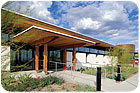
The new transit maintenance facility enables the city to convert its entire bus fleet from diesel to CNG and also includes a publicly accessible CNG fueling station. CNG is an alternative motor vehicle fuel considered to be among the cleanest because its hydrocarbon emissions are low and its vapors produce little ozone. Because CNG must be stored in special high-pressure containers, the design was modified to include facilities for storing and dispensing of CNG.
Located close to major regional circulation routes, the facility includes 28 bicycle stalls and six showers for employee use. A central courtyard provides a peaceful, quiet oasis for staff to get away from the bus yard and interact with the natural environment. All habitable spaces have views to the exterior. The demonstration gardens to the west of the building are organized around a spiral path that winds down through native California riparian planting, and are used to educate visitors on the native species of the region.
The site is largely covered by hard surfaces for bus movement. Fly ash was used to replace the cement content of the concrete in the paving. The percentage of fly ash used is limited to 25 percent; higher concentrations could lower the reflectivity of the concrete, increasing the urban heat island effect.
In planning the site, patterns of bus movement drove the positioning of the maintenance building. The placement maximizes the available site area for bus parking and future building expansion.
The office building is designed around an outdoor courtyard landscaped with drought-tolerant planting. Native trees provide a shady canopy and recreate the mixed groves of California’s streamside landscape. The use of native and adaptive plants reduces potable water consumption for irrigation by 67 percent.
The building design then combines straw-bale construction, high-performance glazing and a well-insulated cool roof to create a super-insulated envelope that moderates temperature fluctuations and protects the indoor environment from the hot, dry daytime conditions. Based on a solar access analysis, the daylighting strategy features narrow floorplates-no more than 60 feet deep-so that all spaces are filled with natural light and offer views to the outside. Deep roof overhangs shade the glazing while protecting the perimeter of the straw-bale walls from direct water infiltration.
The system maximizes energy-saving potential while creating compelling, innovative contemporary architecture that’s well suited to a desert environment.
Because straw bale contains no VOCs or other toxic compounds, it contributes to excellent indoor air quality. The under-floor air delivery system is designed to only condition space seven feet above the floor. Each occupant can control the airflow and temperature of his or her work area.
Efficient plumbing fixtures are used throughout the facility. Dual flush toilets offer the option of 1.6- or 0.8-gallon flushes. Waterless urinals further reduce water use. The indigenous plantings used in the landscape design reduce the amount of water required for irrigation by 67 percent. Water used for bus washing is filtered and reused. The wash water reclamation system consists of an in-ground sump pit in the wash bay. Wash water is collected then pumped through a cyclonic filtration system to remove waterborne solids. The cleaned water is stored in storage vessels then reintroduced in the automatic washer’s wash cycle.
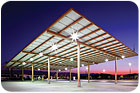
A solar canopy bus shade structure, consisting of a 129.6 KW-DC photovoltaic system, provides on-site renewable energy that meets 45 percent of annual energy demands.
Energy-conserving measures allow the facility to exceed California Energy Code Title 24 requirements by 44 percent. The building combines straw-bale wall construction with high-performance glazing and a well-insulated cool roof to create a super-insulated envelope that moderates the climate’s temperature fluctuations.
The under-floor air system reduces loads by allowing conditioned air to be delivered at a higher temperature. The mechanical system is a series of water source heat pumps. Chilled water is generated by an on-site cooling tower.
An integrated daylighting strategy incorporates an interior courtyard, continuous perimeter clerestory glazing, shading from large roof overhangs and deep inset windows, and skylights to complement high-efficiency internal lighting fixtures and “high cut-off” site lighting components.
On-site renewable energy and built-in adaptation to available natural light and temperature fluctuations provide inherent “passive survivability” in case of emergency conditions.
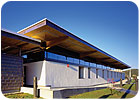
Incorporating straw-bale construction brings a fresh use to a method of construction largely relegated to residential development. A readily available, renewable and local agricultural waste product that may have gone into a landfill or been burned - creating particulate pollution - has been used as a valuable construction material. Straw-bale construction is highly energy efficient, promotes good indoor environmental quality (contains no VOCs or other toxic compounds), is biodegradable and cost-effective.
The main structure of the office building is made of heavy timber manufactured from high-recycled-content engineered lumber. Leaving the frame exposed above the straw bale reduces the need for toxic finishes and adds to the building’s overall aesthetic. Lime plaster covers the straw-bale walls, and metal shingles made from highly-recycled copper cover exterior wall surfaces that are not straw. Exterior materials are light-colored to maximize reflectivity.
A resource efficiency strategy is also evident throughout the interior. There is very little carpeting, and suspended ceilings are only used in a few rooms. All casework and millwork is constructed of wheat-straw board instead of the conventional medium density fiberboard (MDF) or plywood. Wheat-straw board is rapidly renewable and contains no VOCs. Low-VOC, bio-based finish materials were used wherever possible.
Contrary to popular belief, straw-bale construction is extremely durable and long-lived. Straw-bale structures built more than 100 years ago still exist in Nebraska, where the technique evolved. Its resistance to burning, pest infestation and high insulation value make straw bales one of the most efficient, cost-effective building materials for one- and two-story applications.
The “less is more” approach to material selection greatly reduces maintenance demands. Concrete tiles are used instead of carpeting in most locations. Lime-plaster slurry provides a coating on the interior and exterior of the straw-bale walls and eliminates the need for conventional paint. The maintenance garage is made of fly-ash concrete tilt-up panels that can be cleaned with water and will not need painting.
All interior walls are removable without affecting the concrete modular access flooring. Any rooms needing modification can be easily disassembled and re-built to accommodate a new use without damaging the flooring or ceiling systems. All electrical or mechanical devices can be relocated in the access flooring by moving or switching out concrete panels with pre-finished cutouts.
The size of the new facility meets the immediate transit needs of the city, and the design allows the possibility of future expansion.
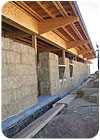
The project demonstrated that straw-bale construction is a powerful strategy for creating an energy- and resource-efficient building. Lessons learned about building with straw bales were numerous. Attaching bales to the footing using wires instead of strapping caused the walls to become less stable during construction. When wood bracing was removed, untrained contractors climbed on bales to reach their work, causing misalignment and necessitating rebuilding. After a rainstorm during construction, a mistake by the roof contractor allowed water to enter the bales and required that 60 percent of them be replaced. On-site quality control and better communication could have prevented these problems.
Building systems are electronically monitored 24-hours a day for comfort and efficiency by a digital control system. Straw-bale walls are continuously monitored for moisture content. The city is committed to a post-occupancy process for occupant satisfaction and reports that all systems are functional and providing the most cost-effective return. A brochure and self-guided tour serve about 10 visitors per week.
Linoleum (Forbo)
Carpet tile over portion of Raised Access Floor ( Interface)
Raised exposed concrete access floor (InterfaceAR Tec-Crete)
Suspended Gypsum Board Ceiling (National Gypsum)
Wood
Cabinets (Phenix Biocomposites)
Countertops (Richlite)
TrusJoist Structural Beams (Weyerhaeuser)
Roofing
Thermoplastic Polyolefin Membrane Roofing (Firestone)
HVAC Systems and Appliances
Packaged Split System AC Units (Carrier)
Appliances (Kenmore)
Insulation/ICFs
Batt Insulation (CertainTeed)
Rice Straw Bale Wall Infill (Benchmark Development)
Interior Finishes and Furnishings
Furniture Finishes and System (Steelcase)
Paints and Wallcoverings
Low Sheen Paints over Gypsum Board Walls (Frazee)
Energy Efficiency
Direct Digital Control System (Carrier)
Building Envelope
Lime Plaster over Rice Straw Bale (CESA Transmineral USA)
Rice Straw Bale (Benchmark Development)
Copper Shingles (Zappone)
Plumbing Fixtures
Low Flow Toilets (Caroma)
Waterless Urinals (Waterless Co.)
Other Fixtures (American Standard)
Landscaping
P&D Landscaping
For more information, visit www.hok.com.
This
47,000-square-foot facility, the new home for the Santa Clarita Transit
Department, is one of the first LEED-certified straw bale buildings in the
world. Photo by John Edward Linden and HOK.
In an effort to improve air quality in the Santa Clarita Valley, the City of Santa Clarita’s municipal transit system chose to convert its entire bus fleet from diesel to Compressed Natural Gas (CNG), a conversion that required a new maintenance facility headquarters. The city sought to achieve the highest LEED rating possible for the new facility on a budget consistent with conventional buildings of the same type and size. The Santa Clarita Transit Maintenance Facility, completed in May 2006 and designed by HOK, has earned a LEED Gold rating and is one of the first LEED-certified straw-bale buildings in the world.
The selected site is 12 acres of previously undeveloped land in an existing business park located northwest of downtown Santa Clarita on the edge of the high desert. A seismically active fault made a portion of the site un-buildable. The new facility includes a 30,673-square-foot administration building, a 25,113-square-foot maintenance building, a bus wash facility, a CNG fueling island for city buses and a publicly accessible CNG fueling station. The project is designed to accommodate over 150 buses and nearly 170 staff with room for future expansion.
Not all project participants were familiar with sustainable design strategies, LEED and the integrated design process. Incorporating the owner, architect, MEP engineering consultant and landscape architect, the process began with an eco-charrette and sustainable building site visits. This strategy led to early adoption of methods and technologies that created a truly sustainable design.
Sustainable Design Intent & Innovation
The desert environment, high sustainability goals and a modest project budget combined to inspire a “less is more” design approach. The project’s most innovative feature is a super-insulated building envelope constructed of straw bales. The many challenges inherent in straw-bale construction such as wider walls, larger building base, elevated wall foundations, etc., opened up the possibility for a whole new aesthetic. Only essential materials are needed to render form while achieving a cost- and energy-efficient building and promoting a healthier indoor environment-important elements of a sustainable design.Stemming from this aesthetic, basic elements function as finished structures. Rather than the typical steel-braced frame, the facility uses heavy timber construction with long spans and leaves the wood structure exposed. A highly efficient water-source heat pump HVAC system employs under-floor air delivery, thus eliminating overhead ducts and leaving the ceiling clean and unobstructed. The corresponding raised-floor system uses concrete-filled metal pans, which are left exposed to eliminate the need for carpet or other floor coverings in most spaces.
As the city’s first green building, the project openly and effectively functions as a showcase for sustainable strategies.
Photo
by John Edward Linden and HOK.
Regional/Community Design & Connectivity
The fundamental benefit of the project is the creation of improved, more environmentally friendly public transportation for the City of Santa Clarita.The new transit maintenance facility enables the city to convert its entire bus fleet from diesel to CNG and also includes a publicly accessible CNG fueling station. CNG is an alternative motor vehicle fuel considered to be among the cleanest because its hydrocarbon emissions are low and its vapors produce little ozone. Because CNG must be stored in special high-pressure containers, the design was modified to include facilities for storing and dispensing of CNG.
Located close to major regional circulation routes, the facility includes 28 bicycle stalls and six showers for employee use. A central courtyard provides a peaceful, quiet oasis for staff to get away from the bus yard and interact with the natural environment. All habitable spaces have views to the exterior. The demonstration gardens to the west of the building are organized around a spiral path that winds down through native California riparian planting, and are used to educate visitors on the native species of the region.
Land Use & Site Ecology
After an exhaustive analysis of potential local sites, the selected location is northwest of downtown Santa Clarita between the coast ranges and the foothills of the Sierra Nevada Mountains, on the edge of the high desert. The site includes 12 acres of undeveloped land in an existing business park.The site is largely covered by hard surfaces for bus movement. Fly ash was used to replace the cement content of the concrete in the paving. The percentage of fly ash used is limited to 25 percent; higher concentrations could lower the reflectivity of the concrete, increasing the urban heat island effect.
In planning the site, patterns of bus movement drove the positioning of the maintenance building. The placement maximizes the available site area for bus parking and future building expansion.
The office building is designed around an outdoor courtyard landscaped with drought-tolerant planting. Native trees provide a shady canopy and recreate the mixed groves of California’s streamside landscape. The use of native and adaptive plants reduces potable water consumption for irrigation by 67 percent.
Bioclimatic Design
The climatic conditions in Santa Clarita promote the use of nighttime ventilation. The site enjoys good on-shore airflow from the Pacific Ocean, and the desert environment contributes large diurnal temperature swings. Cool night air is brought into the administration building at night where the interior surfaces’ high thermal mass stores the air and pre-conditions the space for the following day.The building design then combines straw-bale construction, high-performance glazing and a well-insulated cool roof to create a super-insulated envelope that moderates temperature fluctuations and protects the indoor environment from the hot, dry daytime conditions. Based on a solar access analysis, the daylighting strategy features narrow floorplates-no more than 60 feet deep-so that all spaces are filled with natural light and offer views to the outside. Deep roof overhangs shade the glazing while protecting the perimeter of the straw-bale walls from direct water infiltration.
The system maximizes energy-saving potential while creating compelling, innovative contemporary architecture that’s well suited to a desert environment.
Photo
by John Edward Linden and HOK.
Light & Air
Interior spaces hold a strong connection to the outdoors and are aesthetically pleasing. A daylighting strategy reduces reliance on electric lighting and the associated internal heat loads. Narrow floorplates allow solar access to the interior of the building. Occupied spaces are placed around the perimeter of the building so all occupants have access to daylight and views. A continuous band of clerestory glazing is located above the straw-bale walls and is shaded by the broad overhanging roof to allow indirect light into the interior. Punched widows were placed in the interior side of the straw-bale walls so that they are shaded by the thick walls and the lintel above. Skylights were placed over the interior corridors and the lobby to limit the amount of artificial light required in those areas. Outdoor dining and relaxation areas are easily accessible to staff and guests.Because straw bale contains no VOCs or other toxic compounds, it contributes to excellent indoor air quality. The under-floor air delivery system is designed to only condition space seven feet above the floor. Each occupant can control the airflow and temperature of his or her work area.
Water Cycle
The site’s “hard pan” soil was not conducive to water infiltration without costly remediation well outside the project budget. Rainwater is nevertheless mechanically treated and filtered before it leaves the site. A continuous deflection system uses centrifugal force and filtering to separate contaminants from stormwater before it is released to the storm sewer. During construction, stormwater was collected and sediment was removed by implementing an erosion protection plan known as a Standard Urban Stormwater Mitigation Plan (SUSMP).Efficient plumbing fixtures are used throughout the facility. Dual flush toilets offer the option of 1.6- or 0.8-gallon flushes. Waterless urinals further reduce water use. The indigenous plantings used in the landscape design reduce the amount of water required for irrigation by 67 percent. Water used for bus washing is filtered and reused. The wash water reclamation system consists of an in-ground sump pit in the wash bay. Wash water is collected then pumped through a cyclonic filtration system to remove waterborne solids. The cleaned water is stored in storage vessels then reintroduced in the automatic washer’s wash cycle.
Energy Flows & Energy Future
Through the conversion of its entire bus fleet from diesel to Compressed Natural Gas (CNG) and by making a CNG fueling station accessible to the public, the City of Santa Clarita has greatly reduced hydrocarbon and ozone emissions from city buses and other vehicles in the community.A solar canopy bus shade structure, consisting of a 129.6 KW-DC photovoltaic system, provides on-site renewable energy that meets 45 percent of annual energy demands.
Energy-conserving measures allow the facility to exceed California Energy Code Title 24 requirements by 44 percent. The building combines straw-bale wall construction with high-performance glazing and a well-insulated cool roof to create a super-insulated envelope that moderates the climate’s temperature fluctuations.
The under-floor air system reduces loads by allowing conditioned air to be delivered at a higher temperature. The mechanical system is a series of water source heat pumps. Chilled water is generated by an on-site cooling tower.
An integrated daylighting strategy incorporates an interior courtyard, continuous perimeter clerestory glazing, shading from large roof overhangs and deep inset windows, and skylights to complement high-efficiency internal lighting fixtures and “high cut-off” site lighting components.
On-site renewable energy and built-in adaptation to available natural light and temperature fluctuations provide inherent “passive survivability” in case of emergency conditions.
Photo by John Edward Linden and HOK.
Materials & Construction
Materials were selected based on renewable/recycled content, locality, low toxicity, durability and ease of maintenance.Incorporating straw-bale construction brings a fresh use to a method of construction largely relegated to residential development. A readily available, renewable and local agricultural waste product that may have gone into a landfill or been burned - creating particulate pollution - has been used as a valuable construction material. Straw-bale construction is highly energy efficient, promotes good indoor environmental quality (contains no VOCs or other toxic compounds), is biodegradable and cost-effective.
The main structure of the office building is made of heavy timber manufactured from high-recycled-content engineered lumber. Leaving the frame exposed above the straw bale reduces the need for toxic finishes and adds to the building’s overall aesthetic. Lime plaster covers the straw-bale walls, and metal shingles made from highly-recycled copper cover exterior wall surfaces that are not straw. Exterior materials are light-colored to maximize reflectivity.
A resource efficiency strategy is also evident throughout the interior. There is very little carpeting, and suspended ceilings are only used in a few rooms. All casework and millwork is constructed of wheat-straw board instead of the conventional medium density fiberboard (MDF) or plywood. Wheat-straw board is rapidly renewable and contains no VOCs. Low-VOC, bio-based finish materials were used wherever possible.
Long Life, Loose Fit
The facility is designed to be durable, low-maintenance and flexible for future expansion. It maximizes staff efficiency by consolidating all the functions of the transit operations.Contrary to popular belief, straw-bale construction is extremely durable and long-lived. Straw-bale structures built more than 100 years ago still exist in Nebraska, where the technique evolved. Its resistance to burning, pest infestation and high insulation value make straw bales one of the most efficient, cost-effective building materials for one- and two-story applications.
The “less is more” approach to material selection greatly reduces maintenance demands. Concrete tiles are used instead of carpeting in most locations. Lime-plaster slurry provides a coating on the interior and exterior of the straw-bale walls and eliminates the need for conventional paint. The maintenance garage is made of fly-ash concrete tilt-up panels that can be cleaned with water and will not need painting.
All interior walls are removable without affecting the concrete modular access flooring. Any rooms needing modification can be easily disassembled and re-built to accommodate a new use without damaging the flooring or ceiling systems. All electrical or mechanical devices can be relocated in the access flooring by moving or switching out concrete panels with pre-finished cutouts.
The size of the new facility meets the immediate transit needs of the city, and the design allows the possibility of future expansion.
Photo by HOK.
Collective Wisdom & Feedback Loops
The project benefited from a process that integrated sustainable design from the outset. The early eco-charrette and field trips to projects exhibiting desired systems led to faster and better-informed decisions. By learning about sustainable strategies, the client was able and willing to make decisions earlier, allowing for more economical and sustainable project coordination.The project demonstrated that straw-bale construction is a powerful strategy for creating an energy- and resource-efficient building. Lessons learned about building with straw bales were numerous. Attaching bales to the footing using wires instead of strapping caused the walls to become less stable during construction. When wood bracing was removed, untrained contractors climbed on bales to reach their work, causing misalignment and necessitating rebuilding. After a rainstorm during construction, a mistake by the roof contractor allowed water to enter the bales and required that 60 percent of them be replaced. On-site quality control and better communication could have prevented these problems.
Building systems are electronically monitored 24-hours a day for comfort and efficiency by a digital control system. Straw-bale walls are continuously monitored for moisture content. The city is committed to a post-occupancy process for occupant satisfaction and reports that all systems are functional and providing the most cost-effective return. A brochure and self-guided tour serve about 10 visitors per week.
Products & Suppliers
FlooringLinoleum (Forbo)
Carpet tile over portion of Raised Access Floor ( Interface)
Raised exposed concrete access floor (InterfaceAR Tec-Crete)
Suspended Gypsum Board Ceiling (National Gypsum)
Wood
Cabinets (Phenix Biocomposites)
Countertops (Richlite)
TrusJoist Structural Beams (Weyerhaeuser)
Roofing
Thermoplastic Polyolefin Membrane Roofing (Firestone)
HVAC Systems and Appliances
Packaged Split System AC Units (Carrier)
Appliances (Kenmore)
Insulation/ICFs
Batt Insulation (CertainTeed)
Rice Straw Bale Wall Infill (Benchmark Development)
Interior Finishes and Furnishings
Furniture Finishes and System (Steelcase)
Paints and Wallcoverings
Low Sheen Paints over Gypsum Board Walls (Frazee)
Energy Efficiency
Direct Digital Control System (Carrier)
Building Envelope
Lime Plaster over Rice Straw Bale (CESA Transmineral USA)
Rice Straw Bale (Benchmark Development)
Copper Shingles (Zappone)
Plumbing Fixtures
Low Flow Toilets (Caroma)
Waterless Urinals (Waterless Co.)
Other Fixtures (American Standard)
Landscaping
P&D Landscaping
For more information, visit www.hok.com.
Looking for a reprint of this article?
From high-res PDFs to custom plaques, order your copy today!