High Performance Building Engineering
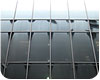
The building envelope’s main function is to act as a filter between the exterior environment and the building indoors, but as technologies have evolved and the urgent need to reduce buildings emissions and overall energy consumption has grown, the role of the envelope has now become more complex. It has to guarantee that the necessary interior climate conditions can be maintained during the whole year with low energy requirements within a very limited space. The high-performance building envelope which is a state-of-the-art design, looks not only at the façade elements but at the blend of all the façade materials and behavior, energy and services performance, cost-efficient solutions, and environmental benefits delivered by this one product.
The importance of the building envelope in the life-cycle performance of an edifice is outlined and recognized today in most of the projects aiming for a high-performance construction or green building certification, such as LEED.
Leadership in Energy and Environmental Design recognizes (with all its credits) different aspects of the green building design, construction, operation and maintenance; but two questions always arise: which credits do we aim for? And, how can we maximize the budget while still achieving a high performance building?
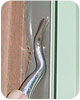
Material incompatibility: Adhesion to substrate
(EIFS).
In a recent study performed for a Masters degree in Façade Engineering for the University of Bath in the United Kingdom, “LEED Through the Eyes of the Building Envelope, a Worldwide Application” it was found that if the LEED certification is targeted at achieving credits specifically through the envelope, projects could earn up to 51 points, which means LEED Silver.
On this study, each one of the credits identified as related to the enclosure, are presented; analyzed; and some alternatives and design considerations are given in order to achieve the credits through the envelope.
If designed appropriately, the building skin can deliver an indoor environmental quality that meets standards and contributes to the reduction of the energy demands required for the users’ comfort.
The main concerns that high-performance envelopes must address are: insulation, conduction, solar radiation control, infiltration (air tightness), openings, and daylight. Energy performance will be determined depending on how these issues are approached, but keep in mind; no two building enclosures are exactly equal.
Each one of these issues requires special attention and unique solutions since the environmental conditions change from location to location and even from a city to a suburb only 10 miles away from each other, known as micro-climates.
Insulation must address (and is tied to) overheating, ventilation, and thermal conductivity among others. Insulation can be fashioned on different ways and with different materials and combinations. Depending on the type of building envelope selected, the available options to achieve the desired level of insulation, and in today’s market there is a wide variety of alternatives for each system.
In the wall and ceiling industry for example, EIFS provides a lightweight and economical alternative when it is compared to other types of cladding; but to fulfill its goal and contribute on the energy demand reduction, the substrate needs to be as good as the wall cladding in order to get higher performance walls. In addition, material compatibility must be verified since not all the jointing materials adhere to these types of systems.
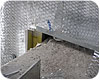
Potential infiltration problem at this wall to
floor transition.
Conduction depends on the exposed surfaces and the temperature difference that, if left overlooked, might lead to heat losses associated with additional energy demands and thermal bridges that can produce surface condensation and interstitial condensation, which could lead to finishes deterioration, mold growth, and premature aging of building elements.
Solar radiation needs to be controlled and managed in order to avoid overheating and obtain a desirable environment for the occupants. Solar radiation can enter a building through the glazing via conduction, convection, and radiation (long wave), and with today’s technology, there are more than a thousand options available with glazing. The possibilities go from environmental control glasses, coatings, films and tints to complex arrangements within insulated units or even with shading devices. Solar control can also by managed with thermal mass, which adds a delay in the heat delivered to the interior of the building.
Infiltration has become more and more strict nowadays since it accounts for 30 to 50 percent of the heat lost or gained in structures that are not completely airtight. In cladding systems infiltration can sometimes be addressed with simple solutions such as: workmanship and proper construction management and techniques. Cladding transitions, wall to ceiling and wall to floor joints, are some basic examples of where infiltration can occur.
Openings and window area proportion depend on the façade orientation, which will determine the most viable option to address all the above mentioned issues. For example and for northern climates, a north facing façade might not require the shading devices that a south facing façade would, but solar radiation must be carefully considered.
RINGS AROUND THE WORLD
High-performance buildings are being constructed all around the globe and registered under many different green rating tools such as: Green Star, Green Globes, CASBEE, BREEAM, and LEED among others. But the question remains: Can any of these tools be applied on every project in every part of the globe? The answer is not easy.
LEED, along with the other systems, addresses many aspects of the green building design and was created to aim for the same final objective. But, the process in which this goal is achieved varies on every rating tool. It is important to remember that regardless of the system used, green building construction must address local needs and regional concerns. Despite of this, there are many LEED projects on international lands in which certain important issues have been disregarded just to comply with the system.
Projects built in hot climates or in extreme weather conditions, might not have the luxury to provide daylight and views as stated on the LEED credits, since it would represent large glazed areas to comply with the requirements. Besides, this does not favor reflective glass even when this might represent the best solution in hot climates.
Rating tools need to be tailored for each region and local reality in order to maximize the benefits of the green building design, neglecting this fact will only handicap projects on the high-performance delivery.
Conceiving a high-performance or a certified green building is not an easy task, and there are multiple approaches and viable options out in the market. But if evaluated Through the Eyes of the Building Envelope, we can resolve at once most of the concerns with the one element that gives a project its character and aesthetic appeal. W&C
Looking for a reprint of this article?
From high-res PDFs to custom plaques, order your copy today!