Mind the Gap
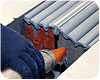
Building codes are increasingly emphasizing requirements for fire protection and compartmentation within new structures as well as in renovation construction. Stopping the spread of smoke and fire is a critical element of today’s architectural and structural design. Wall and floor assemblies that were traditionally engineered to maintain thermal conditions, suppress the transmission of sound and seal out the intrusion of water and wind are now required to be fire-rated to contain the spread of fire.
Expansion joint openings present a design challenge because they are literally a gap in the fire-rated wall or floor. The goal of compartmentation is to contain a fire in the area of its source on a particular story or even within a room. Compartmentation cannot be achieved when a fire is able to escape and spread through any gap-the expansion joint opening being the most prominent. However, when this gap is filled with a proper fire barrier, the fire-rated properties of the adjacent walls or floor assemblies can be restored.
The challenge construction crews face is how to achieve a lasting, continuous fire barrier and still handle thermal, structural, sway and potential seismic movements expected at the expansion joint while also ensuring the expansion joint is not a gap in the acoustic, aesthetic, thermal or moisture protection performance of its adjacent wall and floor assemblies.
Single Unit Fire-Rated Expansion Joints
Traditional methods of joint treatment include the attachment of fire blankets (or mineral wool and sealant) into the joint gap in addition to separate expansion joint covers on one or both wall faces and a cover and moisture barrier in floor joints. This multiple-product approach entails the combined costs of as many as four components in addition to the significant expense of money and time needed to install these separate products.This outdated paradigm has been broken with the introduction of single-product expansion joint sealants with built-in fire ratings. In a single installation of a product, the fire protection is achieved while simultaneously handling movement, sound suppression, exposure to elements and thermal insulation. This single-unit fire-rated product approach simplifies design and trade coordination while providing easier and more cost-effective installation.
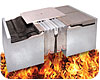
Preformed, pre-compressed, UL-certified fire-rated expansion joints like the EMSHIELD family of products from EMSEAL meet these demands. The key to their ability as fire barriers is the base assembly of a fire-retardant-impregnated foam and intumescent coating. Designed for installation in gypsum or concrete walls, concrete floors and decks (both solid and split-slab), these single-unit systems specifically address the need to maintain the life-safety integrity of fire-rated walls and floors. They are manufactured to maintain the normal expectations of expansion joint assemblies while also acting as a fire barrier to contain the spread of smoke and fire travelling between compartments (rooms or stories) or through exterior walls where fire can wrap back into a building at the floor above or spread to higher-elevation adjacent additions or structures.
The Importance of UL and ULC Certification
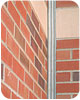
It is in the owner’s, designer’s and installer’s interest for life and safety-not to mention liability-to demand, specify and install fire rated expansion joint assemblies that not only meet UL standards but are also tested by UL (U.S.) and/or ULC (Canada) and certified by UL to have passed these standards.Why demand materials tested at UL and not just a lab capable of testing to the UL standards? When a manufacturer commits to having their products tested in a UL lab and then certified under UL’s Follow-Up service, the manufacturer opens its doors to UL before, during and after manufacture of the specific material submitted for testing. This means that at any time in the future, UL can make unannounced visits to the manufacturer to inspect production of UL listed products. Other labs can run tests to UL standards, but there is no inspection of the build of the sample submitted for testing nor is there any follow up inspection to ensure that what is being shipped to your project meets the same build requirement as the part that was tested. Manufacturers can substitute components or build off-shore production and reduce the bulk of the build to lower costs and the owner, designer and installer would have no way to know
How do you know a product is UL listed and manufactured under the UL Follow-Up Service? Only products that are tested in a UL lab can carry the UL and/or ULC symbol. Only products that carry the symbol(s) and are listed in UL’s online certification directory can be trusted to be manufactured under the UL Follow-Up service.
How does UL verify that a manufacturer is still producing a product in accordance with the requirements after UL Listing is obtained?
UL has a Follow-Up Service program designed to check and verify that the manufacturer continues to produce products in compliance with the requirements of UL. UL’s field representatives make periodic tests and/or examinations at the factory and may, from time to time, select samples from the factory, the open market or elsewhere for further determination of compliance. In addition, if a problem with a UL listed or classified product is reported to UL, UL typically opens up a field investigation.
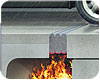
The UL 2079 testing process begins with a two-part cycling test. 400 cycles at 10 cycles per minute simulates thermal and wind-sway cycling. This is followed with an additional rapid 100 cycles at 30 cycles per minute to simulate seismic movement. Any failure of these tests will expose the inability to maintain an adequate build necessary to keep an expansion gap closed and therefore work effectively in stopping fire. Within 96 hours of the cycling test, the product then undergoes a rigorous fire test. A two-hour fire rating involves subjecting the same installed and cycled product to temperatures approaching 1,650 degrees Fahrenheit (899 degrees Celsius) in about 30 minutes. The internal temperature of the test oven gradually reaches its maximum of 1,850 degrees Fahrenheit (1,010 degrees Celsius). To pass this test, no thermocouple attached to the surface of the non-fire side can reach 248 degrees Fahrenheit (120 degrees Celsius).
Final UL/ULC 2079 certification for fire-rated expansion joints, with its rigid test and ongoing monitoring of product manufacturing and standards, is the absolute gold standard for fire safety. Any fire-rated expansion joint considered for specification should be UL 2079 tested and certified before it is accepted for use in life safety situations.
Non-Invasive Installation
The way a fire-rated expansion joint system is installed has everything to do with the system’s ability to block the spread of fire. Traditionally, separate fire barrier materials or fire blankets have been installed from below or behind the expansion joint. This method often hinders successful placement of the fire barrier due to limited access and structural obstructions. By incorporating the fire barrier into the construction of the single-unit expansion joint, the seamless fire barrier is in place when the expansion joint is installed and no secondary installation is required. Because it is installed from above, the installation avoids many of the obstructions typically found beneath a floor or wall. Installation and continuity of the fire barrier is therefore not compromised by restraints created by HVAC, electrical, plumbing or mechanical equipment. Additionally, the installation in floor joints is accomplished entirely from above the deck or floor, eliminating any need for utility lifts.Previous methods of installing or anchoring can cause the substrate to be marred or damaged and therefore the integrity of the seal and the ability to properly block flames can be compromised. Traditional expansion joints, whether mechanical or plated systems, are usually anchored in place through intrusion into the substrate by screws or drilling-both of which damage the surfaces and can damage the overall seal. pre-compressed impregnated expansion joints offer a simpler solution-they are held in place by the stored strain energy of compression (back pressure) of the foam and an epoxy adhesive applied to the substrates. In addition to easier installation, this non-invasive anchoring eliminates damage to the joint surfaces or the adjacent wall or floor while also eliminating any thermal breaks in the form of metal screws, anchors or other fasteners. It also allows the expansion joint to form and shape itself around minor substrate irregularities. This method further permits the joints to be installed in inside corners and at changes in plane and direction that are impossible to access with screws.
Continuity of Seal and Fire Protection
In any fire-rated system, the joining of the vertical and horizontal joints and fire-barriers presents a potential break in the system. Such a break can allow flame to spread at that junction. Preformed, pre-compressed impregnated foam fire-rated expansion joints can eliminate this break because they are designed to operate as a single system continuing through any change in the horizontal to vertical plane. This continuity of seal is what makes it different from other fire barriers which typically terminate at the end of a run. There are two methods that allow fire-rated preformed sealants to maintain their seal. One is the availability from one manufacturer of factory-fabricated single unit 90-degree turns which are a single undivided piece with the upward/downward turn. These are manufactured without a break in the turn of the expansion joint. The other option is to join the horizontal and vertical sticks in the field with a fire-retardant intumescent caulk which seals the join from any gaps or openings. Both the watertight seal and the established fire barrier are maintained using either of these innovative methods.Expansion Joint Performance and Features
There are many advantages to choosing a fire-rated pre-compressed, impregnated expansion joint over multi-product alternatives. Expansion joints are structurally necessary because they are designed to handle the movement of walls or floors. A proper fire-rated expansion joint will also be waterproof thereby sealing out water and weather. When the product includes published independent laboratory certification for ASTM E-330, E-331 and E-283, they can be expected to exhibit no water leakage at pressures equal to winds above hurricane force as well as no deflection at positive or negative pressures of up to 4,950 Pascals (equal to 200 miles-per-hour wind loads). The expansion joint will also contribute significantly to a wall’s sound attenuation as displayed in published STC and OITC ratings.
Floors and Ceilings
Horizontal expansion joints often have additional performance requirements due to the increased joint gap size needed to accommodate larger structural design or seismic movement, split slab construction requiring the incorporation of waterproofing membranes and/or the ability to handle heavy pedestrian and vehicular traffic. In all of these applications, single-system fire-rated expansion joints are available that combine pre-compressed, fire-rated watertight expansion joints with the additional factory-assembled components necessary to meet the requirements of floors and decks. These expansion joints can be manufactured in greater widths (up to 10-inches in seismic applications), assembled as necessary with integrated sidesheets to tie into waterproofing membrane systems of split-slab deck design and/or available with trafficable cover plates.Sealant Finishes
There are many sealant finish options of fire-rated pre-compressed, impregnated expansion joints. Many products are available to accommodate applicable environmental needs. There is often a wide range of colors available to blend the expansion joint to the surrounding environment. There are also sealant finishes which are pick-resistant, making them an ideal choice for prisons, hospitals, detention centers, schools or anywhere where vandalism or tampering are a concern. For floor and deck applications, certain trafficable finishes which are resistant to vehicular chemicals such as oils and gasoline are also available.Summary
A fire barrier installed in an expansion gap should have the ability to be that gap’s expansion joint filler in all other respects. In creating this multi-purpose system, there is no longer a need to build a system composed of numerous separate products with each performing a single purpose. Single-unit, fire-rated expansion joints for interior and exterior walls are now the best option for a fire-rated expansion joint product. Strong, certified performance as a fire barrier as well as other performance features, make the modern, fire-rated, pre-compressed, impregnated expansion joints the best choice in life safety applications.Looking for a reprint of this article?
From high-res PDFs to custom plaques, order your copy today!