Straight Green: Adventures in Waterless Urinals
I first learned about
waterless urinals around eight years ago and was immediately intrigued, and
soon became an enthusiastic user. That’s about the time I began working for
arguably one of the greenest architecture firms in the Northwest. In addition
to my duties as specifier for the firm, I also was allowed to spread my green
building wings, one of the major reasons I decided to work for the firm.
I first learned about waterless urinals around eight years ago and was immediately intrigued, and soon became an enthusiastic user. That’s about the time I began working for arguably one of the greenest architecture firms in the Northwest. In addition to my duties as specifier for the firm, I also was allowed to spread my green building wings, one of the major reasons I decided to work for the firm. Among the many green initiatives I started, the one that was the most fun and educational was using the facility as a sort of sustainable building laboratory. Plumbing fixtures were at the top of the list. Although the building was renovated to be as green as possible, the plumbing fixtures were completely overlooked, and it provided me an opportunity to test emerging ultra low flow fixtures with the blessings of the bosses. I had special ultra low flow pressure assist toilets, ultra low flow aerators, sensor faucets with tiny generators that recharged the batteries, super ultra low flow showers-wall mounted and hand held, and the ultimate in water conservation (for plumbing fixtures)― waterless urinals.
 The
faucets, toilet, and showerheads were easy to convince the bosses about, but
the waterless urinals required a little more effort. I conducted extensive
research on available fixtures, reading all the literature I could find and
interviewing the manufacturer’s representatives. I tallied the cost for the
fixtures, the anticipated required maintenance, and installation. I persuaded
the local Public Utilities District to provide the firm a rebate in the amount
of $150 per fixture installed. Finally, I calculated that all the money spent
for the fixtures, maintenance, and installation (less the PUD rebate) would be
recuperated in three short years due to money saved in not using any water for
the urinals.
The
faucets, toilet, and showerheads were easy to convince the bosses about, but
the waterless urinals required a little more effort. I conducted extensive
research on available fixtures, reading all the literature I could find and
interviewing the manufacturer’s representatives. I tallied the cost for the
fixtures, the anticipated required maintenance, and installation. I persuaded
the local Public Utilities District to provide the firm a rebate in the amount
of $150 per fixture installed. Finally, I calculated that all the money spent
for the fixtures, maintenance, and installation (less the PUD rebate) would be
recuperated in three short years due to money saved in not using any water for
the urinals.
The installation was simple and uneventful, out with the old, stubbed the supply lines, in with the new and Voila! We decided to save the old, 1.0 gallon per flush (g/f) urinals and flush valves just in case, something that proved to be a very wise decision in the end. For the first three months of use, the reaction was universally positive. The fixtures worked flawlessly, as advertised, and we were thrilled. Clients that came to the firm were impressed, and we even got a nice write up about our shiny new fixtures in the local Daily Journal of Commerce.
Waterless Troubles
It was about month four that things started going south. Just a small issue at first, having to do with the top secret blue stuff that creates a seal between the urine that goes into the fixture and the occupied space. It’s heavier than urine and water, so it floats above within the trap. We were told by the manufacturer that the blue stuff would need to be added by mere capfuls, just a few times every six months. We began to have to add more and more of the expensive, proprietary blue liquid into each of the two urinals installed. But, a quick recalculation showed that the payback period would be only slightly longer with the increased addition of the fluid.
Just before six months of use, we experienced another unexpected issue-the cartridges. The model of waterless urinal we installed uses cartridges to contain the blue liquid seal and need to be replaced at regular intervals, after thousands of uses in accordance with the manufacturer’s literature. We made it maybe to half of the predicted life before having to replace the cartridges. And, like the blue liquid, the cartridges are proprietary and expensive. Revising the calculation pushed the payback period closer to five to seven years but that was still completely acceptable. After all, the urinals were working well, and we were not using any water to flush-a very big deal psychologically. The firm was emotionally committed to waterless urinals after just six months of use. Even the doubting Thomas’s were won over.
Just after six months of use a crisis erupted, and all hell broke loose. In the middle of a typical work day, I was urgently called to the men’s room to deal with some sort of emergency. When I got there, one of the urinals had stopped working, a layer of blue liquid seal floated lazily over a large pool of urine that had nowhere to go, the cartridge was completely clogged. But the cartridge had just been replaced! It wasn’t long before the second urinal stopped working as well. Even with the new cartridges and blue liquid seal, both urinals remained clogged; nothing would pass, nothing would drain. It was the pipes! I was on the telephone with the manufacturer immediately. I was told that this was a first, the manufacturer was as baffled as we were. The owner of the company finally came up with what he thought might be a solution, a special product that he had seen at a local county fair, designed to unclog even the most stubborn of drains; just a capful, environmentally friendly and inexpensive. He sent us a bottle of this magical stuff overnight. I ripped the box open and removed the white plastic bottle. Printed on the front was something like “Clog-B-Gone” in big, bold text. Just beneath that text there was a warning about the use of the product. The back of the bottle went into more detail, and listed the main ingredient-hydrochloric acid. It was immediately obvious to me that this was not a long-term solution to our problem, even if it did work (I tried it, after hours, one capful after another-except for foaming and hissing, it did nothing to unclog the drain).
I learned a lot about waterless urinals, and urine in general, as the weeks and months passed. The solids that drop out of urine after passing through the body, without water to move it through the cartridge, the trap, and down the waste line, stick around. They cling to every surface, every nook and cranny. The cartridges clog. The trap clogs. The drain lines clog. The accumulation was so much after six months that even the main waste line clogged after snaking and flushing with gallons of water (there goes the calculated water savings!). We snaked and flushed and cursed for another six months. The problem only worsened. And the odor. Once the urinals began to back up, a horrible stench took up residence in the restroom, growing more intense each week.
The Waterless Solution- Just Add Water!
Saving the original urinals proved to be a wise decision. They were dusted off and reinstalled in place of the waterless versions with a new ultra low flush valve that allowed the per-flush rate to be dialed in from anything between 1.0 to 0.3 g/f. At 0.5 g/f and years later, the ultra low water consuming urinals are working perfectly, no clogs, odor or problems whatsoever.
None of the problems we experienced is any mystery to waterless urinal manufacturers. These fixtures have a long history, first developed back in the 1800s. Improvements have been made in the design of the fixtures and the durability of the liquid seal material, but the technology is essentially unchanged. They worked about as well then as they do today.
Other's Troubles
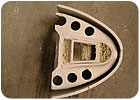
Not too long ago, the University of Washington bought into waterless urinals and purchased 100 for installation around the campus. They managed to install 40 fixtures before they realized the mistake they had made in doing so. All 40 were removed and replaced with flush type fixtures; the 60 that were not installed ended up for sale. In an effort to more fully understand why the urinals failed, one of them was removed and vivisected. You can see in the photo that the accumulation of solids is extensive, and is what caused the failure of the installed units. There is no way to effectively clean and remove the deposits from this type of waterless fixture. Once they have been clogged to this degree, the only recourse is replacement.
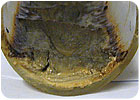
A 2004 German study, “Application of Dry Urinals” by Mete Demiriz of the Gelsenkirchen University of Applied Sciences, gets to the bottom of the problems associated with waterless urinals. Six waterless urinals made by three manufacturers were installed in a university cafeteria restroom plumbed with glass waste lines that were left exposed in a chase space for observation. In just nine months of use a 7 millimeters thick, and 42 millimeters wide layer of solids was deposited at the bottom of the horizontal waste line.
The study reports that the solids continued to build and “The higher this layer, the wider the adjacent flowbed became, causing slower urine flow, which in turn led to additional build-up.” So, the more the urinals are used, the faster the accumulation of solids, eventually leading to clogged urinals and clogged drainlines. The study concludes that “…urine deposits and forming of crusts in drainage pipes of dry urinals is still the case. It is not possible to remove these by application of high water volumes through the urinal itself.” And the odor: “A very intense odor develops in the drainlines leading away from the dry urinals.”
Conclusion
Green building rating systems provide points for using water conserving fixtures. Waterless fixtures count toward this point, but there are now so many ultra low flow fixtures available that waterless fixtures no longer offer the great benefit toward achieving the available points they once did. While it may be true that some facilities have enjoyed great success with waterless urinals, I cannot in good conscience recommend them to clients as a trouble-free solution to water conservation. Instead, I recommend that they consider ultra low flow urinals (which are available from one-eighth to half a gallon per flush), ultra low flow aerators on faucets, dual flush valve water closets, and ultra low flow shower heads. Installing these fixtures routinely result in more than 40 percent water savings over standard fixtures- without having to go to waterless urinals and risk inheriting the problems associated with them. W&C
If you read this article, please circle number 385.
Accumulated
solids from urine have permanently clogged this
waterless urinal.
I first learned about waterless urinals around eight years ago and was immediately intrigued, and soon became an enthusiastic user. That’s about the time I began working for arguably one of the greenest architecture firms in the Northwest. In addition to my duties as specifier for the firm, I also was allowed to spread my green building wings, one of the major reasons I decided to work for the firm. Among the many green initiatives I started, the one that was the most fun and educational was using the facility as a sort of sustainable building laboratory. Plumbing fixtures were at the top of the list. Although the building was renovated to be as green as possible, the plumbing fixtures were completely overlooked, and it provided me an opportunity to test emerging ultra low flow fixtures with the blessings of the bosses. I had special ultra low flow pressure assist toilets, ultra low flow aerators, sensor faucets with tiny generators that recharged the batteries, super ultra low flow showers-wall mounted and hand held, and the ultimate in water conservation (for plumbing fixtures)― waterless urinals.
Build-up
in the collecting drainline after nine month’s use.
The installation was simple and uneventful, out with the old, stubbed the supply lines, in with the new and Voila! We decided to save the old, 1.0 gallon per flush (g/f) urinals and flush valves just in case, something that proved to be a very wise decision in the end. For the first three months of use, the reaction was universally positive. The fixtures worked flawlessly, as advertised, and we were thrilled. Clients that came to the firm were impressed, and we even got a nice write up about our shiny new fixtures in the local Daily Journal of Commerce.
Waterless Troubles
It was about month four that things started going south. Just a small issue at first, having to do with the top secret blue stuff that creates a seal between the urine that goes into the fixture and the occupied space. It’s heavier than urine and water, so it floats above within the trap. We were told by the manufacturer that the blue stuff would need to be added by mere capfuls, just a few times every six months. We began to have to add more and more of the expensive, proprietary blue liquid into each of the two urinals installed. But, a quick recalculation showed that the payback period would be only slightly longer with the increased addition of the fluid.
Just before six months of use, we experienced another unexpected issue-the cartridges. The model of waterless urinal we installed uses cartridges to contain the blue liquid seal and need to be replaced at regular intervals, after thousands of uses in accordance with the manufacturer’s literature. We made it maybe to half of the predicted life before having to replace the cartridges. And, like the blue liquid, the cartridges are proprietary and expensive. Revising the calculation pushed the payback period closer to five to seven years but that was still completely acceptable. After all, the urinals were working well, and we were not using any water to flush-a very big deal psychologically. The firm was emotionally committed to waterless urinals after just six months of use. Even the doubting Thomas’s were won over.
Just after six months of use a crisis erupted, and all hell broke loose. In the middle of a typical work day, I was urgently called to the men’s room to deal with some sort of emergency. When I got there, one of the urinals had stopped working, a layer of blue liquid seal floated lazily over a large pool of urine that had nowhere to go, the cartridge was completely clogged. But the cartridge had just been replaced! It wasn’t long before the second urinal stopped working as well. Even with the new cartridges and blue liquid seal, both urinals remained clogged; nothing would pass, nothing would drain. It was the pipes! I was on the telephone with the manufacturer immediately. I was told that this was a first, the manufacturer was as baffled as we were. The owner of the company finally came up with what he thought might be a solution, a special product that he had seen at a local county fair, designed to unclog even the most stubborn of drains; just a capful, environmentally friendly and inexpensive. He sent us a bottle of this magical stuff overnight. I ripped the box open and removed the white plastic bottle. Printed on the front was something like “Clog-B-Gone” in big, bold text. Just beneath that text there was a warning about the use of the product. The back of the bottle went into more detail, and listed the main ingredient-hydrochloric acid. It was immediately obvious to me that this was not a long-term solution to our problem, even if it did work (I tried it, after hours, one capful after another-except for foaming and hissing, it did nothing to unclog the drain).
I learned a lot about waterless urinals, and urine in general, as the weeks and months passed. The solids that drop out of urine after passing through the body, without water to move it through the cartridge, the trap, and down the waste line, stick around. They cling to every surface, every nook and cranny. The cartridges clog. The trap clogs. The drain lines clog. The accumulation was so much after six months that even the main waste line clogged after snaking and flushing with gallons of water (there goes the calculated water savings!). We snaked and flushed and cursed for another six months. The problem only worsened. And the odor. Once the urinals began to back up, a horrible stench took up residence in the restroom, growing more intense each week.
The Waterless Solution- Just Add Water!
Saving the original urinals proved to be a wise decision. They were dusted off and reinstalled in place of the waterless versions with a new ultra low flush valve that allowed the per-flush rate to be dialed in from anything between 1.0 to 0.3 g/f. At 0.5 g/f and years later, the ultra low water consuming urinals are working perfectly, no clogs, odor or problems whatsoever.
None of the problems we experienced is any mystery to waterless urinal manufacturers. These fixtures have a long history, first developed back in the 1800s. Improvements have been made in the design of the fixtures and the durability of the liquid seal material, but the technology is essentially unchanged. They worked about as well then as they do today.
Other's Troubles
Not too long ago, the University of Washington bought into waterless urinals and purchased 100 for installation around the campus. They managed to install 40 fixtures before they realized the mistake they had made in doing so. All 40 were removed and replaced with flush type fixtures; the 60 that were not installed ended up for sale. In an effort to more fully understand why the urinals failed, one of them was removed and vivisected. You can see in the photo that the accumulation of solids is extensive, and is what caused the failure of the installed units. There is no way to effectively clean and remove the deposits from this type of waterless fixture. Once they have been clogged to this degree, the only recourse is replacement.
A 2004 German study, “Application of Dry Urinals” by Mete Demiriz of the Gelsenkirchen University of Applied Sciences, gets to the bottom of the problems associated with waterless urinals. Six waterless urinals made by three manufacturers were installed in a university cafeteria restroom plumbed with glass waste lines that were left exposed in a chase space for observation. In just nine months of use a 7 millimeters thick, and 42 millimeters wide layer of solids was deposited at the bottom of the horizontal waste line.
The study reports that the solids continued to build and “The higher this layer, the wider the adjacent flowbed became, causing slower urine flow, which in turn led to additional build-up.” So, the more the urinals are used, the faster the accumulation of solids, eventually leading to clogged urinals and clogged drainlines. The study concludes that “…urine deposits and forming of crusts in drainage pipes of dry urinals is still the case. It is not possible to remove these by application of high water volumes through the urinal itself.” And the odor: “A very intense odor develops in the drainlines leading away from the dry urinals.”
Conclusion
Green building rating systems provide points for using water conserving fixtures. Waterless fixtures count toward this point, but there are now so many ultra low flow fixtures available that waterless fixtures no longer offer the great benefit toward achieving the available points they once did. While it may be true that some facilities have enjoyed great success with waterless urinals, I cannot in good conscience recommend them to clients as a trouble-free solution to water conservation. Instead, I recommend that they consider ultra low flow urinals (which are available from one-eighth to half a gallon per flush), ultra low flow aerators on faucets, dual flush valve water closets, and ultra low flow shower heads. Installing these fixtures routinely result in more than 40 percent water savings over standard fixtures- without having to go to waterless urinals and risk inheriting the problems associated with them. W&C
If you read this article, please circle number 385.
Looking for a reprint of this article?
From high-res PDFs to custom plaques, order your copy today!





