How Ford Drywall & Stucco Reduces Risk with Dusty
See how Ford Drywall uses Dusty to reduce rework, improve quality and streamline layout.
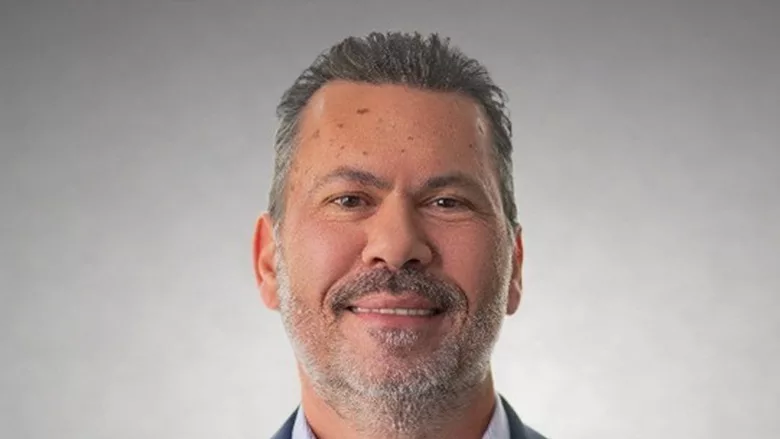
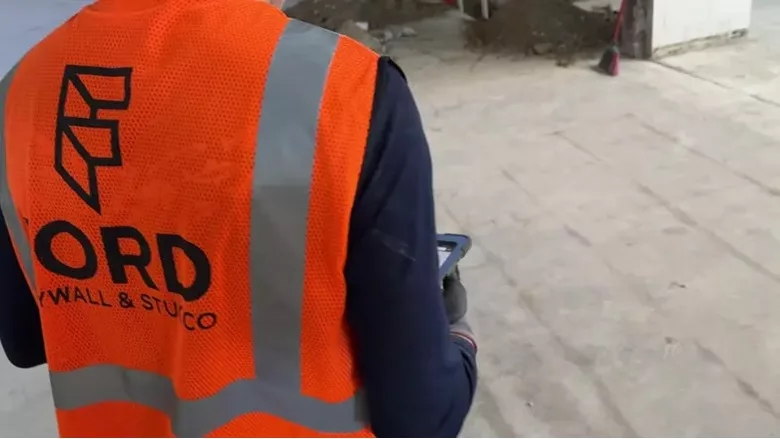
You'd be hard-pressed to find a construction business owner with a clearer vision for how technology should improve operations than John Ford.
"For us at Ford Drywall, it's not just lines on the slab. Dusty ties into an operational process that drives quality. It's preventative. Quality assurance means we mapped it out, measured twice, cut once, and got it right. We prevented problems before they happened."
A Team Built Around Quality
Ford Drywall & Stucco is one of Florida's most respected framing and drywall contractors—a nine-time Walls & Ceilings Top 50 Contractor serving healthcare, higher education, commercial, and luxury residential clients throughout the state.
"We have about 250 people working for us, and we consistently do $30 to $40 million in revenue each year. From Tampa to Marco Island on Florida's west coast, we follow our key clients—especially our healthcare customers—across the state."
Ford is quick to credit his people for the company's success.
"Our people are our family. They're our village."
Supporting that team requires workflows that perform consistently across a wide range of project types.
"We do healthcare, museums, residential homes that look like museums, and production work. We're in all these different lanes, but they all require layout."
Ford's focus is on reducing risk—not just on individual jobs, but across the business.
"In this industry, we're in the habit of pointing fingers—at a trade, at the designers. Everybody gets a chance to be the bad guy. But construction risk doesn't really come from any one person. It's the industry failing as an industry. If we don't get information from the model to the field, we're wasting the preconstruction investment. Dusty absolutely solves that."
When Ford adopted Dusty, it wasn't for a single project. It became part of a company-wide strategy to create a repeatable workflow that improves accuracy, reduces risk, and delivers greater value to clients.
"Dusty doesn't replace the hard-won discipline we've built over time, but it helps us execute those standards more consistently. It makes our successes repeatable."
Turning Layout into a Competitive Advantage
Ford sees Dusty as much more than a layout tool. It's also a communication platform that helps every project stakeholder work from the same information.
"We can accurately print anything we want, in any language we want. What we get is consistent layouts, verified compliance, and reduced rework."
That visibility has become a differentiator during project pursuits.
"Dusty gives us a wow factor: 'Look at what Ford's doing.' But there's a reason for that—we're helping owners save money.
"It's tangible. Everyone can see it. The owner walks through, spots an issue, and says, 'Wait, what's that?' Now we've identified a change before framing begins, and that's a good thing. Everyone benefits from that visibility—not just us, but every trade. Dusty helps us collaborate, stay transparent, and solve problems before they become expensive."
Putting Framers at the Center of VDC
Ford believes layout is where the value of a coordinated model is finally realized. That's why he believes framers should lead Multi-Trade Layout.
"It's obvious that one party should be responsible for all the layout on a project. That's not about ownership—it's about transferring information from Revit to the slab."
He also believes framers should play a much larger role in the VDC process.
"From my perspective, it's been unhealthy for VDC that the mechanical trades have controlled the process. I'm not anti-mechanical, but framers have been absent. We've let other trades tell us where the holes go for two decades. Dusty gives framers the opportunity to bring our expertise back into that conversation."
One challenge was the lack of an internal VDC team.
Rather than spending years building one, Ford partnered with New Vision, a Dusty VDC Partner, to scale immediately.
"Dusty introduced us to New Vision. We asked ourselves, 'How can we help each other?' Together, we can manage preconstruction coordination and drive the process from design through printable layout."
Ford believes the framer naturally belongs in that leadership position."Framing drives all of the MEP rough-in that follows. We're the critical path. Every trade installs its work inside or on top of ours."
Investing in Better Projects—and Better People
Ford is careful to point out that the biggest return isn't reducing layout labor.
"Dusty helps our field teams execute complex layouts more consistently, allowing supervisors to focus on coordination and verification. The result is less rework, fewer back charges, and faster installation."
The investment extends beyond technology.
"Dusty costs money. Our partnership with New Vision costs money. As a business owner, I need a reason for that investment. So I look back at older projects—the change orders, the rework, the schedules that slipped because of poor coordination. Then I compare that with what we're doing now. It's a no-brainer. Our projects will be better across the board, and that's worth the investment."
Ford also sees Dusty as an investment in the next generation of construction professionals.
"Dusty doesn't replace my layout foremen. It's their tool, and it makes them even better."
Ford Drywall's apprenticeship program has become another beneficiary.
"Dusty helps me sell construction careers to young people. It's hard to convince a high school student that construction is exciting when all they see is hot, dirty work. Dusty changes that conversation."
The technology also changes how employees see themselves.
"It's cool technology, but more importantly, it elevates the importance of their work. They realize they're not just laborers. They're creating the blueprint on the slab that becomes an incredible building."
"I'm All In"
Ford has no hesitation about the future.
"I'm all in. I'm invested, and I'll wholeheartedly renew with Dusty."
Looking ahead, he sees opportunities to expand beyond layout.
"I'd like to make operational information—labor planning, project controls, and other jobsite data—printable. The easier we make it for superintendents and project managers, the smoother projects become."
He also believes owners will eventually begin requiring Dusty on projects.
"I don't want to have to pitch it forever. Eventually, owners will simply say, 'We want Dusty'."
Until then, Ford is focused on demonstrating value one project at a time.
"We're confident in what we're building. We tell owners, 'On the next project, get us the plans three months earlier. Let us work with our VDC partner, review everything thoroughly, and really dial it in'."
Looking for a reprint of this article?
From high-res PDFs to custom plaques, order your copy today!