Walls & Ceilings logo
search
cart
facebook twitter linkedin youtube youtube Spotify Podcasts Apple Podcasts Spotify Podcasts Apple Podcasts
  • Sign In
  • Create Account
  • Sign Out
  • My Account
Walls & Ceilings logo
  • NEWS
  • TOPICS
    • Drywall
    • Stucco/EIFS
    • Ceilings
    • Steel Framing
    • Fireproofing
    • Interior Plaster
    • Building Envelope
    • Insulation
    • Technology
    • Interior
    • Exterior
    • Women In Construction
  • COLUMNS
    • Up Front
    • All Things Gypsum
    • Art & Craft of Plastering
    • Stucco Stop
    • Steel Deal
    • Industry Voices
  • PRODUCTS
    • Buzz Guide
  • EVENTS
    • Industry Events
    • Webinars
    • BUILD Expo
  • MEDIA
    • Videos
    • Podcasts
    • Photo Galleries
    • BUILD26 Videos
    • Take our Quiz!
    • Infographics
  • EXCLUSIVE
    • Newsletters
    • Top 50 Contractors
    • Contractor of the Year
    • State of the Industry
    • W&C Store
    • Market Research
    • CEUs
    • Sponsor Insights
    • Custom Content & Marketing Services
  • DIRECTORY
  • EMAGAZINE
    • eMagazine
    • Advertise
    • Archive Issues
  • SIGN UP!
Building Envelope

From Energy Efficiency to Moisture Management: Why Air and Vapor Control Matter

How proper air and vapor control within building enclosures is essential for energy efficiency, moisture management, and long-term durability, emphasizing the need for continuous, well-integrated control layers and coordinated installation to prevent damage, inefficiency, and health issues.

By Benjamin Meyer AIA, LEED AP
proper air and vapor control
Images courtesy of Siplast
January 7, 2026

One of the building envelope's most critical functions is managing the movement of air and moisture, which often occurs unseen behind the surface layers of a structure. Improper air and vapor control can lead to energy inefficiency, moisture damage, and compromised occupant health—issues that account for the majority of construction claims. For professionals in design and construction, understanding the materials, concepts, and practices behind effective air and vapor control is essential to ensure long-term building performance and resilience. 

The Role of Building Enclosures

The building enclosure serves as a three-dimensional boundary between interior conditioned spaces and the external environment, including the roof, foundation, walls (both above and below grade), and openings like windows and doors. Within this system, three primary components are integral: 

  1. Structural Supports: Structural elements, such as columns, trusses, joists, load-bearing walls, and foundations, that resist and/or transfer loads and resist external forces 
  2. Control Layers: Controls the movement of water, air, vapor, and heat into and out of the building. Examples include roof and waterproofing membranes, flashings, air barriers, vapor retarders, and thermal insulation. 
  3. Finishes: Installed on the interior and exterior of buildings, provides the aesthetic character of a structure or interior and often acts as the first line of defense against exterior water intrusion. 

At the heart of the building enclosure is the coordination of control layers, which must work seamlessly across all six sides of the structure—roof, walls, foundation, and floor. Achieving continuity of these layers is particularly challenging at transitions, such as where the wall meets the roof or at corners and penetrations. 
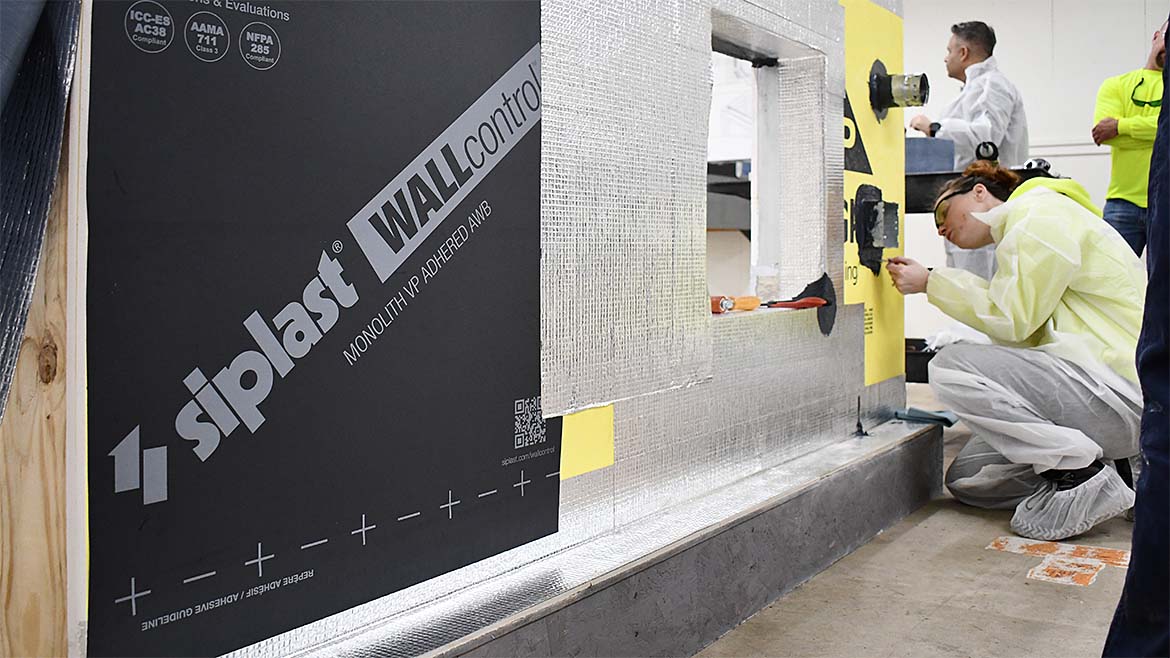
Air and Vapor Control in a Building Envelope

Photo: Siplast

Air Control: Continuity is Critical

Air barriers prevent outside air from entering and conditioned air from escaping the building. Common problems caused by uncontrolled air leakage include energy inefficiency, condensation inside walls, and indoor air quality issues. A well-designed, continuous air barrier system can help improve energy efficiency, lengthen the life span of building materials, and enhance indoor environmental quality.  

A successful air barrier system integrates various materials, such as fluid-applied membranes, self-adhered sheets, rigid boards, sealants, and spray foams. It must be continuous, spanning the entire building enclosure and managing junctions, penetrations, and connections. For example, in roof systems, the air control layer may be installed at the deck level, simplifying transitions to adjacent wall systems and reducing the risk of air leakage. 

However, achieving airtightness requires more than material selection; it demands precise installation and coordination among trades. Common pitfalls include gaps, discontinuities at transitions, and poor sealing around penetrations. Contractors should prioritize detailing and sequencing to ensure that air barriers are applied correctly, avoiding costly repairs and inefficiencies. 
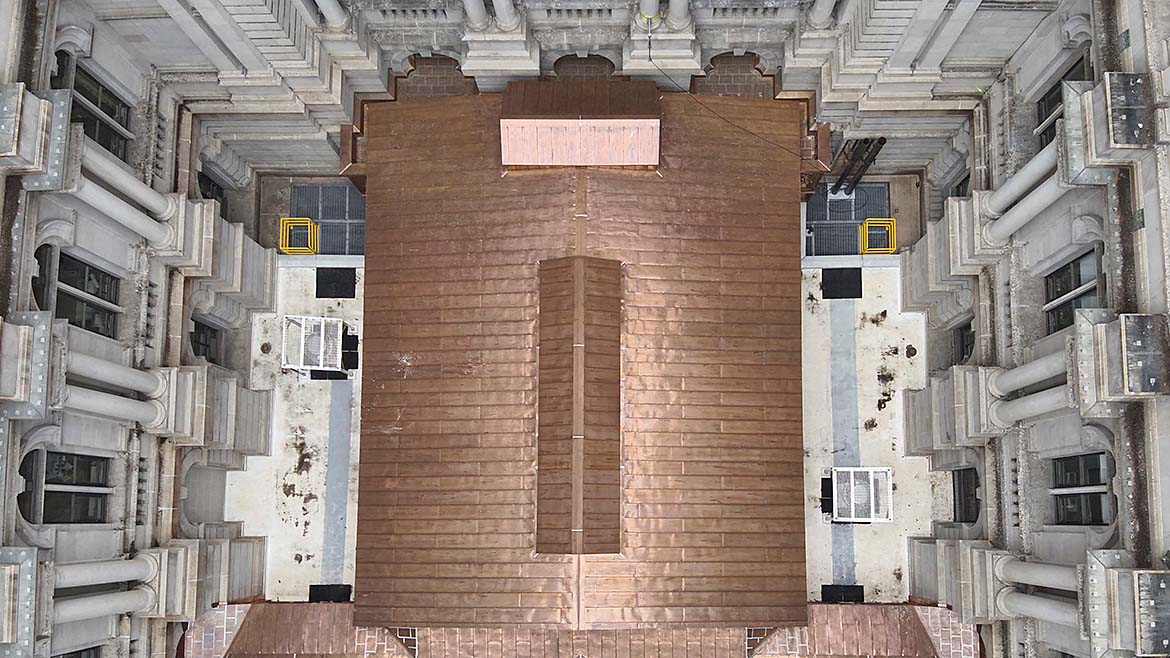
Air and Vapor Control in a Building Envelope

Photo: Siplast

Vapor Control: Molecular Moisture Movement

Vapor control layers, such as vapor barriers and vapor retarders, help manage the movement of water molecules, moisture diffusion, through building materials. A vapor retarder’s effectiveness in limiting diffusion is determined by its permeability (measured in “perms”), ranging from the lowest perms with Class I vapor retarders, to increasingly more permeable with Class II and then Class III retarders. While Class I vapor retarders almost completely block moisture diffusion, Class II & III vapor retarders and high-permeable materials allow some level of diffusion, making them suitable for assemblies that may need drying potential. 

Their function is particularly critical in climates, distinct wetting events, or building uses that experience high amounts of moisture, where vapor drive (the movement of moisture due to pressure differentials) can create the risk of condensation inside the building enclosure. It’s important to note that vapor control is not a one-size-fits-all solution. Misplaced or excessive vapor barriers can trap moisture within assemblies, leading to corrosion, mold, or air quality issues. Consult with a building enclosure expert to assess the project's specific requirements and ensure proper placement and selection of vapor control materials.

Air and Vapor Control in a Building Envelope

Photo: Siplast

Integrating Air and Vapor Control Layers

For optimal performance, air and vapor control layers must function as an integrated system. Unintentional discontinuities can lead to air leakage and condensation, undermining the building's performance. The success of an air and vapor control strategy hinges on collaboration among designers, contractors, and enclosure consultants. 

Mockups, sequencing plans, and field coordination are essential to ensure that control layers are installed as per design intent. Specifying compatible materials and detailing transitions explicitly in construction documents reduces ambiguity and helps contractors maintain continuity. Additionally, consider long-term maintenance and replacement strategies to ensure continued performance over the building's lifespan. 

Conclusion

Air and vapor control are fundamental to the durability, energy efficiency, and health of a building. By prioritizing continuity and integration of control layers, design and construction teams can mitigate risks, enhance performance, and contribute to the building's environmental goals. Whether it's preventing condensation, reducing energy loss, or managing moisture migration, these control systems play a central role in the success of the modern building enclosure.

KEYWORDS: adhesives and sealants air barriers building design building envelope design energy efficiency membranes moisture polyisocyanurate resiliency

Share This Story

Looking for a reprint of this article?
From high-res PDFs to custom plaques, order your copy today!

Wc0126 feat siplast p5 ben meyer
Benjamin Meyer, AIA, LEED AP, serves as Building Enclosure Business Director for Siplast. He also serves as chair of the ASHRAE 90.1 Envelope Committee, Director of the Air Barrier Association of America, past LEED Technical Committee member and past Technical Advisor of the LEED Materials TAG.

Recommended Content

JOIN TODAY
To unlock your recommendations.

Already have an account? Sign In

  • Abercrombie & Fitch

    EIFS in 2026: How Specialty Finishes Are Redefining Exterior Wall Systems

    As building codes, owner expectations, and design demands...
    Stucco/EIFS
    By: Regi Mendoza
  • proper air and vapor control

    From Energy Efficiency to Moisture Management: Why Air and Vapor Control Matter

    How proper air and vapor control within building...
    Building Envelope
    By: Benjamin Meyer AIA, LEED AP
  • Linear Metal Ceiling Beam Baffles

    Top 25 Ceiling Contractors of 2026

    Suspended ceilings demand precision, code compliance and...
    Ceilings
    By: John Wyatt and Tanja Kern
You must login or register in order to post a comment.

Report Abusive Comment

Manage My Account
  • eMagazine Subscription
  • Newsletters
  • Online Registration
  • Manage My Preferences
  • Subscription Customer Service

More Videos

Sponsored Content

Sponsored Content is a special paid section where industry companies provide high quality, objective, non-commercial content around topics of interest to the Walls & Ceilings audience. All Sponsored Content is supplied by the advertising company and any opinions expressed in this article are those of the author and not necessarily reflect the views of Walls & Ceilings or its parent company, BNP Media. Interested in participating in our Sponsored Content section? Contact your local rep!

close
  • medical professionals moving a patient on a stretcher through the halls of a medical building
    Sponsored byNational Gypsum Company

    What Does High Performance Mean When It Comes To Gypsum Boards?

Popular Stories

Linear Metal Ceiling Beam Baffles

Top 25 Ceiling Contractors of 2026

Wichita Biomedical Campus

Wichita Drywall Worker Dies After Scaffolding Fall

QXO Just Changed the Game-Here's What Contractors Are Asking

QXO Just Changed the Game-Here's What Contractors Are Asking

Construction workers in safety vests install drywall

Gypsum Sales Hold Amid Market Shifts in the U.S.

Events

June 24, 2026

The Bright Side & Benefits of Designing with Integrated Lighting

Credits 1 AIA LU/HSW; 0.1 ICC CEU

This course will explore the pivotal role architects and lighting design play in creating safer, more sustainable spaces. Learn how to avoid common lighting mistakes and make informed decisions that create the best visual environment for occupants. 

January 1, 2030

Webinar Sponsorship Information

For webinar sponsorship information, visit www.bnpevents.com/webinars or email webinars@bnpmedia.com.

See our full library of webinars

View All Submit An Event

Products

2026 National Painting Cost Estimator

2026 National Painting Cost Estimator

See More Products

Related Articles

  • An image of ROCKWOOL's Smartrock product being scored

    Adaptive Vapor Control Layer From ROCKWOOL

    See More
  • ClarkDietrich logo 1170x878

    ClarkDietrich and Building Enclosure Partner to Cover Effective Moisture Management

    See More
  • SWACCA

    IRS Releases Notices Implementing the Tax Provisions Related to Prevailing Wage, Apprenticeship and Energy Efficiency from the Inflation Reduction Act

    See More

Related Products

See More Products
  • Optimizing Social Media from a B2B Perspective

  • bim 3e.jpg

    BIM Handbook: A Guide to Building Information Modeling for Owners, Designers, Engineers, Contractors, and Facility Managers, 3rd Edition

  • Accidents Waiting to Happen: Best Practices in Workers' Comp Administration and Protecting Corporate Profitability

See More Products

Related Directories

  • ATLAS Roof & Wall Insulation

    With decades of proven performance, Atlas EnergyShield continuous wall insulation provides an uninterrupted thermal barrier over an entire wall, not just in wall cavities between studs. Atlas polyiso creates a versatile, effective barrier for thermal, air, moisture, and vapor control. Whether building a single family home or a high-rise, Atlas EnergyShield wall insulation will meet energy codes and ensure the best building performance.
×

Connect with the industry’s leading resource for unparalleled insights and education.

Join thousands of industry professionals today. Shouldn’t you know what they know?

JOIN NOW
  • RESOURCES
    • Advertise
    • Contact Us
    • Directories
    • Store
    • Want More
  • SIGN UP TODAY
    • Create Account
    • eMagazine
    • Newsletters
    • Customer Service
    • Manage Preferences
  • SERVICES
    • Marketing Services
    • Reprints
    • Market Research
    • List Rental
    • Survey/Respondent Access
  • STAY CONNECTED
    • LinkedIn
    • Facebook
    • Instagram
    • YouTube
    • X
  • PRIVACY
    • PRIVACY POLICY
    • TERMS & CONDITIONS
    • DO NOT SELL MY PERSONAL INFORMATION
    • PRIVACY REQUEST
    • ACCESSIBILITY

Copyright ©2026. All Rights Reserved BNP Media, Inc. and BNP Media II, LLC.

Design, CMS, Hosting & Web Development :: ePublishing