International Steel Framing Perspective
There are so many arguments why to use steel it should be a “no-brainer.”
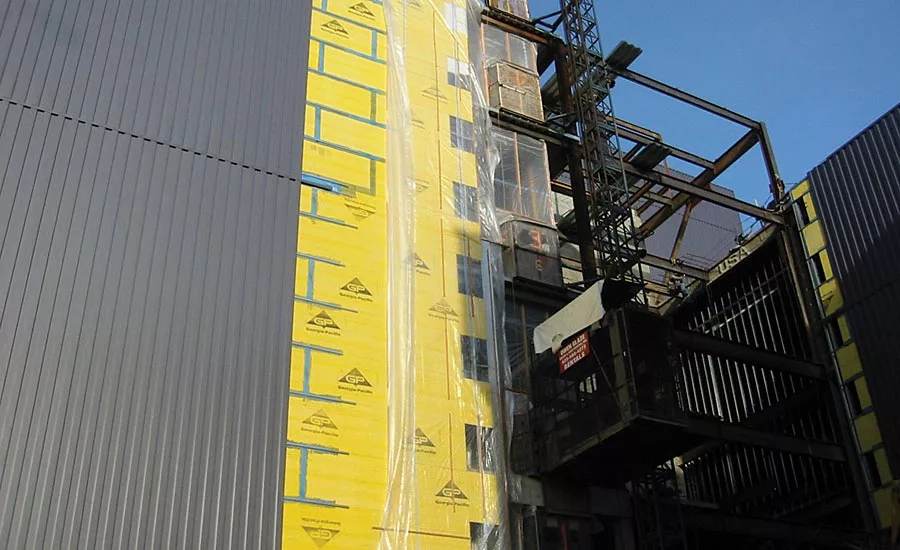
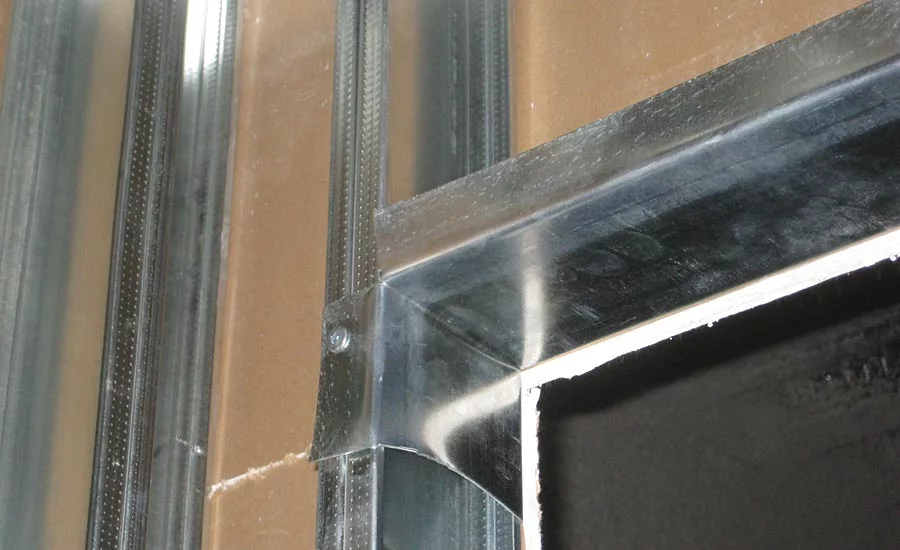
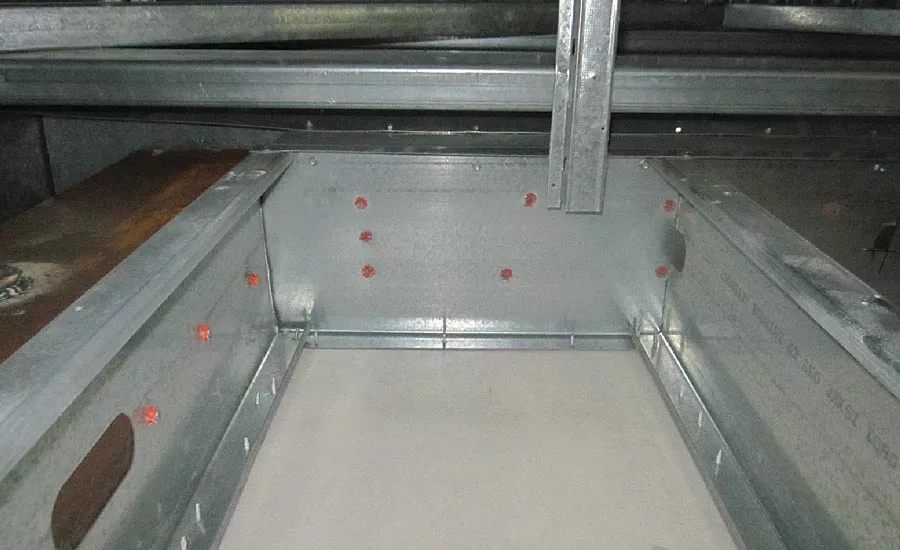
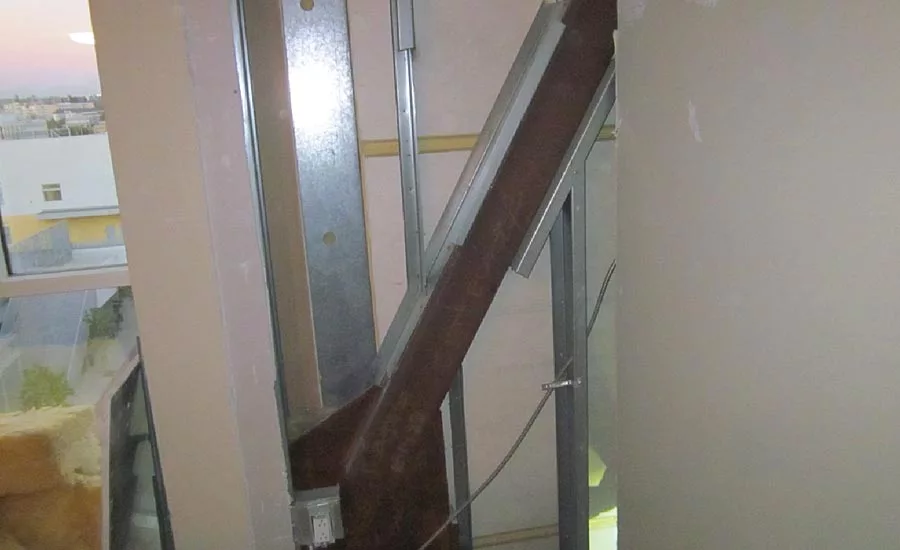

Construction is steeped in tradition. Tendencies, practices and the even the use of different nomenclature can range from region to region. I was at a national meeting when I heard the term clapboard siding being thrown around by my friends from New England. Out west, we simply call it lap siding. In America, we call metal furring hat Z channels, in Canada they are called Zed girts, and in Australia the term is top hats. In Europe, metal furring is referred to as profiles. This makes it interesting as the world is getting smaller and we are handed product literature that has what seem as are funny terms. The predominant difference between North America and much of other parts of the world is they predominantly use masonry more than framing.
One reason for the United States’ reliance on framing is simple tradition. Our history of framed walls goes back over two centuries. When the first Europeans came to America, many of the craftsmen were likely skilled masons but a lack of quarries and expense made stone work almost impossible. What the new world did have was an abundance of trees. These were ideally suited for furniture making but they also found the wood made suitable walls, as well.
Once framing became well established, the ground work to for steel framing was set. However, the cost of producing steel framing members was prohibitive. That changed in the mid-1800s when new processes made it possible for steel framing to be reasonable in cost. Yet, thanks to tradition, little changed. Large buildings were masonry and residential was wood framing.
Architects wanted taller and taller buildings. However, due to the weight of masonry, walls became prohibitively thick to carry all that weight. Many consider the first high rise building was completed in 1885 in Chicago. The architect created a load bearing structural steel frame. Soon these steel structures were popping up all over America and the rest of the world.
Transformations
The building code and insurance industries are reactive. When a catastrophic event happens, code developers and insurance companies look for ways to protect life and property. The Great Chicago fire is an example of such an event that resulted in change. Most of the buildings at that time were constructed of wood. Insurance writers continued to issue fire insurance even in the face of growing concerns and warnings of combustible construction. Mrs. O'Leary’s cow was then blamed in 1871 for the loss of 17,000 structures and 250 lives. The aftermath forced 60 insurance companies into bankruptcy. This started local code regulations with regard to combustible and noncombustible construction.
A few decades later in San Francisco, an earthquake left the city in ruins. What was not destroyed by the earthquake was engulfed by the ensuing fires. Ironically, this was at the same time the country was working to adopt more widespread building codes. In 1927, the International Council of Building Officials published a code that was meant to promote standardization and replace the codes that varied drastically from city to city.
The mesh of code, insurance, desire for taller buildings and the ability to process steel more cheaply made steel framing a natural fit. Yet, steel framing still had one hurdle to overcome, tradition. The construction industry is nothing if not steeped in tradition and resistant to change.
A person from overseas once asked me why we in the United States build with wood and not masonry. I explained it is based on several reasons: cost, generic adaptability, seismic issues and of course tradition. He then asked about steel framing, and wondered why more is not steel than wood. I had to explain that we do build a lot of our construction with steel framing. I suspect he had been misled by seeing large tracts of homes being constructed with wood along the highways. Wood framing is pretty rare in many countries and even frowned upon in much of Europe.
One reason wood framing is not popular is the historical lack of wood that is the result of the wholesale decimation of forests centuries ago. It can be considered similar to what we Americans did to the buffalo in our country. They were almost wiped out. While the forests have returned to many of these regions, some countries became intensely protective of their forests. Skiing at mountain resorts in America has modest rules about skiing through the trees and forest. Even when posted as not allowed, the worst that happens is you might get your ticket lifted for the day if caught. Whereas in Europe, it is a pretty serious offense and the Europeans all know this. Ski in their forest and you might even be spending some time in the jail. To the Europeans, it is showing disrespect to the forest and damaging the young precious trees. I suspect that is another reason many cultures look at our wood framed homes with bewilderment.
Wood to Steel
Most wood framing is strictly for low rise construction. This is predominantly due to our building codes. The code establishes the type and occupancy use for the building, along with height and area restrictions for combustible and noncombustible construction. While most municipalities follow the guide of the International Building Code, each city does have the right to amend, modify or restrict what the International Code has published. The general rule is taller buildings must be made from noncombustible materials. This is considered a public life safety issue. Steel framing has the great benefit as being a noncombustible wall system. Other benefits include they are straighter than wood and; lighter and faster to erect than masonry. The drawbacks to steel framed walls are that prices tend to fluctuate on raw materials, added engineering costs and most recently we had thermal conductivity thrown at us.
A manufacturer from the Middle East was at a trade show in the United States to introduce his new siding product. He had impressive data and several project pictures. All his projects were masonry walls. When I asked him about use on steel framing he had no data. He continued that he was disappointed to see the United States had not adopted the staple of masonry blocks as the rest of the world has done. He opined that the U.S. should change its ways and switch to masonry and move away from framing. I explained that masonry is certainly a good way to build, but to pass U.S. seismic requirements often requires a lot of steel reinforcing. While this is certainly possible and done on many occasions, it is generally cost prohibitive for most buildings.
Even in good times the price for raw steel is often unstable. Seeing new products developed at breakneck speed does not make steel manufacturers work any easier. The competition within this industry has been more than just tough, it is almost unbearable. Manufacturers have supply issues, code compliance claims and innovation challenges in the brutal fight to retain market share. The most recent fight is continuous insulation. As if all the challenges weren’t enough, ASHRAE opted to devalue steel framing as the R-value killer. Justified or not, it has steel framing manufacturers experimenting with every type of furring, girt, connector and fastener known to man.
Dealers in steel framing products have their own challenges. With new proprietary framing members, the days of going to the material yard and picking up a bundle of 20 gauge studs are over. Today, all studs are not created equal. Mixing and matching manufacturers is risky in a litigious society. Dealers must either limit themselves to a single manufacturer or carry several brands of essentially the same product. This uses up valuable stocking room that dealers could use to carry additional lines of products.
Contractors also have their challenges. Far too many details are incorrect, non-constructible or improper for the situation listed. The field installer is under pressure to perform as delays not only cost them money—but without proper approvals—they could be in potential litigation.
Size Matters
Better education on steel framing is also needed for the design industry. Some practices designers take for granted are counterintuitive when it comes to steel. The use of powder actuated fasteners to attach framing members to concrete is pretty common. The general rule is the specified length of the shot pin is a minimum length required. This means a slightly longer pin shank is fine and maybe even preferred. Deeper penetration provides superior holding power.
However, with attaching cold formed steel framing to structural hot rolled steel, such as tube steel columns, this is not true. In fact, pins that are too long will generally weaken the connection value. This is hard for many designers to comprehend as we have been taught the length of the fastener is a minimum value. Understanding the physics of how the pin holds in base steel provides a clearer picture.
When a steel pin is shot through a 3/8-inch hot rolled steel base, the action happens in less than a fraction of a second. A lot of science occurs in that instantaneous moment. The pin is projected using gun powder and is essentially a bullet. The velocity of the pin can be as much as 1,000 feet per second depending on the charge selected. Selection of pin style and powder charge to match base material is critical. Too little powder and the pin fails to be seated properly. Too much velocity and the pin head can shear or the pin will curl after it passes the steel base, resulting in less than optimal holding power. The optimum pin and charge of powder will result in optimum holding power. This is the result of the pin quickly heating up the base steel and simultaneously making the steel more elastic. This happens in a fraction of a second. The steel then quickly cools and shrinks back from its elastic state. The result is the steel shrinks back and essentially clamps around the pin shank and because of the heat generated, has an almost slight welding effect to the pin shank and steel base.
The proper pin length is usually determined by tip penetration through the joined materials. Thicker than 1/2-inch base steel is generally only measured by penetration depth into the steel base, tip penetration is not needed. Most carpenters experienced and adept at steel framing carry two types of pins—longer ones for concrete and short ones for steel. They know through experience that long pins into steel and short pins into concrete can be problematic. Longer is not always better.
Know the Rules
If you are a wood framer and want to get into steel, the industry encourages you to do your homework. Talk to the dealers and manufacturers of steel framing products to gain knowledge. It is not as simple as replacing your hammer with a screwgun. Mistakes can be costly and what may seem innocuous, such as mixing steel framing manufacturers’ products or using too long a shot pin, can result in putting you and your firm at risk.
Looking for a reprint of this article?
From high-res PDFs to custom plaques, order your copy today!