Gypsum and Plaster Extended Forecast
A recent study by Freedonia Group projects growth for drywall and plaster in North America and globally.
Global demand for drywall is forecast to advance 8.4 percent per year through 2014 to 10.7 billion square meters, a significant improvement over the 2004-2009 rate of growth. More than four-fifths of all new product demand generated during the 2009-2014 period will be attributable to the U.S. and the Asia/Pacific region. Drywall sales in the U.S. are predicted to grow 12.4 percent annually through 2014 as the country’s housing market recovers from a period of significant turmoil.
Residential building construction spending in the US will grow at a double-digit annual pace during this time. The drywall market in the Asia/Pacific region will record the second fastest growth rate through 2014, after North America. Rapid growth in residential and nonresidential building construction will stimulate drywall sales. A number of Asian countries are expected to post large gains, including China, India, Thailand and South Korea. China alone will account for over one-third of all new global drywall demand between 2009 and 2014.
The Africa/Mideast region, Eastern Europe, and Central and South America are also projected to see significant advances in drywall sales, spurred by healthy building construction gains. Turkey, Russia and Brazil will experience particularly rapid growth, as local construction firms increase their use of drywall in wall and ceiling construction applications. Drywall markets in more developed parts of the world-Australia, Canada, Japan and Western Europe- will generally expand at a slower pace through 2014 than their industrializing counterparts. Nonetheless, several of these countries are still expected to experience impressive drywall demand growth (starting from a low 2009 base), including South Korea, the UK and Spain.
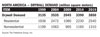
On average, the drywall market in North America contracted 10.4 percent per year during the 2004-2009 period. In practice, sales of gypsum board grew in 2005 and 2006, but then fell dramatically between 2007 and 2009. The U.S. experienced double-digit annual declines in drywall sales, as residential building construction activity in the country fell sharply. Canada also recorded losses during this period, but they were considerably smaller than those of the U.S. Mexico was the only regional country to achieve growth in drywall demand.
Sales of drywall in North America are projected to increase 10.6 percent per annum to 3.4 billion square meters in 2014. North America is forecast to register the fastest rate of growth of any region. The drywall market in the U.S. is forecast to expand 12.3 percent per year during the 2009-2014 period, as residential building construction spending in the country rebounds from its depressed 2009 level. Mexico is predicted to record solid growth, both because of rising construction activity and because local construction firms will use drywall more frequently in the future. Canada, on the other hand, will see product sales rise less than one percent per year through 2014, due to weak growth in building construction expenditures.
Gains in building construction spending will be significantly smaller than those of the U.S. because the 2009 base was not as downtrodden in Canada. Drywall shipments from North America are predicted to grow 10.2 percent annually between 2009 and 2014, trailing drywall demand growth slightly and leading to a decline in the region’s net trade surplus.
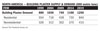
The regional market for plaster contracted 6 percent per year between 2004 and 2009 because of a large decline in residential building construction activity in the U.S.
Building plaster sales in North America are projected to advance 8.3 percent per annum through 2014 to 1.1 million metric tons, an improvement over the 2004-2009 pace and faster than the expected worldwide rate of growth.
As the U.S. housing market recovers from several years of losses, residential building construction spending and associated gypsum board installation activity will surge, greatly increasing demand for building plaster. In Mexico, healthy residential and nonresidential building construction expenditures growth will boost product sales 3.2 percent per year between 2009 and 2014.
Global demand for drywall is forecast to advance 8.4 percent per year through 2014 to 10.7 billion square meters, a significant improvement over the 2004-2009 rate of growth. More than four-fifths of all new product demand generated during the 2009-2014 period will be attributable to the U.S. and the Asia/Pacific region. Drywall sales in the U.S. are predicted to grow 12.4 percent annually through 2014 as the country’s housing market recovers from a period of significant turmoil.
Residential building construction spending in the US will grow at a double-digit annual pace during this time. The drywall market in the Asia/Pacific region will record the second fastest growth rate through 2014, after North America. Rapid growth in residential and nonresidential building construction will stimulate drywall sales. A number of Asian countries are expected to post large gains, including China, India, Thailand and South Korea. China alone will account for over one-third of all new global drywall demand between 2009 and 2014.
The Africa/Mideast region, Eastern Europe, and Central and South America are also projected to see significant advances in drywall sales, spurred by healthy building construction gains. Turkey, Russia and Brazil will experience particularly rapid growth, as local construction firms increase their use of drywall in wall and ceiling construction applications. Drywall markets in more developed parts of the world-Australia, Canada, Japan and Western Europe- will generally expand at a slower pace through 2014 than their industrializing counterparts. Nonetheless, several of these countries are still expected to experience impressive drywall demand growth (starting from a low 2009 base), including South Korea, the UK and Spain.
Drywall
Drywall sales in North America totaled 2.0 billion square meters in 2009, representing 29 percent of global consumption. The intensity of product use in North America, relative to building construction spending and population size, exceeds that of most other regions. North America is home to two well established gypsum board markets in the US and Canada and one developing market in Mexico; as a result, levels of product use vary greatly from country to country. In 2009, for example, per capita drywall demand in Canada was 8.1 square meters, compared to 0.9 square meters per person in Mexico. The U.S., which accounted for more than four-fifths of North American demand in 2009, is both the largest consumer and producer of drywall in the region.On average, the drywall market in North America contracted 10.4 percent per year during the 2004-2009 period. In practice, sales of gypsum board grew in 2005 and 2006, but then fell dramatically between 2007 and 2009. The U.S. experienced double-digit annual declines in drywall sales, as residential building construction activity in the country fell sharply. Canada also recorded losses during this period, but they were considerably smaller than those of the U.S. Mexico was the only regional country to achieve growth in drywall demand.
Sales of drywall in North America are projected to increase 10.6 percent per annum to 3.4 billion square meters in 2014. North America is forecast to register the fastest rate of growth of any region. The drywall market in the U.S. is forecast to expand 12.3 percent per year during the 2009-2014 period, as residential building construction spending in the country rebounds from its depressed 2009 level. Mexico is predicted to record solid growth, both because of rising construction activity and because local construction firms will use drywall more frequently in the future. Canada, on the other hand, will see product sales rise less than one percent per year through 2014, due to weak growth in building construction expenditures.
Gains in building construction spending will be significantly smaller than those of the U.S. because the 2009 base was not as downtrodden in Canada. Drywall shipments from North America are predicted to grow 10.2 percent annually between 2009 and 2014, trailing drywall demand growth slightly and leading to a decline in the region’s net trade surplus.
Plaster
Building plaster demand in North America totaled 740,000 metric tons in 2009, accounting for three percent of worldwide sales. The U.S. is the region’s leading consumer of these products, followed by Mexico and Canada. Wet construction techniques are not commonly employed in either Canada or the U.S. Instead, local construction companies prefer to use drywall in wall and ceiling construction applications. Building plaster is primarily used in association with drywall during the installation process (usually as joint compound), which requires considerably less product than wet construction. As a result, North America tends to have relatively low levels of product demand.The regional market for plaster contracted 6 percent per year between 2004 and 2009 because of a large decline in residential building construction activity in the U.S.
Building plaster sales in North America are projected to advance 8.3 percent per annum through 2014 to 1.1 million metric tons, an improvement over the 2004-2009 pace and faster than the expected worldwide rate of growth.
As the U.S. housing market recovers from several years of losses, residential building construction spending and associated gypsum board installation activity will surge, greatly increasing demand for building plaster. In Mexico, healthy residential and nonresidential building construction expenditures growth will boost product sales 3.2 percent per year between 2009 and 2014.
Looking for a reprint of this article?
From high-res PDFs to custom plaques, order your copy today!