Gypsum Sales Hold Amid Market Shifts in the U.S.
U.S. Gypsum producers navigate softer housing demand, capacity expansions and pricing pressure.
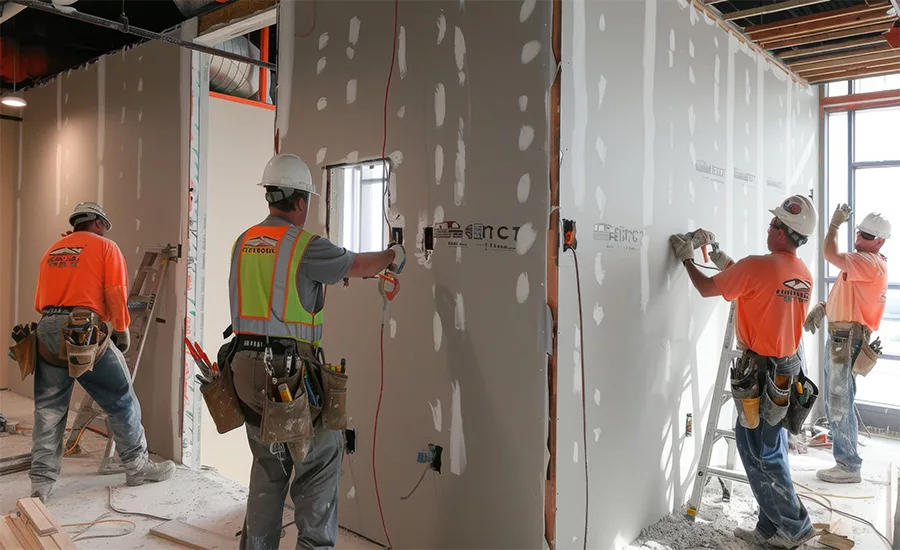
The U.S. gypsum and wallboard sector spent the last year navigating a mixed economic environment marked by softer residential construction activity, cautious commercial spending and continued investment in manufacturing capacity.1 While higher interest rates and uneven housing starts weighed on volumes across portions of the market, leading producers continued to invest in modernization, sustainability initiatives and long-term production growth.2
Companies including USG, National Gypsum, PABCO Gypsum, CertainTeed Gypsum, American Gypsum and G-P Gypsum all faced the same central challenge: how to maintain profitability and market position while builders slowed some new projects and material costs remained volatile.3
Market Conditions Pressure Residential Construction
Despite those pressures, the broader gypsum board market continued to show resilience. Industry forecasts published during the year projected continued long-term growth for drywall and gypsum board products tied to commercial renovations, infrastructure investment and eventual housing recovery. Analysts also pointed to increased demand for fire-resistant, mold-resistant and sustainable gypsum products as drivers for future growth.4
According to the U.S. Geological Survey, domestic gypsum wallboard deliveries declined 9 percent year over year during the first quarter of 2025, reflecting slower construction activity in several regions of the country. At the same time, U.S. gypsum panel manufacturing capacity remained substantial at approximately 34 billion square feet annually.5
USG continued emphasizing operational efficiency and premium product positioning throughout the year. Parent company Knauf and USG leadership repeatedly pointed to resilient repair-and-remodel activity and commercial construction as stabilizing factors even as single-family housing starts softened.6
USG also benefited from broader industry demand for higher-performance wall systems designed to improve acoustics, fire resistance and sustainability. Market analysts noted that premium wallboard categories continue to outperform standard commodity products in several commercial segments.7
National Gypsum likewise focused on modernization and operational improvements. Industry market reports cited investment activity aimed at automating portions of U.S. wallboard production lines to improve efficiency and strengthen long-term supply capabilities.8
National Gypsum executives spent much of the year highlighting the company’s customer relationships and geographic reach. The privately held manufacturer maintained a steady presence across residential and commercial construction channels while continuing to compete aggressively in regional markets.9
Capacity Expansions and Sustainability Investments
CertainTeed Gypsum, part of Saint-Gobain, stood out during the year because of its aggressive investment strategy and sustainability messaging. The company completed a major expansion project at its Palatka, Fla., gypsum facility, a more than $240 million investment that doubled production capacity and created additional manufacturing jobs. Saint-Gobain described the facility as the largest gypsum wallboard plant in the world following completion of the project.10
Saint-Gobain executives repeatedly emphasized North America as a key growth region despite near-term construction headwinds.
The company also advanced sustainability initiatives tied to gypsum manufacturing. During the year, Saint-Gobain completed upgrades at its Sainte-Catherine gypsum wallboard plant, transforming the site into what the company called North America’s first zero-carbon gypsum wallboard facility for Scope 1 and Scope 2 emissions.
For producers across the sector, sustainability increasingly became both a branding opportunity and a competitive necessity. Builders, architects and institutional customers continued seeking products with lower embodied carbon and recycled material content. That trend accelerated investment in plant modernization and energy-efficient manufacturing systems.
Regional Producers Compete on Service and Logistics
G-P Gypsum, part of Georgia-Pacific, maintained its focus on nationwide distribution and commercial wallboard systems throughout the year. The company benefited from continued demand in institutional and infrastructure-related construction projects, particularly in healthcare and education.11
Georgia-Pacific leaders also emphasized supply chain reliability and contractor support amid fluctuating market conditions.
American Gypsum12 and PABCO Gypsum13 continued operating as important regional competitors in the U.S. market. Both companies maintained strong positions in western and southwestern states where population growth and commercial development helped offset some of the broader slowdown in residential construction.14
Executives at both companies highlighted transportation efficiency and regional manufacturing footprints as competitive advantages during the year. By maintaining plants close to major growth markets, both manufacturers were able to limit freight exposure and improve delivery responsiveness.
Even with the uneven market conditions, the long-term outlook for gypsum products remained positive. Multiple industry reports released during the year15 projected continued growth in North American gypsum board demand over the next decade16, supported by urbanization, infrastructure investment and modernization projects.
The market also continued benefiting from gypsum board’s role as a cost-effective, lightweight and fire-resistant building material. Analysts noted that drywall remains one of the most widely used interior construction products across residential, commercial and institutional applications.17
Long-Term Outlook Remains Positive Despite Risks
Still, the sector faces several ongoing risks heading into the remainder of 2026.18 Interest rates remain elevated compared to pre-pandemic levels, labor shortages continue affecting construction timelines and energy costs remain unpredictable in several manufacturing regions.
Pricing pressure also intensified in some commodity wallboard categories as producers competed aggressively for market share amid slower overall demand growth. Industry observers expect manufacturers to continue emphasizing differentiated products, sustainability investments and operational efficiency as ways to protect margins.19
At the same time, the industry’s manufacturing base appears positioned for long-term growth. Expansion projects, modernization initiatives and low-carbon manufacturing investments suggest that leading producers are preparing for the next cycle of construction demand rather than retreating from the market.
For gypsum manufacturers, the past year ultimately became less about rapid growth and more about strategic positioning. Companies that successfully balanced operational discipline, customer service, sustainability and capacity planning appeared best positioned to weather near-term volatility while preparing for eventual recovery in housing and commercial construction.
Summary
For wall and ceiling contractors, the past year in the gypsum market signals a construction environment that remains competitive20 but still presents opportunities for growth. Slower residential construction and elevated interest rates have softened demand in some regions, particularly for single-family housing projects. However, contractors working in commercial, institutional, healthcare and infrastructure-related construction continue to benefit from steady project activity and increased demand for specialty wall systems.
The major gypsum manufacturers, including USG, CertainTeed Gypsum, National Gypsum, G-P Gypsum, American Gypsum and PABCO Gypsum, are continuing to invest heavily in plant expansions, automation and sustainability initiatives. For contractors, that means wallboard supply chains are likely to remain stable despite broader economic uncertainty. Investments in manufacturing capacity and regional distribution networks should also help reduce material shortages and delivery delays that disrupted projects in previous years.
At the same time, contractors may continue facing pricing pressure as manufacturers compete for market share while balancing higher energy, labor and transportation costs. Contractors will likely need to remain flexible with purchasing strategies and maintain strong relationships with suppliers to manage costs effectively.
Another important trend is the growing emphasis on high-performance and sustainable gypsum products. Demand for fire-resistant, mold-resistant and low-carbon wallboard systems continues to increase, especially on commercial and institutional projects. Contractors that understand these products and can properly install advanced wall and ceiling assemblies may gain a competitive advantage as architects and owners prioritize sustainability and performance specifications.
Overall, the market appears to be shifting from rapid expansion to long-term strategic growth, with contractors who adapt to changing product demands and market conditions positioned to benefit most.
USG: Contractors Must Adapt to Market Shifts
Remarks from USG’s John Pappas at BUILD26 closely mirrored broader trends shaping the U.S. gypsum and wallboard market over the past year. Speaking during the AWCI leadership session in New Orleans, Pappas acknowledged softer residential construction activity, ongoing labor pressures and economic uncertainty affecting both contractors and manufacturers.
His comments aligned with larger industry data showing declining housing starts and tighter margins across residential drywall and ceiling work. Pappas also echoed concerns raised throughout the gypsum sector regarding supply chain risks, tariffs and fluctuating material costs that continue affecting pricing and project timelines.
At the same time, Pappas pointed to growth opportunities in commercial and infrastructure-related construction, particularly data centers, healthcare and institutional projects. Those segments continue driving demand for advanced wall and ceiling assemblies that require fire resistance, acoustical performance and specialized installation expertise.
“This is a pivotal time for our industry,” Pappas said, emphasizing that contractors capable of adapting to changing project types and maintaining skilled labor forces will be best positioned moving forward.
Overall, Pappas’ outlook reinforced the broader industry message: while construction markets remain uneven, contractors that stay flexible, invest in workforce development and embrace higher-performance systems can still find long-term growth opportunities.
Sources
1. U.S. Geological Survey Mineral Commodity Summaries 2025, Gypsum
2. Global Gypsum, U.S. wallboard shipment and capacity updates
3. Saint-Gobain 2025 financial outlook and quarterly updates
4. CertainTeed Gypsum Palatka, Florida expansion announcement
5. Saint-Gobain sustainability and zero-carbon gypsum plant announcement
6. North America Gypsum Board Market analysis, Mordor Intelligence
7. U.S. gypsum market analysis, Polaris Market Research
8. U.S. Gypsum Board Market forecast, Market Research Future
9. Gypsum Association industry statistics and technical resources
10. USG Corporation company information and product updates
11. National Gypsum company news and corporate information
12. CertainTeed Gypsum products and manufacturing information
13. Georgia-Pacific Gypsum product and market information
14. American Gypsum corporate and manufacturing information
15. PABCO Gypsum company and product information
16. Grand View Research U.S. gypsum market outlook
17. U.S. Census Bureau housing starts and construction spending data
18. National Association of Home Builders housing market updates
19. Dodge Construction Network commercial construction outlooks
20. FMI construction industry forecasts and materials market analysis
Looking for a reprint of this article?
From high-res PDFs to custom plaques, order your copy today!