Continuous Building Evolution
Continuous insulation panels join the pack of a new breed of smart, energy efficient and sustainable building.

Exterior finishing choices and moisture-related problems occurring within building enclosures are nearly limitless. The newer energy codes and regulations require a more widespread use of continuous insulation over framed walls systems. This presents new design challenges for the installers onsite. The big problem: water plus time equals a universal solvent for most building components. More than 80 percent of lawsuits in the building industry involve water or moisture problems. Water intrusion and insufficient drainage can pose a threat to the durability and usability of a structure. Drainage mats with filter fabric, house wraps, stucco wraps, and weather resistant barriers are all part of a multi-pronged approach to solving a difficult and vexing problem. These are the products that design professionals are most interested in.
The EIFS industry has known for years that continuous insulation on the exterior face of a wall is the best way to insulate a building. The U.S. Department of Energy, through the Office of Energy Efficiency and Renewable Energy’s Building Technologies, in conjunction with Oak Ridge National Laboratories, has confirmed the EIFS industry’s conviction that to add a blanket of insulation that bridges the thermal gaps at the stud and floor lines is the best way to insulate and sheath a home or structure. As a show of the deep commitment to environmental sustainability and stewardship, the DOE has awarded The Dow Chemical Co. nearly $3 million to develop the next-generation of advanced insulation for high-performance, energy-efficient wall, roof and foundation insulation systems.
Many of these advanced insulation systems already exist today, notably insulated concrete forms, which continue to grow and gain market share. And from the ICF industry, several new technologies or variations on a theme have started to emerge.
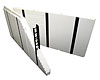
Shape molded continuous insulation panels maintain tighter tolerances on the wall, and in all dimensions: thickness, height and width. Each individual CIP has interlocking outer edges that are flashed to keep water out. The very nature of foam plastic materials impedes bulk water and even air traveling through the CIP. Incorporating interlocking edges in the design increases the water and air tightness of the exterior insulation package of the building.
The CIP’s alignment notches provide dependable layout for other critical design features, such as drainage channels. The drainage channels can be aligned from panel to panel to effectively and safely direct water down the entire surface of the building envelope. Most wall failures are caused by water intrusion and entrapment. It is important to note that closed-cell EPS foam does not form a vapor barrier allowing the wall system the ability to dry. Allowing the wall system to control the moisture exposure of a building envelope and as a result the specter of hidden deterioration is greatly reduced.
Another attribute of the interlocking CIP is that they deliver a smoother finished wall surface. The interlocking panels can bridge deviations in a substrate creating a more uniform and monolithic wall surface. What does this mean to the EIFS contractor? The board line shadows during the critical sun inspections are virtually eliminated. This means little or no rasping and much less bead dust in the air.
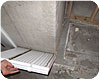
The ICF industry has made great use of durable co-polymer plastic resins for their form ties. This material has low thermal conductivity, yet has extremely high strength characteristics providing solid attachment surface for exterior or interior finishes. The engineered CIPs have this same technology with the attachment studs embedded in the foam. CIPs can use traditional mechanical fasteners or can be applied to most substrates with adhesive. A design feature of the CIPs is that the studs have horizontal keyways which create a mechanical lock for the adhesive to bond to the substrate.
The attachment studs transfer the pullout and shear stresses of attaching wire lathe for stucco, veneer stone, or cement siding by providing a direct and visible surface attachment. Long fasteners and blindly driving them through several inches of insulation with “the hit or miss” method of siding attachment can be a thing of the past.
The Partnership for Advancing Technology in Housing states, “The presence of moisture is perhaps the most significant durability issue that is to be addressed in the design of homes. Moisture needs to be looked at as an aspect of the whole house and its construction, as well.”
While PATH works to promote well-designed, new construction methods, there is a huge number of existing structures, residential and commercial, that need insulation and moisture issues addressed. CIPs are the perfect answer for the remodeling contractor.
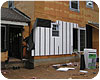
Even just to stage a basement project is difficult. It is not unusual for a basement to have limited access and a narrow staircase located in the middle of the home. The fewer parts, pieces, and tools carried through the home the better. One CIP does the work of many components and saves interior space too.
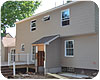
For a recent project in New Jersey, the wall went from 8 inches thick in the framed out mechanical room, to just 2½ inches thick in the rest of the basement using a CIP. This saved valuable interior space in this cramped basement. The builder was so pleased with how fast the panels went up that when the owner decided to remodel the whole house he chose to use the engineered panel on the entire exterior of the project.
“An engineered continuous insulation panel with integrated drainage and attachment studs just made sense for this home’s remodel job. It simplified installing the three different siding materials, vinyl, stucco, and stone and reduced the flashing details and expense too,” says Alberto Ramos, the builder on the project.
Dean
Seibert is president at Solcraft PDC. He can be reached at (484) 332-1661 or
dean.seibert@solcraftpdc.com.
The cornerstone of America is ingenuity. I believe that is what separates Americans from other cultures. We respect traditions but move forward. We are presented a dilemma, and we see it as a challenge or a hurdle to overcome.
The energy codes and our building code are perfect examples of respecting the past and moving forward. The codes are respectful of traditional materials and construction methods but both realize innovation is needed. Needed to move us forward, move us to a better and more sustainable country. The codes are living and breathing documents that are constantly evolving to meet these challenges. The codes also realize they are slow and cumbersome, sometimes too cumbersome to adapt to a fast trend setting base.
This is the importance of Section 104 of the building code. Section 104 is often quoted by building officials as the most important part of the code, Alternative Materials, Design and Methods of Construction. This is the section that encourages that American, innovative spirit. While tradition is great, innovation is what keeps us going, keeps us on the cutting edge, keeps us sustainable and moving ever forward.
The problem of thermal shorts and the new strict energy requirements is thrown at us and the wall and ceiling industry responds with innovation, new products and creativity. SIPs, ICFs, EIFS and now shape molded insulation are all examples of the innovative systems designed to solve a specific problem. No doubt, even more innovation is on the way. The technical team of the Western Conference of Wall and Ceiling Institutes met recently and had this very discussion. They are all looking forward to what other American innovations might lay ahead, as do I.
Exterior finishing choices and moisture-related problems occurring within building enclosures are nearly limitless. The newer energy codes and regulations require a more widespread use of continuous insulation over framed walls systems. This presents new design challenges for the installers onsite. The big problem: water plus time equals a universal solvent for most building components. More than 80 percent of lawsuits in the building industry involve water or moisture problems. Water intrusion and insufficient drainage can pose a threat to the durability and usability of a structure. Drainage mats with filter fabric, house wraps, stucco wraps, and weather resistant barriers are all part of a multi-pronged approach to solving a difficult and vexing problem. These are the products that design professionals are most interested in.
The EIFS industry has known for years that continuous insulation on the exterior face of a wall is the best way to insulate a building. The U.S. Department of Energy, through the Office of Energy Efficiency and Renewable Energy’s Building Technologies, in conjunction with Oak Ridge National Laboratories, has confirmed the EIFS industry’s conviction that to add a blanket of insulation that bridges the thermal gaps at the stud and floor lines is the best way to insulate and sheath a home or structure. As a show of the deep commitment to environmental sustainability and stewardship, the DOE has awarded The Dow Chemical Co. nearly $3 million to develop the next-generation of advanced insulation for high-performance, energy-efficient wall, roof and foundation insulation systems.
Many of these advanced insulation systems already exist today, notably insulated concrete forms, which continue to grow and gain market share. And from the ICF industry, several new technologies or variations on a theme have started to emerge.
New Advancements
These latest advancements in insulation technology have emerged because of the capability of the EPS shape molding industry to embrace the needs of construction insulation. Shape molded insulation raises the bar on manufactured tolerances of these multi-faceted insulation products.Shape molded continuous insulation panels maintain tighter tolerances on the wall, and in all dimensions: thickness, height and width. Each individual CIP has interlocking outer edges that are flashed to keep water out. The very nature of foam plastic materials impedes bulk water and even air traveling through the CIP. Incorporating interlocking edges in the design increases the water and air tightness of the exterior insulation package of the building.
The CIP’s alignment notches provide dependable layout for other critical design features, such as drainage channels. The drainage channels can be aligned from panel to panel to effectively and safely direct water down the entire surface of the building envelope. Most wall failures are caused by water intrusion and entrapment. It is important to note that closed-cell EPS foam does not form a vapor barrier allowing the wall system the ability to dry. Allowing the wall system to control the moisture exposure of a building envelope and as a result the specter of hidden deterioration is greatly reduced.
Another attribute of the interlocking CIP is that they deliver a smoother finished wall surface. The interlocking panels can bridge deviations in a substrate creating a more uniform and monolithic wall surface. What does this mean to the EIFS contractor? The board line shadows during the critical sun inspections are virtually eliminated. This means little or no rasping and much less bead dust in the air.
Electrical Raceways
Another engineered feature of shape molded panels is the ability for a complete network or electrical raceways, both horizontally and vertically, to be built into the panel. Every electrician will appreciate the predictability of a 16 inch and 24 inch o.c. grid work of chases.The ICF industry has made great use of durable co-polymer plastic resins for their form ties. This material has low thermal conductivity, yet has extremely high strength characteristics providing solid attachment surface for exterior or interior finishes. The engineered CIPs have this same technology with the attachment studs embedded in the foam. CIPs can use traditional mechanical fasteners or can be applied to most substrates with adhesive. A design feature of the CIPs is that the studs have horizontal keyways which create a mechanical lock for the adhesive to bond to the substrate.
The attachment studs transfer the pullout and shear stresses of attaching wire lathe for stucco, veneer stone, or cement siding by providing a direct and visible surface attachment. Long fasteners and blindly driving them through several inches of insulation with “the hit or miss” method of siding attachment can be a thing of the past.
The Partnership for Advancing Technology in Housing states, “The presence of moisture is perhaps the most significant durability issue that is to be addressed in the design of homes. Moisture needs to be looked at as an aspect of the whole house and its construction, as well.”
While PATH works to promote well-designed, new construction methods, there is a huge number of existing structures, residential and commercial, that need insulation and moisture issues addressed. CIPs are the perfect answer for the remodeling contractor.
Basements
Throughout the country, older homes have non-insulated concrete block basements that are notoriously difficult to remodel. Most of us can relate to that smell and feel of a basement, Grandma’s old root cellar. One CIP has pioneered a remodeling market niche to specifically address this moisture laden environment. Their CIPs are designed to keep one of the most challenging interior environments dry, comfortable and mold free.Even just to stage a basement project is difficult. It is not unusual for a basement to have limited access and a narrow staircase located in the middle of the home. The fewer parts, pieces, and tools carried through the home the better. One CIP does the work of many components and saves interior space too.
For a recent project in New Jersey, the wall went from 8 inches thick in the framed out mechanical room, to just 2½ inches thick in the rest of the basement using a CIP. This saved valuable interior space in this cramped basement. The builder was so pleased with how fast the panels went up that when the owner decided to remodel the whole house he chose to use the engineered panel on the entire exterior of the project.
“An engineered continuous insulation panel with integrated drainage and attachment studs just made sense for this home’s remodel job. It simplified installing the three different siding materials, vinyl, stucco, and stone and reduced the flashing details and expense too,” says Alberto Ramos, the builder on the project.
American Tradition
by Mark FowlerThe cornerstone of America is ingenuity. I believe that is what separates Americans from other cultures. We respect traditions but move forward. We are presented a dilemma, and we see it as a challenge or a hurdle to overcome.
The energy codes and our building code are perfect examples of respecting the past and moving forward. The codes are respectful of traditional materials and construction methods but both realize innovation is needed. Needed to move us forward, move us to a better and more sustainable country. The codes are living and breathing documents that are constantly evolving to meet these challenges. The codes also realize they are slow and cumbersome, sometimes too cumbersome to adapt to a fast trend setting base.
This is the importance of Section 104 of the building code. Section 104 is often quoted by building officials as the most important part of the code, Alternative Materials, Design and Methods of Construction. This is the section that encourages that American, innovative spirit. While tradition is great, innovation is what keeps us going, keeps us on the cutting edge, keeps us sustainable and moving ever forward.
The problem of thermal shorts and the new strict energy requirements is thrown at us and the wall and ceiling industry responds with innovation, new products and creativity. SIPs, ICFs, EIFS and now shape molded insulation are all examples of the innovative systems designed to solve a specific problem. No doubt, even more innovation is on the way. The technical team of the Western Conference of Wall and Ceiling Institutes met recently and had this very discussion. They are all looking forward to what other American innovations might lay ahead, as do I.
Looking for a reprint of this article?
From high-res PDFs to custom plaques, order your copy today!