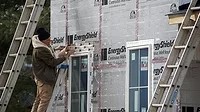
Scaffolds: The Good, the Bad and the Ugly
Scaffolds can be either the greatest asset or the worst nightmare to employee safety and production.

Scaffolds vary in type and style and range from walking stilts to engineered multi story system scaffolds, all of which have their own rules, erection, and usage peculiarities.
The safe work guidelines for scaffolds are found in a variety of publications put out by The Scaffold Industry Association, The Scaffolding, Shoring & Forming Institute, The American National Standards Institute, and, of course, the Occupational Safety & Health Administration.
When safe erection and work practices are implemented we have a very stable work platform capable of holding workers and materials, but when, for whatever reason, a shortcut is taken in even the slightest element of the installation, it can lead to catastrophe. OSHA has attempted to eliminate many of these erection errors by implementing training guidelines requiring both erectors and users to be trained in the identification and correction of hazards. That being said, it is still up to the individual worker to assess the equipment prior to using it.
In 1999, falls were the leading cause of death in construction, causing 31 percent of work-related deaths. An analysis of Census of Fatal Occupational Injuries data from the Bureau of Labor Statistics for the years 1992-1999 showed that the major causes of deaths from falls were falls from roofs (33 percent), scaffolds (18 percent), ladders (14 percent), and girders or other structural steel (10 percent). One finding was that at least 16 percent of what were classified as falls were actually collapses or tip-overs of the surfaces the workers were standing on. For example, 54 percent of the falls from suspended scaffolds, 19 percent of the falls from supported scaffolds, and 19 percent of the falls during the erection of steel structures were due to collapses.
One-hundred-thirteen supported scaffolds across the eastern United States were inspected using a detailed checklist that included information about the scaffold competent person on the site and the structural stability and fall hazards of the scaffolds. There was a strong correlation between structural flaws and missing planks, guardrails, and/or inadequate access. Correlations were found between proper scaffold safety practice and: (1) The presence of a competent person who claimed to have had scaffold safety training; (2) nonframe scaffold types, and; (3) erection of the scaffold by a separate contractor trained in the process.
2. Inspect all equipment before using
3. Key elements
4. Rolling scaffold systems
5. Tubular metal work platforms
6. Elevating work platforms
Many states and some employers do not allow the use of stilts for accessing work at elevations and it is easy to understand why. The average fall involving stilts is six times more costly than a fall from a scaffold. If the work practice of ensuring that the working surface was 100 percent clear of debris and obstructions coupled with proper inspection and use of the tool, injuries with stilts would be dramatically reduced. Unfortunately, most cases of injury are in areas where debris has not been cleaned up and is in fact the cause of the slip, trip and subsequent injury (see picture below). The typical injury is damaged knees but is not limited to fractures and in some instances death.
Walk-up Benches
I recently investigated an injury where the worker’s walk up bench had fractures in the welds and the worker had failed to perform the required pre-use inspection of the tool. When he stepped up onto the bench with a sheet of rock, it collapsed, breaking right in the middle. He sustained a fractured wrist.
Manually Propelled Mobil Scaffolds
And how often are reminders given about having the wheels locked on a mobile scaffold and still the industry logs injury after injury when workers attempt to roller-skate or self propel them and strike that unanticipated hole or piece of debris on the floor causing the whole scaffold to tip over causing a variety of injuries. So far one contractor has paid out claim benefits of more than $11,000 for an injury that could have been prevented if the most basic of safety procedures had been followed. Lock the wheels when working on a mobile scaffold. The practice of “roller-skating” a mobile scaffold in many cases is considered an acceptable practice in some industries. In reality, every regulating agency states that the caster brakes must be set when working on a mobile scaffold.
Mobile Scaffolds
Many questions arise regarding the point and necessity of establishing an anchorage for a fall protection system in a mobil scaffold. Make no mistake, any of the articulating, aerial booms, and boom truck type lifts will typically require and have established a rated anchor point for fall protection tie off. Check with the manufacturer of the equipment prior to using guardrails as anchor points. Guardrails are usually not rated as anchor points meeting the required strength for fall restraint or fall arrest.
The issue arises when you have a guardrail system and your feet are on the platform and somebody says you still need to tie off. This directive has come of late to the industry as all regulations do, through litigation. General contractors and construction management companies are bearing the brunt of third party litigation for falls in the workplace and they are implementing what I call (fail safes) to protect themselves.
Keep in mind “code or OSHA” is merely a minimum performance standard or in other words a “C” grade. The real question of providing safety comes to light in the courtroom. “Mr. XYZ Contractor, did you do all you possibly could have done to prevent this injury?” Talk about a lose/lose question. Of course we could always do something more. So, that being said, some contractors are implementing guidelines stricter than OSHA to protect them and eliminate the need to micro manage their subcontractors. Where this becomes a reality is when a worker is not tied off in a scissor lift and just has one more piece to install and feels he/she must climb up on the guardrail system to reach it. A fall ensues and the lawsuits start to fly.
The Ugly – Not only the wrong tool for the job but maybe no tool at all
When there is no money in a job for the proper tools to do the work, somebody will get creative and find a way to get it done. No amount of money or justification for using a short cut will ever compensate for a work related injury or fatality.
Not everyone is an engineer and what looks good or appears to be strong to some may very well be an accident going to happen. Is it OK because an accident did not happen?
If the expectations are set low or high, people will strive to reach them. Allowing an unsafe act or condition to exist for the sake of production or poor planning when it comes to providing a safe workplace and the proper tools and equipment for our employees is old school and isn’t dying a fast enough death for the industry.
Across the board, we are paying pennies on the dollar difference from our competitors for materials; and schedules are being driven by the “fast track” method of construction we have been subjected to for the past decade; so in reality, safety or keeping your work force working is the only true aspect of construction that we can manage successfully and show a significant impact.
Whether it is safe working platforms (scaffolds) or the appropriate personal protective equipment, we set the stage for success and we manage our outcomes. Providing a safe workplace is the smartest way to do business. W&C
* NIOSH Study Published by the Center for Disease Control (CDC)- www.cdc.gov/eLCOSH/docs/d0100/d000107/traumatic.html
Scaffolds vary in type and style and range from walking stilts to engineered multi story system scaffolds, all of which have their own rules, erection, and usage peculiarities.
The safe work guidelines for scaffolds are found in a variety of publications put out by The Scaffold Industry Association, The Scaffolding, Shoring & Forming Institute, The American National Standards Institute, and, of course, the Occupational Safety & Health Administration.
When safe erection and work practices are implemented we have a very stable work platform capable of holding workers and materials, but when, for whatever reason, a shortcut is taken in even the slightest element of the installation, it can lead to catastrophe. OSHA has attempted to eliminate many of these erection errors by implementing training guidelines requiring both erectors and users to be trained in the identification and correction of hazards. That being said, it is still up to the individual worker to assess the equipment prior to using it.
In 1999, falls were the leading cause of death in construction, causing 31 percent of work-related deaths. An analysis of Census of Fatal Occupational Injuries data from the Bureau of Labor Statistics for the years 1992-1999 showed that the major causes of deaths from falls were falls from roofs (33 percent), scaffolds (18 percent), ladders (14 percent), and girders or other structural steel (10 percent). One finding was that at least 16 percent of what were classified as falls were actually collapses or tip-overs of the surfaces the workers were standing on. For example, 54 percent of the falls from suspended scaffolds, 19 percent of the falls from supported scaffolds, and 19 percent of the falls during the erection of steel structures were due to collapses.
One-hundred-thirteen supported scaffolds across the eastern United States were inspected using a detailed checklist that included information about the scaffold competent person on the site and the structural stability and fall hazards of the scaffolds. There was a strong correlation between structural flaws and missing planks, guardrails, and/or inadequate access. Correlations were found between proper scaffold safety practice and: (1) The presence of a competent person who claimed to have had scaffold safety training; (2) nonframe scaffold types, and; (3) erection of the scaffold by a separate contractor trained in the process.
The Good: Following Basic Scaffold Safety Rules
1. General guidelines- a. Survey the jobsite of previously disturbed footings or underground installations that would render the base support less than stable.
- b. Electrical conductors within the minimum safe approach distance (start at 10 feet).
- c. Determine overall load needs for the system to include wind loading as you anticipate using barrier screen to prevent overspray.
2. Inspect all equipment before using
- a. Plan the erection sequence in advance.
- b. Must be erected in accordance with manufacturers’ recommendations in conjunction with all local, state, and federal regulations.
- c. Only a qualified person can erect, dismantle, or alter scaffold systems.
- d. Users must continually inspect the scaffold system to ensure it is in safe working condition.
3. Key elements
- a. On adjustable based systems, always use a foot pad and mud sill to prevent accidental displacement.
- b. Users must be trained.
- c. Be aware of wind loading.
- d. ll scaffold systems must be plumb, level, and secure.
- e. Distribute loads evenly across the vertical leg support members. Never exceed the 4/1 safety factor.
- f. Install access ladders. Do not climb cross braces.
- g. Must have alternative support systems when height exceeds four times the minimum base dimension (three times in California).
- h. Tie back scaffolds at the ends and every 30 feet of length and every 26 feet in elevation when height to base ratio is exceeded.
- i. Provide access to all platforms.
- j. Do not use ladders or makeshift devices on top of scaffolds to increase height unless specifically designed for this use.
- k. Provide guardrails (42 inches ± 3 inches) and mid-rails (21 inches or mid distance) at each working platform level where open sides and ends exist.
- l. Install toeboards at 10 feet and above where there is the potential for materials to be dislodged and fall to a lower level.
- m. Use only scaffold-grade planking, not standard grade lumber.
- n. Planking must overlap at least 12 and no more than 18 inches and extend 6 inches beyond the center support or be cleated to prevent accidental displacement.
4. Rolling scaffold systems
- a. Wheels or casters shall be provided with a locking means to prevent caster rotation and scaffold movement.
- b. Use stages only on a level surface free from holes and obstruction.
- c. Keep maximum height (floor to decking) less than 4 times the minimum base dimension. (Note California difference listed above)
- d. Make decking full width and secure against displacement.
- e. Install guardrails, midrails, and toe-boards.
5. Tubular metal work platforms
- a. Adjust screw jacks to plumb and level platform. No more than 12 inches of the screw jack shall extend between the bottom of the adjusting nut and the top of the caster.
- b. Install all cross bracing.
- c. Clean off ice and snow before using the platform.
- d. Provide a safe means of access and egress.
6. Elevating work platforms
- a. Use only on a level surface free from holes and obstructions.
- b. Use outriggers when available.
- c. Check frame, cables, hoses, motor, and controls for proper operation prior to use.
- d. Do not remove guardrails, midrails and toeboards.
- e. Do not exceed height and weight capacities. Do not use lifts as a crane.
- f. Maintain adequate distance from power lines.
- g. Lower platforms when unattended.
The Bad: Taking Shortcuts
StiltsMany states and some employers do not allow the use of stilts for accessing work at elevations and it is easy to understand why. The average fall involving stilts is six times more costly than a fall from a scaffold. If the work practice of ensuring that the working surface was 100 percent clear of debris and obstructions coupled with proper inspection and use of the tool, injuries with stilts would be dramatically reduced. Unfortunately, most cases of injury are in areas where debris has not been cleaned up and is in fact the cause of the slip, trip and subsequent injury (see picture below). The typical injury is damaged knees but is not limited to fractures and in some instances death.
Walk-up Benches
I recently investigated an injury where the worker’s walk up bench had fractures in the welds and the worker had failed to perform the required pre-use inspection of the tool. When he stepped up onto the bench with a sheet of rock, it collapsed, breaking right in the middle. He sustained a fractured wrist.
Manually Propelled Mobil Scaffolds
And how often are reminders given about having the wheels locked on a mobile scaffold and still the industry logs injury after injury when workers attempt to roller-skate or self propel them and strike that unanticipated hole or piece of debris on the floor causing the whole scaffold to tip over causing a variety of injuries. So far one contractor has paid out claim benefits of more than $11,000 for an injury that could have been prevented if the most basic of safety procedures had been followed. Lock the wheels when working on a mobile scaffold. The practice of “roller-skating” a mobile scaffold in many cases is considered an acceptable practice in some industries. In reality, every regulating agency states that the caster brakes must be set when working on a mobile scaffold.
Mobile Scaffolds
Many questions arise regarding the point and necessity of establishing an anchorage for a fall protection system in a mobil scaffold. Make no mistake, any of the articulating, aerial booms, and boom truck type lifts will typically require and have established a rated anchor point for fall protection tie off. Check with the manufacturer of the equipment prior to using guardrails as anchor points. Guardrails are usually not rated as anchor points meeting the required strength for fall restraint or fall arrest.
The issue arises when you have a guardrail system and your feet are on the platform and somebody says you still need to tie off. This directive has come of late to the industry as all regulations do, through litigation. General contractors and construction management companies are bearing the brunt of third party litigation for falls in the workplace and they are implementing what I call (fail safes) to protect themselves.
Keep in mind “code or OSHA” is merely a minimum performance standard or in other words a “C” grade. The real question of providing safety comes to light in the courtroom. “Mr. XYZ Contractor, did you do all you possibly could have done to prevent this injury?” Talk about a lose/lose question. Of course we could always do something more. So, that being said, some contractors are implementing guidelines stricter than OSHA to protect them and eliminate the need to micro manage their subcontractors. Where this becomes a reality is when a worker is not tied off in a scissor lift and just has one more piece to install and feels he/she must climb up on the guardrail system to reach it. A fall ensues and the lawsuits start to fly.
The Ugly – Not only the wrong tool for the job but maybe no tool at all
When there is no money in a job for the proper tools to do the work, somebody will get creative and find a way to get it done. No amount of money or justification for using a short cut will ever compensate for a work related injury or fatality.
Not everyone is an engineer and what looks good or appears to be strong to some may very well be an accident going to happen. Is it OK because an accident did not happen?
If the expectations are set low or high, people will strive to reach them. Allowing an unsafe act or condition to exist for the sake of production or poor planning when it comes to providing a safe workplace and the proper tools and equipment for our employees is old school and isn’t dying a fast enough death for the industry.
Across the board, we are paying pennies on the dollar difference from our competitors for materials; and schedules are being driven by the “fast track” method of construction we have been subjected to for the past decade; so in reality, safety or keeping your work force working is the only true aspect of construction that we can manage successfully and show a significant impact.
Whether it is safe working platforms (scaffolds) or the appropriate personal protective equipment, we set the stage for success and we manage our outcomes. Providing a safe workplace is the smartest way to do business. W&C
* NIOSH Study Published by the Center for Disease Control (CDC)- www.cdc.gov/eLCOSH/docs/d0100/d000107/traumatic.html
Looking for a reprint of this article?
From high-res PDFs to custom plaques, order your copy today!