Smart Business: The Cash Flow Dilemma

Several years ago, I authored a training manual titled “Essentials of Profitable Wholesale-Distribution” for the American Supply Association and National Association of Wholesaler-Distributors. While doing research for the book I came across some information that startled me. Various business consultants insist that more businesses fail because of cash flow problems than due to unprofitability. In other words, even if your revenues ultimately surpass your costs, you still can go broke if you don’t collect your money fast enough.
Some businesses are more vulnerable than others to cash flow problems and that certainly describes construction trade contracting. Slow pay is part of the construction industry’s culture and it’s not something most of you have a great deal of control over. While you await progress and retainage payments to materialize, you have payrolls to meet and suppliers to pay, along with fixed overhead needed to keep your business running.
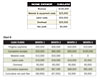
To illustrate the cash flow dilemma, I’ve constructed a couple of simple charts. Chart A assumes you have won a contract worth $100,000. Material and equipment costs for this job are pegged at $25,000, labor $50,000 and overhead $20,000, leaving you with 5 percent or $5,000 net profit at the end.
Now let’s assume this job has a work schedule entailing three monthly progress payments of $30,000, with the final 10 percent held out as retainage to be paid after everything on the punch list gets cleared up. In Chart B, I have frontloaded material costs somewhat, on the assumption that all materials and equipment going into the work will have been purchased and paid for well in advance of the work being done. I realize this doesn’t necessarily happen in the real world but in my ideal scenario you would receive discounts for timely payment, which has been factored into the job’s profitability.
As you can see, even though there’s a decent profit factored into this job, your cash flow runs in negative numbers until the third month, and you don’t get to enjoy all the profits until four months after work began. In the interval you have to pay your workers and all material bills plus overhead out of retained earnings or borrow the money from the bank.
Multiply this example by all the jobs you do and it’s easy to see how at any given point in time you can owe thousands upon thousands of dollars more in payments due than you have cash on hand. You either have to finance the shortfall out of your own pocket or take out a bank loan to meet your obligations. If you don’t have the money and your credit has run dry, you can be driven out of business even though theoretically you would be able to pay everything once all the money owed to you comes through.
My examples are of course oversimplified but I’ve been around construction contractors enough to know that this example conceptually depicts the kind of cash flow dilemma that is epidemic throughout the construction industry. Throw in factors such as delayed progress payments and jobs bid under cost or runaway expenses, and the situation turns from difficult to disastrous for many contactors.
Another factor that can lead to a cash flow crunch is rapid growth. People don’t normally think of booming business as having a downside but when a contracting firm experiences growth on the order of 15 percent or more in a single year it creates a need for capital expenditures that get frontloaded ahead of revenues. Rapid growth requires more cash for materials, labor and overhead, along with additional tools, equipment, office supplies and equipment, etc. Much of it has to be purchased on the fly without a lot of time available to shop prices or compare value. And if business is booming for you, it’s probably booming for competitors who are going after the same things and thus driving up prices through increased demand. Often you end up having to purchase from unfamiliar suppliers who might not extend friendly credit terms like the business buddies you’ve been dealing with for years.
Here are some ways to stay out of cash flow hell.
Be choosy about who you work for. Some GCs and owners are notorious for making life miserable for their subcontractors. Experienced subs won’t even bid on their jobs, so they rely on newcomers who don’t know any better to take the bait. In today’s crunch, it’s especially tempting to take any work you can get. Still, better do your homework before bidding on any job with an owner or GC you don’t know. Also do a little snooping to find out their financial and payment status. It doesn’t matter what your contract documents say about payment terms, if the guy ahead of you doesn’t get paid on time, it’s unlikely he’ll be any quicker to sign your check.
Reduce overhead expenses. This goes without saying as something to be done everyday in every way. But when times are good, it’s real easy to pad the front office with a lot of stuff that’s nice to have but nonessential to running your business. It only starts to hurt when business slows down.
Negotiate dating terms. Almost everyone haggles with suppliers over the price of materials, equipment and services but eventually you’ll run into the lowest price anyone is willing to offer. That will be the point at which you begin to ask not for a lower price but an extra 30 days to pay for the goods or services.
Do things right the first time. Mistakes kill profits and cash flow. Nobody will pay you until you fix what’s wrong. When you make a mistake, deal with it right away. Better yet, avoid mistakes.
Send invoices promptly. Most people set aside certain times of month to pay bills, which is sensible. Many contractors do the same thing when it comes to sending out invoices, which is foolish. Get in the habit of sending out your invoices as soon as possible. Oh, and add a late payment penalty, just like a lot of utility companies do. The penalty is likely to be unenforceable but adds a little bit of a psychological edge.
Stay on top of past-due collections. Call late payers the first day a payment is past due. Keep calling. Send follow up collection notices using businesslike but increasingly stern language. Credit and collections professionals recognize that the longer someone owes money, the greater the chance of never getting paid. Debts that are more than 90 days past due generally sell for around 30 cents on the dollar to collection agencies.
Cash that check. When you do get paid, don’t let the check sit around until you “get a chance” to go to the bank. Put it into an interest-bearing account right away. W&C
Looking for a reprint of this article?
From high-res PDFs to custom plaques, order your copy today!