Straight Green: Regional Materials Requirements
Both LEED and Green Globes
address building material greenness with regard to where products are
fabricated and where the raw ingredients for these products originated.

Both LEED and Green Globes address building material greenness with regard to where products are fabricated and where the raw ingredients for these products originated. The rationale for including a regional materials credit in green building rating systems is twofold: 1) The regional economy is stimulated and 2) Environmental damage associated with transportation of materials and products is reduced.
The requirement in LEED for MR Credit 5 – Regional Materials was substantially changed from Version 2.1 to Version 2.2, and this has caused a great deal confusion that stubbornly persists. The Green Globes credit for regional materials includes a novel way for materials outside the arbitrary 500 mile radius to count toward earning the available points if railed or shipped to the project site.
 LEED
MRC5 REGIONAL MATERIALS
LEED
MRC5 REGIONAL MATERIALS
Historically, project teams pursuing the LEED regional materials credit could get one point for documenting that a percentage of products and materials were manufactured within a 500 mile radius of the project site, and another point for documenting that a percentage of materials raw ingredients was additionally harvested within that same radius. This was a great deal for nearly every building material manufacturer, because nearly all of them could claim that their products contributed to the first part of the credit (most being manufactured somewhere in the U.S.). The stated intent of the credit is to support the regional economy and reduce the environmental impact resulting from transportation.
Because raw ingredients for many building materials are transported large distances from a project site, allowing things made with such ingredients to count toward the credit is in conflict with the stated intent. LEED for New Construction Version 2.2. changed the credit to be in alignment with the credit intent. The change required that materials contributing to the credit must be both manufactured and extracted/harvested/recovered within 500 miles of the project site. LEED Version 3.0 made this change effective across all of the other rating systems.
The industry has been slow to acknowledge this very significant change. I am still, on a fairly regular basis, presented with information by product representatives that their products meet requirements for the regional materials credit by virtue of the fact that they are manufactured somewhere in the U.S. When I point out that the credit now requires that products and materials also be extracted/harvested/recovered within 500 miles, I generally get blank stares. For all but a few products and materials in a few locations across the U.S., this change makes it extremely difficult for most to comply. Because this credit (as are most of the MR credits in LEED) is based on the total cost of materials used in the building’s construction, it’s the big ticket items that matter most.
In the earlier version of the credit, big ticket items like windows, cabinets, and metal roofing and wall panels made a large contribution toward the first point. In the current version, however, many of the materials used to make these products are extracted/harvested/recovered well outside most project’s 500 mile radius. For aluminum windows the framing members’ raw ingredient, bauxite, is mined outside the U.S., the sand used in glass from only a handful of U.S. locations, and the metal for the hardware anyone’s guess. The wood-based core material used in cabinets comes from all over North America, hardwood veneers often originate overseas, the paper and petroleum-based resins for plastic laminate anyone’s guess. Although metal roofing and wall panels are roll formed in many locations throughout the U.S., the ingredients used to make the coil stock come from a very limited number of locations.
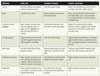
Some raw ingredients that do contribute toward the credit are sometimes overlooked by manufacturers. Materials that contribute include those that are recovered within a 500 mile radius and include things such as scrap metals used to make steel products, crushed concrete aggregate, flue gas gypsum, and recycled paper. Some common examples of this type of raw ingredient are presented in the Table on page 60.
GREEN GLOBES APPROACH TO REGIONAL MATERIALS
Green Globes addresses regional materials under Section 10 of the rating system, Resources/Materials, as 10.1.3 Transportation of Harvested, Reclaimed Salvaged, or Extracted Materials. The credit is similar to LEED in that 500 miles is retained as the radius limit, but it differs in allowing materials that are transported primarily by rail or ship within 1,500 miles to also contribute. This option will be especially beneficial for projects located in coastal areas and landlocked areas with low population densities. The credit recognizes that the environmental burden related to transportation of building materials by truck is greater than by rail or ship. A 2007 white paper, The Environmental Footprint of Surface Freight Transportation by Lawson Economics Research Inc., finds that greenhouse gas emissions for trucking are roughly twice as much as for rail, and three times that of shipping. The paper also concludes that trucking is many times worse than shipping or rail for NOx, VOC, and CO emissions. I found many papers circulating in cyberspace, similar to this one, that arrive at the same conclusions.
For materials to count toward the credit using the shipping or rail alternative, a simple calculation must be performed that shows the majority of the transportation was done by water or rail. The calculation requires that for a combination of transportation methods, the total Extracted Combined Distance must be less than or equal to a value of 1.0. The formula for determining if a material or product meets this criteria is:
ECD = EDR ÷ 1,500 + EDO ÷ 500
Where:
EDR = extraction distance (distance between project and extraction, harvest, recovery or salvaging site) by rail or water.
EDO = extraction distance (distance between project and extraction, harvest, recovery or salvaging site) other than by rail or water.
Let’s use exterior stone cladding quarried in China for a building in Seattle as an example. Let’s say that the stone is transported from the quarry to the dock 100 miles, that the stone is transported by ship 7,000 miles, and then transported again by truck to the project site 50 miles. The calculation for this material would look like this:
(7,000 ÷ 1,500) + (150 ÷ 500) = 4.9
The value of approximately 5.0 does not meet the requirement of less than or equal to 1.0. Now let’s change the stone from an origin in China to something quarried in Cold Spring, Minn., and instead of being shipped to Seattle, let’s assume that it is transported by rail and that the total ground transportation is 100 miles. The new calculation would look like this:
(1,400 ÷ 1,500) + (100 ÷ 500) = 0.95
The value 0.95 meets the requirement and allows the stone from Minnesota to contribute to the regional materials points available. There are 5 total points available for this credit in Green Globes. Allowing materials that are more environmentally transported to the project site will provide incentive for teams to evaluate the source of proposed materials and their modes of transportation to maximize the award of the available points.
CONCLUSION
Acquiring regional materials points in green building rating systems has become more difficult. It is no longer a low hanging fruit credit, especially with LEED. Manufacturers need to take a look at their Web site and product literature claims for this credit and correct where necessary. Manufacturer’s representatives need to provide this updated information to project teams that are pursuing these points for projects they are working on. More and more, manufacturers are offering additional information about raw materials extraction, harvesting, and recovery, a trend welcomed by the building design community.
While LEED has made the right decision to couple point of manufacture with harvesting/extraction/recovery as a minimum requirement, Green Globes offers greater flexibility by allowing mode of transport to be considered for materials that would otherwise count against the project. In offering more than twice the available points than LEED for this credit, Green Globes is also encouraging greater participation and incentive for project teams to do more, and design greener buildings. W&C
Both LEED and Green Globes address building material greenness with regard to where products are fabricated and where the raw ingredients for these products originated. The rationale for including a regional materials credit in green building rating systems is twofold: 1) The regional economy is stimulated and 2) Environmental damage associated with transportation of materials and products is reduced.
The requirement in LEED for MR Credit 5 – Regional Materials was substantially changed from Version 2.1 to Version 2.2, and this has caused a great deal confusion that stubbornly persists. The Green Globes credit for regional materials includes a novel way for materials outside the arbitrary 500 mile radius to count toward earning the available points if railed or shipped to the project site.
Historically, project teams pursuing the LEED regional materials credit could get one point for documenting that a percentage of products and materials were manufactured within a 500 mile radius of the project site, and another point for documenting that a percentage of materials raw ingredients was additionally harvested within that same radius. This was a great deal for nearly every building material manufacturer, because nearly all of them could claim that their products contributed to the first part of the credit (most being manufactured somewhere in the U.S.). The stated intent of the credit is to support the regional economy and reduce the environmental impact resulting from transportation.
Because raw ingredients for many building materials are transported large distances from a project site, allowing things made with such ingredients to count toward the credit is in conflict with the stated intent. LEED for New Construction Version 2.2. changed the credit to be in alignment with the credit intent. The change required that materials contributing to the credit must be both manufactured and extracted/harvested/recovered within 500 miles of the project site. LEED Version 3.0 made this change effective across all of the other rating systems.
The industry has been slow to acknowledge this very significant change. I am still, on a fairly regular basis, presented with information by product representatives that their products meet requirements for the regional materials credit by virtue of the fact that they are manufactured somewhere in the U.S. When I point out that the credit now requires that products and materials also be extracted/harvested/recovered within 500 miles, I generally get blank stares. For all but a few products and materials in a few locations across the U.S., this change makes it extremely difficult for most to comply. Because this credit (as are most of the MR credits in LEED) is based on the total cost of materials used in the building’s construction, it’s the big ticket items that matter most.
In the earlier version of the credit, big ticket items like windows, cabinets, and metal roofing and wall panels made a large contribution toward the first point. In the current version, however, many of the materials used to make these products are extracted/harvested/recovered well outside most project’s 500 mile radius. For aluminum windows the framing members’ raw ingredient, bauxite, is mined outside the U.S., the sand used in glass from only a handful of U.S. locations, and the metal for the hardware anyone’s guess. The wood-based core material used in cabinets comes from all over North America, hardwood veneers often originate overseas, the paper and petroleum-based resins for plastic laminate anyone’s guess. Although metal roofing and wall panels are roll formed in many locations throughout the U.S., the ingredients used to make the coil stock come from a very limited number of locations.
Some raw ingredients that do contribute toward the credit are sometimes overlooked by manufacturers. Materials that contribute include those that are recovered within a 500 mile radius and include things such as scrap metals used to make steel products, crushed concrete aggregate, flue gas gypsum, and recycled paper. Some common examples of this type of raw ingredient are presented in the Table on page 60.
GREEN GLOBES APPROACH TO REGIONAL MATERIALS
Green Globes addresses regional materials under Section 10 of the rating system, Resources/Materials, as 10.1.3 Transportation of Harvested, Reclaimed Salvaged, or Extracted Materials. The credit is similar to LEED in that 500 miles is retained as the radius limit, but it differs in allowing materials that are transported primarily by rail or ship within 1,500 miles to also contribute. This option will be especially beneficial for projects located in coastal areas and landlocked areas with low population densities. The credit recognizes that the environmental burden related to transportation of building materials by truck is greater than by rail or ship. A 2007 white paper, The Environmental Footprint of Surface Freight Transportation by Lawson Economics Research Inc., finds that greenhouse gas emissions for trucking are roughly twice as much as for rail, and three times that of shipping. The paper also concludes that trucking is many times worse than shipping or rail for NOx, VOC, and CO emissions. I found many papers circulating in cyberspace, similar to this one, that arrive at the same conclusions.
For materials to count toward the credit using the shipping or rail alternative, a simple calculation must be performed that shows the majority of the transportation was done by water or rail. The calculation requires that for a combination of transportation methods, the total Extracted Combined Distance must be less than or equal to a value of 1.0. The formula for determining if a material or product meets this criteria is:
ECD = EDR ÷ 1,500 + EDO ÷ 500
Where:
EDR = extraction distance (distance between project and extraction, harvest, recovery or salvaging site) by rail or water.
EDO = extraction distance (distance between project and extraction, harvest, recovery or salvaging site) other than by rail or water.
Let’s use exterior stone cladding quarried in China for a building in Seattle as an example. Let’s say that the stone is transported from the quarry to the dock 100 miles, that the stone is transported by ship 7,000 miles, and then transported again by truck to the project site 50 miles. The calculation for this material would look like this:
(7,000 ÷ 1,500) + (150 ÷ 500) = 4.9
The value of approximately 5.0 does not meet the requirement of less than or equal to 1.0. Now let’s change the stone from an origin in China to something quarried in Cold Spring, Minn., and instead of being shipped to Seattle, let’s assume that it is transported by rail and that the total ground transportation is 100 miles. The new calculation would look like this:
(1,400 ÷ 1,500) + (100 ÷ 500) = 0.95
The value 0.95 meets the requirement and allows the stone from Minnesota to contribute to the regional materials points available. There are 5 total points available for this credit in Green Globes. Allowing materials that are more environmentally transported to the project site will provide incentive for teams to evaluate the source of proposed materials and their modes of transportation to maximize the award of the available points.
CONCLUSION
Acquiring regional materials points in green building rating systems has become more difficult. It is no longer a low hanging fruit credit, especially with LEED. Manufacturers need to take a look at their Web site and product literature claims for this credit and correct where necessary. Manufacturer’s representatives need to provide this updated information to project teams that are pursuing these points for projects they are working on. More and more, manufacturers are offering additional information about raw materials extraction, harvesting, and recovery, a trend welcomed by the building design community.
While LEED has made the right decision to couple point of manufacture with harvesting/extraction/recovery as a minimum requirement, Green Globes offers greater flexibility by allowing mode of transport to be considered for materials that would otherwise count against the project. In offering more than twice the available points than LEED for this credit, Green Globes is also encouraging greater participation and incentive for project teams to do more, and design greener buildings. W&C
Looking for a reprint of this article?
From high-res PDFs to custom plaques, order your copy today!




