Walls & Ceilings logo
search
cart
facebook twitter linkedin youtube youtube Spotify Podcasts Apple Podcasts Spotify Podcasts Apple Podcasts
  • Sign In
  • Create Account
  • Sign Out
  • My Account
Walls & Ceilings logo
  • NEWS
  • TOPICS
    • Drywall
    • Stucco/EIFS
    • Ceilings
    • Steel Framing
    • Fireproofing
    • Interior Plaster
    • Building Envelope
    • Insulation
    • Technology
    • Interior
    • Exterior
    • Women In Construction
  • COLUMNS
    • Up Front
    • All Things Gypsum
    • Art & Craft of Plastering
    • Stucco Stop
    • Steel Deal
    • Industry Voices
  • PRODUCTS
    • Buzz Guide
  • EVENTS
    • Industry Events
    • Webinars
    • BUILD Expo
  • MEDIA
    • Videos
    • Podcasts
    • Photo Galleries
    • BUILD26 Videos
    • Take our Quiz!
    • Infographics
  • EXCLUSIVE
    • Newsletters
    • Top 50 Contractors
    • Contractor of the Year
    • State of the Industry
    • W&C Store
    • Market Research
    • CEUs
    • Sponsor Insights
    • Custom Content & Marketing Services
  • DIRECTORY
  • EMAGAZINE
    • eMagazine
    • Advertise
    • Archive Issues
  • SIGN UP!

The Secondary Water Resistive Barrier
By Mark Fowler
April 1, 2010


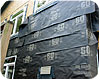
Codes have been around a long time. They are living documents and as such, change is inevitable. One would think that as the codes have evolved, it would be more clear and concise, and help designers, contractors and others with understanding materials and applications. This should be particularly true of products that have been around for decades. Unfortunately, the opposite is true: the code language for water resistive barriers is more confusing, misleading and convoluted than ever.

If you are interested, the code section is 1404.2 of the International Building Code, but that will not help you understand a thing. Not to blame anyone or infer the code is wrong. It is simply there are so many options and schools of thought on the right product; the code has no idea where to go. Basically, asphalt-saturated felts and Kraft papers are allowed under claddings. Housewraps or plastic wraps are also allowed, if they have an International Code Council report stating compliance with section 1404.2. Liquid applied membranes are also code compliant, if they have the same ICC report for compliance. The choice is really the architect’s and approval is ultimately the building official’s. 
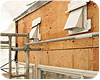
The problem for code officials is how do you take a test meant for felt and use it to test a liquid. You can’t. All of these products keep moisture out, some are more vapor permeable than others; some integrate better with flashings; designers must decide how much water resistance, how much vapor permeance, how much cost. What has a proven history? It is not easy being an architect.

Some WRBs require special attention or a unique application and integration with flashings. Some installation instructions are overwhelming, complicated and incomplete. It is not easy being an installer, either. Since we are limited in space, and manufacturers of proprietary products are the best place to get installation for their products, let’s focus on installation of the old standbys-felt and paper.
FELTS AND PAPERS

Most plaster bureaus prefer Kraft paper over felts. This is not to say felts do not work or that they may not be appropriate in some areas.

The bonding of cement to the secondary WRB has been a concern for plaster bureaus. This is why most recommend two layers over all sheathings. This ensures a true drainage plane.

THE RAIN IN SPAIN FALLS MAINLY IN THE PLAIN

It would seem that cement plaster applied over a flat sheathing with a Kraft paper, and then rodded to a true and flat plane, would produce a cement membrane flat on both sides. Not true, the asphalt paper wrinkles when it absorbs some of the moisture from the fresh scratch coat. This in turn makes the paper wrinkle, creating shallow waves or channels in the back of the plaster. This is the drainage plane. Not as robust as a rainscreen but, when installed correctly, functional in almost all areas of the country.

The WRB is intended to handle “incidental” moisture. We often see pictures of decayed sheathing under stucco, and this could lead one to believe stucco does not work. Proving it works can be a challenge. After all, we do not tear into buildings with no problems.
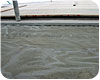
Stucco membrane removed shows the wrinkled paper and the “weep” plane between cement and the WRB that is formed.

APPLICATION

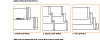
Since two layers of WRB is the standard of the day, how should it be applied? There are three basic methods to achieve a double layer:

Double-Layer Method: manufacturers produce double layer or two-ply paper. This allows both layers to be applied in a single operation and is easy to integrate flashing. It is tradition and functional.

Separate Layers Method: this method is applying a single layer completely and then another single layer over the first layer. Flashings can be more complicated to integrate, slightly more in cost to install, but it is functional.

50 percent Lap Method: this method starts with a half roll (can be full) and the succeeding layer then covers half the lower layer. This system has also proven functional.
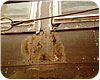
Typical results when basic flashings are missing or reverse laps are present.

There is no testing to confirm that one method of application is superior to another. There are many opinions and preferences as to the best method. If an architect has a preferred method, he must state that method in the specifications to allow the contractor to bid that method accordingly.

Lacking clear and specific direction in the bidding or construction documents, the installer (plastering contractor) should be allowed to install the WRB as he has determined as the best method of application. Architects should allow the contractor his “means and methods” as long as they are code compliant and installed in a shingle-fashion.

Forcing a contractor to install the WRB in a method that you prefer and he is uncomfortable with is a recipe for disaster. People not on board with the plan tend to sabotage that plan, consciously or unconsciously. Whatever application method is selected or forced to be used, the party pushing and prevailing should bear the ultimate responsibility.  

Contractor: If an architect or building envelope consultant has clearly stated how the WRB will be installed at your bid time, you are aware of the direction and should have bid accordingly-if you are not comfortable with that method, do not bid the work. If the architect or consultant announces that you will apply the WRB in a method you did not plan for, you should send a letter advising the parties of your concern and ask to be allowed to use your preferred method. If forced to use the method you do not like, send another letter that you are capitulating against your better judgment and industry guidelines and keep it on file.

Architect/Consultant: If you have strong feelings about how the WRB should be applied, state it clearly in your bid documents. 

Weather-proofing a building for cement plaster is not brain surgery. Good products, common sense and a qualified contractor are worth every penny. W&C

Sidebar: RAINY DAY FUN

This is a five-story condominium with no overhangs on Queen Anne Hill in Seattle. The top of the building is equivalent in height to the Space Needle and exposed to the harshest weather Seattle offers. No rainscreen and no overhangs should be a recipe for disaster. However, good flashings, a knowledgeable architect and a qualified plastering contractor made the conventional cement plaster system work. After 10 years, the sheathing under the stucco appears almost as good as the day it was installed. Tip: The architect specified two layers of 60 minute, asphalt-saturated Kraft paper to be installed in a “shingle-fashion,” and integrated with flashing and never had a reverse lap. He also pre-qualified the plastering contractor. Prior to applying any cement, the architect turned off his cell phone and walked every penetration on the building to ensure compliance. He has more than 300 stucco buildings in Seattle completed and no problems with leaks. He loves stucco and encourages owners to choose it. Just do it right.

Share This Story

Looking for a reprint of this article?
From high-res PDFs to custom plaques, order your copy today!

Headshots fowler

Mark Fowler joined Walls & Ceilings as editorial director in 2006. Fowler grew up in the construction business and has held a number of positions in different companies and associations. He spent 11 years with the Northwest Wall and Ceiling Bureau before moving to his position with Soltner Group Architects in Seattle. Fowler is currently the executive director of the Stucco Manufacturers Association. He can be reached at Mark@markfowler.org.


Recommended Content

JOIN TODAY
To unlock your recommendations.

Already have an account? Sign In

  • Abercrombie & Fitch

    EIFS in 2026: How Specialty Finishes Are Redefining Exterior Wall Systems

    As building codes, owner expectations, and design demands...
    Stucco/EIFS
    By: Regi Mendoza
  • proper air and vapor control

    From Energy Efficiency to Moisture Management: Why Air and Vapor Control Matter

    How proper air and vapor control within building...
    Building Envelope
    By: Benjamin Meyer AIA, LEED AP
  • Linear Metal Ceiling Beam Baffles

    Top 25 Ceiling Contractors of 2026

    Suspended ceilings demand precision, code compliance and...
    Ceilings
    By: John Wyatt and Tanja Kern
You must login or register in order to post a comment.

Report Abusive Comment

Manage My Account
  • eMagazine Subscription
  • Newsletters
  • Online Registration
  • Manage My Preferences
  • Subscription Customer Service

More Videos

Sponsored Content

Sponsored Content is a special paid section where industry companies provide high quality, objective, non-commercial content around topics of interest to the Walls & Ceilings audience. All Sponsored Content is supplied by the advertising company and any opinions expressed in this article are those of the author and not necessarily reflect the views of Walls & Ceilings or its parent company, BNP Media. Interested in participating in our Sponsored Content section? Contact your local rep!

close
  • medical professionals moving a patient on a stretcher through the halls of a medical building
    Sponsored byNational Gypsum Company

    What Does High Performance Mean When It Comes To Gypsum Boards?

Popular Stories

Linear Metal Ceiling Beam Baffles

Top 25 Ceiling Contractors of 2026

Wichita Biomedical Campus

Wichita Drywall Worker Dies After Scaffolding Fall

Okan Tower in Miami, Florida

OSHA Opens Investigation Into Fatal Okan Tower Column Collapse

Construction workers in safety vests install drywall

Gypsum Sales Hold Amid Market Shifts in the U.S.

Events

June 24, 2026

The Bright Side & Benefits of Designing with Integrated Lighting

Credits 1 AIA LU/HSW; 0.1 ICC CEU

This course will explore the pivotal role architects and lighting design play in creating safer, more sustainable spaces. Learn how to avoid common lighting mistakes and make informed decisions that create the best visual environment for occupants. 

January 1, 2030

Webinar Sponsorship Information

For webinar sponsorship information, visit www.bnpevents.com/webinars or email webinars@bnpmedia.com.

See our full library of webinars

View All Submit An Event

Products

2026 National Painting Cost Estimator

2026 National Painting Cost Estimator

See More Products

Related Articles

  • Up Front: That Wacky, Water-Resistive Barrier

    See More
  • The Finish Line: Water Resistive Barrier Coatings

    See More
  • Water resistive barrier

    See More

Related Products

See More Products
  • building codes illustated.jpg

    Building Codes Illustrated: A Guide to Understanding the 2021 International Building Code, 7th Edition

  • Lean Builder book cover - front.jpg

    The Lean Builder

See More Products

Related Directories

  • VaproShield LLC

    For over a decade VaproShield has designed and manufactured high performance vapor permeable water resistive barriers (WRB) and air barrier (AB) membranes and accessories, creating a comprehensive approach to protecting the building envelope that leads to unprecedented savings.
×

Connect with the industry’s leading resource for unparalleled insights and education.

Join thousands of industry professionals today. Shouldn’t you know what they know?

JOIN NOW
  • RESOURCES
    • Advertise
    • Contact Us
    • Directories
    • Store
    • Want More
  • SIGN UP TODAY
    • Create Account
    • eMagazine
    • Newsletters
    • Customer Service
    • Manage Preferences
  • SERVICES
    • Marketing Services
    • Reprints
    • Market Research
    • List Rental
    • Survey/Respondent Access
  • STAY CONNECTED
    • LinkedIn
    • Facebook
    • Instagram
    • YouTube
    • X
  • PRIVACY
    • PRIVACY POLICY
    • TERMS & CONDITIONS
    • DO NOT SELL MY PERSONAL INFORMATION
    • PRIVACY REQUEST
    • ACCESSIBILITY

Copyright ©2026. All Rights Reserved BNP Media, Inc. and BNP Media II, LLC.

Design, CMS, Hosting & Web Development :: ePublishing