Straight Green: Home Energy Monitoring Systems
The
average annual electricity consumption for a U.S. residential utility customer
is approximately 900 kilowatt-hours (kWh) per month. The national average
retail price for electricity is about 11 cents per kilowatt hour. We spend
about $100 a month, per household, on electricity.

The average annual electricity consumption for a U.S. residential utility customer is approximately 900 kilowatt-hours (kWh) per month. The national average retail price for electricity is about 11 cents per kilowatt hour. We spend about $100 a month, per household, on electricity. For many people, the amount of electricity consumed to heat, cool, illuminate, and run appliances is a complete mystery. Studies have proved that knowing how much is being used, at any given moment in time, is a very effective way to get people to reduce and conserve. These studies reveal that when consumers can see how much energy is being used, a reduced consumption in the order of between 8 to 25 percent is realized. That adds up to a savings of $100 to $300 per year for the average American.
With a modest investment of around $200, consumers can purchase energy monitoring equipment that shows exactly how much electricity is being used in the home and for what. This has allowed hundreds of thousands of utility customers to easily identify sources of excess consumption and waste due to behavior, poorly calibrated equipment, inefficient appliances, and less-than-optimal settings.
 THE ELECTRICITY WE USE
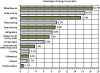
According to a 2008 U.S. Energy Information Administration census, the Top 5 uses of electricity in an average U.S. residence are: see graph on page 44.
Of course, these percentages can vary widely from home to home depending on climate, available energy sources, home size, and number of occupants. The category that caught my attention, though, was the largest: “miscellaneous,” at a whopping 18.5 percent. This is alarming to me because I believe that most of us have no idea what goes into that number. And it is this number that a home electricity monitoring system may have the greatest impact over. Identify the source of the miscellaneous uses, and it is likely that many of them can be reduced or eliminated.
A massive study undertaken by the Electric Power Research Institute titled “Residential Electricity Use Feedback: A Research Synthesis and Economic Framework,” concludes that human beings modify their behavior to conserve energy used simply by being able to see their real-time energy use. It is because of studies like this that utility companies are investing in energy monitoring equipment for residential customers and providing them at a reduced cost, and oftentimes free of charge.
THE ENERGY DETECTIVE
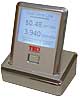
Arguably one of the most sophisticated and useful of the available home energy monitoring devices is The Energy Detective or TED, made by a company Energy Inc. Introduced only a few years ago, several updates and improvements have been made that make this device a must-have for anyone interested in saving electricity at home. TED 5000, the latest and greatest version, is very simple to install and to operate. The device has three main hardware components. One connects to a home’s electrical panel, one plugs into an electrical receptacle and a wireless router, and one displays the data. There are no batteries to replace, and nothing to have to tweak or calibrate.
Software is preloaded into the device that allows users to identify the largest of the electrical consuming widgets in the home, and then lets the user know when each of them is on, and how much power each is using. The software also allows the user to input any rate charge structure be it flat, tiered, or peak and non peak rates. This information is used to display the amount of money being spent for the electricity being used. It is a very powerful behavior-modification tool. Users can also have the data sent to an iPhone of iTouch for remote viewing of the home’s electricity usage.
Google has recently partnered up with Energy Inc. and provides a link from TED 5000 to user’s gmail account for a remote display on any computer monitor connected to the Internet. Called the Google Powermeter, it is the first step in an ambitious plan by Google to remotely monitor, and eventually control, devices that use energy and water. Google has also aligned itself with a competitor to TED 5000 called Current Cost, giving consumers two devices to choose from.
TED 5000 can also be connected to a home’s renewable energy generation equipment. Solar photovoltaic panels and wind turbines that are net metered can also be tied into the TED 5000 devices to show a user how much energy is being generated, how fast the meter is turning backwards, and how much money is being saved at any point in time.
 USING ENERGY MONITORING EQUIPMENT TO SAVE
ENERGY
USING ENERGY MONITORING EQUIPMENT TO SAVE
ENERGY
One user reported a $50 savings in the first month after TED was installed. He realized the savings by turning off the many computer systems, peripherals, and battery backup systems connected to the computer systems. He used TED to pinpoint this huge source of electricity use in his home by turning each one on and off and checking the real-time TED electricity use monitor.
A group of college students sharing an apartment unit in California were spared from having to pay an electric bill many times more than normal using an energy monitoring system. Unbeknownst to the utility company, the apartment manager had installed energy monitoring devices on all of the unit electrical panels. The students returned from a school break to find a $400 electricity bill, even though no one had occupied the unit the previous month. A quick check of the energy monitor data showed a $360 dollar discrepancy between the billed amount and the actual electricity used. Once shown the data from the monitor, the utility company retracted the bill (with no explanation and no apologies).
A common discovery among energy monitor users is how much electricity a water heater can use. One user noticed a huge spike in electricity consumption every time his wife washed her hands. His wife believed in using the hottest water she could stand to wash her hands, and did so quite thoroughly. The home’s water heater was set at such a high temperature that even the slightest amount of hot water use engaged the heating element. Reducing the temperature setting of the water heater saved 20 percent in electricity use, without hampering the wife’s desire to wash her hands the way she liked.
Many users immediately identify several “ghost” or “phantom” loads in their homes upon installation of home energy monitors. Many electrical devices that are “off” continue to draw small amounts of electricity. Things like computers, stereo equipment, DVDs, televisions, and microwaves continue to consume power even when off. According to the U.S. Department of Energy, 75 percent of the electricity that powers home electronics is consumed while these devices are turned off.
CONCLUSION
Home energy monitoring certainly seems like a no-brainer for anyone interested in saving money by reducing electricity use. Because the devices are relatively inexpensive, payback periods for most will be quick. With the backing and support of behemoths like Google and Apple, devices like TED 5000 will only get better, include more and more features, and become more widespread in use. I could find no reference to energy monitoring devices in any green home rating system, but I would expect that oversight to be corrected very soon. The devices can also be used for small commercial buildings, and could satisfy requirements for commercial green building rating system points available for energy measurement and verification. The future looks very bright indeed for energy management and monitoring equipment! W&C
The average annual electricity consumption for a U.S. residential utility customer is approximately 900 kilowatt-hours (kWh) per month. The national average retail price for electricity is about 11 cents per kilowatt hour. We spend about $100 a month, per household, on electricity. For many people, the amount of electricity consumed to heat, cool, illuminate, and run appliances is a complete mystery. Studies have proved that knowing how much is being used, at any given moment in time, is a very effective way to get people to reduce and conserve. These studies reveal that when consumers can see how much energy is being used, a reduced consumption in the order of between 8 to 25 percent is realized. That adds up to a savings of $100 to $300 per year for the average American.
With a modest investment of around $200, consumers can purchase energy monitoring equipment that shows exactly how much electricity is being used in the home and for what. This has allowed hundreds of thousands of utility customers to easily identify sources of excess consumption and waste due to behavior, poorly calibrated equipment, inefficient appliances, and less-than-optimal settings.
According to a 2008 U.S. Energy Information Administration census, the Top 5 uses of electricity in an average U.S. residence are: see graph on page 44.
Of course, these percentages can vary widely from home to home depending on climate, available energy sources, home size, and number of occupants. The category that caught my attention, though, was the largest: “miscellaneous,” at a whopping 18.5 percent. This is alarming to me because I believe that most of us have no idea what goes into that number. And it is this number that a home electricity monitoring system may have the greatest impact over. Identify the source of the miscellaneous uses, and it is likely that many of them can be reduced or eliminated.
A massive study undertaken by the Electric Power Research Institute titled “Residential Electricity Use Feedback: A Research Synthesis and Economic Framework,” concludes that human beings modify their behavior to conserve energy used simply by being able to see their real-time energy use. It is because of studies like this that utility companies are investing in energy monitoring equipment for residential customers and providing them at a reduced cost, and oftentimes free of charge.
THE ENERGY DETECTIVE
Arguably one of the most sophisticated and useful of the available home energy monitoring devices is The Energy Detective or TED, made by a company Energy Inc. Introduced only a few years ago, several updates and improvements have been made that make this device a must-have for anyone interested in saving electricity at home. TED 5000, the latest and greatest version, is very simple to install and to operate. The device has three main hardware components. One connects to a home’s electrical panel, one plugs into an electrical receptacle and a wireless router, and one displays the data. There are no batteries to replace, and nothing to have to tweak or calibrate.
Software is preloaded into the device that allows users to identify the largest of the electrical consuming widgets in the home, and then lets the user know when each of them is on, and how much power each is using. The software also allows the user to input any rate charge structure be it flat, tiered, or peak and non peak rates. This information is used to display the amount of money being spent for the electricity being used. It is a very powerful behavior-modification tool. Users can also have the data sent to an iPhone of iTouch for remote viewing of the home’s electricity usage.
Google has recently partnered up with Energy Inc. and provides a link from TED 5000 to user’s gmail account for a remote display on any computer monitor connected to the Internet. Called the Google Powermeter, it is the first step in an ambitious plan by Google to remotely monitor, and eventually control, devices that use energy and water. Google has also aligned itself with a competitor to TED 5000 called Current Cost, giving consumers two devices to choose from.
TED 5000 can also be connected to a home’s renewable energy generation equipment. Solar photovoltaic panels and wind turbines that are net metered can also be tied into the TED 5000 devices to show a user how much energy is being generated, how fast the meter is turning backwards, and how much money is being saved at any point in time.
One user reported a $50 savings in the first month after TED was installed. He realized the savings by turning off the many computer systems, peripherals, and battery backup systems connected to the computer systems. He used TED to pinpoint this huge source of electricity use in his home by turning each one on and off and checking the real-time TED electricity use monitor.
A group of college students sharing an apartment unit in California were spared from having to pay an electric bill many times more than normal using an energy monitoring system. Unbeknownst to the utility company, the apartment manager had installed energy monitoring devices on all of the unit electrical panels. The students returned from a school break to find a $400 electricity bill, even though no one had occupied the unit the previous month. A quick check of the energy monitor data showed a $360 dollar discrepancy between the billed amount and the actual electricity used. Once shown the data from the monitor, the utility company retracted the bill (with no explanation and no apologies).
A common discovery among energy monitor users is how much electricity a water heater can use. One user noticed a huge spike in electricity consumption every time his wife washed her hands. His wife believed in using the hottest water she could stand to wash her hands, and did so quite thoroughly. The home’s water heater was set at such a high temperature that even the slightest amount of hot water use engaged the heating element. Reducing the temperature setting of the water heater saved 20 percent in electricity use, without hampering the wife’s desire to wash her hands the way she liked.
Many users immediately identify several “ghost” or “phantom” loads in their homes upon installation of home energy monitors. Many electrical devices that are “off” continue to draw small amounts of electricity. Things like computers, stereo equipment, DVDs, televisions, and microwaves continue to consume power even when off. According to the U.S. Department of Energy, 75 percent of the electricity that powers home electronics is consumed while these devices are turned off.
CONCLUSION
Home energy monitoring certainly seems like a no-brainer for anyone interested in saving money by reducing electricity use. Because the devices are relatively inexpensive, payback periods for most will be quick. With the backing and support of behemoths like Google and Apple, devices like TED 5000 will only get better, include more and more features, and become more widespread in use. I could find no reference to energy monitoring devices in any green home rating system, but I would expect that oversight to be corrected very soon. The devices can also be used for small commercial buildings, and could satisfy requirements for commercial green building rating system points available for energy measurement and verification. The future looks very bright indeed for energy management and monitoring equipment! W&C
Looking for a reprint of this article?
From high-res PDFs to custom plaques, order your copy today!