Water Resistant Barriers Meet Mandated Codes
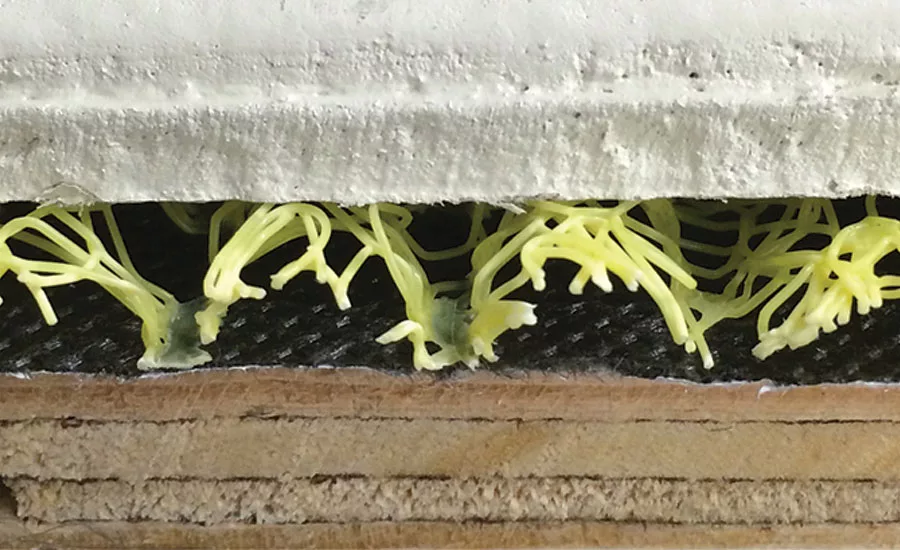
The publication of the 2003 International Residential Code mandated water-resistive barriers as part of exterior wall assemblies. Spurred by increasing costs of energy for heating and cooling homes and the desire for a reduced carbon footprint, there has also been a trend to increase insulation in the building enclosure. These combined goals of water resistance, and a tighter building envelope to control energy costs, often result in a lack of heat and air transmission across wall assemblies. This can mean trapped moisture within sidewalls that has little opportunity to dry, especially in rainy or humid climates.
Residential builders, architects and homeowners have now had over a decade of experience working and living with these requirements and are finding that a WRB, while good, may not always be an adequate solution for keeping wall assemblies dry. Buildings experience serious issues when water gets trapped behind siding. It can cause mold, rot and significant structural damage that can be expensive to repair.
This issue has been magnified by water remediation issues cropping up across the United States and Canada, particularly in coastal regions and lakeside areas including New England, the Pacific Northwest, and along the Rust Belt. Still, no one area is immune. It only takes a rainy season or significant rainfall, in an otherwise dry area, to create a moisture problem.
No matter where they live, homeowners are aware of moisture issues and the related consequences, from inspection failures to litigation. They want to live in houses that are going to last, and they’re actively looking for builders who differentiate themselves in the marketplace by promoting good building practices, high-level customer care and attention to detail.
In a recent research paper published by the Pennsylvania Housing Research Center at Pennsylvania State University, University Park, Pa. it is posed that even when WRBs are installed to code, certain moisture-related limitations are experienced in wall assemblies. Those limitations were noted to include the following:
- A properly installed, code-compliant WRB does not necessarily address the need for a wall assembly to dry effectively, should it become wet.
- Flashing at wall openings (doors, windows, etc.) and utility penetrations is commonly installed incorrectly, increasing the likelihood of moisture intrusion or entrapment.
- Increased levels of insulation in walls reduce the ability of walls to dry through diffusion when water vapor is present and when it is necessary to dry moist building materials.
Without an advanced system to drain water behind siding effectively, problems with moisture control can appear in as few as two to three years, and are more commonly seen as the house approaches 10-years-old. These limitations with WRBs make it easy to understand why rainscreen systems, a technology that has been used in Europe for many years and on commercial projects in the United States, are growing in popularity within the residential construction market.
What is a Rainscreen?
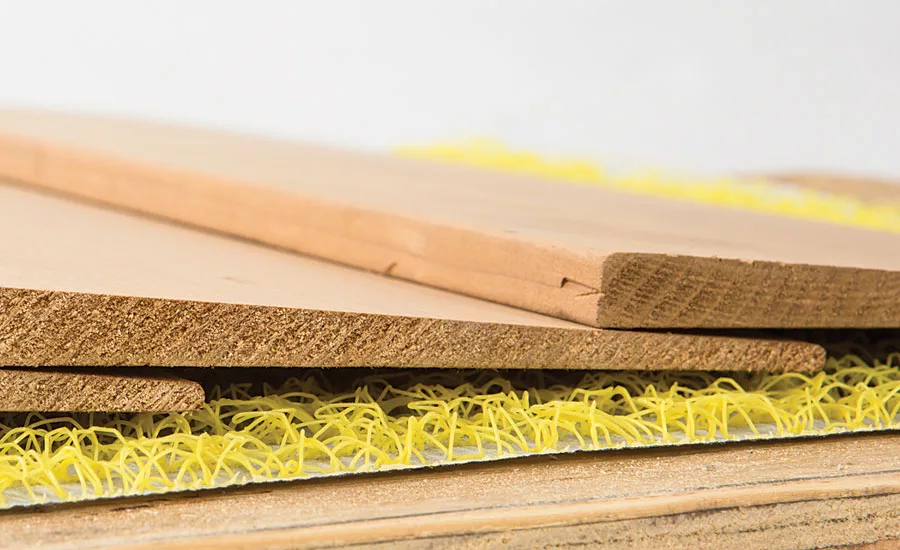
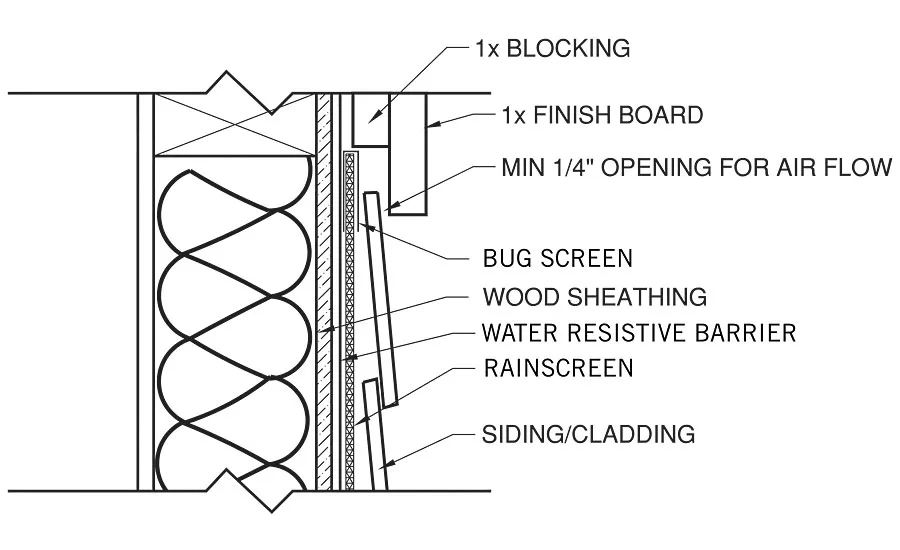
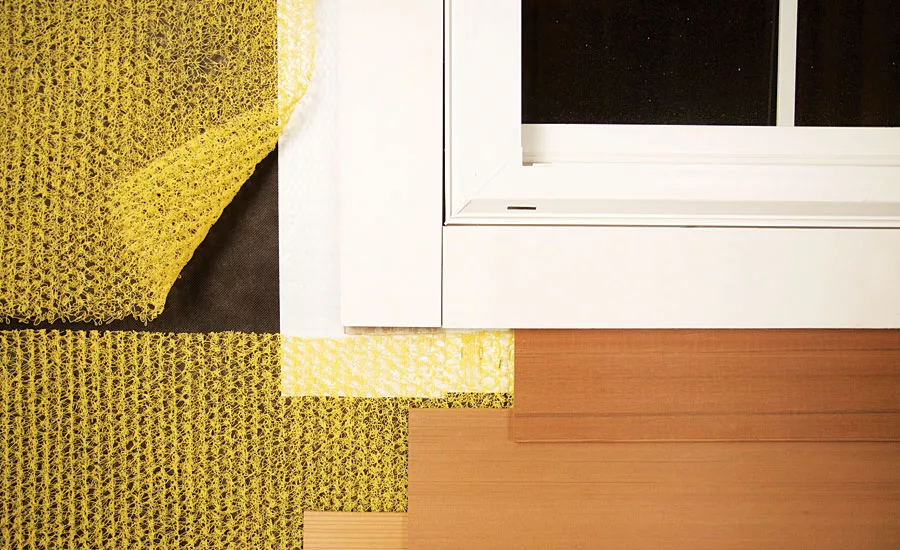
A residential rainscreen is actually a cladding assembly. It is the combination of the exterior siding, a WRB–such as building paper or housewrap–and an air gap, which can be created with furring strips or a three-dimensional mesh product. This design provides a drainage space which allows the cavity behind the siding to dry naturally following water exposure.
A rainscreen system controls rain entry in an exterior wall by creating a pressure-moderated air space immediately behind exterior cladding. The 1/4- to 3/4-inch space between the back of the cladding and the face of the WRB reduces the forces that draw water into the assembly, while also managing water entry by allowing it to enter and exit. The WRB in turn, drains away any bulk water that manages to seep in behind cladding. A rainscreen also aids in the drying of any moisture in the interior wall assembly by moving air in a convective fashion throughout the cavity. Some rainscreen systems include ventilation gaps at both the top and bottom terminations of the wall system to contribute to this effect. However, there are also many highly functioning assemblies constructed with gaps only at the bottom of the system.
Selecting the Right Wall Protection System
There are several factors to consider when making the decision as to whether a rainscreen assembly is the best choice for residential water protection. The first consideration is annual rainfall. In areas with rainfall averages of 20-inches or less, some level of protection is required, which may be satisfied with a standard housewrap. In climates where rainfall is between 20- and 40-inches per year, a drainable house wrap is a strong option. This building category provides a continuous drainage gap that allows water to escape quickly from the wall system, protecting the building enclosure. Testing has shown that drainable housewraps drain 10 times more water than standard housewraps installed without any gaps. Still, rainscreen assemblies provide the best level of water protection in geographies that routinely experience in excess of 40-inches of rainfall per year.
In addition to average rainfall, wind-driven rain must also be considered, which can be a factor even in areas with low annual rainfall. Proximity to lakes and coastlines also contribute to cumulative humidity levels, along with indigenous weather events that can affect the amount of water deposited on the surface of the cladding, and moisture trapped behind it.
Another factor is the type of cladding to be used in the construction of the home. More porous sidings, such as wood, stucco, and stone, are more susceptible to moisture penetration and absorption and require the comprehensive level of protection provided by a rainscreen assembly. Fiber cement products are less susceptible to moisture infiltration and can benefit from the air space of a rainscreen system or a drainable housewrap, depending on climate. Vinyl sidings, which are non-permeable and do not trap water when installed correctly, can be installed with housewrap or building paper. Obviously, local building codes must be followed when weighing the options for moisture protection.
Many builders and architects now recognize this need for rainscreen assemblies, and are making extra efforts to help homeowners understand the benefits of installing advanced moisture management systems up front. While the cost to construct a rainscreen system for an average 2,400-square-foot U.S. home typically run higher than a standard housewrap, average remediation costs due to moisture protection issues can range from $500 to $30,000 and can extend up to $300,000 on stucco applications. In addition to providing a line of defense against remediation costs, rainscreens support a balanced environment that can prolong the life of the wall assembly, reduce the incidence of peeling paint and other moisture-related exterior siding deterioration, and allow homeowners to enjoy long-term energy savings of a well-insulated home.
Looking for a reprint of this article?
From high-res PDFs to custom plaques, order your copy today!