Spray Foam's Move Toward Sustainability and Why It Matters
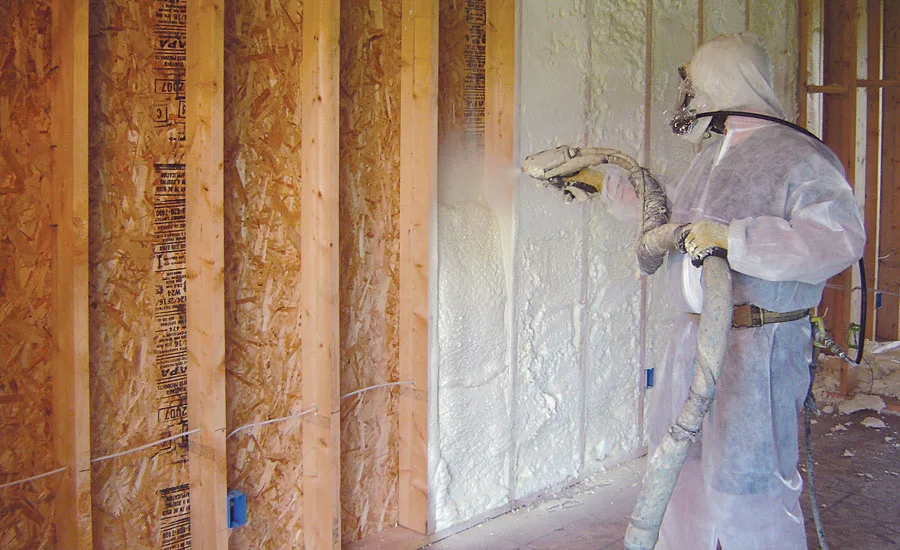

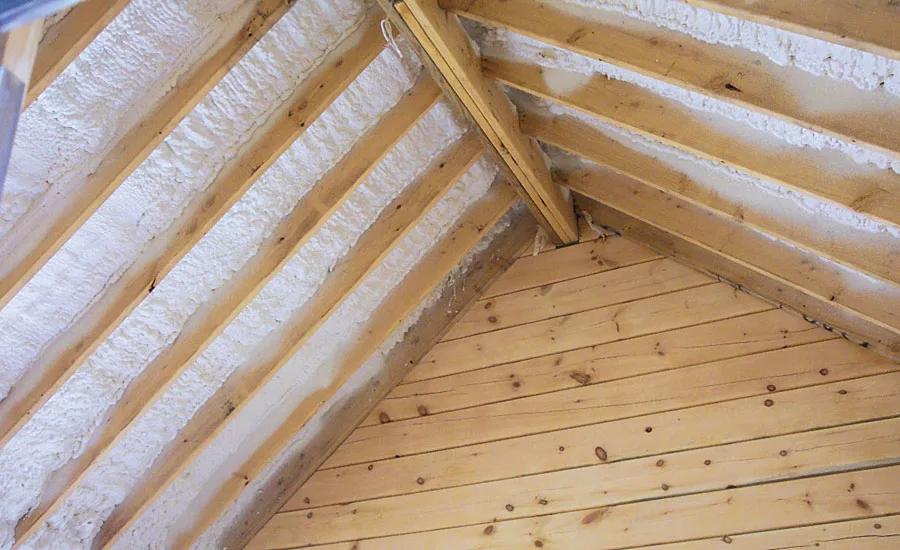
The spray polyurethane foam industry has been making notable strides in sustainability over the past few years. In part, a reflection of a sector growing in market share and sophistication, the industry’s move toward sustainability is also a result of significant, recent innovations in product chemistry. Nevertheless, these recent strides were spurred long before and are, in essence, the latest achievement on a continuum of green efforts that started more than three decades ago.
An International Impetus
In 1987, 20 global economic leading countries got together to raise awareness and create a commitment to the protection of the ozone over growing concerns of its depletion by greenhouse gasses created by vehicle exhaust and other ozone depleting gasses, some natural and some artificially generated. What resulted was an international treaty, structured around the phased elimination of several groups of halogenated hydrocarbons known to deplete stratospheric ozone.
Thought to be a remarkable example of international cooperation and policy making on a global scale, this initiative was eventually ratified by all 20 countries and, in 1989, entered into force as the Montreal Protocol on substances that deplete the ozone layer.
Despite the historical success of the Montreal Protocol, the initiative created hurdles for many industries, requiring a marked shift to more environmentally friendly methods. The treaty essentially mandated guidelines to transition each affected industry to employ a more sustainable technology and ensure a more eco-friendly future. Some of the industries most affected by the treaty, both then and now, include: refrigeration, air conditioning, fire protection, aerospace, electronics, agriculture, laboratory measurements, and foam.
The Impact to Spray Foam
At the time of the official enactment of the Montreal Protocol, the impact to the spray foam industry (much like the air conditioning industry, for example), was significant with a mandate to move toward lower ozone depleting technologies with lower global warming potential. The efforts over the years to achieve this have not been without challenge.
Specifically, chemical providers and manufacturers had to “retool,” finding alternative chemistry formulations and raw materials that achieved the mandated goals, while not compromising the performance value of the spray foam end product. This challenge essentially boiled down to maintaining both performance and cost to retain the class of products’ market potential and ultimate value to the consumer.
As part of the industry’s response to the treaty, it successfully phased out chlorofluorocarbons, and followed that with freezing the consumption and production of hydrochlorofluorocarbons. The industry over time has transitioned from CFCs to HCFCs to HFCs to HFOs, or hydrofluoroolefins, with the latter reflecting the industry’s most significant move yet toward a sustainable chemistry that is non-ozone-depleting and has a low global warming potential.
Where Are We Now?
The spray foam industry made its official move to HFO’s in 2014, with the introduction of a fourth generation blowing agent, HFO-1233zd(E). Honeywell led the industry as the first to commercialize the new blowing agent, which boasts an ultra-low global warming potential value of less than one and zero ozone depletion potential. The first product industry-wide to incorporate the new blowing agent was Lapolla Industries’ high performance FOAM-LOK 2000-4G closed-cell spray foam insulation system.
“The fourth generation blowing agent represents Honeywell’s continued commitment to the delivery of low environmental impact technology that enhances the industry’s ability to deliver effective and safe energy saving spray polyurethane foam products,” says Laura Reinhard, global business manager, Spray Foam for Honeywell. “This blowing agent represents our industry’s greatest achievement to date in meeting the goals set forth by the Montreal Protocol.”
The global requirement brought forth by the Montreal Protocol is now not only achievable but is resulting in better product performance. Spray foam incorporating the new blowing agent technology achieves higher R-values and enhanced consumer value via lower in-place costs. These benefits run alongside the net positive ecological value provided with reduced carbon footprint, low global warming potential and non-ozone-depleting properties.
Interestingly, sustainability in the spray polyurethane foam market comes in a few different forms. The improved blowing agent technology is significant. The product also achieves an unmatched reduction in the structure’s energy consumption. This energy conservation by dramatically reducing the demand for energy required to heat or cool the building. This reduces the use of fossil fuel for electricity as well as the consumer’s carbon footprint.
The exceptional performance of spray foam in energy efficiency makes it an ideal solution for all construction methods aimed at energy conservation. With zero net energy construction being pushed by the state of California, Texas’ recent move to the International Energy Conservation Code, and many other states and municipalities following suit in the push toward energy conservation in the built environment, spray polyurethane foam is poised as an insulation material of choice.
However, with spray foam as an ideal materials solution for the energy conserving structures that meet increasingly stringent building codes, it is imperative that the industry continues to identify and employ sustainability in the products it creates—much like it has with the adoption of the fourth generation blowing agent. This drive toward sustainability will not only reduce the industry’s impact to the environment, but will ensure that spray foam is included in future environmental certification programs and, ultimately, that the industry continues to grow in market share.
Looking for a reprint of this article?
From high-res PDFs to custom plaques, order your copy today!