Building Science Pseudologoi
Three common continuous mineral fiber myths debunked.
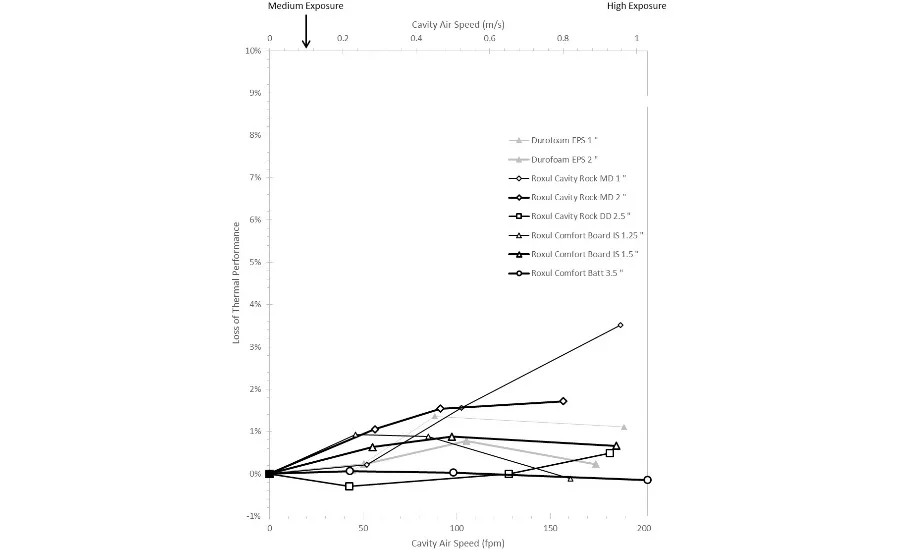
Figure 1.
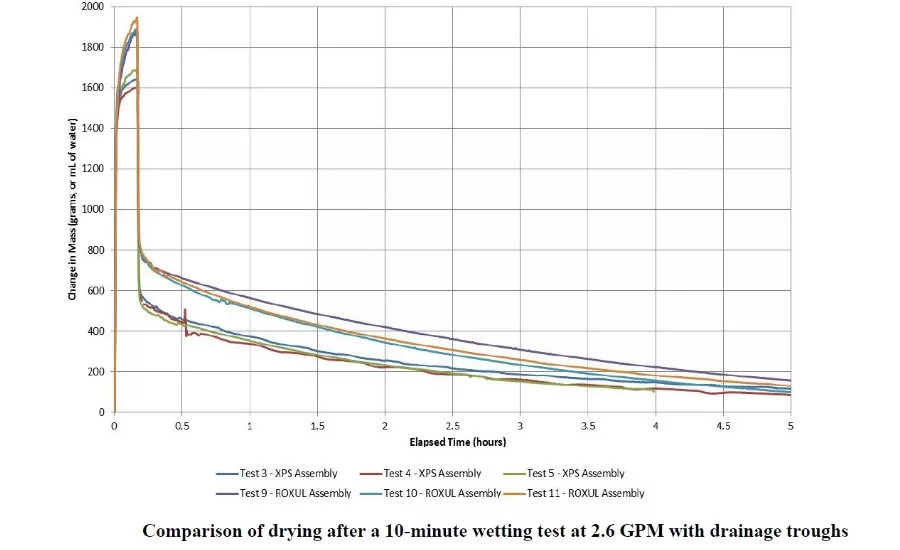
Figure 2.
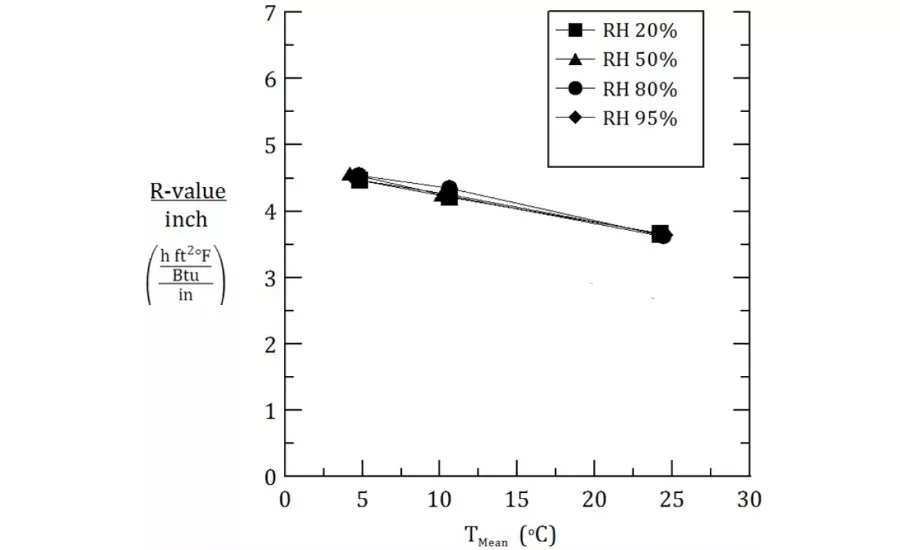
Figure 3.

Rockford “Rocky” Boyer is North American manager, Energy Design Center for ROXUL Inc. He is involved globally, promoting energy efficient, sustainable products and solutions for residential, commercial and institutional buildings.
Pseudologoi were the personifications, or tangible manifestations, of lies and falsehoods in Greek Mythology. Myths are stories that people know to take as parables, not to interpret literally. But falsehoods are dangerous. With the explosion of social media and self-proclaimed experts commenting on building industry websites and blogs, personal views and false information (whether intentional or not) is now everywhere. It can be difficult to sort through the falsehoods to find the truth. Tangible manifestations of falsehoods in the building industry occur when industry experts specify products on the basis of this prevalent misinformation. The buildings they construct become the living embodiments of falsehoods, and the repercussions can be serious, ranging from wasted money to buildings that may deteriorate over time.
Listed below are three common pseudos’ about mineral fiber installed as continuous thermal insulation. These three myths relate to wind washing, water absorption and loss of R-value due to cold temperatures. Data provided in this article was obtained by third-party testing labs.
Myth #1: Wind Washing Significantly Reduces Mineral Fiber Thermal Performance
There are many variables that dictate the force of wind acting on a building or structure, location, weather, height, orientation, surroundings are to name a few. Wind loads on a building are not always constant and will also vary from low concentrated loads to high concentrated loads. High concentrated wind loads only come in gusts and typically do not last that long as to have any meaningful effect on the performance of the continuous fibrous insulation. These gusts are also specific to the type of façade and do not have the same impact on the windward side vs. the leeward side (suction). The majority of the time the continuous fibrous insulation is protected by a cladding or wind break which drastically minimizes the impact of the wind loads acting on the insulation. Not all fibrous insulation is meant to be installed as a continuous insulation, so manufacturers have designed specific materials with a higher density to minimize the impact of reduced R-value due to air flow over and through the product. Third-party wind washing testing both at low and high levels (see figure 1) on typical exterior insulations has shown that the impact is very minimal (as shown in the graph). So with a high density insulation material on the exterior side of the cladding, significantly reducing the impact of the wind gusts occurring periodically and windward forces occurring on limited facades, designers should not worry about the impact of wind washing. Aeolus, Greek God of all the winds, would not be happy about the misinformation relating to his powers.
Myth #2: Water Absorption Likely Reduces Mineral Fiber Thermal Performance
Typically, moisture is the number one cause of building failures. Therefore designers and architects are very concerned when designing their enclosure for durability and performance. There is an unsubstantiated perception in the industry that fibrous continuous insulation absorbs water and takes many hours to dry out. This is not the case.
Similar to wind, the façade or rain screen effectively blocks approximately 90-95 percent of the rain as it falls on the building. So the remaining 5-10 percent is either drained on the back side of the cladding or a small percentage of water may fall on the face of the insulation. The small amount of water that hits the face of the insulation is not absorbed in the fibres due to oils and binders on the fibers. The non-directional fibres create small voids in the insulation board to minimize the wicking of water into the product, similar to water draining though crushed stone at the foundation wall. Gravity also helps propel the water down and to a location where it can be directed outside of the enclosure. This is even the case with open jointed rain screen system. Figure 2 shows and open jointed rain screen with the water absorption of XPS board insulation vs. mineral fiber board insulation and elapsed drying period. As shown in the chart the difference between the two is minimal. The perception of water absorption in mineral fiber was derived from submerging mineral wool in water for two hours and then weighing and seeing how long to dry. If your wall enclosure sees this amount of bulk water in two hours, I am sure the mineral fibre would be the least of your worries (unless you are Poseidon, in which case it isn’t a worry at all).
Myth #3: Mineral Fiber Loses R-value Loss at Cold Temperatures
Fibrous insulation does not use blowing agents in the manufacturing process; therefore the potential for R-value loss due to temperature is eliminated. Actually R-value of fibrous insulation increases when the temperature decreases, this is due to the radiation function of heat transfer (see figure 3). Studies for fibrous insulation show that as the temperature decreases the R-value increases, this is similar to all other insulations except certain other insulation products where there is a decrease at low temperatures. The reason for the decreased R-value in certain other insulation products is due to the fact that the blowing agents in the product condense in the cells which increase the thermal conductivity of the insulation. This does not happen in fibrous insulation products as the R-value is obtained from trapping still air. Boreas, Greek God of cold winter air, would be disappointed that his powers are blunted by fibrous insulation.
In closing, there is no such thing as bad insulation, just bad application. Using a higher density fibrous insulation as a continuous layer is a very good application and there should be no concerns regarding wind washing, water absorption, and loss of R-value when the temperature decreases. It is important to understand that fibrous insulation is only a component within the system, so a complete understanding of the enclosure and its performance should always be realized.
Looking for a reprint of this article?
From high-res PDFs to custom plaques, order your copy today!