How Channels Impact Acoustics
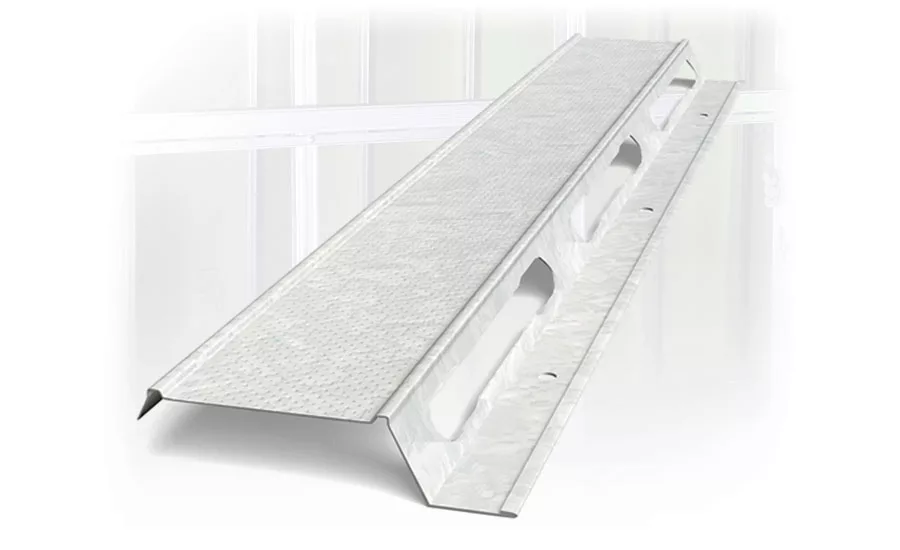
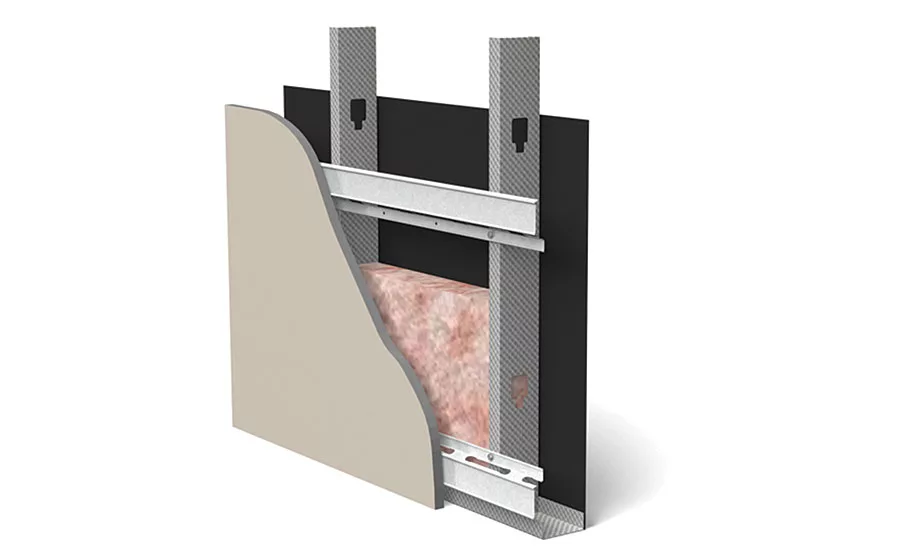
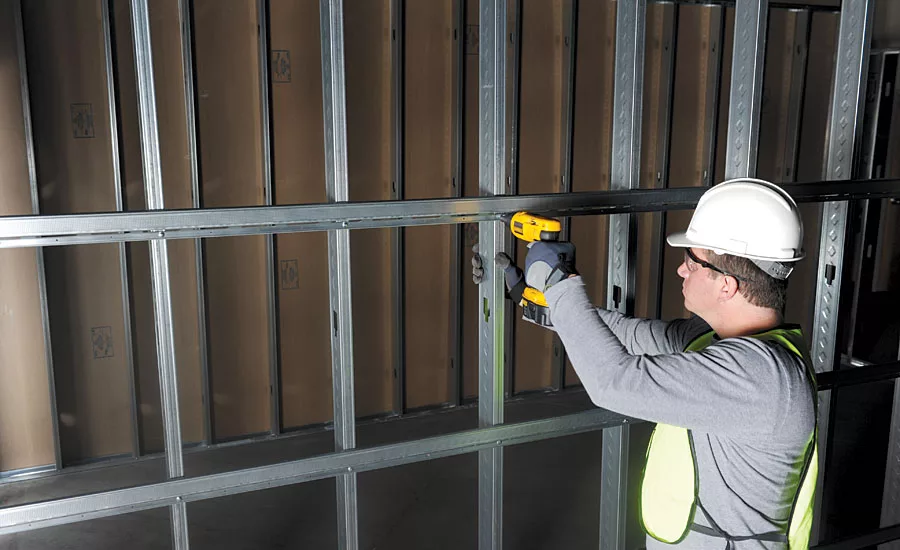
Resilient channels have long been a popular, cost-effective component of acoustical design strategies in commercial and multi-family construction projects. They function as de-couplers, permitting the attachment of gypsum board to the framing members without any actual contact between the two components. This separation of the gypsum board from the studs impedes the transmission of airborne sound waves through the wall assembly by breaking their path.
However, in order to achieve maximum acoustical performance from building assemblies that utilize resilient channels, a variety of factors must first be considered. Research done over the years by acousticians, such as Veneklasen Associates,¹ of Santa Monica, Calif., have shown that resilient channel design selection and installation practices can significantly impact a wall, ceiling or floor assembly’s overall acoustical performance.
Comparing Resilient Channel Designs
Since the debut of the industry’s first resilient channel, RC-1, by USG more than 50 years ago, the product’s design has been extensively tested against other resilient channel designs to compare acoustical performance. Consistently outperforming its counterparts, it is now widely accepted as the benchmark for resilient channels in wall, ceiling and floor assemblies and in sound testing. Although USG stopped manufacturing resilient channels in the early 1990s, the RC Deluxe Resilient Channel, made by ClarkDietrich Building Systems, is identical to the original USG RC-1.
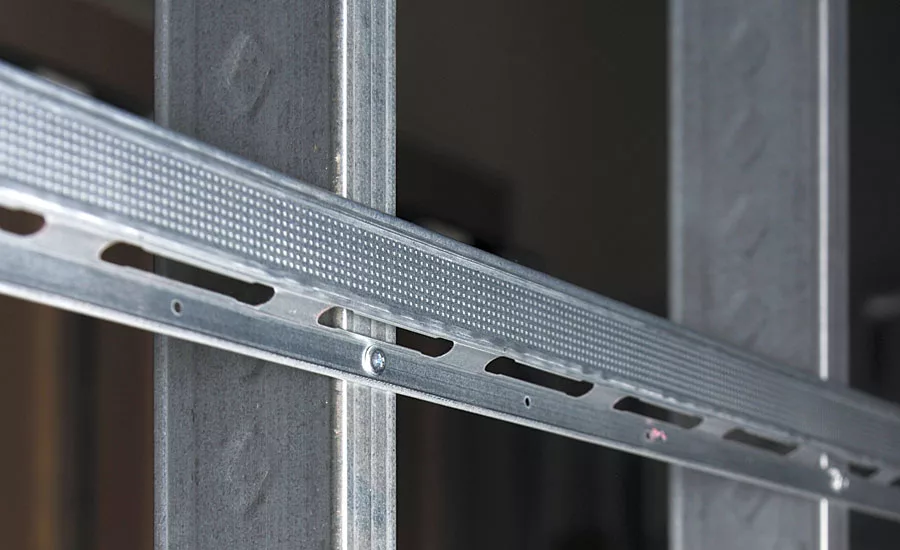
The average resilient channel is manufactured in a cross-section shape, appearing like half of a standard hat-shaped furring channel, but with only one leg. The leg attaches to the wall stud and the gypsum board is attached to the channel face. The channel’s leg has special holes for the screws that fasten it to the framing members. Traditional resilient channels that follow the original RC-1 design typically feature a long, slotted hole with circular ends that are wider at the ends than in the middle portion of the slot. Because of the unique shape, these holes are commonly referred to as a “dog bones.” Resilient channel products featuring various other hole shapes and configurations have consistently yielded lesser results when tested against the original USG RC-1 design over the years.
Acoustical Testing for Resilient Channels
Acoustical testing for resilient channels follows the protocols of ASTM E336, Standard Test Method for Measurement of Airborne Sound Insulation in Buildings; ASTM E90, Standard Test Method for Laboratory Measurement of Airborne Sound Transmission Loss of Building Partitions and Elements; and ASTM E 413, Classifications of Rating Sound Insulation. They are incorporated into a wall assembly design and tested collectively with the other components. The sound measurement most often required for wall construction is sound transmission class, an integer-number rating of how well an assembly reduces airborne sound transmission. The higher the STC rating, the better the assembly is at reducing the transmission of sound.
By incorporating one brand of resilient channels in a particular wall assembly design and testing it against another brand installed in the same assembly design, acousticians can get an accurate picture of how the resilient channels affect STC ratings. Before choosing a resilient channel for a project, it is wise to research its performance in such tests.
Now, let’s look at common resilient channel installation errors, their impact on the acoustical performance of wall assemblies and how to prevent them.
Preventing Common Installation Errors
It is important to ensure that resilient channels and the gypsum board are installed properly, as one seemingly minor error can derail the whole acoustical strategy. Let's talk about some of the most common resilient channel installation errors and how to prevent them.
Improper Screw Length and Placement
Screws that attach the gypsum board to the resilient channel must be the correct length and should be located within the space between framing members when the gypsum board is attached. They should never fall directly over a stud. The screw length should be the gypsum board’s depth plus 3/8-inch. Acoustical problems arise when installers use screws that are too long, place them directly over a framing member and allow them to make contact with, or penetrate, the framing member. This gives sound vibrations a direct path to the stud, which will then allow the stud to transmit the vibrations through to the next room. This installation error, known as “short-circuiting,” nullifies the acoustical advantages of the resilient channel and significantly reduces the wall assembly’s sound attenuation. Just a few “short circuits” will significantly reduce the effectiveness of the entire wall assembly.
Installers must either use a screw that’s no longer than necessary or guard the stud with a steel resilient furring channel clip, which slides onto the resilient channel and acts as an impenetrable washer between the resilient channel and stud. Screws will not penetrate the clip because it’s a heavier gauge product, adding extra protection from short-circuiting.
Improper Mounting
The resilient channel should be mounted perpendicular to the stud framing, with the elongated dog bone holes centered directly over the framing members. This placement helps impede airborne sound vibrations, as the opening slot decreases the area of metal-on-metal contact. It is also important for the attachment flange to face downward. The open side of the resilient channel should face upwards, toward the top of the wall. This placement allows the weight of the installed gypsum board to lead the resilient channel away from the framing. Since the top of the resilient channel has no direct contact with the stud, sound transmission through the wall assembly is disrupted. Installing the open side of the resilient channel downward will press it into the framing, allowing sound waves to resonate through to the stud. The RC Deluxe name, when properly installed, can be read. If the channel is installed incorrectly, the name will appear upside down.
There is an exception to this rule, however. The first resilient channel row, starting at the floor level, can be installed with the open side down to facilitate the connection of the resilient channel to the stud. When installing the resilient channel to the wall studs, it should not touch the abutting wall surface. This would result in a short circuit. The first horizontal piece of resilient channel should be installed so the centerline of the face is 3-inches or less from the floor. The last horizontal row of resilient channel should be no farther than 6-inches from the ceiling.
Sandwich Installation
Another common misstep, known as a “sandwich installation,” involves a resilient channel installed onto a solid surface, such as a plywood shear panel, in a way that sandwiches the channel between the gypsum board and the plywood panel. When tested, this installation is an acoustical catastrophe, as it results in a short circuit, negating the value of the resilient channel over the majority of the frequency range.1
Neglecting To Offset Wallboard Seams
Whenever the project calls for two layers of gypsum board for additional acoustic control, it is vital to offset the seams on these boards for each layer, as well from the seams on opposite side of the wall. Vertical seams should also be offset whenever the gypsum board is installed either in a horizontal or vertical application. This blocks any direct sound transmission pathway through the wall assembly.
Insufficient Partition Sealing
Once the wall assembly has been constructed, all direct pathways for sound transmission should be blocked. Drywall installers should thoroughly seal any penetrations, such as electrical outlets, switch boxes or telephone boxes, etc. Avoid having more than one penetration in a stud bay whenever possible. Sealing the perimeter of the assembly with acoustical caulk after everything else is tightened up is also recommended to avoid “flanking,” or the traveling of sound through gaps located at the perimeter of the wall assembly and its corners.
Conclusion
Wall assembles with properly installed USG RC-1-style resilient channels, sound-absorbing insulation and acoustical sealant can easily rival the acoustical performance of assemblies with premium noise-reducing gypsum board—and for a lower total install cost. They provide a cost-effective strategy for enhancing sound transmission loss, which helps contractors give their customers more performance for their money. By following the guidelines above and properly installing resilient channels, contractors can provide the client a high-STC wall assembly at a fraction of the price of those made with alternative materials.
Looking for a reprint of this article?
From high-res PDFs to custom plaques, order your copy today!