Exterior Gypsum Sheathing for High Performance Building
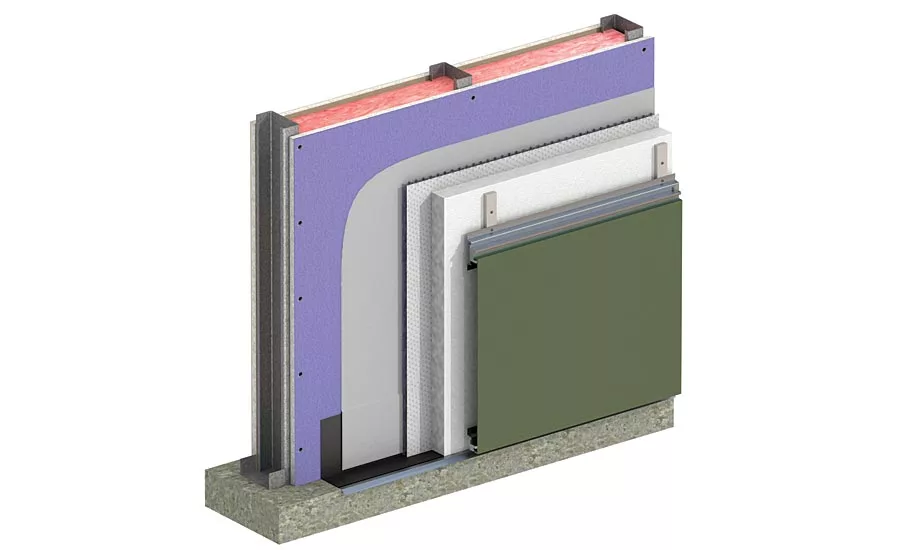
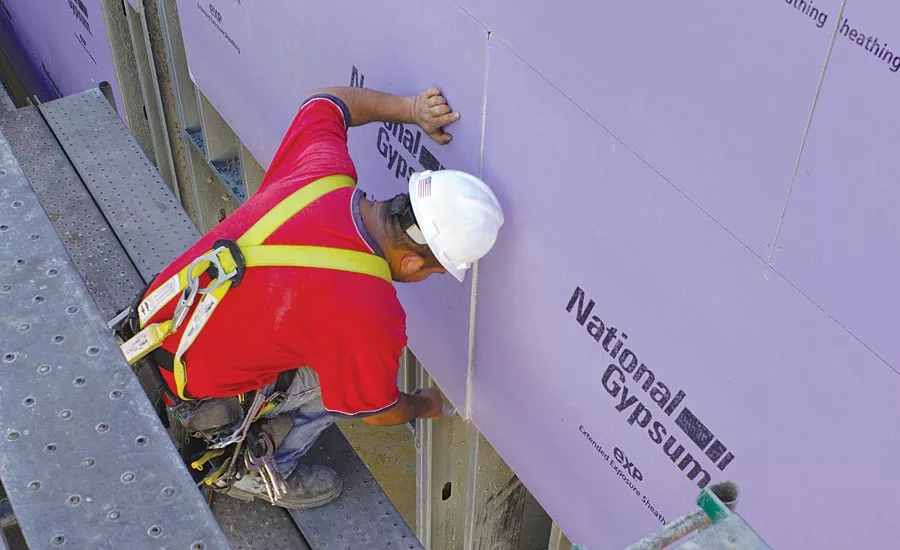
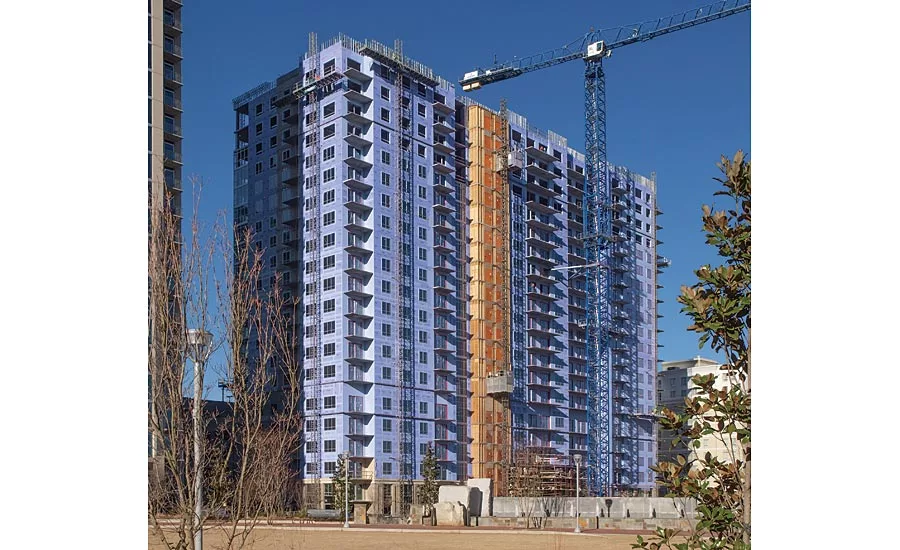
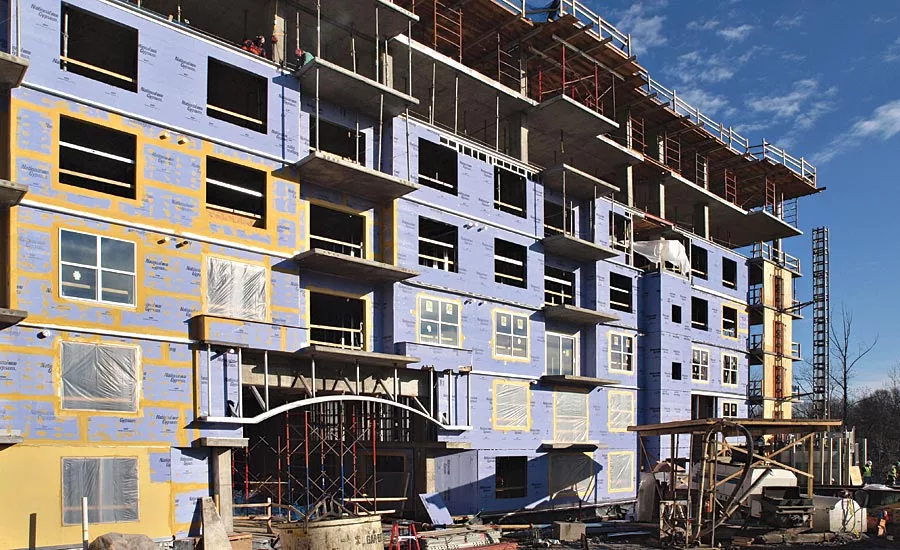
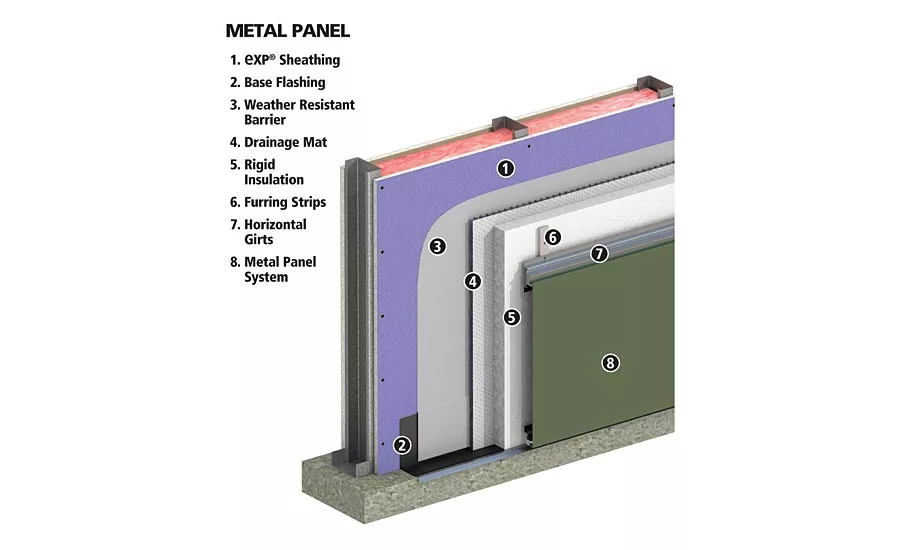
In 1986, fiberglass-faced gypsum sheathing was introduced to the marketplace to help with scheduling issues. Especially with EIFS, exposed paper-faced sheathing would either delaminate or show the growth of mold, necessitating the need to replace the sheathing prior to installing the cladding. In contrast, fiberglass-faced products could be exposed for extended periods. Though it grew in popularity over the years, in 2006 it became a go-to product for high-performance exterior wall assemblies.
The 2006 International Building Code called for the addition of a weather resistive barrier to address air and moisture issues over the surface of sheathing. (“An approved water-resistive barrier shall be applied over studs or sheathing of all exterior walls.”) To comply, architects, contractors and subcontractors needed a product that would minimize air leakage and moisture intrusion into the wall cavity. Fiberglass-faced gypsum sheathing, which provides a stable base on which to apply the WRB, became an even greater option (it was always a growing option; with the code changes, it became an even more compelling option). Composed of an inorganic, moisture-resistant gypsum core and fiberglass facers, it exhibits low thermal and hydrometric expansion and is ideal to take on the elements and maintain dimensional stability. It weathers well during construction and is not moisture sensitive.
Between 2009 and 2012, the International Energy Conservation Code then added several amendments for energy conservation to the IBC. Changes in the IECC from 2009 to 2012 have resulted in an increase in minimum insulation levels required for commercial buildings. Not only are the levels increased, the use of exterior rigid insulation has become part of the prescriptive code requirements. With more jurisdictions adopting the 2012 IECC, commercial contractors are required to incorporate exterior insulation in the construction of exterior wall assemblies.
Thermal expansion and contraction of some rigid foam exterior insulation materials can have a significant effect on the assembly. The use of fiberglass-faced gypsum sheathing as a substrate for the insulation mitigates the movement issues. Additional provisions included preventing thermal bridging in the building envelope (heat transferring across thermally conductive elements of the assembly) along with limiting air leakage into and out of the building.
Uncontrolled air leakage leads to increased energy usage as it introduces hot air into the building during the cooling months and cold air into the building during the heating months. Also, there are the new American Society of Heating, Refrigerating and Air-Conditioning Engineers standards that demand continuous insulation outside the building along with fully adhered WRBs. To address these issues as well as new sustainability standards and certifications for LEED, architects specify products they can rely upon to create better high-performance building assemblies. This now includes incorporating fiberglass-faced gypsum sheathing into their projects.
Gypsum Sheathing Provides More Long-term Benefits
There is a reason today every gypsum manufacturer produces a fiberglass mat sheathing. Since moisture intrusion is a major consideration, this sheathing helps to diminish the possibility of mold growth by removing the food source for mold contained in conventional sheathings. Gypsum sheathing also has a 12-month exposure warranty, it is not affected by inclement weather or fluctuating temperatures (suitable in both warm and cold climate zones), it provides dimensional stability (the coefficient of expansion and contraction is ~1/2-inch in linear 100 feet), it is fire resistant (approved for specific UL designs), it can have cladding installed over it at any time, it is easy to install, it has flexural stability, allowing for installation either vertically or horizontally, and it provides great benefits while a building is under construction.
With fiberglass-faced gypsum sheathing, contractors can compress construction schedules without delays, or delays in the next step of the critical path changes. If schedules are modified, it is not an issue. There is no need to build in replacement costs for materials. For architects and contractors, fiberglass-faced gypsum sheathing is a key component in streamlining building projects and provides additional peace of mind.
Bringing Exterior Sheathing Indoors to Enhance Building Performance
When using fiberglass-faced gypsum sheathing on the exterior, it also makes sense to use fiberglass gypsum panels on a building’s interior. The interior gypsum panel’s moisture- and mold-resistant core and fiberglass mat surface provides additional increased resistance to incidental moisture. Several gypsum manufacturers produce interior fiberglass panels to use for the interior of the exterior wall, shafts and stairwells because they work so well with exterior fiberglass-faced gypsum sheathing to create an optimal environment. Heat and moisture flows from warm to cold, and moisture flows from moist to drier areas. Moist air carried into a wall cavity by air leakage or diffusion will condense on the first hard surface it encounters that is colder than the dew point. By creating a wall system using interior fiberglass-faced gypsum panels with exterior gypsum sheathing, the danger of condensation occurring on the interior board is markedly reduced. Gypsum sheathing on the outside and fiberglass-faced drywall on the inside enhances long-term building performance.
Works Like an Insurance Policy
Architects, contractors and subcontractors should use products that have their backs because it is not a matter of “if” but “when” they will have a leak in their exterior envelope. High-performance exterior walls might have a higher initial cost, but it is nothing compared to the cost of maintenance and repairs. The price of long-term damage from incidental moisture or having to employ mold remediation services can quickly multiply. Codes and standards have changed, and expectations of what we make and what a contractor is going to build have changed.
An architect has to consider whether a building is energy efficient, watertight, airtight, and to a contractor, we say the same thing: build it to be all of these things, and you have an insurance policy in place. Building it well hinges on using the right materials.
Design, Build and Maintain it Right
Gypsum sheathing has a proven track record to help support the strength and longevity of buildings. Moving forward, it will be even more beneficial as requirements expand for air, water and insulation barriers and the need for dimensional stability in high-performance energy systems increases.
Looking for a reprint of this article?
From high-res PDFs to custom plaques, order your copy today!