Drywall: History, Design Concepts and Fire Safety
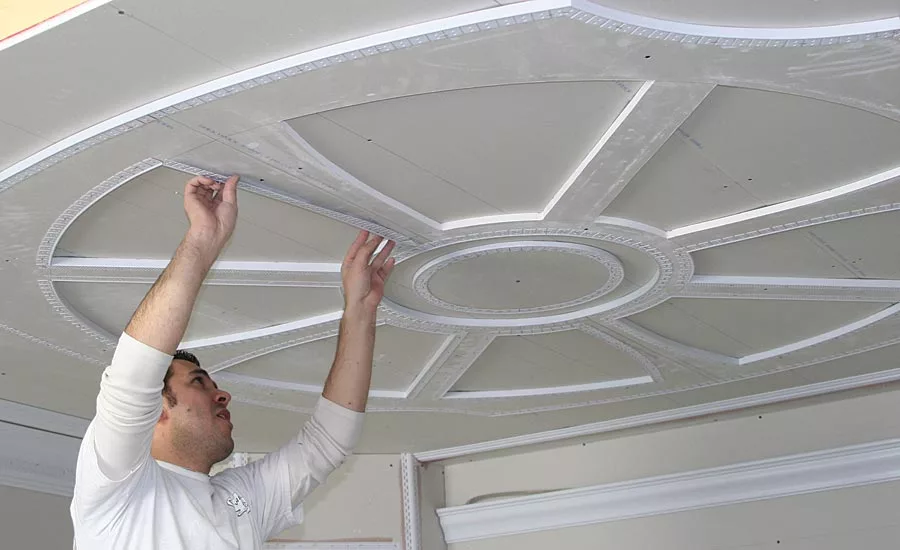
A drywall artisan uses the layering technique to create a ceiling medallion.
Plaster construction has existed in various forms since 7500 B.C.E., when ancient peoples in modern-day Jordan used a crushed limestone plaster to cover walls, floors, and other large surfaces in their homes. The Ancient Egyptians used a gypsum-based plaster to create a paintable surface on the interior of tombs, and in Ancient China, plaster was used to create a smooth finish on walls made of rough stone or brick.
As plasterwork developed, more refined and elegant techniques emerged. This gave plasterwork an artisan- or craft-status. Such techniques included marmorino (the direct application of plaster to masonry), scratchwork (two layers of contrasting plaster are applied, then the top layer is scratched away to create designs) and a variety of techniques for blending the plaster with pigments in-order-to imitate marble. In this way, plasterwork developed from a practical, almost primitive, construction technique into an expressive, artistic craft. Until recently, interior finishing was a highly skilled trade, requiring artisans to mix and match a wide-variety of techniques to create textures, colors, and custom designs.
Fast forward to 1916, a subsidiary of U.S. Gypsum Co. (known then as Sackett Plaster Co.) first sold a fire-proof tile consisting of two sheets of heavy paper sandwiching compressed gypsum, or drywall. Twenty-five years later, builders began using drywall regularly in construction because of its cost-effectiveness and fire-resistance. Why did this great fire-resistant interior finishing material take so long to be accepted by the market? For the simple reason that since its invention, and to this today, it is regarded as too plain to meet our aesthetic needs. As a result, the use of drywall has been reserved for purely practical considerations. However, modern developments, especially in cornerbead, are transforming boring drywall into an artistic skill.
Design with Drywall/Cornerbead
Cornerbead is a protective finishing element used in drywall construction. Drywall, while resistant on the surface, has brittle and fragile edges that require protection. Cornerbeads, made of impact resistant materials, line the edge of drywall and provide this protection. Traditionally, cornerbead has been made from thin sheets of galvanized metal rolled into shape from flat stock.
Unfortunately, while metal is strong, it is not flexible. For example, while a metal corner may be resistant to impact, once it is hit with enough force to cause it to deform, it does not have the elasticity to return to its previous shape. This means that damage sustained to metal cornerbead requires time consuming and unnecessarily expensive maintenance. Additionally, metal cornerbeads, inability to absorb force, can lead to cracking, paint chipping and other problems that will result in ongoing maintenance repairs. Beyond the durability challenges that metal poses, the production process limits the malleability of metal bead so only basic shapes can be achieved. This means that metal cornerbead can only act as a protective element, relying on wood carpentry and wall hangings to provide interior finishing adornment.
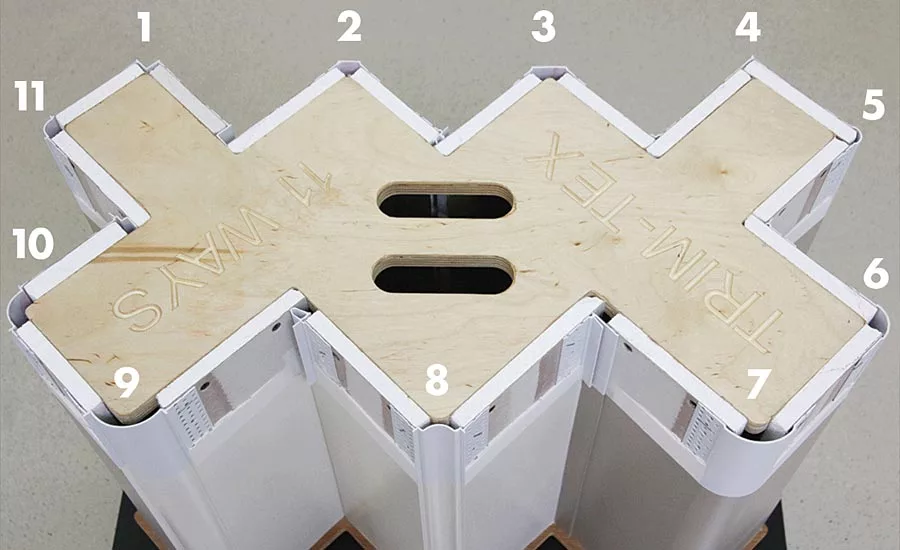
The introduction of vinyl cornerbead in the late ’60s eliminated the design limitations of cornerbeads. Vinyl beads are composed of a proprietary vinyl blend that gives it strength and elasticity. The rigid vinyl compound is extruded through a die. The dies used in this extruding process can be cut to nearly any size and shape, meaning that vinyl bead is much better suited to creating complex or decorative shapes. With more than 200 shapes currently on the market, vinyl bead has become the perfect solution to boring gypsum walls.
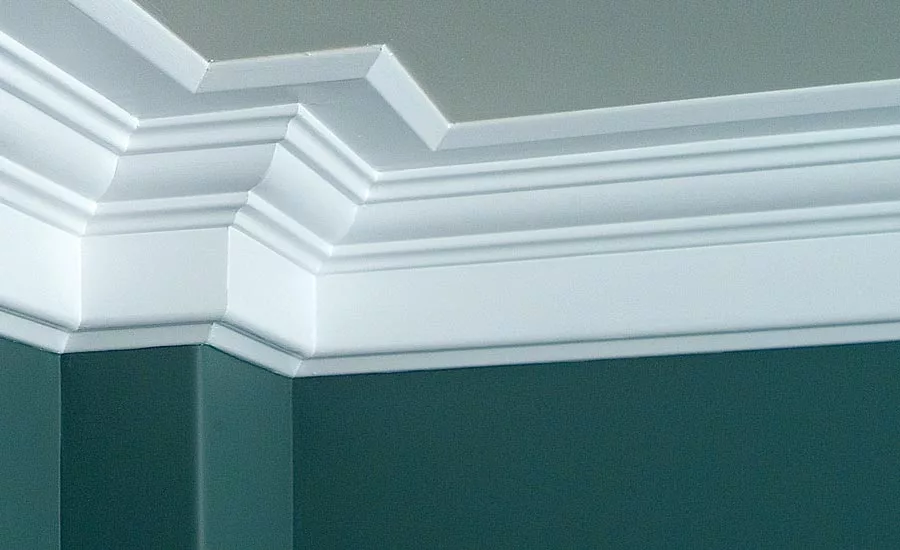
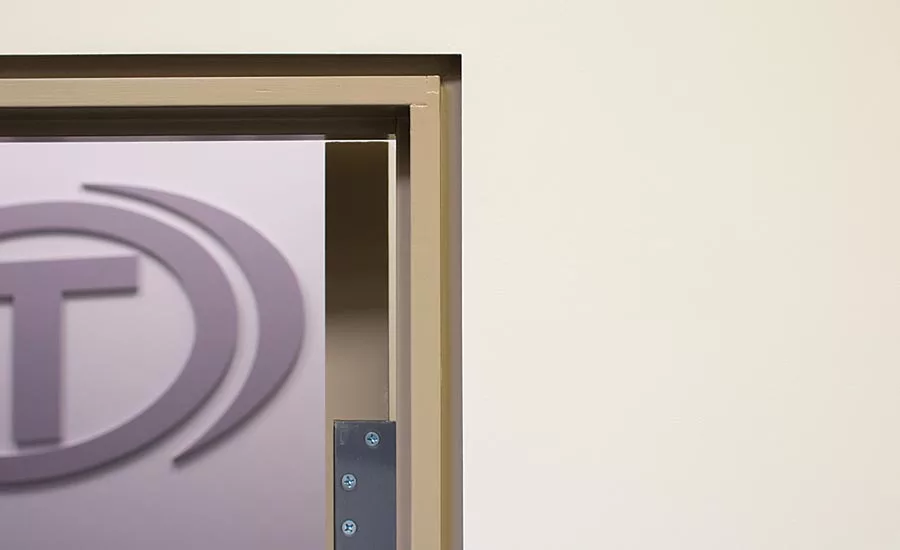
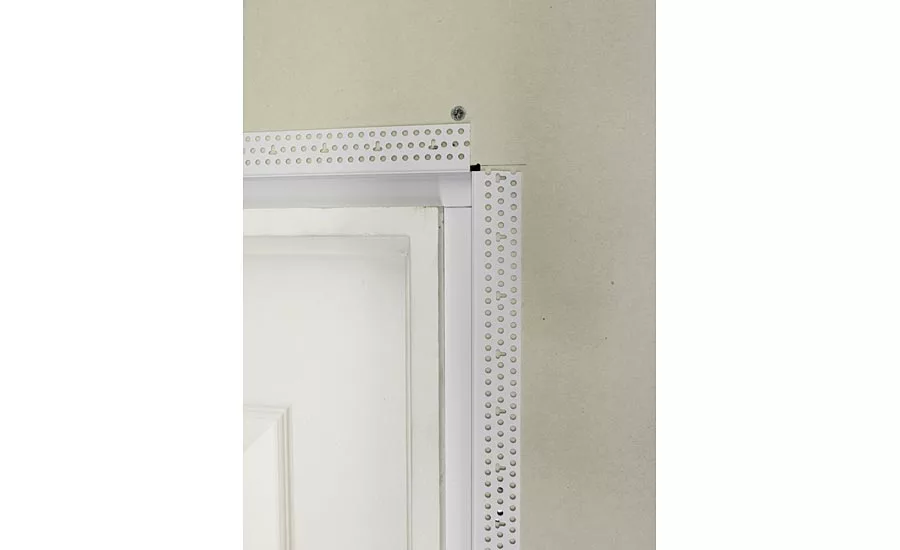
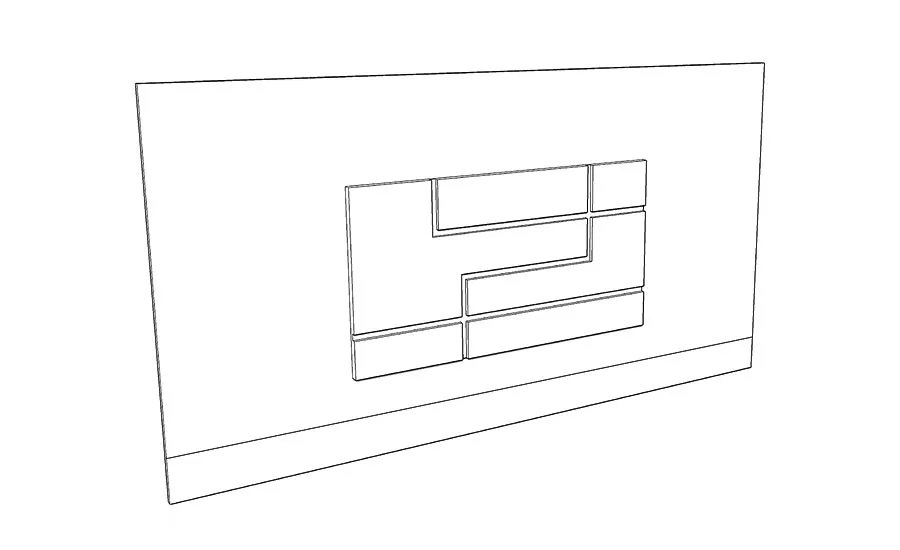
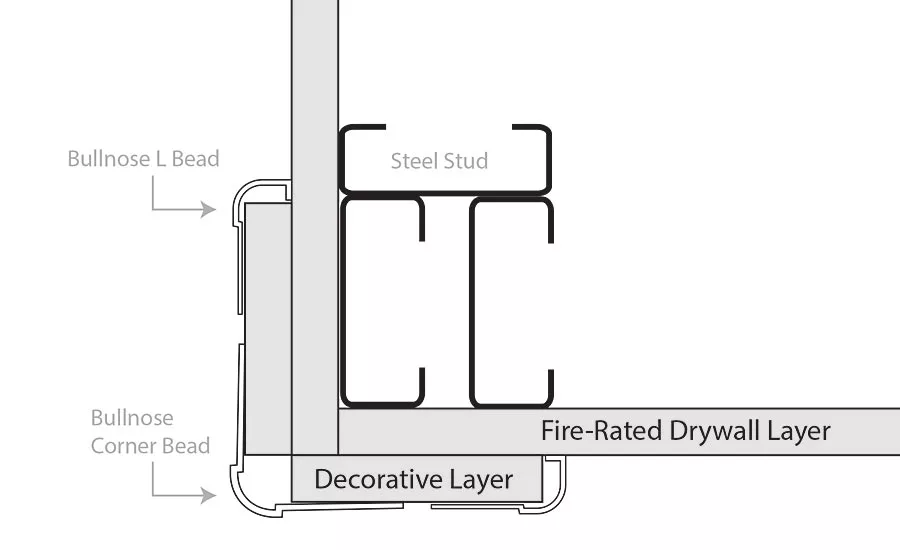
Besides finishing straight edges and corners, vinyl bead is also an outstanding choice for creating advanced radial curves and archways. Some of the more popular vinyl cornerbeads include bullnose, niche, and chamfer. All these decorative beads lend themselves to different styles and design applications. For instance, bullnose is well-suited to creating the soft corners of the Southwestern style. Decorative L-beads create Victorian-style millwork details without the cost of custom-cut wood. Minimalist interiors are enhanced by using reveal and shadow beads to create crisp, clean shadow lines that highlight frameless doors and flush baseboards. Modern drywall artisans can now achieve nearly endless custom, one-of-a-kind details through a process of drywall layering. Shapes are cut from drywall stock, attached to a wall or ceiling, and then finished with stylistically appropriate decorative beads.
Drywall Design, Building Codes and Fire Safety
Of course, with the increased variety in design choices comes increased consideration for safety. Custom work often necessitates special considerations when dealing with codes and certifications. Consider, for instance, the added load created by a drywall art layering installation like the medallion above. Even though it is merely an attachment to an existing (up to code) ceiling, the added weight necessitates a careful evaluation of the underlying framing to ensure it can safely bear the weight of the installation.
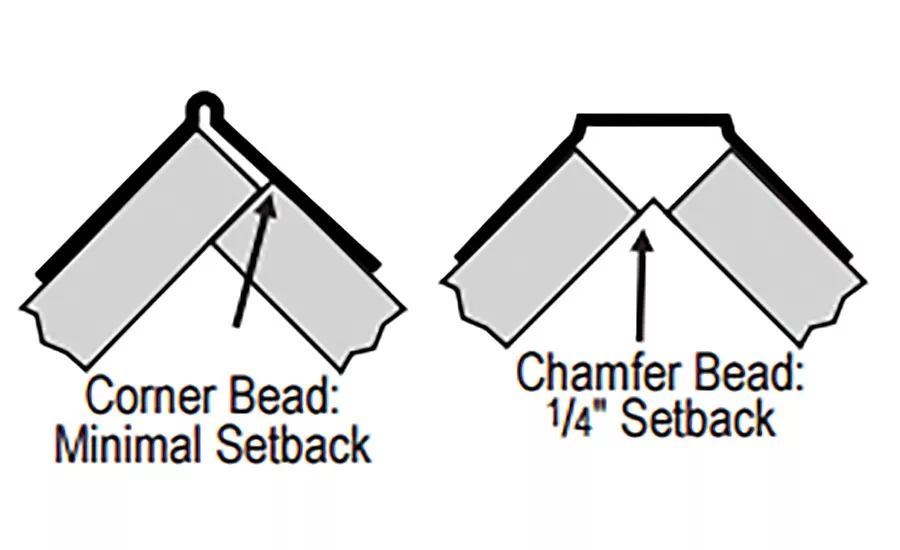
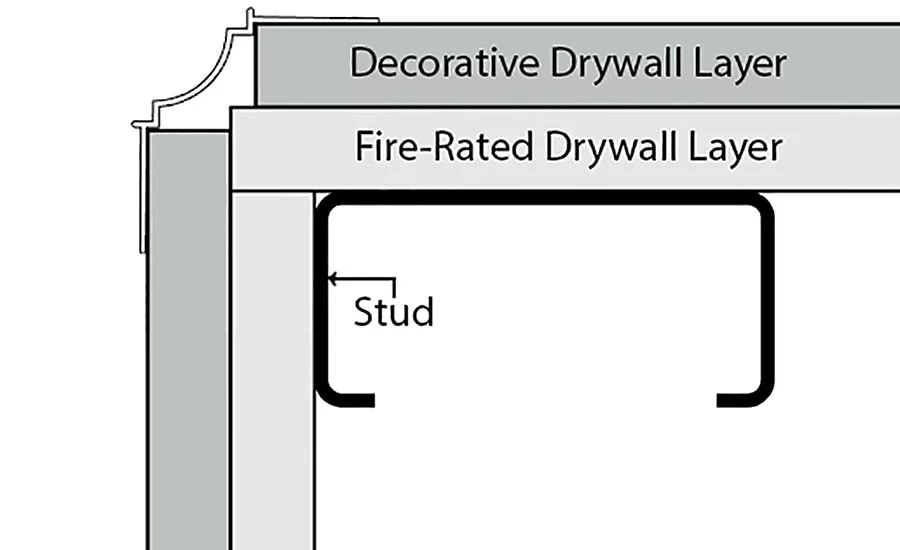
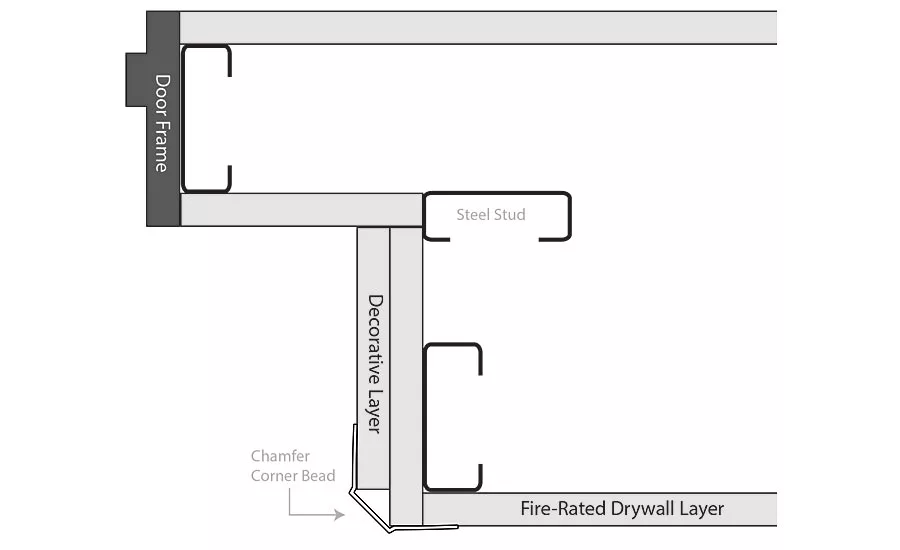
In the case of decorative cornerbeads used in commercial projects, fire safety ratings must be maintained. In commercial structures requiring a 1- or 2-hour fire rating, the drywall must maintain a continuous barrier. The installation requirements of some decorative vinyl beads breaks the continuous drywall barrier. A standard 90-degree bead allows two pieces of drywall to overlap, maintaining the continuous barrier. On-the-other-hand, chamfer bead, requires a set-back that separates the drywall panels, thus breaking the continuous barrier. In a case such as this, when a decorative cornerbead breaks the fire-rated continuous barrier, two layers of drywall must be installed. The first layer will maintain the continuous barrier, and the second layer will be installed with the appropriate offset for the decorative bead. This two-layer approach is critical for maintaining a fire-rated wall. Many architects and contractors see this installation requirement and worry that in-order-to achieve fire-rating, they will have to install an entire two-layer wall system, doubling the cost of the drywall and potentially negating the cost-effectiveness of drywall as a building substrate.
Fortunately, well-considered design choices can create elegant upgrades that simultaneously circumvent the need to install two layers throughout the entire project. For example, a common detail in hotels is the return wall to the entrance of individual rooms. This detail is an ideal space to add visual interest without adding excessive amounts of labor or material costs. A second sheet only needs added on the return wall to maintain the continuous fire-rated barrier and account for the drywall offset needed for the decorative cornerbead. The building requirements for 1 and 2-hour fire ratings can vary by construction detail; always be sure to consult the Gypsum Association’s Fire Resistance Design Manual. Home construction requires at least 1/2 inch drywall, 5/8 inch or thicker is to be used in commercial applications, depending on whether the wall is 1 or 2-sided and single or double-layered. Remember, if the thinnest portion of the drywall installation does not meet the fire-rating requirement, the whole wall does not meet the fire-rating.
Summary
While drywall is often thought of as a boring but practical building substrate, modern advances in cornerbead production have opened new avenues for creative and aesthetically pleasing drywall design. Vinyl cornerbeads are available in a wide-range of styles, sizes and shapes and can be used to trim drywall installations in new and interesting ways. Drywall is a natural choice for fire-rated walls since it is naturally fire-resistant in its composition.
Traditional (plain) drywall corner finishing is compliant with fire rating codes, while new decorative beads require special consideration to maintain commercial building codes. Thoughtful design, however, allows architects and contractors to make bold visual choices with these beads that maintain fire-rating and cost less than custom millwork details. Familiarity with the fire-rating codes in your area will allow you to successfully design beautiful, cost-effective, and, above all, safe spaces that your clients will love.
Looking for a reprint of this article?
From high-res PDFs to custom plaques, order your copy today!