Five Things To Remember for New Silica Dust Regulations
Are you Ready for Silica Dust?
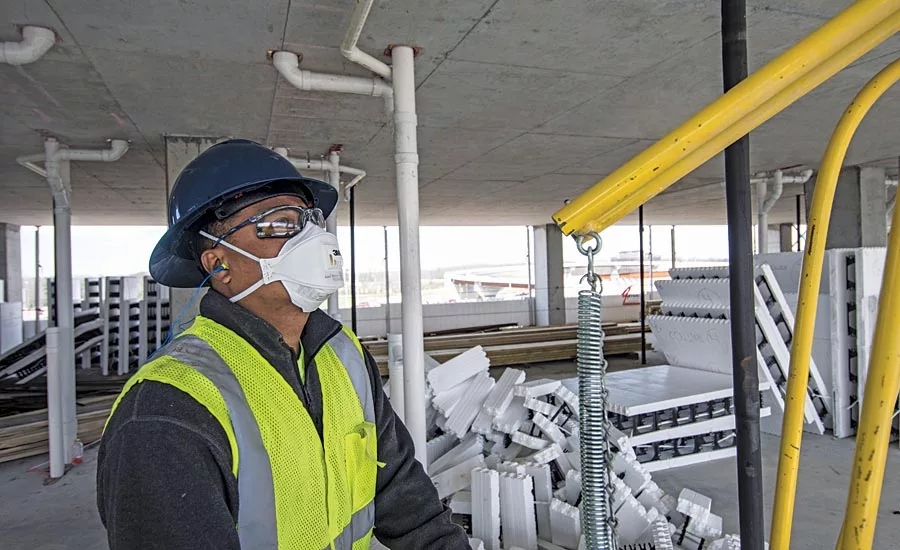
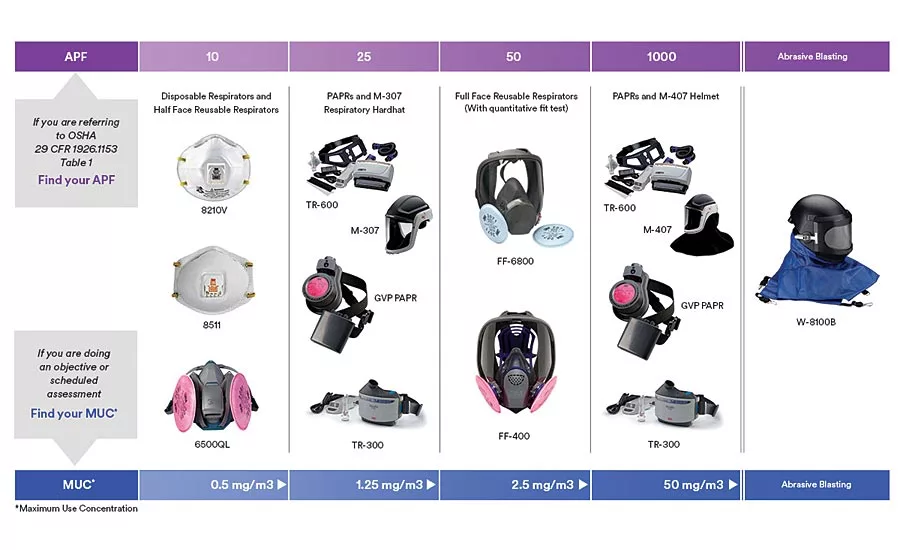
Examples of respiratory protection based on the OSHA Silica regulation revision.
OSHA has issued a final rule to limit workers’ exposure to respirable crystalline silica (March 2016, OSHA Respirable Crystalline Silica in Construction Regulation – 29 CFR 1926.1153), a common construction material (e.g., concrete, brick, mortar, granite, sand).
Scientists have long known that prolonged, excessive exposure to respirable-size particles of crystalline silica, created when workers chip, cut, drill or grind objects containing it, can increase health risks, such as the risk of developing silicosis or other ailments. The effects of crystalline exposure are typically long-term.
Safety managers need to take steps to protect their workers and comply with the new OSHA rule. The use of engineering controls such as water sprays or local exhaust ventilation are the preferred methods of controlling silica dust (and required by OSHA to the maximum extent feasible). However, personal protective equipment, particularly respirators, may still be a critical factor in helping to ensure worker safety and compliance.
Respiratory protection for silica involves more than just handing out respirators to workers. If respiratory protection is needed, a full respirator program per OSHA regulation 29 CFR 1910.134 is necessary to ensure proper worker protection and mitigate those hazards. Here are a few points to keep in mind:
Designate a Respiratory Program Administrator
A respirator program administrator must oversee the respirator program discussed below. The administrator must evaluate every element of the respiratory protection program on a regular basis to ensure all elements are being properly implemented. Records, tests and inspection reports need to stay up-to-date and respirators in use are still proper for the conditions on the worksite. It is important to document all evaluations and findings as well as any corrective measures taken.
The program administrator should also observe and speak with the respirator users to ensure they are using it correctly, that they understand how to use and maintain it properly and that the respirators are ultimately meeting their needs. In silica work sites, the program administrator may also be the silica competent person required by the silica regulations. While not required to be the same person, it may make administration and oversite of the program easier.
Create a Written Respirator Program
A written program is required by OSHA and is a core component to an effective and complete respiratory protection program for silica. Per 29 CFR 1910.134, every respiratory protection program requires written worksite-specific procedures for various issues, such as:
- Exposure assessment to determine the airborne hazards present
- Respirator selection based on the identified hazards
- Medical evaluations to help ensure workers can safely wear the respirator selected
- Use of respirators
- Maintenance, cleaning and storage of respirators
- Assuring adequate air quality if air supplied respirators are used
- Training and fit testing of workers
- Program evaluation
Medical Evaluation
OSHA requires employers to provide a respirator medical evaluation to the worker before they can wear a respirator. This typically consists of a questionnaire that considers medical conditions, workplace conditions and hazards that could affect the worker’s ability to wear a respirator safely. A licensed healthcare professional evaluates the employee’s responses and advises whether the worker appears to be medically able to wear the class of respirator being considered.
The employer must reevaluate the worker’s ability to wear a respirator safely when:
- Signs or symptoms are reported that may affect a worker’s ability to safely use a respirator
- A physician, supervisor or respiratory program administrator requests an evaluation
- Information during fit testing or program evaluation indicate a need for re-evaluation
- Changes in workplace conditions increase the burden on the worker, such as temperatures, level of exertion or equipment needs
OSHA has not established a time frame for when to repeat the medical evaluation. However, all workers using respirators must be reevaluated when:
- A worker reports signs or symptoms that may affect his or her ability to safely use a respirator
- A physician, supervisor or respiratory program administrator requests an evaluation
- Information during fit testing or program evaluation indicate a need for re-evaluation
- Changes in workplace conditions increase the burden on the worker, such as temperatures, level of exertion or equipment needs
Respirator fit testing
All tight-fitting face piece respirators—both negative pressure (elastomeric and disposable) and positive pressure (powered air and supplied air)—must be fit tested to ensure a good seal between the user’s face and the respirator. OSHA currently allows two basic types of fit testing:
- Qualitative (e.g. Bitrex, saccharin), which gives a pass/fail result.
- Quantitative, which gives and numerical result.
Either method can be used for all respirators except full-face negative pressure respirators. To qualify for the OSHA assigned protection factor of 50, a full-face respirator must be fit tested using the quantitative fit test method. If a qualitative method is used, the full-face respirator will only be given an APF of 10.
Respirator fit testing must be repeated at least annually, or if the user changes to a different make or model of respirator or experiences any physical changes (e.g., significant weight changes, dental work, etc.) that could affect fit.
Respiratory training and maintenance
OSHA mandates that employers ensure that workers are trained annually. This provides a forum for users to become reacquainted with the importance of respiratory protection and to give everyone a refresher course in properly using and caring for their equipment. At a minimum, training should cover:
- Why respirators are needed;
- What protection a respirator can or cannot offer
- How to properly inspect, put on, take off and use a respirator
- How to perform a “user seal check”
- What to do in emergency situations, including what to do if the respirator does not work properly
- How to recognize medical signs and symptoms that may limit or prevent workers from using a respiratory
- How improper fit, use or maintenance can reduce effectiveness
- Maintenance and storage procedures
- The requirements for federal/state OSHA respiratory protection standards
Respirators should be inspected before each use and during cleaning, and users must follow the manufacturer’s user instructions for specific inspection and maintenance procedures. Emergency respirators should be inspected at least monthly and before and after every use. Consider issues like:
- Respiratory function
- Tightness and connection
- Pliability of elastomeric parts
- The condition of various parts including the facepiece, head straps, valves, connecting tube, cartridges, canisters or filters
References:
This article is only a brief overview of respirator use. Employers should read and understand the U.S. OSHA respirator regulation (29 CFR 1910.134) in its entirety prior to using respirators. To learn more about the silica regulation, or about overall best practices for respiratory protection, there are many valuable, dependable resources available online including:
Silica Regulation: https://www.3m.com/OSHASilica
Center for Respiratory Protection: https://www.3m.com/RespiratoryCenter
Looking for a reprint of this article?
From high-res PDFs to custom plaques, order your copy today!