Versatility of Stucco to Adapt to Changing Building Practices
Adapting to the evolution of stucco installation.

The idea of a drainage plane for the construction of wall assemblies has been used for years in masonry cavity wall/veneer construction.
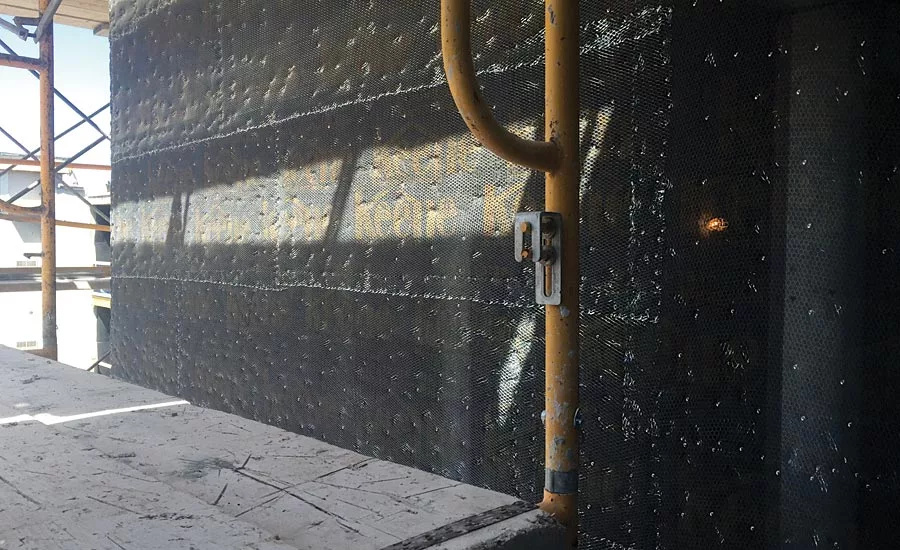
The idea of a drainage plane for the construction of wall assemblies has been used for years in masonry cavity wall/veneer construction.
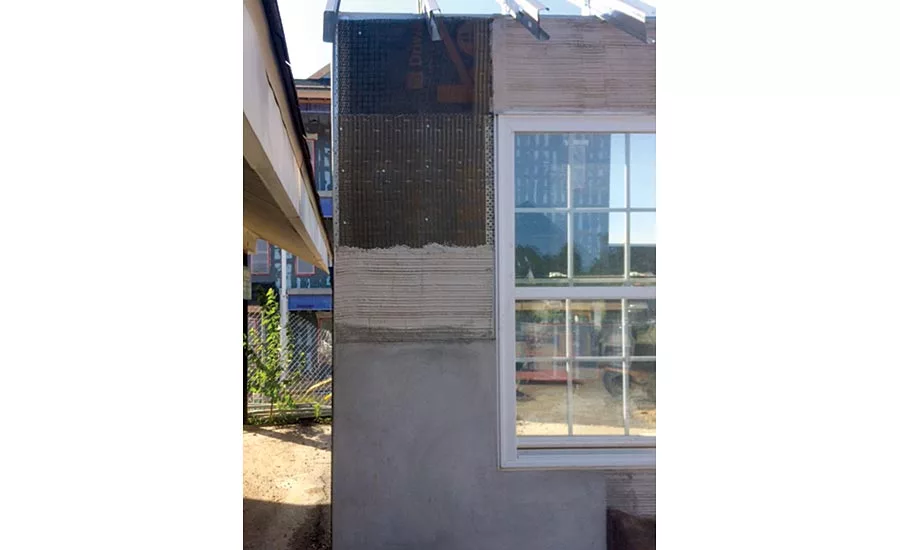
The idea of a drainage plane for the construction of wall assemblies has been used for years in masonry cavity wall/veneer construction.
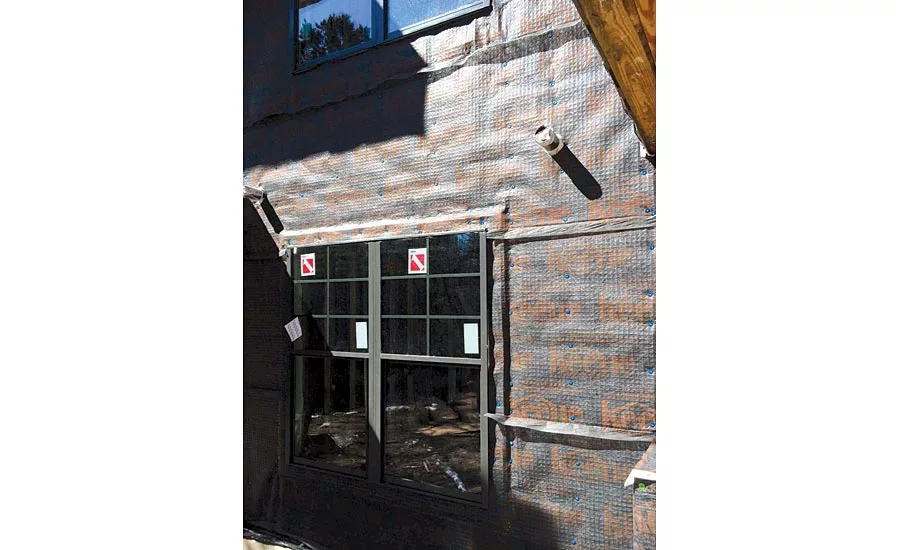
The idea of a drainage plane for the construction of wall assemblies has been used for years in masonry cavity wall/veneer construction.
The idea of a drainage plane for the construction of wall assemblies has been used for years in masonry cavity wall/veneer construction. The airspace provided by the drainage plane allows the wall to properly dry should it come into contact with incidental moisture. The incorporation of rainscreen(s) provide the ability for stucco/plaster wall assemblies to properly breathe and dry out as these assemblies have become much tighter and less forgiving with the new energy codes. The evolution of stucco wall systems is a good place to start with today’s discussion.
In ancient times, “plaster,” which comes from the Greek word emplastos meaning to “daub on,” was used primarily on interior walls and ceilings as an ornamental finish for creating different reliefs, moldings, and cornices, in addition to providing a smooth finish over substrates. Because of its versatility, plaster evolved into an exterior cladding beginning with the Romans who began adding pozzolanic materials to a predominately lime based mixture to increase its durability and strength. Stucco composites were further improved during the Italian Renaissance, and up until the 19th century with the advent of Portland cement, were mostly a mixture of different types of natural bonding agents, such as lime, aggregates and water.
Stucco Popularity
The late 19th century is when Stucco gained a foothold in the United States. The improvements to Portland cement first produced here in 1874 led to its popularity. The public obsession with Mediterranean architectural styles were already prevalent in California, the Southwest, and Florida which then expanded to all regions of the United States and Canada. The result was an increased use in a variety of building types such as government centers, resort hotels, travel motels, apartments, movie theaters, railroad stations, and even gas stations.
The popularity during this period created numerous opportunities for exterior plaster. Historic stucco was not a particularly permanent fixture of long-lasting building material. Early 20th century formulations were basic sand, cement, and lime, which were mixed on-site by hand. Admixtures were non-existent, except for horse hair which was used for crack prevention.
Since then, stucco formulation(s) have received many improvements for enhanced quality and simplified production. Some manufacturers offer a blend containing all the components required for a quality stucco base, including alkaline resistant fibers, to add strength and reduce cracking. Some manufactures go to the ultimate in convenience and consistency by providing a totally pre-blended stucco material with graded sand(s).
In addition to the stucco material itself evolving over the years, the rest of the building construction and the building envelope has changed. The key here is to be able to take the considerations of the new codes, standards, and other changes to the building and installation process of stucco, and make adaptations to the stucco wall assembly to fit with the new codes and building practices for a better performing wall system.
Stucco has excellent fire resistance (characteristics), however it is a cladding system that has experienced issues with water infiltration and other construction defects. In addition to flashing detailing mistakes, related to windows and kick out flashings, incorrect detailing of dissimilar materials that allow incidental moisture causes the framing and sheathing to rot. Repairs can be extensive and expensive. The introduction of air barriers into the code has also contributed to the changing dynamics of the wall assembly for stucco, as has the use of a vapor barrier on the interior of the wall. The ability of a stucco wall that does not have a rainscreen can reduce drastically or eliminate the drying capability of the current wall assembly.
Changes to the code have made the use of two WRBs standard practice for the installation of a code compliant wall assembly. Typical construction has two layers of paper, OSB sheathing, insulation filled studs, poly and drywall. You could change the sheathing to plywood or eliminate the interior poly sheet, however the changing of one or two of these details in itself is not enough to avoid damage to the wall from moisture.
Avoiding Wall Pitfalls
The best way to detail a stucco wall to avoid the pitfalls mentioned above is to follow the code and ensure you install two layers of WRB. To improve upon that installation, you should incorporate a ventilated rainscreen/drainage mat into the system that serves as the second layer. In addition to providing the second layer, you should also install an air gap that will allow the assembly to dry out quicker.
Building facades need an airspace behind for proper drainage and ventilation. The brick industry is seen as a very favorable wall system and it typically has a 1 inch or greater drainage/ventilation airspace behind it. The BIA has required these cavities to create air movement to assure the ease of ventilation.
Ventilation of the wall cavity is essential. The free flow of air is required to take the moisture-laden air out of the cavity. The perfect cavity would be completely clear. Inhibiting the perfect cavity is the mortar from the stucco which applies to stone and brick, as well. Rainscreen products help provide a 95 percent open cavity with a high percentage of uninhibited open area for free air movement. Studies have shown that air begins to move efficiently over a large area of thickness approximating 1/4 inch. Less than 1/4 inch, and minor changes in cavity dimensions, create air movement impediments and limit efficiency. Thinner cavities function well when they do not come in contact with mortar—as is the case in other wall sidings.
In summary, the installation of stucco has evolved over the years and the importance of incorporating a rainscreen into the systems we install today is to ensure that we build wall assemblies that have the ability to dry out properly. The buildings we build have evolved as well and due to the changes and energy efficiency driven codes, the installation of stucco also needs to continue to adapt.
Often, I hear the stucco we bid and install hasn’t changed that much over the years. Why now do I need to adjust my installation to incorporate a rainscreen into the system(s) I install? The short answer is that the rest of the building you are installing your system on has changed and therefore has become less forgiving. We have added better insulation, windows, and doors and sealed all other penetrations of the building envelope. It increases energy efficiency, but also inhibits the wall from drying out. The rainscreen/drainage mat created airspace, effectively resolves this issue.
Looking for a reprint of this article?
From high-res PDFs to custom plaques, order your copy today!





