BIM and the Contractor
IT'S TIME FOR WALL AND CEILING CONTRACTORS TO ASSERT THEIR POSITION AND LEVERAGE IMPLEMENTATION OF BIM DATA.
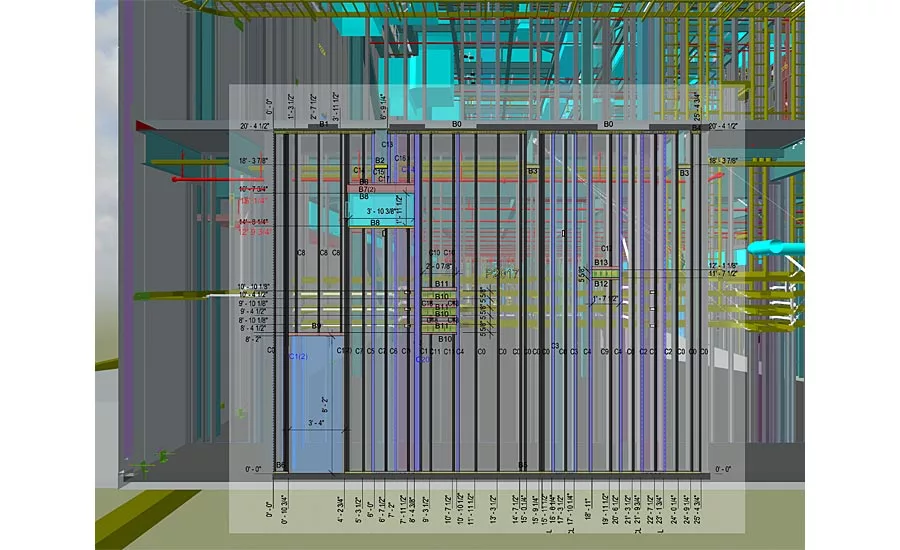
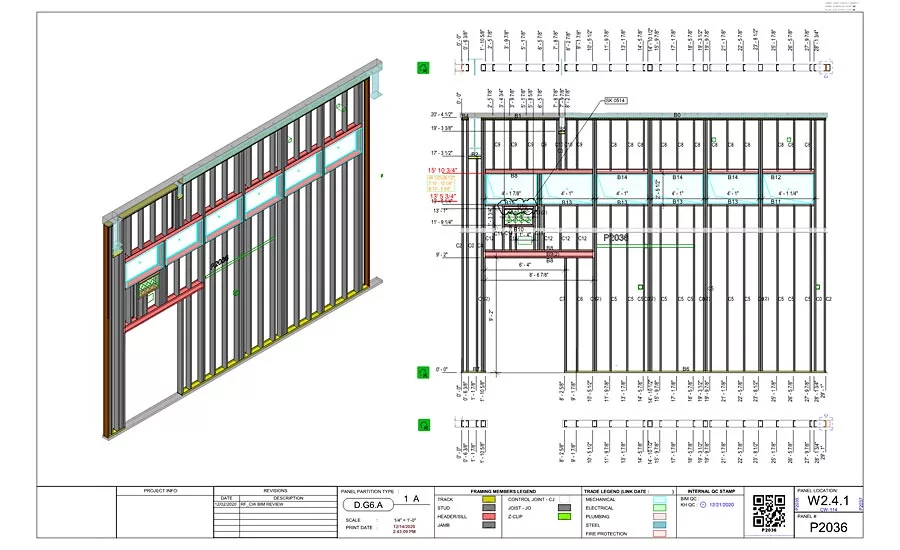
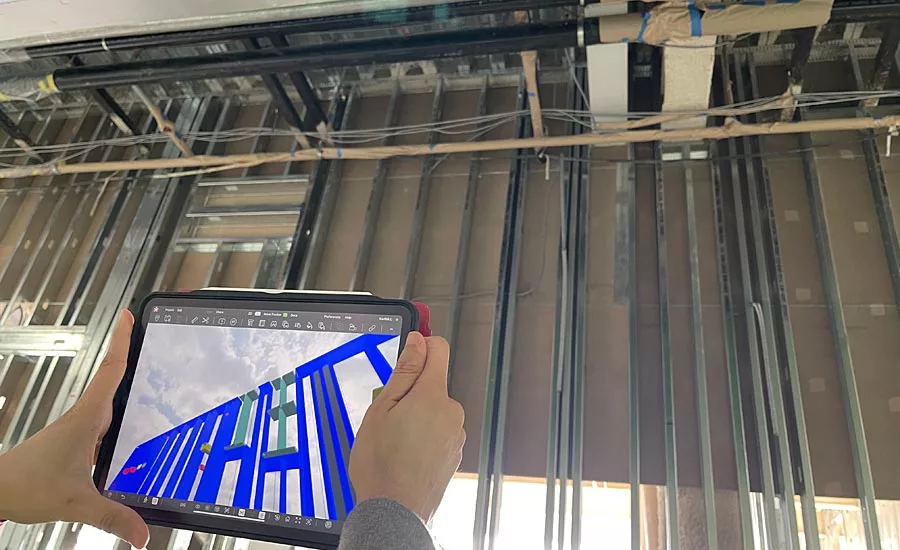
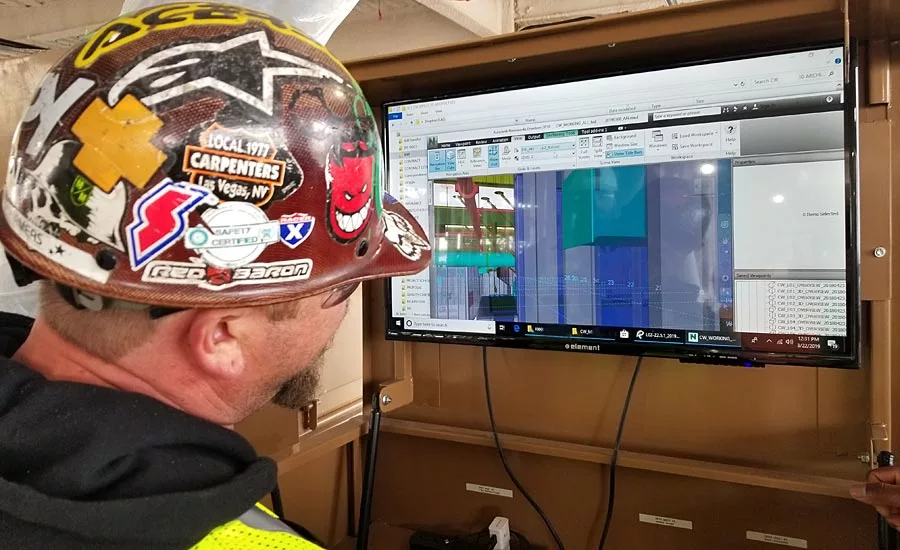
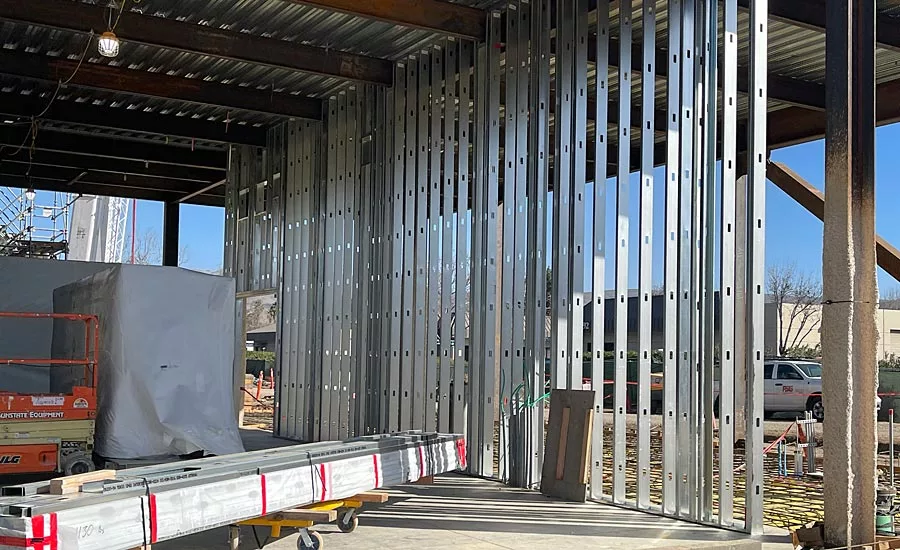
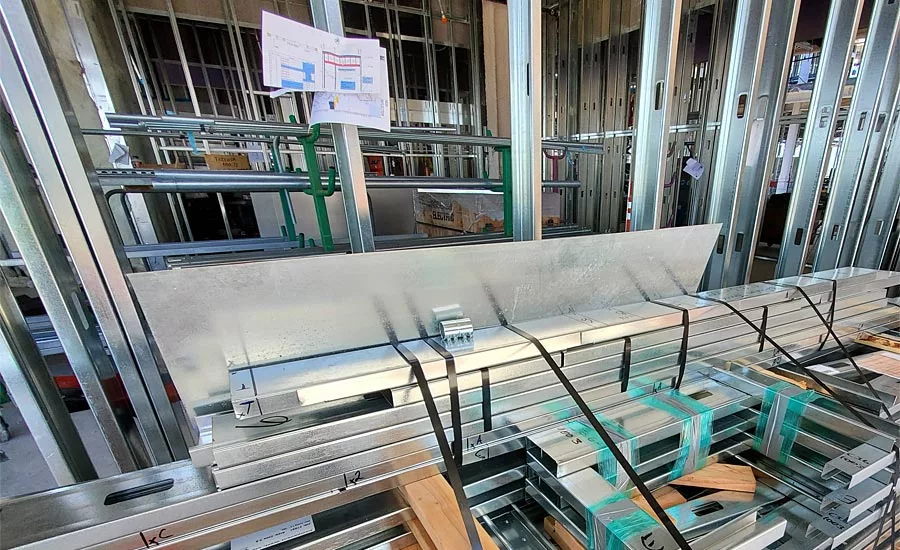
Building information modeling is in many ways still a theory and not a reality. What do I mean by that? It’s still all about the data. It’s about data from the specialty contractors, which is the missing link to complete a true workflow of necessary inputs, whether it’s ISO 19650 requirements or working with software like Revit, MWF or LCP payroll tracker. Our work is interspersed with the other trades. We are typically brought in later in the process, which hurts the BIM coordination, planning and correct sequencing of work in the field. It’s time to bring the group forward, while also looking at the Partition Information Exchange (PARTie) and following in the footsteps of the steel industry as to making our walls and ceilings ISO open standards ready for basic sharing. Doing so at all levels, with spec writers, manufacturers, suppliers, contractors, modelers, facility managers and other repositories housing the installation of what’s put in place, creates a standard.
The use of IFC centric data modeling should include Omni Class designations and other information from U.L. Libraries, ASTM, ANSI, etc. BIM Execution Planning is expanding to better support the growth of stakeholders in BIM. Bringing traditional subcontractors into the planning process will add value and efficiency throughout the BIM process.
Capture the Data
Groups know the data they need for their work. It’s time we capture it. Earned Value Management standards have to be built into scheduling and billing practices allowing BIM review of percent complete for work items that affect work time, and bring the entire project scope into full view. The results ultimately are the lowering of retainage and the reducing of other issues that finish trades get saddled with more than the other trades who are on and off projects earlier. Real scheduling can be consolidated and reported to allow a true 3-D view of efficient production possibilities.
Foremen today do not have the tools available to them to react to problems on the project due to congestion, RFI delays, material loading interferences, etc. For example, by simply adding carpenters to the existing, efficient crews yields a lower per unit productivity, but knowing exactly where work is available then becomes a system provided feature.
You can certainly see savings with VR technologies, coordination with BIM 360, Navisworks and other tools like computer aided layout. However, we are scratching the surface when looking to do things for publicity purposes and not with the structures’ end in mind: a truly integrated as-built model which can be used to run a facility and manage it in perpetuity. Data is lost during the construction process when there is a lack of BIM requirements for facilities management from the owner. With shop drawing requirements and other add-ons, the process gets overrun by the building flow. As built representations with LiDAR and other tools become either too expensive or too difficult to go back and add information that was necessary to be inputted at the time.
The Modeling Process
What’s even more galling is that the wall and ceiling trade is rarely included in the modeling process. We are often considered an afterthought and not required to participate in the modeling. I don’t understand this approach other than to scoff at it as part of the fantasy that BIM is touching all the prime trades, which of course includes carpentry and not just the perceived more “sophisticated” engineered trades. We get asked to participate in coordination meetings without the proper position to make our case for where we fit into the puzzle of what’s built where and when. As long as we are in the HVAC world of predominance as it relates to BIM management and scheduling influence, the chance for other players to influence outcomes are markedly restrained.
The wall and ceiling industry can only truly advance if a critical mass of companies can demonstrate BIM mastery and burn in our true place within the big rooms. The BIM Council of the National Institute of Building Sciences has begun the launch phase for the U.S. National BIM Program.
Day to day project use of data by a subcontractor (drawings, RFIs, submittals, specifications, schedules, etc.) is always contingent on what software the Construction Manager/GC uses. Whether it’s Prolog, Procore or others, the fundamental benefits of having a single platform to manage data are oftentimes lost when on the receiving end. Many of the syncing features and integrations with external software (Excel, Bluebeam, misc. BIM software) are limited due to end user/subcontractor permissions implemented to prevent subs from “breaking” anything.
Software companies need to address these limitations to allow subcontractors to leverage data despite them being subsidized end users. With restrictions lifted, the real work of full integration between different software companies can then be addressed. Especially now that everything is migrating to the cloud, software silos have been created. In effect, breaking workflows and processes apart around software. As a result, users are often forced to ignore better niche software and compromise in favor of the comparable all-in one solution to facilitate better integration as a whole.
Software companies are in a race to create the all-in-one ‘suite’ to keep users within their environment (e.g., Office 365 and Autodesk BIM360), and if open standards are not enforced, construction software will suffer the Amazon effect.
Wall and ceiling contractors benefit immensely when receiving architectural Revit models to start their 3-D framing models. But the way we leverage BIM data is contingent on its setup by the architecture firm/project/individual modeler. Owners, such as the Smithsonian and the VA, have strict architectural model standards and requirements but partition types vary, and these owners still lack BIM scope requirements specific to our trade. We have some construction managers who take it upon themselves to mandate BIM involvement and modeling by the drywall subcontractor. But most CMs are not mindful of the various nuances of our trade, i.e. BIM language is too generic or they require every single framing member and piece of backing be modeled, then question why the BIM budget is so high. Some may even refuse to pay for extra BIM costs for design based change orders and claim it should have been included in the unit price. Efforts are being made to help our trade, such as prioritizing us in the BIM hierarchy lists, but actual implementation is another story.
BIM and the Trades
Hence, each project continues to be a one-off for the wall and ceiling subcontractor, and we are being forced into adding manpower across the board in order to meet expectations largely driven by the benefits that the technology affords. All these benefits do not come without a cost, and while some of the efficiencies directly benefit our bottom line, many of the savings are for the benefit of the owners and CMs/GCs. While we cannot expect all projects to move towards a shared profit IPD delivery type, we can remain firm on standing strong by the added cost associated with meeting the new standards of care that continue to evolve.
Some trades have solved many of these issues by standardizing product configurations and using common languages to describe what is to be built. For example, the American Institute of Steel Construction has standardized structural steel shapes that can be supported by any number of steel fabricators. When combining such properties, digital formats can be used to carry all information needed to automatically fabricate structural members in their entirety directly from data. This effort leads to a more efficient pre-fabrication and off-site construction process from the shop floor to the jobsite.
For framing and drywall trades, common languages and data formats have yet to be adopted. At best, a digital representation of a wall might describe generic layers of given thicknesses, where relevant details such as stud spacing, screw spacing, and insulation requirements are described differently according to the architect involved and must be manually interpreted.
In many cases, performance criteria such as fire- and sound-rating are provided, and it is up to the contractor to source components that meet criteria. Component Assembly Systems has created the Partition Information Exchange to solve these issues for the industry and bridge the gap between performance criteria, material composition, and what competing manufacturers may offer. Now more than ever, with manufacturer lead times and prices fluctuating globally, data efficiency becomes increasingly crucial.
The PARTie helps to solve these issues with a library of component configurations for partition walls that may be used in common BIM authoring software, with value-added functionality for visualization, automatic conversion between common data formats, and automatic extraction of data from building models. PARTie is available in a variety of formats at http://www.constructivity.com/componentassembly/PARTie.
Our Time
A few years ago AWCI launched a technology campaign strategically known as “Carpenters First!” We have to unite to move significantly to the forefront of the ordering in the current technology stack. In this way, we go from being at the end of the caboose to being part of the front BIM car steering and firing up the engine. Until then, we’re more vulnerable to being boxed out, change ordered without compensation and awaiting money payments longer than the others. Our time is now, so let’s go and grab it!
Looking for a reprint of this article?
From high-res PDFs to custom plaques, order your copy today!



.webp?height=200&t=1751488031&width=200 "USGBC-CA(3).png")


