Straight Green: Say Hello to CAL Green California's New Green Building Code
The California Building Standards Commission has been working on a green building code since 2007, culminating with a primarily voluntary set of standards for nonresidential occupancies adopted in July of 2008.
The California Building Standards Commission has been working on a green building code since 2007, culminating with a primarily voluntary set of standards for nonresidential occupancies adopted in July of 2008. On January 12, 2010, California adopted this new green building code, referred to as “CAL Green,” and one year from now will cease to be a voluntary standard and become a mandatory requirement for all buildings in the state of California. From the Governor’s press release:
“Governor Arnold Schwarzenegger today announced the California Building Standards Commission unanimously adopted the first-in-the-nation mandatory Green Building Standards Code (CALGREEN) requiring all new buildings in the state to be more energy efficient and environmentally responsible. Taking effect on January 1, 2011, these comprehensive regulations will achieve major reductions in greenhouse gas emissions, energy consumption and water use to create a greener California.
A letter campaign opposing the adoption of CAL Green was launched by some heavy hitting environmental groups, including the U.S. Green Building Council, the Natural Resources Defense Council, the Sierra Club, and Berkeley, Calif.-based Build It Green. These groups opposed the adoption of the code for several reasons, including the fear that it will “cause confusion in the marketplace and the potential for builders to label their buildings green without substantiating their claims.” The groups sent a letter December 22 to Governor Schwarzenegger urging him to veto the bill stating:
“The marketplace does not need a new government quasi rating system, particularly one that lacks adequate verification. The existing private sector rating systems are working successfully and have been adopted by many local jurisdictions across the state. Their rigorous benchmarks and verification mechanism are driving innovation in California by leading industry to develop new products, services, and green jobs. If the state introduces a new quasi rating system, it will cause disruption and confusion in the marketplace, hindering the tremendous progress California is making on green building.”
Many people were surprised and puzzled that these groups came out in such strong opposition to CAL Green. It was widely reported that Dan Pellissier, a California deputy cabinet official, alleged that the Green Building Council is leading opposition to CAL Green because it does not want competition to its own private sector LEED brand. This is consistent with the USGBC’s constant bad-mouthing and virulent opposition to Green Globes (a competing rating system) and makes its whining tempting to dismiss, but what about the other groups that signed the letter? Is there any legitimacy to their concerns?
CAL GREEN-AN IN-DEPTH LOOK
As soon as I learned of the announcement that California had adopted CAL Green, I high tailed it to the California Building Standards Commission’s web site to have a look. What I found was the mainly voluntary version with limited application to an even further limited number of buildings. It wasn’t until a couple weeks later, upon revisiting the web site, that I found a newly created draft of the version that is scheduled to take effect January 2011. You can download this version at the California BSC Web site.
The code is broken down into for basic parts:
Residential Mandatory Measures
Residential Voluntary Measures
Nonresidential Mandatory Measures
Nonresidential Voluntary Measures
The stated purpose of the code is “to improve public health, safety and general welfare by enhancing the design and construction of buildings through the use of building concepts having a reduced negative impact, or positive environmental impact and encouraging sustainable construction practices” and addresses the five following categories:
Planning and design
Energy efficiency
Water efficiency and conservation
Material conservation and resource efficiency
Environmental quality
CAL GREEN VS. LEED: HOW DO THEY STACK UP?
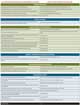
Below is a side-by-side comparison of CAL Green Mandatory Measures for Nonresidential Buildings with LEED for New Construction V3 credit equivalents and available points.
Conclusion
Building to CAL Green requirements for nonresidential buildings, a total of a mere 13 LEED for New Constriction points would be achieved. Many of the CAL Green requirements are equivalent to LEED Prerequisites, which are not negotiable when pursing a LEED certification, and do not provide points. There are some CAL Green requirements that are simply not addressed in the LEED rating system. These requirements could result in LEED Innovation in Design points but this is not a slam-dunk. If we were to assume that all four available LEED ID points were awarded for these requirements, the total number of equivalent points in LEED would jump to 17.
The minimum number of points necessary for a LEED V3 green building certification is 40. The total number of points that could be awarded using only the CAL Green mandatory requirements is well short of the minimum required for a LEED Certified building. There is no question that a building designed to meet the minimum requirements in LEED will be greener than one designed to the CAL Green minimum but it doesn’t matter. CAL Green includes many voluntary measures that Owners may elect to pursue and does not limit going beyond the minimum requirements or using a green building rating system such as LEED or Green Globes.
The letter of opposition to the Governor neglects to point out that private sector rating systems were conceived and designed to be applied to a small percentage of all buildings: the greenest of the green. The truth is that the “rigorous benchmarks and verification mechanisms” and expense of private sector rating systems have served to keep the majority of buildings out play. CAL Green is a game changer.
The challenge presented to the California Building Standards Commission was to strike a balance between green building requirements that have meaningful and measureable impact without dooming implementation from the start by requiring more than the market can bear. The current CAL Green draft does that, I think, and will be an enormous catalyst for the rapid development of greener buildings. W&C
The California Building Standards Commission has been working on a green building code since 2007, culminating with a primarily voluntary set of standards for nonresidential occupancies adopted in July of 2008. On January 12, 2010, California adopted this new green building code, referred to as “CAL Green,” and one year from now will cease to be a voluntary standard and become a mandatory requirement for all buildings in the state of California. From the Governor’s press release:
“Governor Arnold Schwarzenegger today announced the California Building Standards Commission unanimously adopted the first-in-the-nation mandatory Green Building Standards Code (CALGREEN) requiring all new buildings in the state to be more energy efficient and environmentally responsible. Taking effect on January 1, 2011, these comprehensive regulations will achieve major reductions in greenhouse gas emissions, energy consumption and water use to create a greener California.
A letter campaign opposing the adoption of CAL Green was launched by some heavy hitting environmental groups, including the U.S. Green Building Council, the Natural Resources Defense Council, the Sierra Club, and Berkeley, Calif.-based Build It Green. These groups opposed the adoption of the code for several reasons, including the fear that it will “cause confusion in the marketplace and the potential for builders to label their buildings green without substantiating their claims.” The groups sent a letter December 22 to Governor Schwarzenegger urging him to veto the bill stating:
“The marketplace does not need a new government quasi rating system, particularly one that lacks adequate verification. The existing private sector rating systems are working successfully and have been adopted by many local jurisdictions across the state. Their rigorous benchmarks and verification mechanism are driving innovation in California by leading industry to develop new products, services, and green jobs. If the state introduces a new quasi rating system, it will cause disruption and confusion in the marketplace, hindering the tremendous progress California is making on green building.”
Many people were surprised and puzzled that these groups came out in such strong opposition to CAL Green. It was widely reported that Dan Pellissier, a California deputy cabinet official, alleged that the Green Building Council is leading opposition to CAL Green because it does not want competition to its own private sector LEED brand. This is consistent with the USGBC’s constant bad-mouthing and virulent opposition to Green Globes (a competing rating system) and makes its whining tempting to dismiss, but what about the other groups that signed the letter? Is there any legitimacy to their concerns?
CAL GREEN-AN IN-DEPTH LOOK
As soon as I learned of the announcement that California had adopted CAL Green, I high tailed it to the California Building Standards Commission’s web site to have a look. What I found was the mainly voluntary version with limited application to an even further limited number of buildings. It wasn’t until a couple weeks later, upon revisiting the web site, that I found a newly created draft of the version that is scheduled to take effect January 2011. You can download this version at the California BSC Web site.
The code is broken down into for basic parts:
Residential Mandatory Measures
Residential Voluntary Measures
Nonresidential Mandatory Measures
Nonresidential Voluntary Measures
The stated purpose of the code is “to improve public health, safety and general welfare by enhancing the design and construction of buildings through the use of building concepts having a reduced negative impact, or positive environmental impact and encouraging sustainable construction practices” and addresses the five following categories:
Planning and design
Energy efficiency
Water efficiency and conservation
Material conservation and resource efficiency
Environmental quality
CAL GREEN VS. LEED: HOW DO THEY STACK UP?
Below is a side-by-side comparison of CAL Green Mandatory Measures for Nonresidential Buildings with LEED for New Construction V3 credit equivalents and available points.
Conclusion
Building to CAL Green requirements for nonresidential buildings, a total of a mere 13 LEED for New Constriction points would be achieved. Many of the CAL Green requirements are equivalent to LEED Prerequisites, which are not negotiable when pursing a LEED certification, and do not provide points. There are some CAL Green requirements that are simply not addressed in the LEED rating system. These requirements could result in LEED Innovation in Design points but this is not a slam-dunk. If we were to assume that all four available LEED ID points were awarded for these requirements, the total number of equivalent points in LEED would jump to 17.
The minimum number of points necessary for a LEED V3 green building certification is 40. The total number of points that could be awarded using only the CAL Green mandatory requirements is well short of the minimum required for a LEED Certified building. There is no question that a building designed to meet the minimum requirements in LEED will be greener than one designed to the CAL Green minimum but it doesn’t matter. CAL Green includes many voluntary measures that Owners may elect to pursue and does not limit going beyond the minimum requirements or using a green building rating system such as LEED or Green Globes.
The letter of opposition to the Governor neglects to point out that private sector rating systems were conceived and designed to be applied to a small percentage of all buildings: the greenest of the green. The truth is that the “rigorous benchmarks and verification mechanisms” and expense of private sector rating systems have served to keep the majority of buildings out play. CAL Green is a game changer.
The challenge presented to the California Building Standards Commission was to strike a balance between green building requirements that have meaningful and measureable impact without dooming implementation from the start by requiring more than the market can bear. The current CAL Green draft does that, I think, and will be an enormous catalyst for the rapid development of greener buildings. W&C
Looking for a reprint of this article?
From high-res PDFs to custom plaques, order your copy today!




