Breathe Deep
As building materials and methods become better at sealing air leaks, the question arises, “How tight is too tight?” In terms of energy efficiency, one cannot build too tightly. Reducing air leakage is critical to lowering heating and cooling energy consumption.
As building materials and methods become better at sealing air leaks, the question arises, “How tight is too tight?”
In terms of energy efficiency, one cannot build too tightly. Reducing air leakage is critical to lowering heating and cooling energy consumption. Every cubic foot of conditioned air that escapes the building envelope represents lost therms or watts-and dollars-that the HVAC system consumes.
But of course, fresh air is needed for occupant health and comfort. Managing airflow becomes a carefully controlled balance. Think of a hot air balloon sailing thousands of feet above the ground: keeping the heated air inside is vital to avoid crashing, yet well-placed, operable vents allow the balloonist to safely descend when desired.
In buildings constructed with structural insulated panels or other high-performance wall and roof systems, mechanical ventilation is typically necessary since the number of unaided air changes per hour is so low. And similar to other construction methods, moisture management is needed for long-term durability.
With such airtight structures, mechanical ventilation can help provide adequate fresh air, as well as remove indoor air pollutants such as formaldehyde, radon and tobacco smoke. Ventilation systems can also get rid of excess humidity from cooking, bathing and other sources, including the breathing and sweating of the occupants.
In essence, the goal in building for energy efficiency is to tighten the building envelope as much as possible and then use mechanical systems to control air inflow and outflow. Accomplishing this requires a systems approach to the overall building design and construction. Unfortunately, there are no easy rules of thumb and consultation with a qualified heating and ventilation engineer is necessary.
The specific type and size of mechanical ventilation system required for a given building depends on the climate zone, type of occupancy and a range of other factors. Potential systems include:
Heat recovery ventilators: Also known as air-to-air heat exchangers, these units pull air from high-humidity spaces such as bathrooms and kitchens. The warm, moist air passes through a core where it pre-heats incoming cool, fresh air from outdoors. HRVs are most commonly used in northern climates where cold, relatively dry outside air prevails.
 Energy recovery ventilators: ERVs perform the same heat exchange function as HRVs as well as dehumidifying the air. They are typically used in southern climates where removal of high humidity from outdoor air is required. The specific target for indoor relative humidity varies by region, but generally the range is 30 to 50 percent.
Exhaust-only systems: The relatively simple units used in these systems move air from the inside out and come in a variety of configurations from single rooms to whole buildings. They typically rely on air infiltration through the building envelope to replace the vented air, so may cause negative indoor air pressure in a tightly sealed structure. Because of this they are not used with SIP construction.
Other potential air management systems include ventilating windows and air cleaners among others. The former can help exhaust stale air and bring in fresh air, while the latter can typically remove particle pollutants such as smoke, but not gaseous pollutants such as radon. Neither type of system conditions the air for heat or humidity.
Beyond mechanical ventilation systems, it is also common in tight structures to use sealed combustion furnaces and water heaters. These heating appliances draw air directly from the outdoors for use in the combustion chamber, which helps manage the overall internal pressure balance of the structure and the total amount of fresh air required in the building (i.e., the appliance does not contribute to the need to bring more outdoor air into living spaces).
Consistent with codes, SIPs used as exterior walls typically include a water-resistive barrier. Potential options include No. 15 asphalt felt, synthetic weather barriers/building wraps or liquid-applied membranes. It is important to check with the SIP manufacturer and to consult local codes for specific requirements.
For roofs, synthetic, breathable underlayments provide an alternative to traditional No. 15 and No. 30 felts. Such underlayments typically have perm ratings much greater than one, which allows water vapor to pass up and out through the membrane yet keep bulk water away from the roof assembly. This can be especially beneficial when the OSB skins of SIP roof panels have been exposed to precipitation during construction.
While methods to protect SIPs from water are similar to those used with other building envelope assemblies, a specific consideration with SIP installation is proper sealing between panels. All panel joints must be sealed against air and vapor transmission by using a mastic specified by the SIP manufacturer. A vapor retarder may also be required with the specific details varying for commercial and residential buildings.
In many commercial projects, the mechanical ventilation system usually obviates the need for SIP tape or other vapor retarders. However, for buildings with pools, spas or other high-humidity conditions, SIP tape may be required. SIP tape has perm ratings less than one, and works in conjunction with the OSB skin of the SIP panels to provide a vapor retarder. Typically, 6-inch-wide SIP tape is used at all wall and roof panel joints and wall panel corners, and 12 inches wide SIP tape is used where roof and wall panels join. In cases where roof panels meet over supporting beams-such as at a ridge beam-18-inch-wide SIP tape is required.
For residential SIP installations, SIP tape is usually required in all instances. In certain climates and based on local building codes, an additional vapor retarder may be necessary. Such barriers include polyethylene sheeting or similar performance materials.
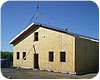
Buildings using structural insulated panels typically require mechanical ventilation due to the tight building envelope SIPs create. Photo courtesy of Premier SIPs by Insulfoam
As building materials and methods become better at sealing air leaks, the question arises, “How tight is too tight?”
In terms of energy efficiency, one cannot build too tightly. Reducing air leakage is critical to lowering heating and cooling energy consumption. Every cubic foot of conditioned air that escapes the building envelope represents lost therms or watts-and dollars-that the HVAC system consumes.
But of course, fresh air is needed for occupant health and comfort. Managing airflow becomes a carefully controlled balance. Think of a hot air balloon sailing thousands of feet above the ground: keeping the heated air inside is vital to avoid crashing, yet well-placed, operable vents allow the balloonist to safely descend when desired.
In buildings constructed with structural insulated panels or other high-performance wall and roof systems, mechanical ventilation is typically necessary since the number of unaided air changes per hour is so low. And similar to other construction methods, moisture management is needed for long-term durability.
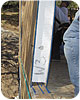
Application of an approved mastic between SIP panels and other parts of the structure helps block air and vapor penetration. Photo courtesy of Premier SIPs by Insulfoam
The Ins and Outs of Air
Air leakage rates in today’s buildings are often dramatically lower than in older buildings. For example, SIP structures are approximately 15 times more airtight than stick framing, according to U.S. Department of Energy blower door tests. They found that for spaces built with SIPs, the leakage rate was 8 cubic feet per minute at 50 pascals compared to 121 cubic feet per minute at 50 pascals for wood framing with fiberglass batt insulation. The low leakage rates, along with more continuous insulation and less thermal bridging, mean that SIPs can help reduce energy consumption costs up to 60 percent.With such airtight structures, mechanical ventilation can help provide adequate fresh air, as well as remove indoor air pollutants such as formaldehyde, radon and tobacco smoke. Ventilation systems can also get rid of excess humidity from cooking, bathing and other sources, including the breathing and sweating of the occupants.
In essence, the goal in building for energy efficiency is to tighten the building envelope as much as possible and then use mechanical systems to control air inflow and outflow. Accomplishing this requires a systems approach to the overall building design and construction. Unfortunately, there are no easy rules of thumb and consultation with a qualified heating and ventilation engineer is necessary.
The specific type and size of mechanical ventilation system required for a given building depends on the climate zone, type of occupancy and a range of other factors. Potential systems include:
Heat recovery ventilators: Also known as air-to-air heat exchangers, these units pull air from high-humidity spaces such as bathrooms and kitchens. The warm, moist air passes through a core where it pre-heats incoming cool, fresh air from outdoors. HRVs are most commonly used in northern climates where cold, relatively dry outside air prevails.
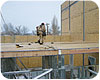
Installation of a breathable roof underlayment may be necessary on SIP roof panels exposed to precipitation during construction. Photo courtesy of BNIM Architects
Exhaust-only systems: The relatively simple units used in these systems move air from the inside out and come in a variety of configurations from single rooms to whole buildings. They typically rely on air infiltration through the building envelope to replace the vented air, so may cause negative indoor air pressure in a tightly sealed structure. Because of this they are not used with SIP construction.
Other potential air management systems include ventilating windows and air cleaners among others. The former can help exhaust stale air and bring in fresh air, while the latter can typically remove particle pollutants such as smoke, but not gaseous pollutants such as radon. Neither type of system conditions the air for heat or humidity.
Beyond mechanical ventilation systems, it is also common in tight structures to use sealed combustion furnaces and water heaters. These heating appliances draw air directly from the outdoors for use in the combustion chamber, which helps manage the overall internal pressure balance of the structure and the total amount of fresh air required in the building (i.e., the appliance does not contribute to the need to bring more outdoor air into living spaces).
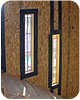
SIP tape at all panel joints works in conjunction with the SIPs’ OSB skins to provide a vapor retarder. Photo courtesy of Premier SIPs by Insulfoam
Water Go Away
As with other construction methods, the exterior building envelope in SIPs structures must be protected from water accumulation. Both the International Building Code and International Residential Code require buildings to have flashing, a water-resistant barrier and a means of draining to the exterior any water that enters the wall assembly.Consistent with codes, SIPs used as exterior walls typically include a water-resistive barrier. Potential options include No. 15 asphalt felt, synthetic weather barriers/building wraps or liquid-applied membranes. It is important to check with the SIP manufacturer and to consult local codes for specific requirements.
For roofs, synthetic, breathable underlayments provide an alternative to traditional No. 15 and No. 30 felts. Such underlayments typically have perm ratings much greater than one, which allows water vapor to pass up and out through the membrane yet keep bulk water away from the roof assembly. This can be especially beneficial when the OSB skins of SIP roof panels have been exposed to precipitation during construction.
While methods to protect SIPs from water are similar to those used with other building envelope assemblies, a specific consideration with SIP installation is proper sealing between panels. All panel joints must be sealed against air and vapor transmission by using a mastic specified by the SIP manufacturer. A vapor retarder may also be required with the specific details varying for commercial and residential buildings.
In many commercial projects, the mechanical ventilation system usually obviates the need for SIP tape or other vapor retarders. However, for buildings with pools, spas or other high-humidity conditions, SIP tape may be required. SIP tape has perm ratings less than one, and works in conjunction with the OSB skin of the SIP panels to provide a vapor retarder. Typically, 6-inch-wide SIP tape is used at all wall and roof panel joints and wall panel corners, and 12 inches wide SIP tape is used where roof and wall panels join. In cases where roof panels meet over supporting beams-such as at a ridge beam-18-inch-wide SIP tape is required.
For residential SIP installations, SIP tape is usually required in all instances. In certain climates and based on local building codes, an additional vapor retarder may be necessary. Such barriers include polyethylene sheeting or similar performance materials.
All Together Now
Optimum building performance requires that architects, engineers and contractors take a systematic approach to the whole building. Increasingly, the walls, roof, HVAC, windows and other elements must work together to maximize energy efficiency and comfort. In projects using structural insulated panels, attention to mechanical ventilation, and moisture and vapor management can help ensure a quality building that performs for many decades.Looking for a reprint of this article?
From high-res PDFs to custom plaques, order your copy today!