Walls & Ceilings logo
search
cart
facebook twitter linkedin youtube youtube Spotify Podcasts Apple Podcasts Spotify Podcasts Apple Podcasts
  • Sign In
  • Create Account
  • Sign Out
  • My Account
Walls & Ceilings logo
  • NEWS
  • TOPICS
    • Drywall
    • Stucco/EIFS
    • Ceilings
    • Steel Framing
    • Fireproofing
    • Interior Plaster
    • Building Envelope
    • Insulation
    • Technology
    • Interior
    • Exterior
    • Women In Construction
  • COLUMNS
    • Up Front
    • All Things Gypsum
    • Art & Craft of Plastering
    • Stucco Stop
    • Steel Deal
    • Industry Voices
  • PRODUCTS
    • Buzz Guide
  • EVENTS
    • Industry Events
    • Webinars
    • BUILD Expo
  • MEDIA
    • Videos
    • Podcasts
    • Photo Galleries
    • BUILD26 Videos
    • Take our Quiz!
    • Infographics
  • EXCLUSIVE
    • Newsletters
    • Top 50 Contractors
    • Contractor of the Year
    • State of the Industry
    • W&C Store
    • Market Research
    • CEUs
    • Sponsor Insights
    • Custom Content & Marketing Services
  • DIRECTORY
  • EMAGAZINE
    • eMagazine
    • Advertise
    • Archive Issues
  • SIGN UP!

Cornerbead in Basements and Bathrooms: Vinyl Solution

By Matt Lamb
cornerbead
cornerbead
cornerbead
cornerbead
cornerbead
cornerbead
September 1, 2016

I have been in the drywall business for a few years now and I’m always amazed by how reluctant people are to change. New is not always best but you have to be open to change.

I was walking through a plant recently when I spotted a procedure that looked a little off. I asked the employee how long they had been doing it this way, and he answered, “Since forever.” I get the same kind of reaction when I ask different applicators why they install metal cornerbeads in bathrooms, basements and garages, “Because we’ve always done it that way.”

Which brings me to a relevant question in the drywall industry: why do people still install steel cornerbead in areas of high humidity?

I realize some contractors choose to install plastic bead and trim throughout entire jobs, but for many, steel is still the most commonly installed bead and trim.

Despite the occasional architect’s specification, most of the time the drywall contractor can install what they feel most comfortable with. Rarely does someone want to buy two boxes of steel and eight pieces of plastic cornerbead. So, is installing steel cornerbead in the bathroom still the correct thing to do?

I Found Out the Hard Way

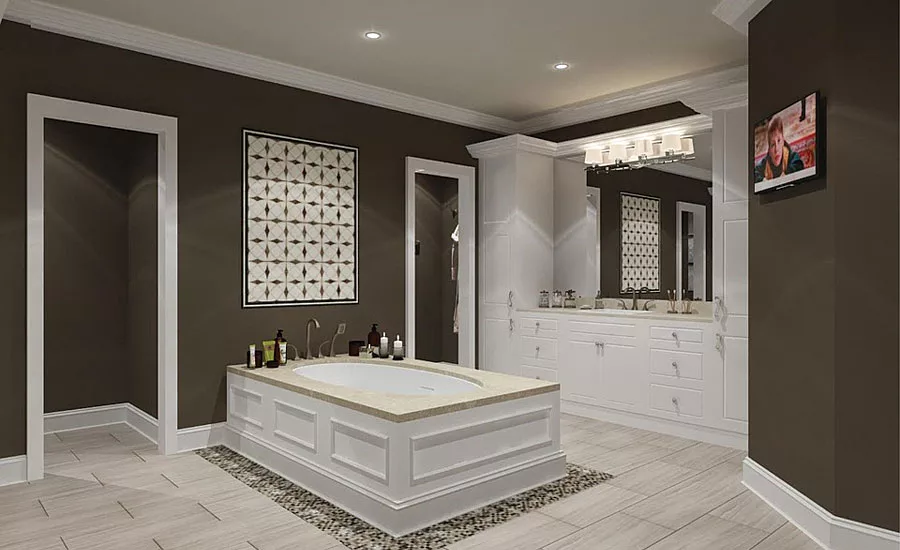
Recently, I was in the process of remodeling two bathrooms in my home. Even though I diligently kept the paint fresh for 30 years, the corners were completely covered with rust. Rusty corners with half of the bead under a tile are not a quick, simple fix. End result: I had to gut bathrooms, replacing all of the old, rusty metal bead and trim with vinyl along the way. I did this for the aesthetics, of course, but also another reason—sustainability.

If you look up “sustainability,” most of the descriptions or definitions say everything but what the word actually means. Sustainability doesn’t just apply to environmentally-conscious materials. In the drywall industry, sustainability translates into building a structure and using materials that will stand up to climate stress and daily abuse. In fact, the ASTM Sustainability Committee (E60) is beginning to build guides to help evaluate the resiliency of products and materials. These guides will be relevant to all application and market segments, and the proposed standard’s goal, WK54254, is to help determine which materials and applications befit various applications. The construction industry is constantly improving design, operations and building materials more rapidly than ever before. Doing things because “we’ve always done them that way” just doesn’t fly anymore.

Let’s Break it Down

When you take a hot shower, about a pint of water is added to the air. The additional water molecules in the air must find a spot to “land.” Steam finds the coolest place possible to settle. If our walls rest at about 70 degrees, that’s where the droplets land–not just your mirrors and metal hardware.

Assuming there are two people per bathroom in your home, two showers a day equal 730 cups of water in one year alone. Bottom line, bathrooms get wet. Even though the wall and cornerbead are painted, over time this moisture works its way through the paint. The excess water will eventually breach the zinc coating of the galvanized steel and leave you with rusty steel. That’s no good.

But high humidity areas aren’t just limited to the bathroom:

  • Basements in Older Homes: Basements are higher in humidity than the rest of the house. Humid air is heavy and settles to the lowest level of the home. Also to note: moisture can and will migrate through the walls from the ground surrounding the basement walls in older homes.
  • Garages: Garages are another prime area for wet and dirty floors. Rain or snow, the car gets pulled in, and whatever is on it usually ends up on the floor in one form or another.
  • Outdoor Job Sites: Improperly stored materials or harsh, unpredictable weather can expose metal bead and products to moisture unexpectedly. Rust city.

Some other areas where moisture can be a problem:

  • Coastal areas where salty air can lead to accelerated rusting
  • Drywall returns around windows
  • L-Trim touching the window instead of the gypsum board
  • Overheated kitchens during the high volume holiday cooking (a personal favorite)

This leads us to a natural conclusion—use vinyl in these humid areas. Vinyl cornerbead is 100 percent rust-resistant, and excels in damp areas. Vinyl eliminates the probability of moisture-driven wall damage and discoloration. In addition to this, vinyl cornerbead and trim are not only sustainable in their resistance to moisture penetration, but also nod to ecofriendly sustainability. A majority of vinyl products are made from recycled plastics, about 70 to 80 percent, postindustrial. This allows punch-hole scraps and pieces trimmed or cut off in the manufacturing plant to be recycled again.

With sustainability being a major theme in the building industry, skipping over these details in wall and ceiling applications like drywall finishing accessories is a mistake. Vinyl products, windows, doors, gutters and siding, have been popular in exterior home building products for years. Such products have proven to hold up to whatever Mother Nature throws at them. Vinyl products for interior building products are coming of age. Oftentimes, they outperform the more historical products. So next time you are building a home, apartment, hospital, etc., remember that in areas of high humidity and exposure, “Vinyl is final.” 

KEYWORDS: beads corner bead spray foam trim vinyl

Share This Story

Looking for a reprint of this article?
From high-res PDFs to custom plaques, order your copy today!

Wc1014 feat2 ceiling p5sl
Matt Lamb is manufacturing engineer for Phillips Manufacturing Co. He has spent most of his 40-year career in the manufacturing of building components for the construction industry. Lamb can be reached at mlamb@phillipsmfg.com.

Recommended Content

JOIN TODAY
To unlock your recommendations.

Already have an account? Sign In

  • Abercrombie & Fitch

    EIFS in 2026: How Specialty Finishes Are Redefining Exterior Wall Systems

    As building codes, owner expectations, and design demands...
    Stucco/EIFS
    By: Regi Mendoza
  • proper air and vapor control

    From Energy Efficiency to Moisture Management: Why Air and Vapor Control Matter

    How proper air and vapor control within building...
    Building Envelope
    By: Benjamin Meyer AIA, LEED AP
  • Linear Metal Ceiling Beam Baffles

    Top 25 Ceiling Contractors of 2026

    Suspended ceilings demand precision, code compliance and...
    Ceilings
    By: John Wyatt and Tanja Kern
You must login or register in order to post a comment.

Report Abusive Comment

Manage My Account
  • eMagazine Subscription
  • Newsletters
  • Online Registration
  • Manage My Preferences
  • Subscription Customer Service

More Videos

Sponsored Content

Sponsored Content is a special paid section where industry companies provide high quality, objective, non-commercial content around topics of interest to the Walls & Ceilings audience. All Sponsored Content is supplied by the advertising company and any opinions expressed in this article are those of the author and not necessarily reflect the views of Walls & Ceilings or its parent company, BNP Media. Interested in participating in our Sponsored Content section? Contact your local rep!

close
  • medical professionals moving a patient on a stretcher through the halls of a medical building
    Sponsored byNational Gypsum Company

    What Does High Performance Mean When It Comes To Gypsum Boards?

Popular Stories

Linear Metal Ceiling Beam Baffles

Top 25 Ceiling Contractors of 2026

Wichita Biomedical Campus

Wichita Drywall Worker Dies After Scaffolding Fall

QXO Just Changed the Game-Here's What Contractors Are Asking

QXO Just Changed the Game-Here's What Contractors Are Asking

An interior drywalling work in progress

Boost Profits with AI Scheduling

Events

June 24, 2026

The Bright Side & Benefits of Designing with Integrated Lighting

Credits 1 AIA LU/HSW; 0.1 ICC CEU

This course will explore the pivotal role architects and lighting design play in creating safer, more sustainable spaces. Learn how to avoid common lighting mistakes and make informed decisions that create the best visual environment for occupants. 

January 1, 2030

Webinar Sponsorship Information

For webinar sponsorship information, visit www.bnpevents.com/webinars or email webinars@bnpmedia.com.

See our full library of webinars

View All Submit An Event

Products

2026 National Painting Cost Estimator

2026 National Painting Cost Estimator

See More Products

Related Articles

  • Wide Vinyl Cornerbead

    See More
  • Popular Choice

    Backed in a Cornerbead

    See More
  • Soundproofing the Multi-Unit Structure

    See More

Related Products

See More Products
  • Accidents Waiting to Happen: Best Practices in Workers' Comp Administration and Protecting Corporate Profitability

  • barrys.jpg

    Barry's Advanced Construction of Buildings, 4th Edition

See More Products

Related Directories

  • Huntsman Building Solutions

    DEMILEC (USA) manufactures spray foam insulation products for use in residential and commercial construction.
×

Connect with the industry’s leading resource for unparalleled insights and education.

Join thousands of industry professionals today. Shouldn’t you know what they know?

JOIN NOW
  • RESOURCES
    • Advertise
    • Contact Us
    • Directories
    • Store
    • Want More
  • SIGN UP TODAY
    • Create Account
    • eMagazine
    • Newsletters
    • Customer Service
    • Manage Preferences
  • SERVICES
    • Marketing Services
    • Reprints
    • Market Research
    • List Rental
    • Survey/Respondent Access
  • STAY CONNECTED
    • LinkedIn
    • Facebook
    • Instagram
    • YouTube
    • X
  • PRIVACY
    • PRIVACY POLICY
    • TERMS & CONDITIONS
    • DO NOT SELL MY PERSONAL INFORMATION
    • PRIVACY REQUEST
    • ACCESSIBILITY

Copyright ©2026. All Rights Reserved BNP Media, Inc. and BNP Media II, LLC.

Design, CMS, Hosting & Web Development :: ePublishing