Walls & Ceilings logo
search
cart
facebook twitter linkedin youtube youtube Spotify Podcasts Apple Podcasts Spotify Podcasts Apple Podcasts
  • Sign In
  • Create Account
  • Sign Out
  • My Account
Walls & Ceilings logo
  • NEWS
  • TOPICS
    • Drywall
    • Stucco/EIFS
    • Ceilings
    • Steel Framing
    • Fireproofing
    • Interior Plaster
    • Building Envelope
    • Insulation
    • Technology
    • Interior
    • Exterior
    • Women In Construction
  • COLUMNS
    • Up Front
    • All Things Gypsum
    • Art & Craft of Plastering
    • Stucco Stop
    • Steel Deal
    • Industry Voices
  • PRODUCTS
    • Buzz Guide
  • EVENTS
    • Industry Events
    • Webinars
    • BUILD Expo
  • MEDIA
    • Videos
    • Podcasts
    • Photo Galleries
    • BUILD26 Videos
    • Take our Quiz!
    • Infographics
  • EXCLUSIVE
    • Newsletters
    • Top 50 Contractors
    • Contractor of the Year
    • State of the Industry
    • W&C Store
    • Market Research
    • CEUs
    • Sponsor Insights
    • Custom Content & Marketing Services
  • DIRECTORY
  • EMAGAZINE
    • eMagazine
    • Advertise
    • Archive Issues
  • SIGN UP!
Building EnvelopeExterior

El Niño Results in Progression
By Gary Messenger
waterproofing membranes
November 1, 2016

The origins of mechanically-attached waterproofing membranes can be traced back to a number of what seemed as unrelated events more than four decades ago, and a California sales representative who got a great idea.

The first event was wide sweeping legislation across the country in prohibiting the use of asbestos in building products. During the mid-1970s, the use of asbestos as an additive in cement and stucco products were being banned throughout the United States. This had a dramatic effect on the physical properties of these products at the time.

The second event was the environmental phenomenon known as El Niño, in particular, the one that started in 1997 and lasted into the early 2000’s. The El Niño of 1997-1998 alone drenched California with more than 31-inches of rain that resulted in not only the closing of highways, power outages and mudslides, but it took a severe toll on residential and commercial buildings.

The cement and stucco used in these facilities were truly tested for the severe rainfall which in turn, caused massive fastener intrusion failures around window and door frames. Basically, any structure built after 1976 had a high potential for failure due to the asbestos mandates and the massive volume of rain.

At that time, window and door flashings were mechanically-attached, siliconized paper membranes, not equipped for the extreme moisture during the El Niño period. The result was a widespread increase in the formation of Stachybotrys Chartarum or more commonly known as, toxic or black mold. As one stucco installer noted, “There were not enough lawyers in California to represent all the construction defects at the time.”

The Right Idea at the Right Time

During this period, Gary Messenger, founder of No Leaks Inc., was an independent sales representative selling to the stucco marketplace. It was here that Messenger become aware of the black mold problem and the fragility of siliconized paper as an effective waterproofing barrier. Self-adhering bituminous rubberized asphalt products were just being introduced into the California marketplace as a result of the construction defects.

It was then that an idea came to mind. Messenger began outlining the criteria that he envisioned would be the ideal flashing product that could withstand extreme moisture conditions without failing. He then contacted MFM Building Products, one of the companies that Messenger represented. Following his specifications, MFM began the research and development process to create a mechanically-attached product to solve the problem.

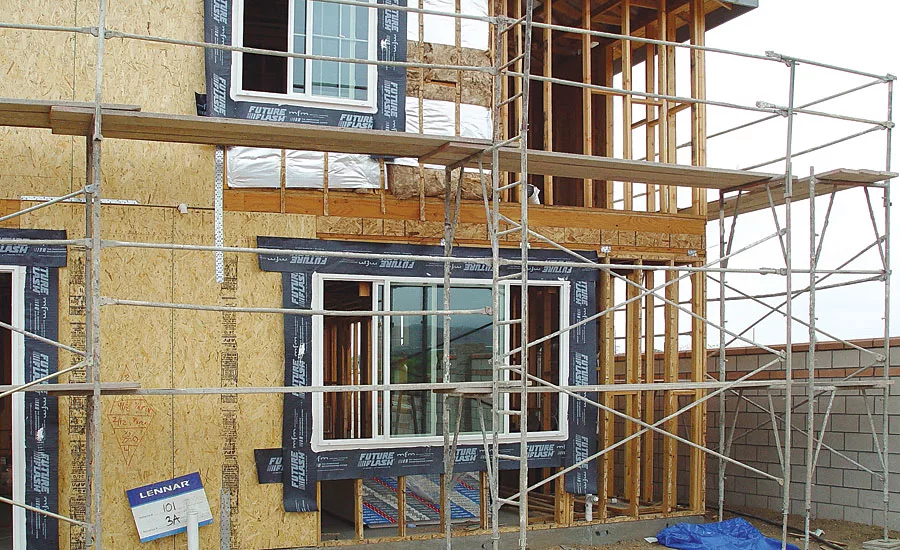
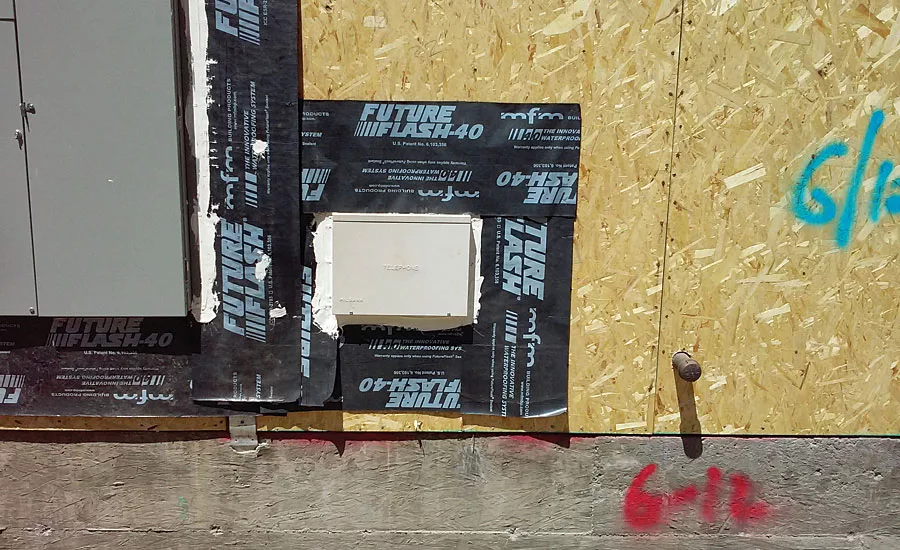
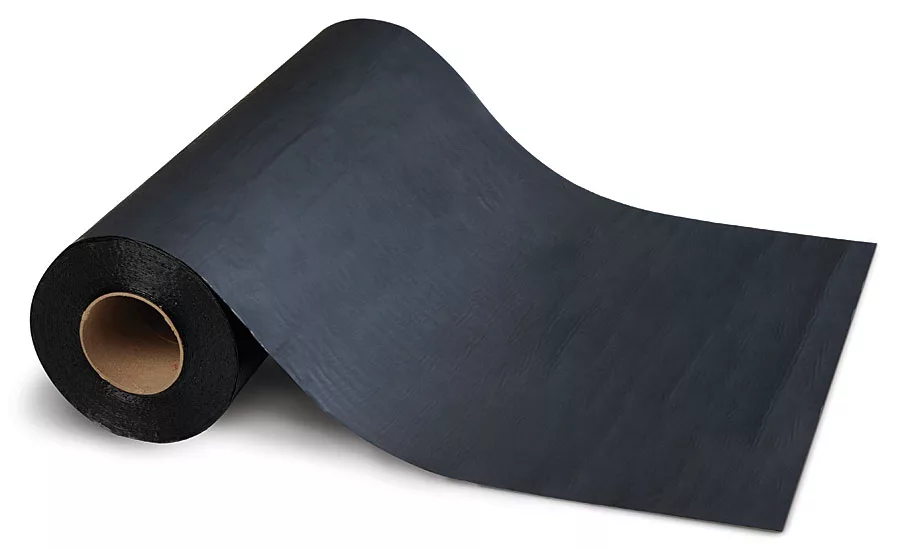
MFM’s product development was FutureFlash, a 25-mil, mechanically-attached waterproofing membrane. It is constructed of two high-performance films with a core of rubberized asphalt sandwiched between them. The outer polyethylene film is tough and resistant to tear, whereas the inner polyester film adds dimensional stability. The bituminous rubberized asphalt (SBS) core allows the membrane to self-seal around construction fasteners for a waterproof bond.

Products like this are designed especially for stucco walls where substantial through-wall movement of moisture is expected, and maximum waterproofing is essential. The membrane is also suitable for use under all siding materials, to strip in flanges of wood, metal and vinyl windows or a prelining at all metal transitions among other applications.

The major benefit of a product like this is that the membrane will not trap moisture. It effectively seals and prohibits entrapping water within wall cavities to prevent wood rot and warping. Its unique “weep” characteristics let the structure breath, and moisture to drain away from the wall cavity discouraging the occurrence of potentially hazardous, toxic mold.

The Moisture Diversion Method of Installation

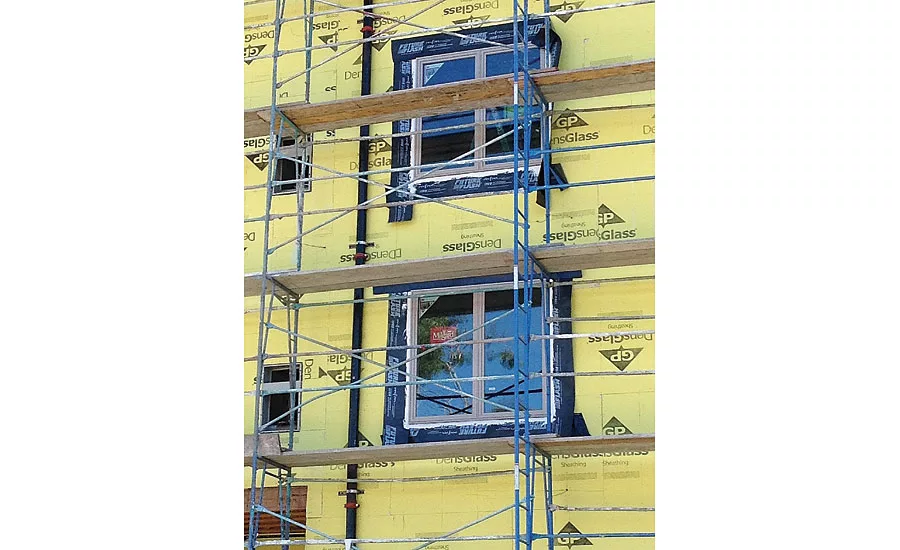
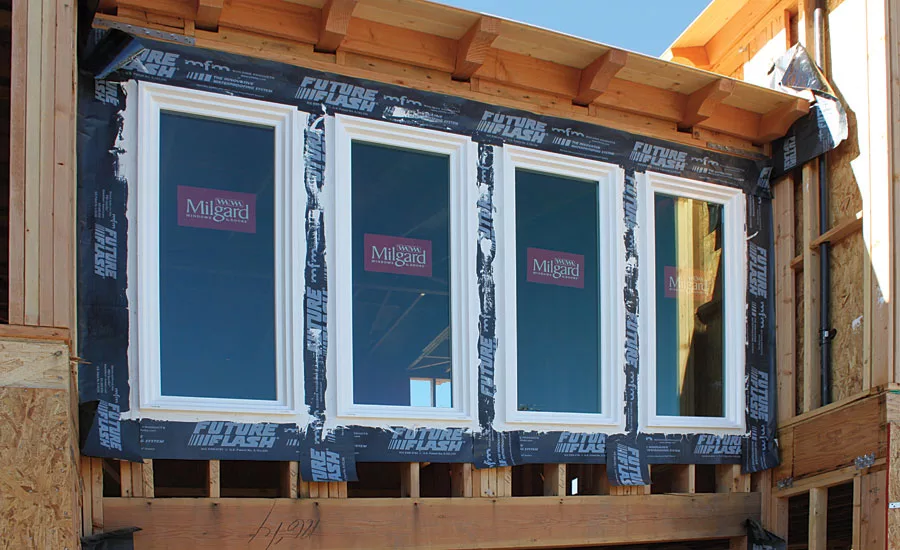
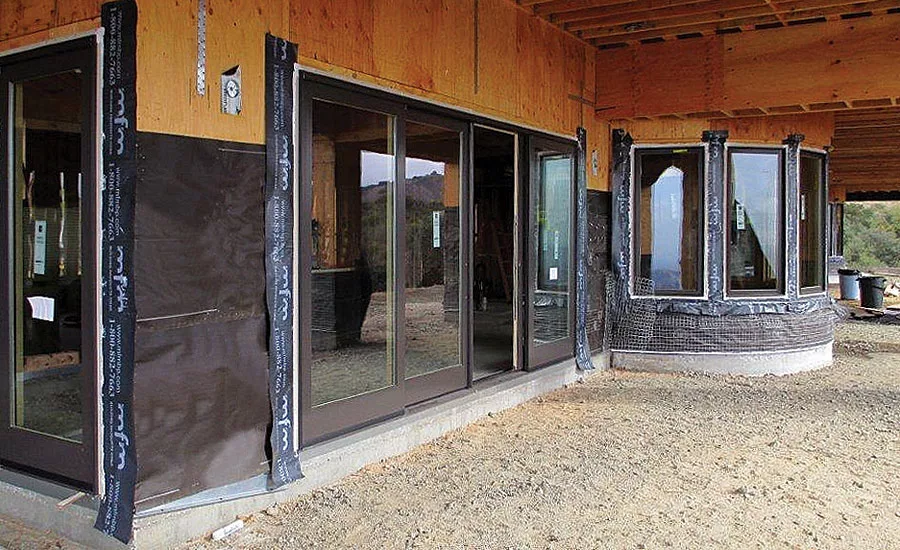
In window flashing applications, products like FutureFlash can be used to flash flat windows but when it comes to the complex recessed window configurations in today’s structures, a new method needed to be developed. Messenger followed up with the Moisture Diversion Method, a patented installation method to ensure proper waterproofing protection of these assemblies.

MDM utilizes both a 25-mil and a 40-mil product for the new requirements of a 40-mil membrane to flash the sill. This method creates a sill pan system compliant with ASTM E 2112 requirements. MDM is very effective, while significantly lowering material and labor costs. For instance, a fabricated sheet metal pan can cost anywhere from $75-150 per window, but only around $10 per window when using MDM. The total system creates a weep system that channels any water to the outside for complete waterproofing protection.

Significant Savings

Today, a large group of West Coast builders are taking advantage of products like these and the Moisture Diversion Method. The method eliminates the need for costly plastic prefabricated corners or other systems fabricated out of sheet metal or vinyl. The system also significantly reduces the number of installation steps needed per each window from 30 down to 8 to 12. As Messenger stated, “We have not yet experienced a failure in more than 20 years, while saving the builder money.”

As one builder noted, “I anticipated spending three days to install the windows on an apartment complex. By using the MDM, the job was completed in one day.”

“Necessity is the mother of invention definition. A need or problem encourages creative efforts to meet the need or solve the problem.” This saying appears in the dialogue Republic, by the ancient Greek philosopher Plato.

KEYWORDS: moisture waterproofing windows WRB (weather resistant barrier)

Share This Story

Looking for a reprint of this article?
From high-res PDFs to custom plaques, order your copy today!

Gary Messenger and MFM Building Products may not be as famous as Plato but by working together, a new product was developed that is still being used extensively by the stucco trade and window installers today.

Recommended Content

JOIN TODAY
To unlock your recommendations.

Already have an account? Sign In

  • Abercrombie & Fitch

    EIFS in 2026: How Specialty Finishes Are Redefining Exterior Wall Systems

    As building codes, owner expectations, and design demands...
    Stucco/EIFS
    By: Regi Mendoza
  • proper air and vapor control

    From Energy Efficiency to Moisture Management: Why Air and Vapor Control Matter

    How proper air and vapor control within building...
    Building Envelope
    By: Benjamin Meyer AIA, LEED AP
  • Linear Metal Ceiling Beam Baffles

    Top 25 Ceiling Contractors of 2026

    Suspended ceilings demand precision, code compliance and...
    Ceilings
    By: John Wyatt and Tanja Kern
You must login or register in order to post a comment.

Report Abusive Comment

Manage My Account
  • eMagazine Subscription
  • Newsletters
  • Online Registration
  • Manage My Preferences
  • Subscription Customer Service

More Videos

Sponsored Content

Sponsored Content is a special paid section where industry companies provide high quality, objective, non-commercial content around topics of interest to the Walls & Ceilings audience. All Sponsored Content is supplied by the advertising company and any opinions expressed in this article are those of the author and not necessarily reflect the views of Walls & Ceilings or its parent company, BNP Media. Interested in participating in our Sponsored Content section? Contact your local rep!

close
  • medical professionals moving a patient on a stretcher through the halls of a medical building
    Sponsored byNational Gypsum Company

    What Does High Performance Mean When It Comes To Gypsum Boards?

Popular Stories

Linear Metal Ceiling Beam Baffles

Top 25 Ceiling Contractors of 2026

Wichita Biomedical Campus

Wichita Drywall Worker Dies After Scaffolding Fall

QXO Just Changed the Game-Here's What Contractors Are Asking

QXO Just Changed the Game-Here's What Contractors Are Asking

Less compound

Joint Compound Market to Reach $9.7B by 2033

Events

June 24, 2026

The Bright Side & Benefits of Designing with Integrated Lighting

Credits 1 AIA LU/HSW; 0.1 ICC CEU

This course will explore the pivotal role architects and lighting design play in creating safer, more sustainable spaces. Learn how to avoid common lighting mistakes and make informed decisions that create the best visual environment for occupants. 

January 1, 2030

Webinar Sponsorship Information

For webinar sponsorship information, visit www.bnpevents.com/webinars or email webinars@bnpmedia.com.

See our full library of webinars

View All Submit An Event

Products

2026 National Painting Cost Estimator

2026 National Painting Cost Estimator

See More Products

Related Articles

  • WC0921-FEAT-Armstrong-p1FT-Hourigan_CorporateOffices_03.jpg

    Expansion of Corporate Office Results in Spacious Eye-Catching Signature Ceiling

    See More
  • AGC logo

    Construction Spending Shows Mixed Results in May

    See More
  • ATAS-La-Nube-40-780-x-439.jpg

    Wall Systems Elevate La Nube’s Award-Winning Design in El Paso

    See More

Related Products

See More Products
  • Drywall: Professional Techniques for Great Results, 4th Edition

  • Accidents Waiting to Happen: Best Practices in Workers' Comp Administration and Protecting Corporate Profitability

  • M:\General Shared\__AEC Store Katie Z\AEC Store\Images\Walls & Ceilings\new site\Painters_handbook.gif

    Painter's Handbook

See More Products
×

Connect with the industry’s leading resource for unparalleled insights and education.

Join thousands of industry professionals today. Shouldn’t you know what they know?

JOIN NOW
  • RESOURCES
    • Advertise
    • Contact Us
    • Directories
    • Store
    • Want More
  • SIGN UP TODAY
    • Create Account
    • eMagazine
    • Newsletters
    • Customer Service
    • Manage Preferences
  • SERVICES
    • Marketing Services
    • Reprints
    • Market Research
    • List Rental
    • Survey/Respondent Access
  • STAY CONNECTED
    • LinkedIn
    • Facebook
    • Instagram
    • YouTube
    • X
  • PRIVACY
    • PRIVACY POLICY
    • TERMS & CONDITIONS
    • DO NOT SELL MY PERSONAL INFORMATION
    • PRIVACY REQUEST
    • ACCESSIBILITY

Copyright ©2026. All Rights Reserved BNP Media, Inc. and BNP Media II, LLC.

Design, CMS, Hosting & Web Development :: ePublishing