Walls & Ceilings logo
search
cart
facebook twitter linkedin youtube youtube Spotify Podcasts Apple Podcasts Spotify Podcasts Apple Podcasts
  • Sign In
  • Create Account
  • Sign Out
  • My Account
Walls & Ceilings logo
  • NEWS
  • TOPICS
    • Drywall
    • Stucco/EIFS
    • Ceilings
    • Steel Framing
    • Fireproofing
    • Interior Plaster
    • Building Envelope
    • Insulation
    • Technology
    • Interior
    • Exterior
    • Women In Construction
  • COLUMNS
    • Up Front
    • All Things Gypsum
    • Art & Craft of Plastering
    • Stucco Stop
    • Steel Deal
    • Industry Voices
  • PRODUCTS
    • Buzz Guide
  • EVENTS
    • Industry Events
    • Webinars
    • BUILD Expo
  • MEDIA
    • Videos
    • Podcasts
    • Photo Galleries
    • BUILD26 Videos
    • Take our Quiz!
    • Infographics
  • EXCLUSIVE
    • Newsletters
    • Top 50 Contractors
    • Contractor of the Year
    • State of the Industry
    • W&C Store
    • Market Research
    • CEUs
    • Sponsor Insights
    • Custom Content & Marketing Services
  • DIRECTORY
  • EMAGAZINE
    • eMagazine
    • Advertise
    • Archive Issues
  • SIGN UP!
Building EnvelopeInsulation

Four W's: Optimizing Wall Performance with Continuous Insulation

By JR Babineau
continuous insulation
February 1, 2017

Continuous insulation has established itself as the industry standard for achieving optimum building performance. And in most regions, CI is raising the bar on energy efficiency and high-performance solutions for buildings.

As building codes and requirements continue to trend toward greater attention to higher efficiency requirements, contractors are recognizing how insulation plays into the wall performance of a building. To better explain how CI enhances the energy efficiency of wall systems, here is the why, what, where, and when. 

Why: Using CI to Increase Energy Efficiency in Wall Systems

As defined by the U.S. Department of Energy and model building codes, “continuous insulation” is insulation that runs continuously over structural members and is free of significant thermal bridging. It is installed on the interior or exterior, and is integral to any opaque surface of the building envelope.

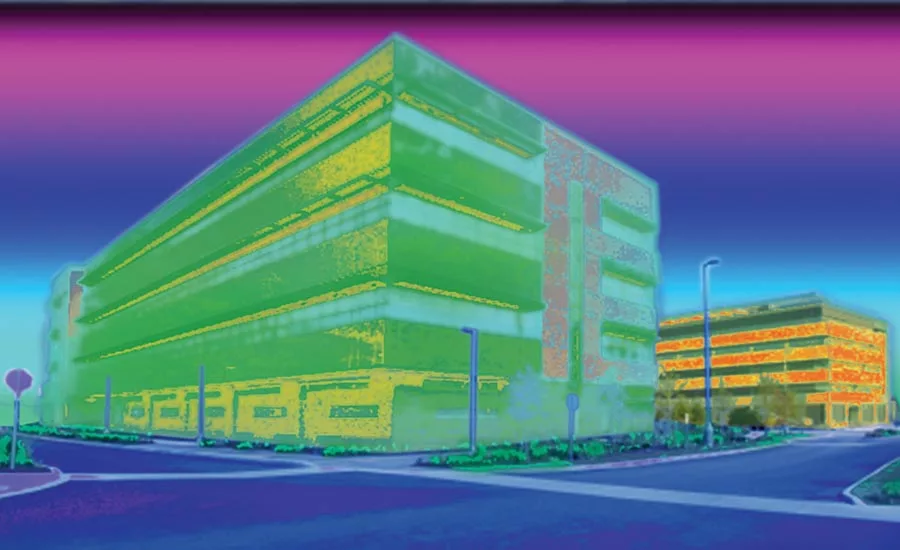
Although CI can serve a number of different roles when incorporated into a building structure, most importantly, it eliminates or greatly reduces the existence of thermal bridges. Thermal bridging occurs when a poorly insulating material allows an easy pathway for heat flow across the thermal envelope. Thermal bridging in buildings can reduce energy efficiency, create indoor heating and/or cooling problems, and even lead to condensation issues. Therefore, reducing the risk of thermal bridging not only cuts down on energy costs, but also can reduce condensation that could cause mold, rot, and rust, and harm indoor air quality.

The most common thermal bridges, and what are addressed by most codes, are thermal bridging through framing. Although steel is the most obvious offender, wood framing can also hurt wall thermal performance. For example, in a typical framed wall, framing can easily account for 25 percent or more of the wall area allowing heat to easily flow through the structure and reduce energy efficiency.

Other structures, such as balconies, slab edges, awnings or porte-cochères, have elements that can also contribute to thermal bridging. These can be effective in taking the heat out of a building and ejecting it into the surrounding air, resulting in high heating costs and cold floors.

Other benefits of CI? Certain CI materials can also act as air barriers and water-resistive barriers when integrated with window and door details. Other materials can satisfy structural, green building, or fire requirements, while also addressing practical needs such as cladding installation.

What: The Right Product Mix for Optimal Wall Performance

Determining the proper amount and type of continuous insulation to use for a given project might seem challenging, especially when considering how the overall insulation and air barrier system can help manage condensation and heat transfer.

When selecting the product that will best achieve your CI goals, thickness is often a critical consideration. As CI materials get thicker (to meet code requirements), this can lead to other issues in the project, including fastener length, cladding attachments, and integration with flashings, and door and window jambs. Therefore, identify the product that meets the building requirements at a minimum thickness. One popular concept is to incorporate foam plastic insulating sheathing (FPIS), a widely used and cost-effective product, into the wall assembly.

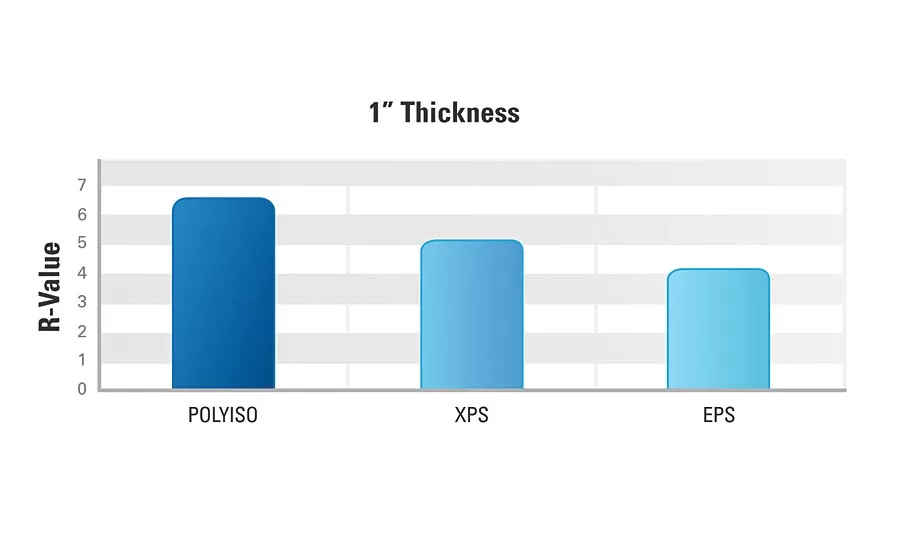
Due to its high thermal performance, polyisocyanurate foam (polyiso) is the product of choice for energy-aware contractors, building owners and homebuilders. With one of the highest R-values of 6 per inch, polyiso foam is an excellent choice for achieving thermal efficiency. It has a low tendency to absorb moisture, is solvent-resistant, and provides strong dimensional stability and fire performance. When seams are taped, penetrations sealed, and the system is integrated with window and door flashings, polyiso foam sheathing can also create an effective air barrier and water-resistive barrier, eliminating the need for a separate building wrap.

Another effective CI option is to install closed-cell spray polyurethane foam (ccSPF) on the exterior of the building envelope. When integrated with window and door flashings, exterior ccSPF can provide continuous insulation, air barrier, water-resistive barrier, and vapor retarder functions in one installation step.

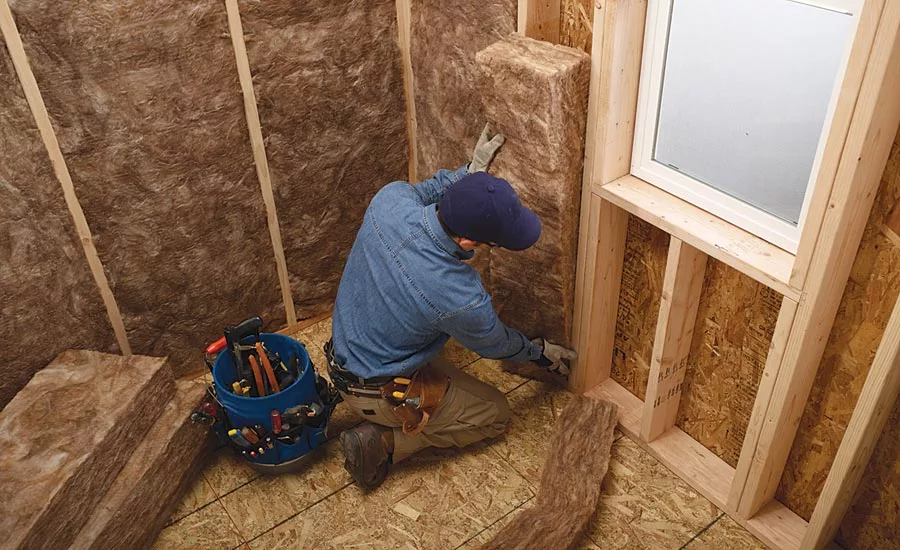
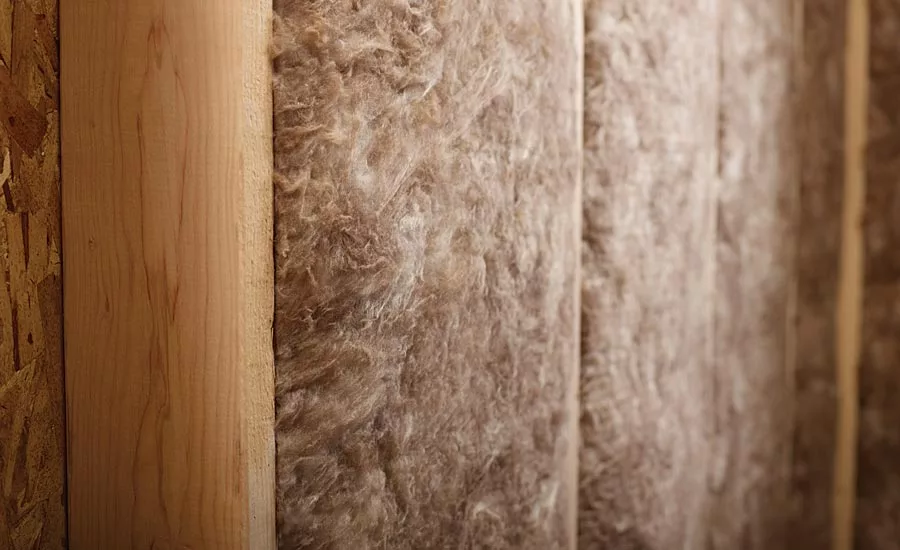
Once the type of CI product is determined, it is important to consider the other insulation, air-sealing, and moisture management strategies that will be implemented. Products like fiber glass, mineral wool, and spray foam work together with CI to ensure long-term energy efficiency. Combined with a proper installation, the right mix of products will determine whether or not the structure will deliver a durable and long-lasting performance.

Where: The Impact of Location and Climate on Wall Performance

Installing the right mix of insulation products in the building depends on where and how in the structure CI will be installed, what R-values are required and the climate the project is in.

Understanding which energy efficiency and building codes and standards are in place is crucial in determining how to achieve CI in the project. For the current status of energy codes and standards adoptions by state, visit energycodes.gov or iccsafe.org. 

CI will have the biggest impact when applied to the entire building structure, eliminating thermal bridging through the roof, walls, and foundation.

Consider installing CI throughout the structure to provide heat, moisture, and air control, protect the building’s exterior and increase energy efficiency.

When: Collaborating with Teams to Incorporate CI

Collaborate with project partners early on in the construction process to agree on the best overall insulation, air-sealing, and moisture management strategy, including CI. This will help the team avoid costly oversights or decreased building efficiency. 

Learn early on about the planned designs, and recommend improvements to the wall assembly and the right product mix for the project.  Once a design is finalized, be sure to communicate what other trades (such as framers or window installers) need to do to help ensure a successful CI installation later on.

As building codes move toward higher energy efficiency, CI can play a crucial role in meeting or exceeding energy code R-values or U-factors, when used in conjunction with traditional insulation methods. 

Although CI is seen as an affordable or economical option for contractors, the benefits of a proper building envelope go beyond project savings. As the boundary between the interior and exterior, the building envelope provides outdoor protection and indoor comfort, adding value to the building, and saving the future owner money.

Continuous insulation has become a mainstream concept that should be considered when determining a cost-effective and long-term solution for eliminating thermal bridges and maximizing a building’s energy efficiency and performance.

KEYWORDS: building codes charities and foundations CI (continuous insulation) wall system

Share This Story

Looking for a reprint of this article?
From high-res PDFs to custom plaques, order your copy today!

Wc0619 ft insulation p4 author jr babineau
JR Babineau is a research manager and the principal building scientist for Johns Manville. For more than 20 years, he has been involved in research and development of building products, as well as providing education and consulting on building systems, with an emphasis on heat, air, moisture, noise, and energy efficiency.

Recommended Content

JOIN TODAY
To unlock your recommendations.

Already have an account? Sign In

  • Abercrombie & Fitch

    EIFS in 2026: How Specialty Finishes Are Redefining Exterior Wall Systems

    As building codes, owner expectations, and design demands...
    Stucco/EIFS
    By: Regi Mendoza
  • proper air and vapor control

    From Energy Efficiency to Moisture Management: Why Air and Vapor Control Matter

    How proper air and vapor control within building...
    Building Envelope
    By: Benjamin Meyer AIA, LEED AP
  • Linear Metal Ceiling Beam Baffles

    Top 25 Ceiling Contractors of 2026

    Suspended ceilings demand precision, code compliance and...
    Ceilings
    By: John Wyatt and Tanja Kern
You must login or register in order to post a comment.

Report Abusive Comment

Manage My Account
  • eMagazine Subscription
  • Newsletters
  • Online Registration
  • Manage My Preferences
  • Subscription Customer Service

More Videos

Sponsored Content

Sponsored Content is a special paid section where industry companies provide high quality, objective, non-commercial content around topics of interest to the Walls & Ceilings audience. All Sponsored Content is supplied by the advertising company and any opinions expressed in this article are those of the author and not necessarily reflect the views of Walls & Ceilings or its parent company, BNP Media. Interested in participating in our Sponsored Content section? Contact your local rep!

close
  • medical professionals moving a patient on a stretcher through the halls of a medical building
    Sponsored byNational Gypsum Company

    What Does High Performance Mean When It Comes To Gypsum Boards?

Popular Stories

Wichita Biomedical Campus

Wichita Drywall Worker Dies After Scaffolding Fall

Okan Tower in Miami, Florida

OSHA Opens Investigation Into Fatal Okan Tower Column Collapse

Construction workers in safety vests install drywall

Gypsum Sales Hold Amid Market Shifts in the U.S.

data center and logos

USG, Subzero Engineering Form Data Center Alliance

Events

June 24, 2026

The Bright Side & Benefits of Designing with Integrated Lighting

Credits 1 AIA LU/HSW; 0.1 ICC CEU

This course will explore the pivotal role architects and lighting design play in creating safer, more sustainable spaces. Learn how to avoid common lighting mistakes and make informed decisions that create the best visual environment for occupants. 

January 1, 2030

Webinar Sponsorship Information

For webinar sponsorship information, visit www.bnpevents.com/webinars or email webinars@bnpmedia.com.

See our full library of webinars

View All Submit An Event

Products

2026 National Painting Cost Estimator

2026 National Painting Cost Estimator

See More Products

Related Articles

  • The frame of a new house with insulation installed

    Creating Healthy Indoor Environments with Continuous Insulation

    See More
  • Meeting Energy Code Requirements with Continuous Insulation

    See More
  • outdoor musical theater

    Continuous Insulation Wall System With Stucco Finish Delivers Strong Performance

    See More

Related Products

See More Products
  • Optimizing Social Media from a B2B Perspective

  • 1118458605.jpg

    Sustainable Facades: Design Methods for High-Performance Building Envelopes

See More Products

Related Directories

  • ATLAS Roof & Wall Insulation

    With decades of proven performance, Atlas EnergyShield continuous wall insulation provides an uninterrupted thermal barrier over an entire wall, not just in wall cavities between studs. Atlas polyiso creates a versatile, effective barrier for thermal, air, moisture, and vapor control. Whether building a single family home or a high-rise, Atlas EnergyShield wall insulation will meet energy codes and ensure the best building performance.
  • TRUFAST Walls

    TRUFAST® is an innovative leader in fastening systems for exterior building envelopes and facades. Products include a variety of fasteners to allow installation to continuous insulation, lath, EIFS, brick veneer, and building wrap. The products are extensively tested and conform to current energy and building standards.
  • High Performance Insulation Professionals (HPIP)

    HPIP is the only 501c3 in the insulation industry dedicated to establishing a unified certification for contractors and those entering the workplace. HPIP's mission is TO BETTER THE INSULATION INDUSTRY.
×

Connect with the industry’s leading resource for unparalleled insights and education.

Join thousands of industry professionals today. Shouldn’t you know what they know?

JOIN NOW
  • RESOURCES
    • Advertise
    • Contact Us
    • Directories
    • Store
    • Want More
  • SIGN UP TODAY
    • Create Account
    • eMagazine
    • Newsletters
    • Customer Service
    • Manage Preferences
  • SERVICES
    • Marketing Services
    • Reprints
    • Market Research
    • List Rental
    • Survey/Respondent Access
  • STAY CONNECTED
    • LinkedIn
    • Facebook
    • Instagram
    • YouTube
    • X
  • PRIVACY
    • PRIVACY POLICY
    • TERMS & CONDITIONS
    • DO NOT SELL MY PERSONAL INFORMATION
    • PRIVACY REQUEST
    • ACCESSIBILITY

Copyright ©2026. All Rights Reserved BNP Media, Inc. and BNP Media II, LLC.

Design, CMS, Hosting & Web Development :: ePublishing