Clay: The Original Plaster Binder
Art & Craft of Plastering
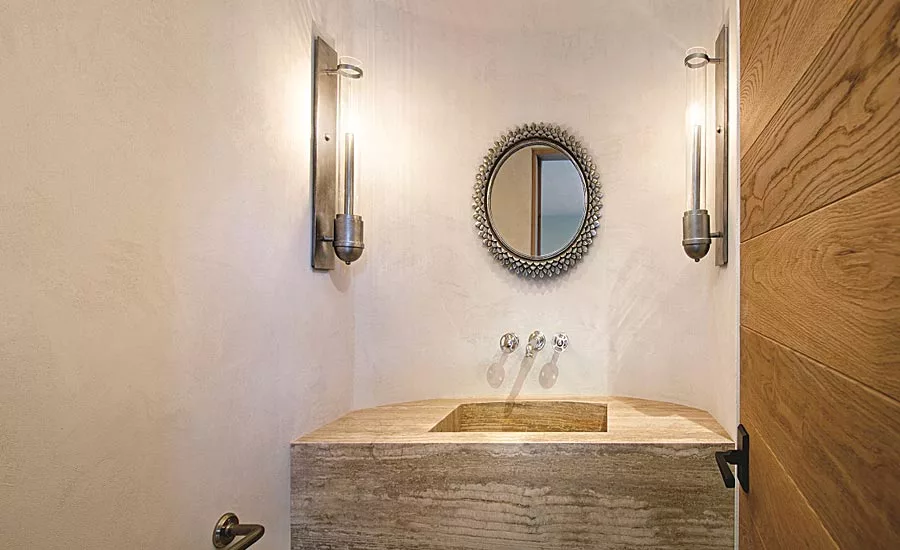
Since clay is almost always readily available, we sometimes take it for granted.
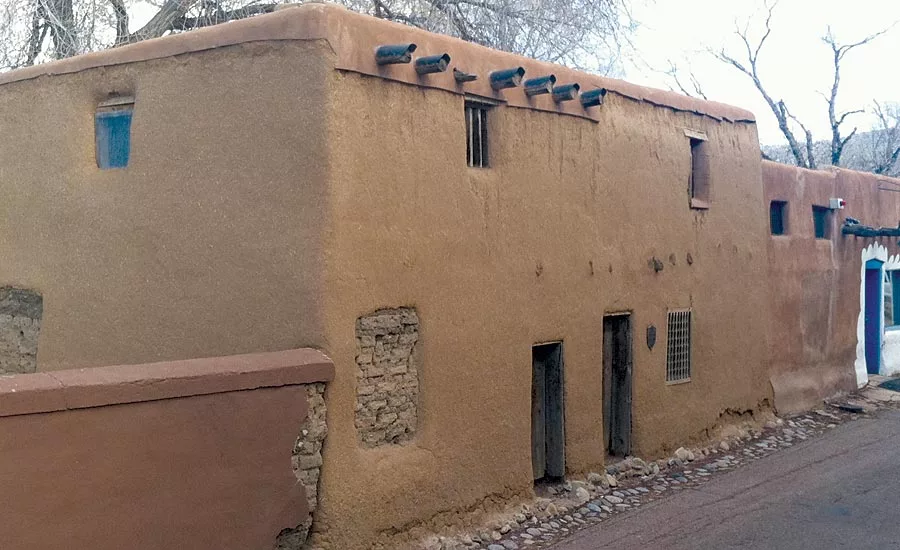
In arid climates that have a diurnal cycle of warm sunny days and cool nights, the thickness of earthen construction can be managed to take advantage of its thermal mass.
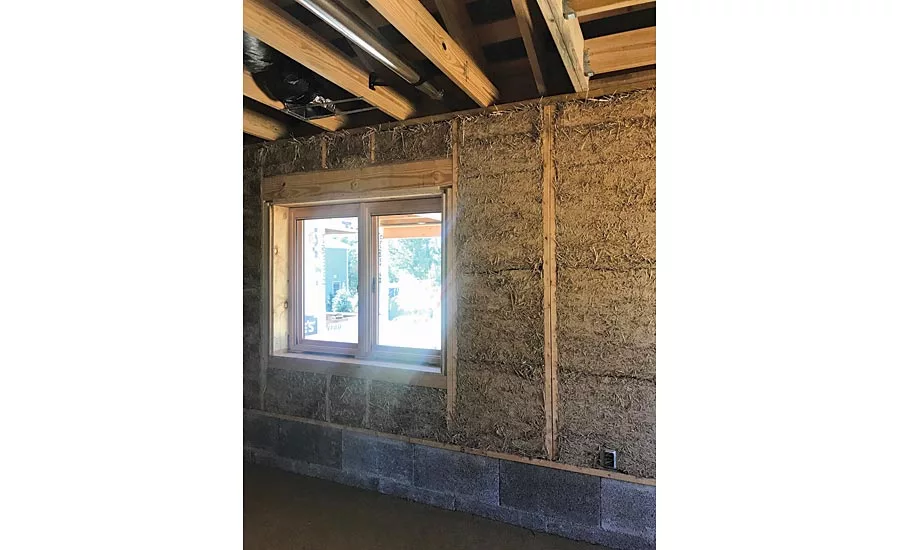
In exterior, earthen plasters have been the most traditional building material around the world and throughout history. “Wattle & Daub” refers to earthen plaster applied over interwoven reed laths, a typical infill for traditional timber framing.
Clay was undoubtedly the first binder discovered and used to make plasters. Likewise, earthen, clay-based construction is our oldest continuous building tradition. Clay is readily available only a few feet or as little as inches under the surface of the ground in most areas humans inhabit. Because of this, clay-based products such as roof tiles, pottery and bricks are benefits of clay technology that we almost take for granted. The topsoil in your backyard is likely a mix of organic matter, sand and clay. Having clayey soils is vitally important for most kinds of agriculture. As such, there is hardly a habitable region of the earth that doesn’t have vast, readily accessible clay deposits suitable for construction.
Understanding a bit of the geology helps to explain why clay deposits are so widely dispersed. Clays form from millions of years of mineral erosion. Mountains break down into boulders, boulders into rocks, rocks into pebbles, sand, silt and eventually, when the silt reaches a certain size of fineness, an amazing transformation occurs. Instead of just being a loose mix, the fine particles manifest an attraction for water and each other at a molecular level. Clay can be thought of less as a material and more of a behavior: the phenomenon of very finely eroded minerals to agglomerate into a sticky mass.
Chemistry
What we generally classify as “clay” actually derives from a wide variety of minerals. The mineral sources most interesting as raw material for plaster are from the silicon dioxide family; examples include granite or feldspar. Fortunately for us, these minerals make up more than 60 percent of the earth’s crust, explaining clay’s wide availability as a practically unlimited resource. When eroded, granites and feldspars form hydrous aluminum silicates having a simplified chemical notation: AlO•2SiO•2HO. This notation helps us to identify the alumina, silica and water components; however, this is not just a mixture. Instead, at a molecular level clay reorganizes itself into a platelet arrangement better described with a chemical formula such as Al2Si2O5(OH)4, representative of the commonly known clay kaolin.
Manufacture
To convert naturally occurring clay into a binder for plaster requires minimal processing. In many regions, clay can be found just a few feet under the topsoil. Manufacture is often simply a matter of harvesting. Clay plasters are one of the few plasters you can easily and inexpensively make yourself! If your underlying soil has 20 percent or more clay content, it is quite likely a very good candidate for use as a plaster binder. Even if the percentage of clay in the soil is low or has a relatively high silt content. Usually, it can be quickly amended with a suitable nearby soil rich in clay.
There are simple, inexpensive tests that yield trustworthy results for determining if a given clay is suitable for plaster or construction more generally.
Clay has many practical uses in many industries including pottery, bricks and terra cotta as well as fields related to civil engineering. As a result, clays that have already been tested, dried, sifted and amended as necessary are readily available for purchase as an inexpensive raw material. Industrial manufacturers of processed clays typically take advantage of the sun in the drying process, resulting in a significantly lower embodied energy and cost than most other construction materials.
Properties & Specifications
One of the most unique characteristics of clay that distinguishes it from other binders such as gypsum or lime is that it only has a mechanical set, that is to say it doesn’t undergo a chemical change when it goes from a wet to a dry plaster. Rather, it simply dries out. The aforementioned platelet structure makes the clay very plastic and workable when wet, just what is needed for a good plaster. However, as the water evaporates from the plaster, the platelet structure consolidates and becomes rigid.
A major and unique benefit of having a mechanical set is that if the clay plaster gets damaged, it can be rehydrated and reworked.
Because so much water evaporates out of clay plasters, precautions have to be taken to ensure that the plaster does not remain overly “friable,” meaning loose and weakened because of voids. Base coats are typically loaded with aggregates and fibers such as straw to prevent shrinkage. Finish coats will receive a hardening consolidation by rehydrating the surface and compressing typically with a trowel or even a stiff sponge.
Clay plasters contribute to a very healthy indoor air quality. The high permeability of clay helps to regulate humidity in the air. At as low as 50 percent relative humidity, clay plasters will act as a reservoir, adsorbing excess humidity out of the air, subsequently releasing it later as humidity levels in the air diminish.
In exterior, earthen plasters have been the most traditional building material around the world and throughout history. “Wattle & Daub” refers to earthen plaster applied over interwoven reed laths, a typical infill for traditional timber framing. Adobe bricks are sun baked clay-based plaster molded masonry units that, in turn, receive an earthen plaster finish. Cob is similar to adobe; however, damp lumps are unmolded and hand-applied as walls and floors. Rammed earth, as the name implies, compresses earthen plaster between forms. Clay plaster’s greatest vulnerability in exterior is erosion which can be mitigated with a building design that includes extended eaves or other means of preventing water from streaming on the façade.
In arid climates that have a diurnal cycle of warm sunny days and cool nights, the thickness of earthen construction can be managed to take advantage of its thermal mass. Earthen buildings can slowly absorb the radiant heat of the day, releasing it in the interior of the building during the night. In more humid climates, the thickness of the walls can be increased even further creating a highly insulative wall assembly. Earthen wall assemblies combined with smart building placement, natural shading and ventilation can create comfortable living conditions that negate or diminish reliance on mechanical systems, a traditional construction solution that is both economical and ecological.
In the next column, we’ll delve into gypsum, a plaster binder whose properties are nothing short of magical.
Looking for a reprint of this article?
From high-res PDFs to custom plaques, order your copy today!