Walls & Ceilings logo
search
cart
facebook twitter linkedin youtube youtube Spotify Podcasts Apple Podcasts Spotify Podcasts Apple Podcasts
  • Sign In
  • Create Account
  • Sign Out
  • My Account
Walls & Ceilings logo
  • NEWS
  • TOPICS
    • Drywall
    • Stucco/EIFS
    • Ceilings
    • Steel Framing
    • Fireproofing
    • Interior Plaster
    • Building Envelope
    • Insulation
    • Technology
    • Interior
    • Exterior
    • Women In Construction
  • COLUMNS
    • Up Front
    • All Things Gypsum
    • Art & Craft of Plastering
    • Stucco Stop
    • Steel Deal
    • Industry Voices
  • PRODUCTS
    • Buzz Guide
  • EVENTS
    • Industry Events
    • Webinars
    • BUILD Expo
  • MEDIA
    • Videos
    • Podcasts
    • Photo Galleries
    • BUILD26 Videos
    • Take our Quiz!
    • Infographics
  • EXCLUSIVE
    • Newsletters
    • Top 50 Contractors
    • Contractor of the Year
    • State of the Industry
    • W&C Store
    • Market Research
    • CEUs
    • Sponsor Insights
    • Custom Content & Marketing Services
  • DIRECTORY
  • EMAGAZINE
    • eMagazine
    • Advertise
    • Archive Issues
  • SIGN UP!
Building EnvelopeInsulationInterior Plaster

10 Safety Tips For Operating Aerial Work Platforms

Tips every operator should know to stay safe on a jobsite.
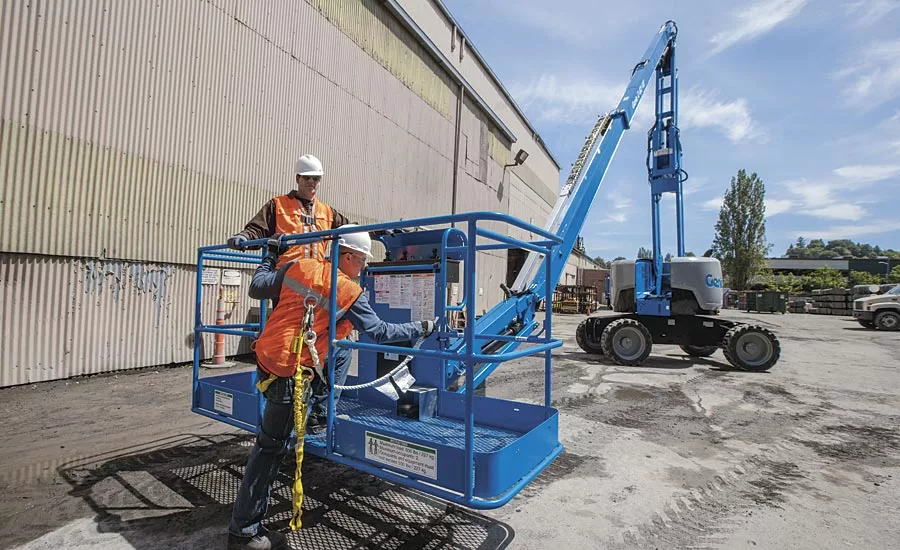
Aerial Work Platforms

The number one priority for aerial equipment manufacturers is to provide safe, productive aerial work platforms for customers working on aerial worksites.
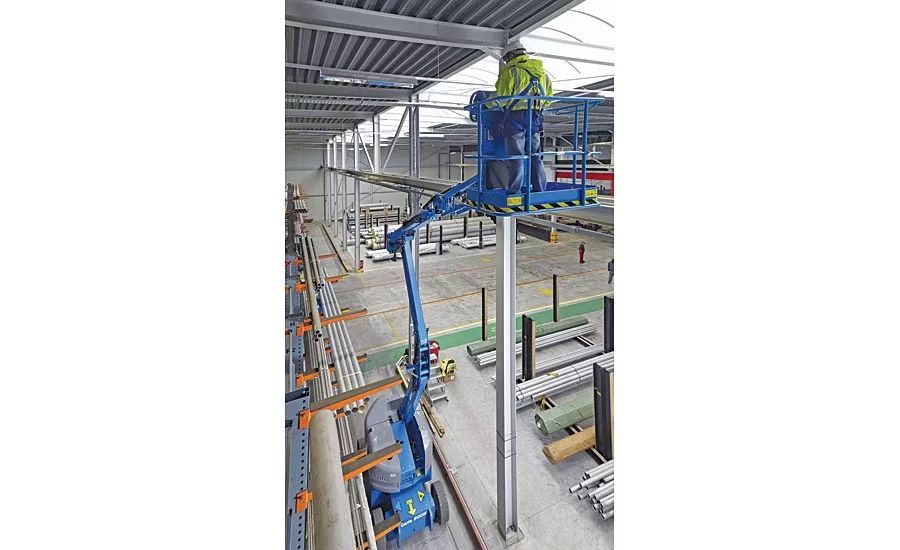
Aerial Work Platforms

The number one priority for aerial equipment manufacturers is to provide safe, productive aerial work platforms for customers working on aerial worksites.
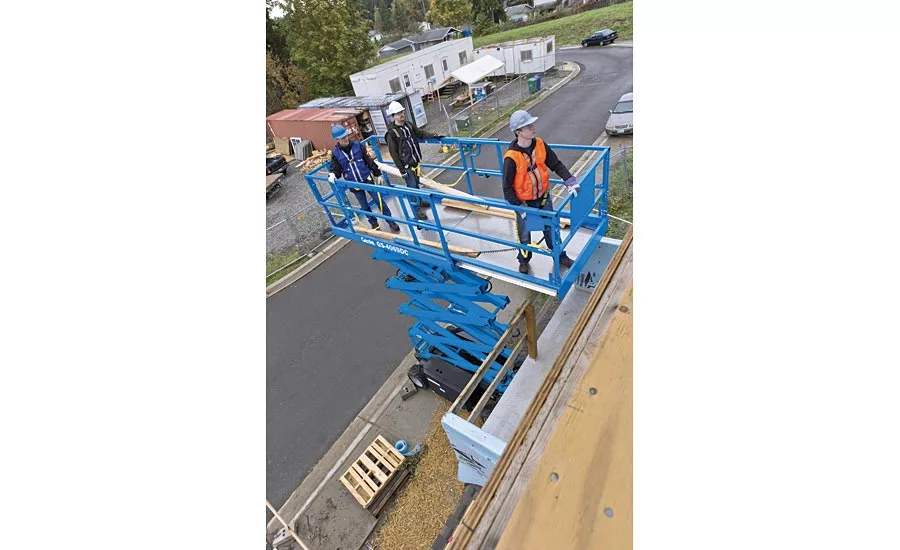
Aerial Work Platforms

The number one priority for aerial equipment manufacturers is to provide safe, productive aerial work platforms for customers working on aerial worksites.
Aerial Work Platforms

The number one priority for aerial equipment manufacturers is to provide safe, productive aerial work platforms for customers working on aerial worksites.
Aerial Work Platforms

The number one priority for aerial equipment manufacturers is to provide safe, productive aerial work platforms for customers working on aerial worksites.

Aerial Work Platforms
December 1, 2018

The number one priority for aerial equipment manufacturers is to provide safe, productive aerial work platforms for customers working on aerial worksites. Once the equipment is in the field, operators must follow the prescribed operating practices outlined in our manufacturer’s recommended guidelines to keep the equipment working safely and productively.

These are some of the best ways to prevent incidents from happening while operating an aerial work platform on a jobsite that all operators should know.

Ten Tips for Safe Work Practices on Aerial Work Platforms

1. Read.

Understand and obey all of your employer’s safety rules and worksite regulations, as well as any applicable local, governmental or provincial regulations that apply before operating the machine.

2. Perform pre-operation inspection and function tests on the equipment before each shift.

If the machine fails any of these tests, make sure it is immediately tagged and removed from service until it can be repaired by a qualified service technician.

3. Perform a workplace risk assessment prior to moving machines to the jobsite.

Look for drop-offs and holes, slopes, slippery or unstable surfaces, overhead obstacles, power lines and any other hazards that may exist, and develop a plan to avoid those hazards through all phases of machine operation.

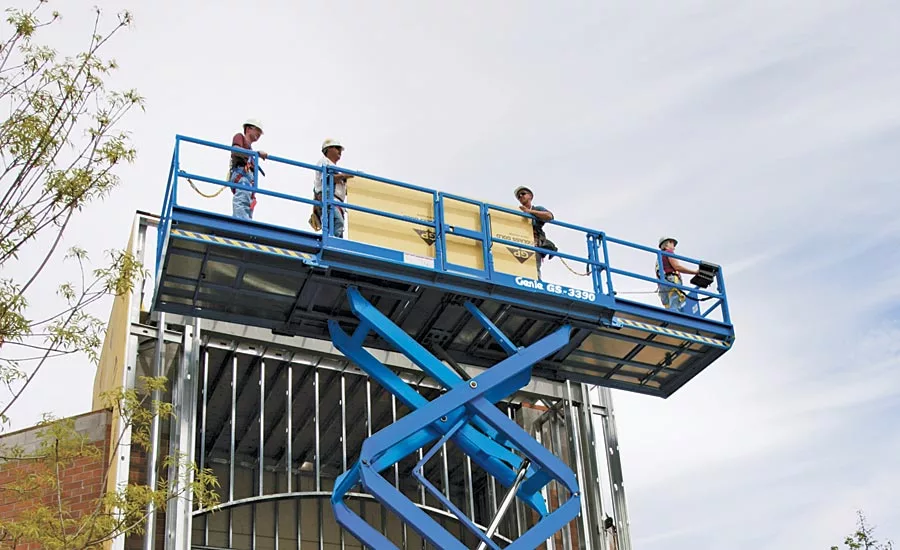
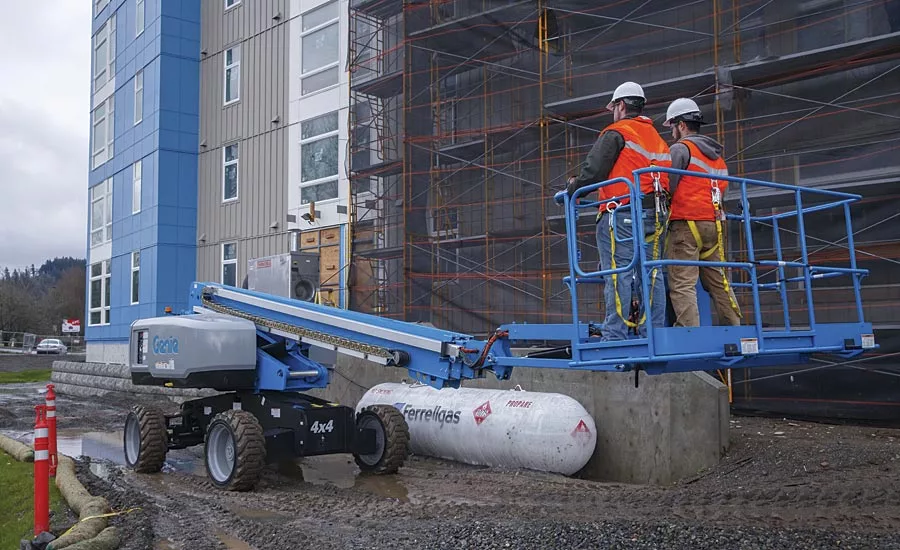
4. Wear the proper fall protection.

A properly fitted full body harness and appropriate lanyard, or self-retracting lifeline, will reduce the potential for an operator being catapulted from the platform of a boom. The slightest jar at the base of the machine can equate into a sudden and powerful whiplash at the platform—if this happens, wearing the proper fall protection may reduce the chances of serious injury or even death.

5. Do not sit, stand or climb on the platform guardrails.

Operators should maintain a firm footing on the platform floor at all times. If an operator is required to reach an overhead work area that is too small for the platform guardrails to allow access to, the use of a manufacturer-approved device, specifically designed to provide additional access to confined spaces, is recommended.

6. Do not exit an elevated boom or scissor lift platform unless you have been properly trained to do so.

Maintain 100 percent tie-off at all times and are in possession of an approval letter from the manufacturer that provides the proper guidance.

7. Do not climb down from the platform when it is raised.

Whenever possible, keep a cell phone or two-way radio with you while you are in the platform and always have a rescue plan in place in the event that an aerial machine is not equipped with an auxiliary lowering system (or if that system malfunctions).

8. Keep the platform floor clear of debris.

Scrap materials, buckets, large tool boxes and other items can cause a serious tripping hazard—you should remove any item from the platform that is not absolutely necessary to do your work.

9. Lower the platform entry mid-rail or close the entry gate before operating an aerial work platform.

Never tape or prop the entry open, and never use an aerial machine if the gate does not properly latch.

10. Receive proper training (both general training and hands-on practical training) on, as well as become familiar with, the exact aerial work platform you will be operating.

This includes thoroughly reading the operator’s manual and safety signs on the machine, as well as understanding the function and location of all safety devices and controls before beginning operation.

Overall

Be sure to follow these simple, safe operating tips to keep your aerial work platform performing productively day in and day out, from one application to another.

KEYWORDS: aerial work platforms apps and software fall prevention safety equipment training

Share This Story

Looking for a reprint of this article?
From high-res PDFs to custom plaques, order your copy today!

Recommended Content

JOIN TODAY
To unlock your recommendations.

Already have an account? Sign In

  • Abercrombie & Fitch

    EIFS in 2026: How Specialty Finishes Are Redefining Exterior Wall Systems

    As building codes, owner expectations, and design demands...
    Stucco/EIFS
    By: Regi Mendoza
  • proper air and vapor control

    From Energy Efficiency to Moisture Management: Why Air and Vapor Control Matter

    How proper air and vapor control within building...
    Building Envelope
    By: Benjamin Meyer AIA, LEED AP
  • Linear Metal Ceiling Beam Baffles

    Top 25 Ceiling Contractors of 2026

    Suspended ceilings demand precision, code compliance and...
    Ceilings
    By: John Wyatt and Tanja Kern
You must login or register in order to post a comment.

Report Abusive Comment

Manage My Account
  • eMagazine Subscription
  • Newsletters
  • Online Registration
  • Manage My Preferences
  • Subscription Customer Service

More Videos

Sponsored Content

Sponsored Content is a special paid section where industry companies provide high quality, objective, non-commercial content around topics of interest to the Walls & Ceilings audience. All Sponsored Content is supplied by the advertising company and any opinions expressed in this article are those of the author and not necessarily reflect the views of Walls & Ceilings or its parent company, BNP Media. Interested in participating in our Sponsored Content section? Contact your local rep!

close
  • medical professionals moving a patient on a stretcher through the halls of a medical building
    Sponsored byNational Gypsum Company

    What Does High Performance Mean When It Comes To Gypsum Boards?

Popular Stories

Wichita Biomedical Campus

Wichita Drywall Worker Dies After Scaffolding Fall

Okan Tower in Miami, Florida

OSHA Opens Investigation Into Fatal Okan Tower Column Collapse

Construction workers in safety vests install drywall

Gypsum Sales Hold Amid Market Shifts in the U.S.

data center and logos

USG, Subzero Engineering Form Data Center Alliance

Events

June 24, 2026

The Bright Side & Benefits of Designing with Integrated Lighting

Credits 1 AIA LU/HSW; 0.1 ICC CEU

This course will explore the pivotal role architects and lighting design play in creating safer, more sustainable spaces. Learn how to avoid common lighting mistakes and make informed decisions that create the best visual environment for occupants. 

January 1, 2030

Webinar Sponsorship Information

For webinar sponsorship information, visit www.bnpevents.com/webinars or email webinars@bnpmedia.com.

See our full library of webinars

View All Submit An Event

Products

2026 National Painting Cost Estimator

2026 National Painting Cost Estimator

See More Products

Related Articles

  • resurfacing walls and ceilings

    Training is Key to Safety and Efficiency on Aerial Work Platforms

    See More
  • MADISA TO LAUNCH JLG AERIAL WORK PLATFORMS IN LATIN AMERICA

    See More
  • TEMPLATES PUBLISHED FOR MAST CLIMBING WORK PLATFORMS

    See More

Related Products

See More Products
  • Drywall: Professional Techniques for Great Results, 4th Edition

  • bim 3e.jpg

    BIM Handbook: A Guide to Building Information Modeling for Owners, Designers, Engineers, Contractors, and Facility Managers, 3rd Edition

  • 0470872616.jpg

    Sustainable Renovation: Strategies for Commercial Building Systems and Envelope

See More Products

Events

View AllSubmit An Event
  • December 10, 2025

    Next-Level Drywall Corners: Live Demo of Precision Grooving Techniques

    On-Demand This webinar will feature a live demonstration that showcases an innovative approach to creating clean, accurate drywall corners using portable grooving technology.
View AllSubmit An Event

Related Directories

  • Infrastructure Health & Safety Assn.

    IHSA is a leader in health and safety education. Through skills-based training, auditing, and evaluation, we provide safety solutions to those who perform high-risk activities such as working at heights, working with energized high-voltage power systems, driving motor vehicles, transporting dangerous goods, working on suspended access equipment, and utility line clearing.
×

Connect with the industry’s leading resource for unparalleled insights and education.

Join thousands of industry professionals today. Shouldn’t you know what they know?

JOIN NOW
  • RESOURCES
    • Advertise
    • Contact Us
    • Directories
    • Store
    • Want More
  • SIGN UP TODAY
    • Create Account
    • eMagazine
    • Newsletters
    • Customer Service
    • Manage Preferences
  • SERVICES
    • Marketing Services
    • Reprints
    • Market Research
    • List Rental
    • Survey/Respondent Access
  • STAY CONNECTED
    • LinkedIn
    • Facebook
    • Instagram
    • YouTube
    • X
  • PRIVACY
    • PRIVACY POLICY
    • TERMS & CONDITIONS
    • DO NOT SELL MY PERSONAL INFORMATION
    • PRIVACY REQUEST
    • ACCESSIBILITY

Copyright ©2026. All Rights Reserved BNP Media, Inc. and BNP Media II, LLC.

Design, CMS, Hosting & Web Development :: ePublishing