Walls & Ceilings logo
search
cart
facebook twitter linkedin youtube youtube Spotify Podcasts Apple Podcasts Spotify Podcasts Apple Podcasts
  • Sign In
  • Create Account
  • Sign Out
  • My Account
Walls & Ceilings logo
  • NEWS
  • TOPICS
    • Drywall
    • Stucco/EIFS
    • Ceilings
    • Steel Framing
    • Fireproofing
    • Interior Plaster
    • Building Envelope
    • Insulation
    • Technology
    • Interior
    • Exterior
    • Women In Construction
  • COLUMNS
    • Up Front
    • All Things Gypsum
    • Art & Craft of Plastering
    • Stucco Stop
    • Steel Deal
    • Industry Voices
  • PRODUCTS
    • Buzz Guide
  • EVENTS
    • Industry Events
    • Webinars
    • BUILD Expo
  • MEDIA
    • Videos
    • Podcasts
    • Photo Galleries
    • BUILD26 Videos
    • Take our Quiz!
    • Infographics
  • EXCLUSIVE
    • Newsletters
    • Top 50 Contractors
    • Contractor of the Year
    • State of the Industry
    • W&C Store
    • Market Research
    • CEUs
    • Sponsor Insights
    • Custom Content & Marketing Services
  • DIRECTORY
  • EMAGAZINE
    • eMagazine
    • Advertise
    • Archive Issues
  • SIGN UP!
Building EnvelopeExteriorStucco/EIFS

Rainscreens: Products Builders Should Use

Rainscreen Is The Barrier Product Builders Should Be Selecting On Many Projects. Why Aren’t More Contractors Using Them?
By Daniel Dietz
rainscreen
cut away view
Rainscreen System
Rain Material Thickness
rainscreen
cut away view
Rainscreen System
Rain Material Thickness
April 10, 2020

During the summer months, we usually put a layer of sunscreen on to protect our skin from damage and burns, which can contribute to skin cancer. But why do we call it “sunscreen?”

Generally speaking, the term “screen” means a “barrier.” A barrier is like a block that provides a specific type of defense to reduce the level of damage from any negative climate impact. Most people might think the exterior cladding of a building should be able to provide the full barrier function required to prevent water leakage when it rains. Building construction professionals and scientists all know that unfortunately that is not the case: moisture will always find a way into a building’s enclosure, no matter how well the building was constructed or which specific cladding type was used. 

When moisture penetrates, it can cause significant structural damage from rotting wood and pose serious health issues due to mold, both of which can become quite expensive when having to fix. According to ISO/Verisk Analytics, about one in 50 insured homes has a property damage claim caused by water damage or freezing each year.

These claims cost insurers about $9 billion a year. The average water damage claim costs about $8,860.


Weather Resistant Products

Therefore, an additional water-resistive barrier is utilized throughout the building industry to enhance the water management from the exterior cladding to the interior sheathing. Often that WRB is a standard layer of building paper between the cladding and sheathing. Though, as is the case with sunscreen, in-time and especially when contact with water and moisture comes into play, something more sophisticated and long-lasting is required.

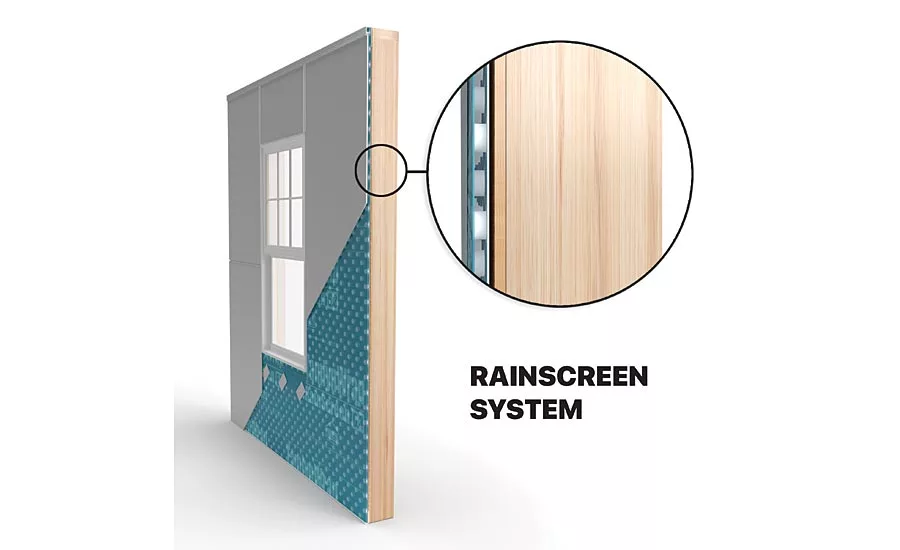
Thus, through research and experience, building experts have developed what is known as a rainscreen wall and more precisely a ventilated rainscreen. Essentially providing a capillary break between the water-resistive barrier and cladding material, the space works to prevent water that has worked its way behind the cladding from remaining within the wall and damaging the sheathing. A rainscreen also allows a constant airflow that promotes drying and discourages the growth of mold and rot. 

In the fight against the inevitable penetration, rainscreen provides the best defense by removing liquid water and water vapor as quickly as possible from within wall assemblies.

The protection level the rainscreen provides has caused many exterior cladding manufacturers to enact product installation requirements tied to their performance warranty that requires rainscreen to be installed in addition to the also mandatory WRB. Many municipalities around the United States, Canada and around the world have also begun to implement such requirements on all new construction and renovations.

As of 2015, the International Residential Code requires: “The exterior wall envelope shall be designed and constructed in such a manner as to prevent the accumulation of water within the wall assembly by providing a water-resistive barrier behind the exterior veneer, as described in Section 1404.2, and a means of draining water that enters the assembly to the exterior.”

It is often suggested that even if a rainscreen requirement has not been adopted by your local region, or is not mandated by the cladding manufacture, it is always wise to include the detail in the plans—as many architects have increasingly taken it upon themselves to do so throughout the years.


Rain Parade

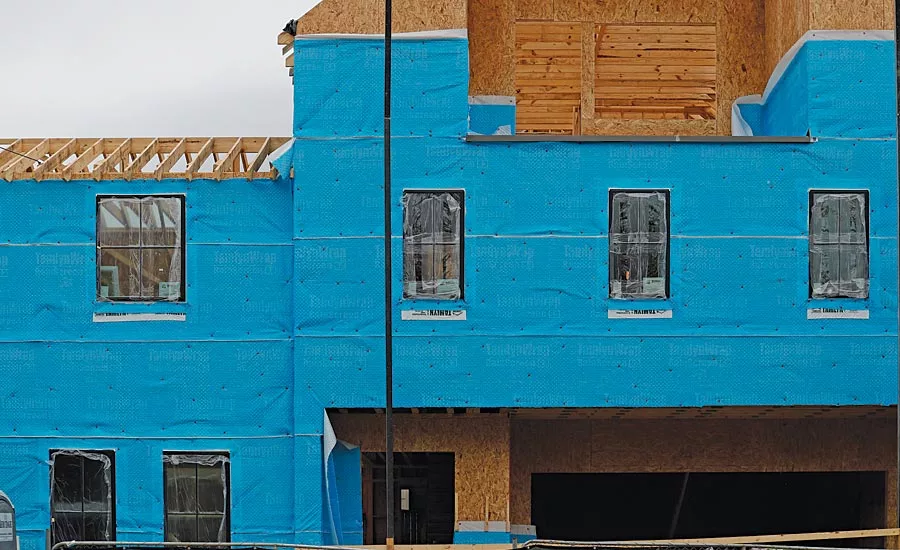
Because the rainscreen requirements often aren’t an individually specified product or material—but a design feature detailed by the architect or designer and then left to the installer to fabricate themselves—the introduction of the rainscreen requirements often creates considerable confusion and at times can lead to delays which increase the project’s overall costs. This has led those in the building industry clamoring for an actual tested, specified product; one that has defined installation procedures across all material types and design features. One company that recently brought such a product to market is Tamlyn with their new TamlynWrap RainScreen line of products.

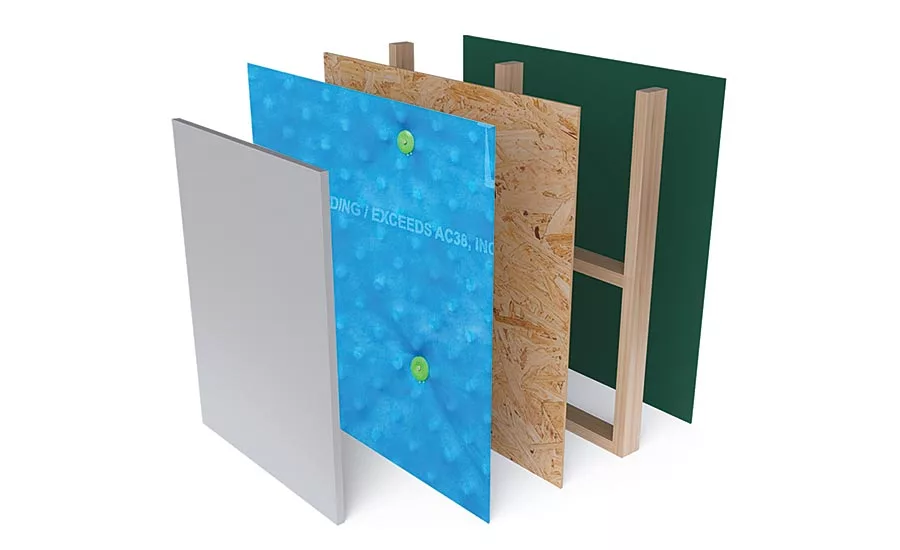
The product is a 3-in-1 water resistive barrier system that enhances the drainage efficiency and drying proficiency of a building through a unique three-dimensional matrix of extruded dot-textured building wrap based on the ProSelect Drainable Wrap substrate which allows draining and drying behind the exterior cladding systems. The product replaces and is installed in the same fashion as most commercially available WRBs.

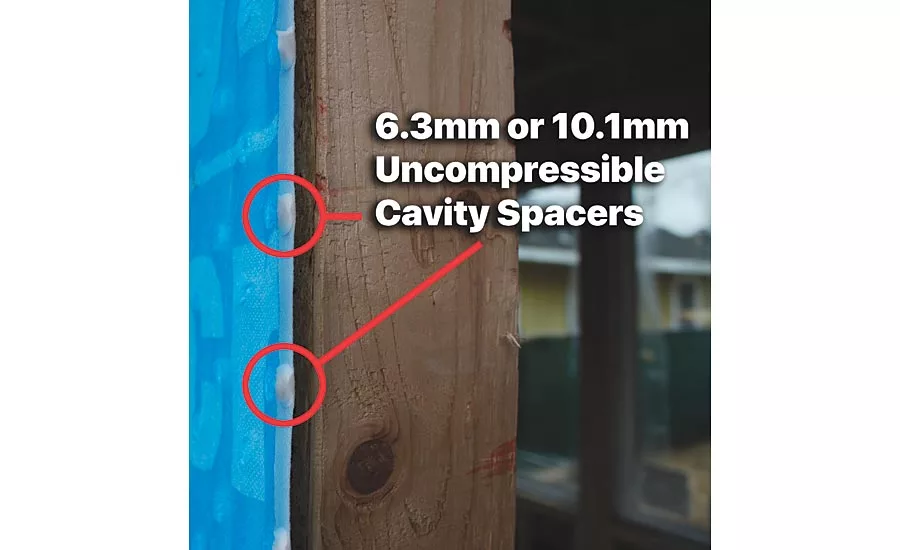
Since product’s dot-textured cavity spacers are non-compressible, they provide the minimum rainscreen air gap between the sheathing and the cladding reducing the labor cost and excessive materials associated with a more traditional furring strip installation method. The two standard depths available are 6.3 mm (1/4 inch) and 10.1 mm (3/4 inch). The rainscreen 6.3 meets and exceeds the requirements of most building codes and performance needs. For areas in the country and Canada with stricter requirements and needs, particularly the coastal areas with high-precipitation, the manufacturer also offers its RainScreen 10.1.

The rainscreen allows for longer durability and sustainability of a building’s sheathing (i.e. OSB or coated OSB, plywood, etc.) and is engineered to be used for fiber cement siding, stucco, stone, and metal panel systems across many climate areas. 

KEYWORDS: air barriers building envelope design rainscreen

Share This Story

Looking for a reprint of this article?
From high-res PDFs to custom plaques, order your copy today!

Img 2563

Daniel Dietz has been a marketing professional in the building supply industry for many years with a strong background in science (physics). Combining these two aspects, he applies objective thinking when writing about the latest and greatest products used in the industry.

Recommended Content

JOIN TODAY
To unlock your recommendations.

Already have an account? Sign In

  • Abercrombie & Fitch

    EIFS in 2026: How Specialty Finishes Are Redefining Exterior Wall Systems

    As building codes, owner expectations, and design demands...
    Stucco/EIFS
    By: Regi Mendoza
  • proper air and vapor control

    From Energy Efficiency to Moisture Management: Why Air and Vapor Control Matter

    How proper air and vapor control within building...
    Building Envelope
    By: Benjamin Meyer AIA, LEED AP
  • Linear Metal Ceiling Beam Baffles

    Top 25 Ceiling Contractors of 2026

    Suspended ceilings demand precision, code compliance and...
    Ceilings
    By: John Wyatt and Tanja Kern
You must login or register in order to post a comment.

Report Abusive Comment

Manage My Account
  • eMagazine Subscription
  • Newsletters
  • Online Registration
  • Manage My Preferences
  • Subscription Customer Service

More Videos

Sponsored Content

Sponsored Content is a special paid section where industry companies provide high quality, objective, non-commercial content around topics of interest to the Walls & Ceilings audience. All Sponsored Content is supplied by the advertising company and any opinions expressed in this article are those of the author and not necessarily reflect the views of Walls & Ceilings or its parent company, BNP Media. Interested in participating in our Sponsored Content section? Contact your local rep!

close
  • medical professionals moving a patient on a stretcher through the halls of a medical building
    Sponsored byNational Gypsum Company

    What Does High Performance Mean When It Comes To Gypsum Boards?

Popular Stories

Wichita Biomedical Campus

Wichita Drywall Worker Dies After Scaffolding Fall

Okan Tower in Miami, Florida

OSHA Opens Investigation Into Fatal Okan Tower Column Collapse

Construction workers in safety vests install drywall

Gypsum Sales Hold Amid Market Shifts in the U.S.

data center and logos

USG, Subzero Engineering Form Data Center Alliance

Events

June 24, 2026

The Bright Side & Benefits of Designing with Integrated Lighting

Credits 1 AIA LU/HSW; 0.1 ICC CEU

This course will explore the pivotal role architects and lighting design play in creating safer, more sustainable spaces. Learn how to avoid common lighting mistakes and make informed decisions that create the best visual environment for occupants. 

January 1, 2030

Webinar Sponsorship Information

For webinar sponsorship information, visit www.bnpevents.com/webinars or email webinars@bnpmedia.com.

See our full library of webinars

View All Submit An Event

Products

2026 National Painting Cost Estimator

2026 National Painting Cost Estimator

See More Products

Related Articles

  • Driwall rainscreen

    Driwall Rainscreens by Keene Building Products

    See More
  • Builders Show Spotlights Innovative Products

    See More
  • WC0123-DEPT-Prods-p1-Stockton_Tru-Weep.jpg

    Product Focus on Rainscreens

    See More

Related Products

See More Products
  • BNi Building News Home Builders Costbook 2026 (Print Edition)

  • Lean Builder book cover - front.jpg

    The Lean Builder

  • Construction Spanish to English Dictionary

See More Products

Events

View AllSubmit An Event
  • February 2, 2027

    NAHB International Builders' Show (IBS)

    The NAHB International Builders’ Show returns to Las Vegas, where more than 100,000 residential construction professionals are expected to reconvene as the industry continues to prioritize system integration, labor efficiency and jobsite coordination. For wall and ceiling contractors, the upcoming show is positioned to again highlight a broad range of product categories that directly affect interior assemblies and installation practices.
View AllSubmit An Event

Related Directories

  • Keene Building Products

    Noise Control Products, Building Envelope Products & Roofing products for commercial and residential applications.
×

Connect with the industry’s leading resource for unparalleled insights and education.

Join thousands of industry professionals today. Shouldn’t you know what they know?

JOIN NOW
  • RESOURCES
    • Advertise
    • Contact Us
    • Directories
    • Store
    • Want More
  • SIGN UP TODAY
    • Create Account
    • eMagazine
    • Newsletters
    • Customer Service
    • Manage Preferences
  • SERVICES
    • Marketing Services
    • Reprints
    • Market Research
    • List Rental
    • Survey/Respondent Access
  • STAY CONNECTED
    • LinkedIn
    • Facebook
    • Instagram
    • YouTube
    • X
  • PRIVACY
    • PRIVACY POLICY
    • TERMS & CONDITIONS
    • DO NOT SELL MY PERSONAL INFORMATION
    • PRIVACY REQUEST
    • ACCESSIBILITY

Copyright ©2026. All Rights Reserved BNP Media, Inc. and BNP Media II, LLC.

Design, CMS, Hosting & Web Development :: ePublishing