Walls & Ceilings logo
search
cart
facebook twitter linkedin youtube youtube Spotify Podcasts Apple Podcasts Spotify Podcasts Apple Podcasts
  • Sign In
  • Create Account
  • Sign Out
  • My Account
Walls & Ceilings logo
  • NEWS
  • TOPICS
    • Drywall
    • Stucco/EIFS
    • Ceilings
    • Steel Framing
    • Fireproofing
    • Interior Plaster
    • Building Envelope
    • Insulation
    • Technology
    • Interior
    • Exterior
    • Women In Construction
  • COLUMNS
    • Up Front
    • All Things Gypsum
    • Art & Craft of Plastering
    • Stucco Stop
    • Steel Deal
    • Industry Voices
  • PRODUCTS
    • Buzz Guide
  • EVENTS
    • Industry Events
    • Webinars
    • BUILD Expo
  • MEDIA
    • Videos
    • Podcasts
    • Photo Galleries
    • BUILD26 Videos
    • Take our Quiz!
    • Infographics
  • EXCLUSIVE
    • Newsletters
    • Top 50 Contractors
    • Contractor of the Year
    • State of the Industry
    • W&C Store
    • Market Research
    • CEUs
    • Sponsor Insights
    • Custom Content & Marketing Services
  • DIRECTORY
  • EMAGAZINE
    • eMagazine
    • Advertise
    • Archive Issues
  • SIGN UP!

How Contractors Can Protect Jobsites From Vandalism
By Kim Slowey
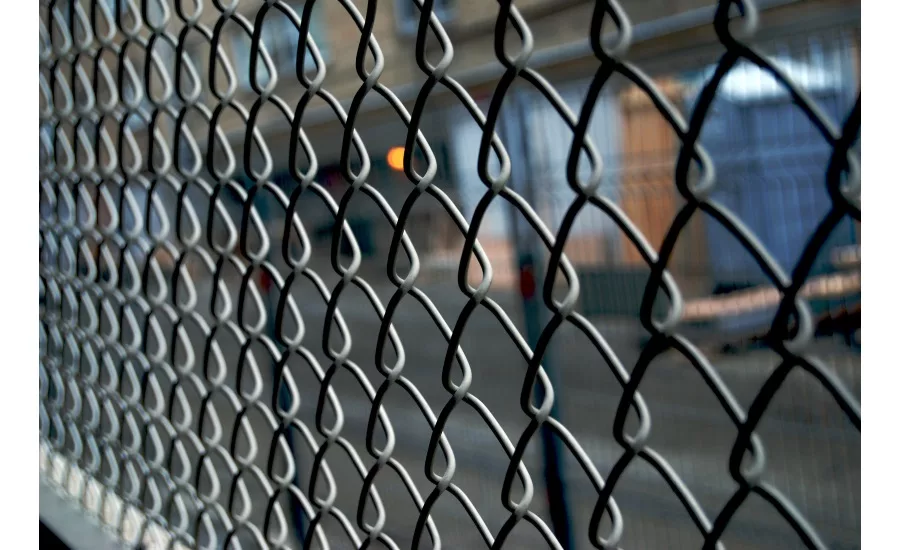
fence

Photo Credit: Flickr; Joel Penner

June 15, 2020

The antiracism protests spurred by the killing of an unarmed African-American man at the hands of police in Minneapolis has put business owners on guard and looking for ways to protect their property against looters and others intent on inflicting damage.

Construction sites have not been affected in the same way that retail businesses have, but there has been enough impact to warrant concern.

There have been a few cases of suspected arson that resulted in total or significant losses to properties under construction in Minneapolis and Columbus, Ohio. In San Jose, California, rioters allegedly broke into a jobsite so that they could grab 2x4s to use as weapons, leaving construction workers to repair a perimeter fence after the trespassers had left.

Although most of the protests have been peaceful, damages from those intent on looting are reminder to contractors they should be vigilant about making sites as impervious as possible to any type of intrusion.

The first step contractors should take to protect their jobsites, said Durrell Garman, assistant vice president at The Graham Co., an insurance firm, is to create a site-specific construction safety plan that includes a security plan and assigns responsibilities to each participating project player — i.e. project manager, supervisor, site safety manager and subcontractors — all of whom should be trained to take action within the scope of their roles.

Next, the plan should be implemented and then reviewed and evaluated for its effectiveness. “You can’t just throw something against the wall and expect it to stick,” Garman said. “If you have to, make the necessary changes.”

Detailed elements of a plan that will help protect projects from property damage or theft, said Kevin Cannon, senior director of safety and health services at the Associated General Contractors of America, range from low tech to high tech and have their basis in common sense.

“You’re talking security to [prevent access] to those who have no right or reason to be on the project,” he said.

Secure Every Entry Point

First, said James Gallagher, a principal at construction consulting and mediation firm Resolution Management, is to limit and secure entry points to the job. “The more access points you have, the more points people can enter,” he said.

This is already happening on many projects throughout the country as controlled entry points are where contractors perform health and temperature checks of those entering projects in an effort to reduce the chance that someone with COVID-19 will expose other workers.

However, Gallagher said, there will be other points of access opened up during the work day for the delivery of materials and supplies, so contractors should have a secure perimeter in place — i.e. fencing, false walls, concrete or plastic barriers — with entry points that can be monitored and secured when they don’t need to be open.

This is also where need comes into play, he said. If the project is in a dense, urban setting like New York City where there is a great deal of foot traffic, there should be someone assigned to monitoring every entry point. If the project is in a lightly populated suburban or rural area, perhaps constant monitoring of all access areas is not necessary.

Store Materials and Equipment

Another way to reduce the chance someone will trespass is to store materials and equipment in such a way so that it won’t catch the eye of passersby intent on theft or mischief. And if the contractor cannot keep material and equipment out of view, then they should consider extra layers of security to make attempts at theft hard enough that the potential thief will give up.

For example, contractors can cover pallets of bricks with tarps after work hours, Gallagher said, but it would be better to secure them in a separate locked area, creating more obstacles for would-be thieves. Managing deliveries so that they arrive when crews are ready for them will also limit the amount of material that needs to be stored on site and kept out of view.

Unsecured cranes, other pieces of equipment or just the general draw of a construction site could create an “attractive nuisance,” Cannon said, luring children onto the site, where they could be seriously injured by something that seems “cool.”

But curiosity seekers are not limited to children.

“Apparently, there are those who somehow get a thrill out of climbing a tower crane,” Cannon said. He added he has seen contractors erect plywood enclosures up to 10 feet tall around cranes as an extra way to secure that equipment.

Immobilizing heavy equipment is also a good idea, Garman said, as is chaining up ladders, locking tools away in gang boxes and securing motorized components of scaffolding so that no one can make their way up the side of a building on it.

Out of sight, out of mind is a good approach when it comes to security, Gallagher said. An inexpensive way to achieve the benefits of that philosophy is to install a false wall constructed of sheets of drywall, studs and lumber around the project so that there is no visibility from the street or sidewalk. 

Add Security Cameras

 Another way to monitor the project during off hours is through the use of security cameras, Garman said. Systems come with different levels of functionality, but those that provide live monitoring so that the police are called and project personnel are notified that they have an intruder on the site are more effective than those that record only. No matter what kind of camera system is used, he said, it’s important to have good lighting so that the camera images are as clear as possible. The light also serves as a deterrent.

Get to Know Local Police and Others

One of the most important ways contractors can keep jobsites safe, though, is to reach out to those in the community, including local emergency service providers, and introduce themselves.

“The community,” Garman said, “can be a great asset [as far as] keeping an eye on your project and for people breaking in.” Contractors should also consider holding some events like cookouts or otherwise helping those living and doing business near the jobsite. 

“It’s good relations,” he said.

This article was originally posted on constructiondive.com.

KEYWORDS: COVID-19 jobsite safety workplace injuries

Share This Story

Looking for a reprint of this article?
From high-res PDFs to custom plaques, order your copy today!

Kim slowey

Kim is a writer who has been active in the construction industry for the last 25 years and is licensed as a certified general contractor in Florida. She received her BA in Mass Communications/Journalism from the University of South Florida and has experience in both commercial and residential construction. She can be reached at kim@kimslowey.com.

Recommended Content

JOIN TODAY
To unlock your recommendations.

Already have an account? Sign In

  • Abercrombie & Fitch

    EIFS in 2026: How Specialty Finishes Are Redefining Exterior Wall Systems

    As building codes, owner expectations, and design demands...
    Stucco/EIFS
    By: Regi Mendoza
  • proper air and vapor control

    From Energy Efficiency to Moisture Management: Why Air and Vapor Control Matter

    How proper air and vapor control within building...
    Building Envelope
    By: Benjamin Meyer AIA, LEED AP
  • Linear Metal Ceiling Beam Baffles

    Top 25 Ceiling Contractors of 2026

    Suspended ceilings demand precision, code compliance and...
    Ceilings
    By: John Wyatt and Tanja Kern
You must login or register in order to post a comment.

Report Abusive Comment

Manage My Account
  • eMagazine Subscription
  • Newsletters
  • Online Registration
  • Manage My Preferences
  • Subscription Customer Service

More Videos

Sponsored Content

Sponsored Content is a special paid section where industry companies provide high quality, objective, non-commercial content around topics of interest to the Walls & Ceilings audience. All Sponsored Content is supplied by the advertising company and any opinions expressed in this article are those of the author and not necessarily reflect the views of Walls & Ceilings or its parent company, BNP Media. Interested in participating in our Sponsored Content section? Contact your local rep!

close
  • medical professionals moving a patient on a stretcher through the halls of a medical building
    Sponsored byNational Gypsum Company

    What Does High Performance Mean When It Comes To Gypsum Boards?

Popular Stories

Linear Metal Ceiling Beam Baffles

Top 25 Ceiling Contractors of 2026

Wichita Biomedical Campus

Wichita Drywall Worker Dies After Scaffolding Fall

QXO Just Changed the Game-Here's What Contractors Are Asking

QXO Just Changed the Game-Here's What Contractors Are Asking

An interior drywalling work in progress

Boost Profits with AI Scheduling

Events

June 24, 2026

The Bright Side & Benefits of Designing with Integrated Lighting

Credits 1 AIA LU/HSW; 0.1 ICC CEU

This course will explore the pivotal role architects and lighting design play in creating safer, more sustainable spaces. Learn how to avoid common lighting mistakes and make informed decisions that create the best visual environment for occupants. 

January 1, 2030

Webinar Sponsorship Information

For webinar sponsorship information, visit www.bnpevents.com/webinars or email webinars@bnpmedia.com.

See our full library of webinars

View All Submit An Event

Products

2026 National Painting Cost Estimator

2026 National Painting Cost Estimator

See More Products

Related Articles

  • Up Front: A Walls & Ceilings Editorial Column by Mark Fowler

    How Contractors Can Manage Punch Lists and Avoid Costly Litigation

    See More
  • WC-2022-03-Cotney-PriceHikes-Video-1170x658.jpg

    VIDEO: How Contractors Can Mitigate Price Hikes Caused by Fuel Increases

    See More
  • WC-Industry-Voices-Ben-Johnston

    How Contractors Can Navigate Growth Amid Tariffs and Economic Uncertainty

    See More

Related Products

See More Products
  • business.png

    How to Succeed With Your Own Construction Business

  • bim 3e.jpg

    BIM Handbook: A Guide to Building Information Modeling for Owners, Designers, Engineers, Contractors, and Facility Managers, 3rd Edition

  • Optimizing Social Media from a B2B Perspective

See More Products

Related Directories

  • National Fire Protection Assn. (NFPA)

    Known as the trusted source of safety knowledge, the National Fire Protection Association (NFPA) has been helping to solve some of the planet’s toughest safety problems for more than 125 years. To remain relevant for over a century as a knowledge and information organization, we’ve continually evolved our scope of expertise—from fire prevention, wildfire preparedness, and electrical safety to hazardous materials, community risk reduction, and public safety.
  • Firestop Contractors International Assn. (FCIA)

    FCIA Members are the global experts and providers of life safety passive fire and smoke protection systems. FCIA Members are committed to providing consistent, high-quality firestop systems as a critical part of effective compartmentation through the ‘DIIM’ of firestopping, passive fire protection, and barrier management.
×

Connect with the industry’s leading resource for unparalleled insights and education.

Join thousands of industry professionals today. Shouldn’t you know what they know?

JOIN NOW
  • RESOURCES
    • Advertise
    • Contact Us
    • Directories
    • Store
    • Want More
  • SIGN UP TODAY
    • Create Account
    • eMagazine
    • Newsletters
    • Customer Service
    • Manage Preferences
  • SERVICES
    • Marketing Services
    • Reprints
    • Market Research
    • List Rental
    • Survey/Respondent Access
  • STAY CONNECTED
    • LinkedIn
    • Facebook
    • Instagram
    • YouTube
    • X
  • PRIVACY
    • PRIVACY POLICY
    • TERMS & CONDITIONS
    • DO NOT SELL MY PERSONAL INFORMATION
    • PRIVACY REQUEST
    • ACCESSIBILITY

Copyright ©2026. All Rights Reserved BNP Media, Inc. and BNP Media II, LLC.

Design, CMS, Hosting & Web Development :: ePublishing