Walls & Ceilings logo
search
cart
facebook twitter linkedin youtube youtube Spotify Podcasts Apple Podcasts Spotify Podcasts Apple Podcasts
  • Sign In
  • Create Account
  • Sign Out
  • My Account
Walls & Ceilings logo
  • NEWS
  • TOPICS
    • Drywall
    • Stucco/EIFS
    • Ceilings
    • Steel Framing
    • Fireproofing
    • Interior Plaster
    • Building Envelope
    • Insulation
    • Technology
    • Interior
    • Exterior
    • Women In Construction
  • COLUMNS
    • Up Front
    • All Things Gypsum
    • Art & Craft of Plastering
    • Stucco Stop
    • Steel Deal
    • Industry Voices
  • PRODUCTS
    • Buzz Guide
  • EVENTS
    • Industry Events
    • Webinars
    • BUILD Expo
  • MEDIA
    • Videos
    • Podcasts
    • Photo Galleries
    • BUILD26 Videos
    • Take our Quiz!
    • Infographics
  • EXCLUSIVE
    • Newsletters
    • Top 50 Contractors
    • Contractor of the Year
    • State of the Industry
    • W&C Store
    • Market Research
    • CEUs
    • Sponsor Insights
    • Custom Content & Marketing Services
  • DIRECTORY
  • EMAGAZINE
    • eMagazine
    • Advertise
    • Archive Issues
  • SIGN UP!
ExteriorStucco/EIFS

Improving Stucco Performance

THE BETTER UNDERSTANDING OF STUCCO, THE BETTER STUCCO INSTALLATION.
By William Spilchen P.E.
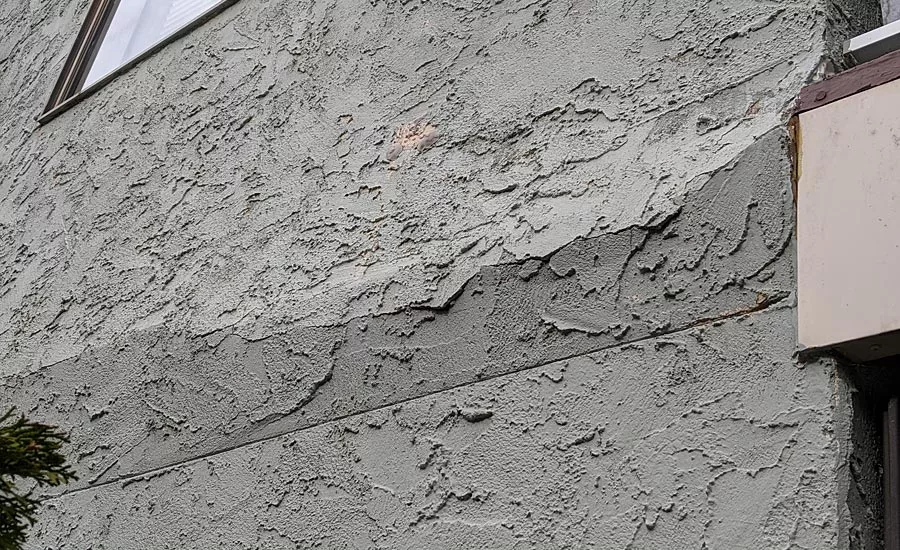
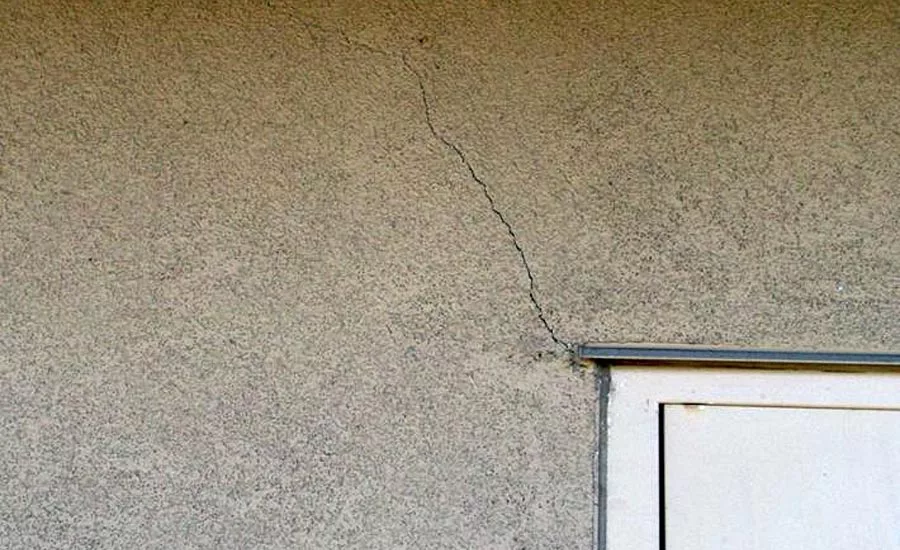
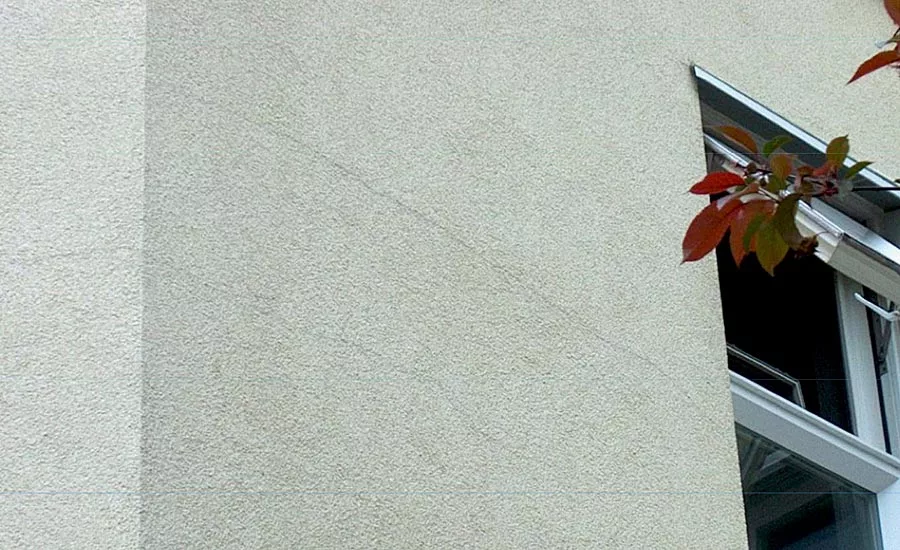
Examples of horizontal cracking due to thermal movement. Photo courtesy of Pierre Busque.
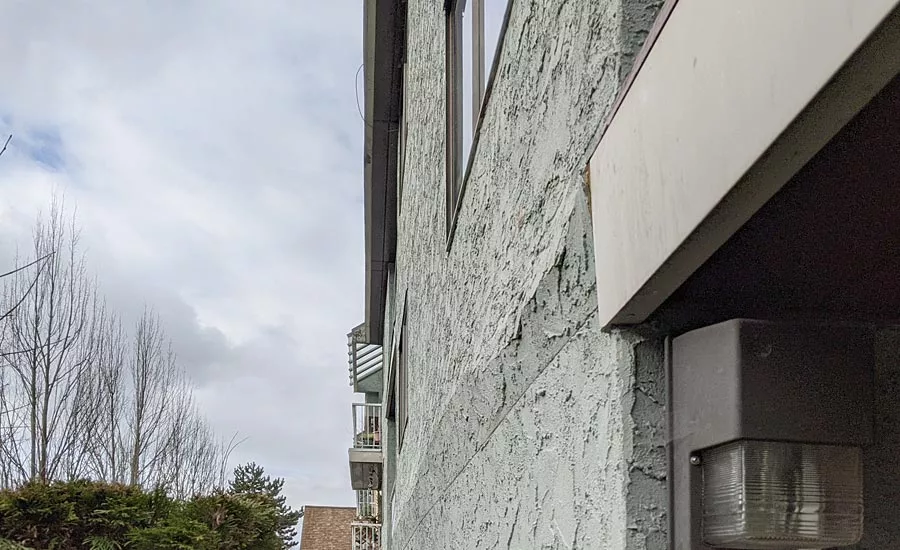
Compression failures due to a failure to accommodate building movement. Photo courtesy of Jason Wei.
Examples of horizontal cracking due to thermal movement. Photo courtesy of Pierre Busque.
Compression failures due to a failure to accommodate building movement. Photo courtesy of Jason Wei.
Examples of horizontal cracking due to thermal movement. Photo courtesy of Pierre Busque.
Compression failures due to a failure to accommodate building movement. Photo courtesy of Jason Wei.
Examples of horizontal cracking due to thermal movement. Photo courtesy of Pierre Busque.
Compression failures due to a failure to accommodate building movement. Photo courtesy of Jason Wei.
March 17, 2021

Stucco has successfully been used for centuries and provides a resilient, unified look for residential and commercial facades. The variety of stucco finishes can complement both traditional and contemporary styles. Moreover, stucco is cost-effective as compared to various exterior coatings, it may be applied at a rapid rate and is extremely durable. Stucco has the lowest annual maintenance cost when compared to other claddings. 

Stucco is a cementitious material so cracking can occur under certain conditions. Cracking presents aesthetic as well as water entry concerns. It is impossible to eliminate cracking entirely, but understanding what impacts stucco walls will lead to better stucco installations.

Stucco, similar to concrete, is very strong in compression but weak in tension. Stucco compression strengths range from 2000 to 3000 psi, but tensile strength is only 100 to 200 psi. Because of this, lathing is required which serves two functions: it provides a mechanical attachment path from the stucco to the structure and it provides reinforcement to the stucco to provide tensile strength, similar to reinforced concrete. All laths provide good reinforcing strength in the horizontal direction, but are weaker in the vertical direction. Some lath types are weaker than others in this direction, providing less reinforcing strength. Therefore, it is not uncommon to see linear horizontal cracking on stucco. 


How to Minimize Stucco Cracking 

Stucco will crack when the imposed tensile stresses exceed the tensile strength of the stucco and lath combination. Tensile stresses are caused primarily by shrinkage of the stucco during the curing process. Shrinkage of stucco has been studied over the years and is well documented. 

Hence the need to follow good work practices to minimize the stresses on the stucco and minimize cracking potential. Here are some of those fundamental factors:

•    Proper mix and application: good quality, properly sized, clean sand is essential for quality stucco. Sand to cementitious ratios need to be maintained per ASTM C926. Remember that these are volumetric ratios, and that the lime counts as part of the cement portion. The scratch coat needs to be the richest cementitious mix, followed by weaker brown coat, and then the finish coat being the weakest.

•    Moist curing: good moist curing is critical to minimize shrinkage and to achieve harder, stronger stucco, especially in hot windy conditions. Stucco should be kept moist for a minimum of 48 hours. Fine water spray should be applied in morning and evening. This continued moisture allows the hydration of the Portland cement to continue and for the stucco to achieve the desired strength. Additional moist curing may be required depending on wind, temperature, and humidity conditions.

•    Wood based sheathing: plywood expands 0.0002 in/in for each 10 percent change in humidity. Doesn’t sound like much? Let’s say we have a 60 foot wall and 20 percent humidity change—the expansion of the sheathing would be 0.3 inches. As a result, there would be increased force imposed on the stucco and the stucco would have to crack. This is why there is the requirement to provide a 1/8-inch gap between sheets of wood-based sheathing. If the framer hasn’t provided the gapping, then the lather (presuming he is putting up the WRB) must ensure it is done before the WRB goes on.

•    Consistent stucco thickness is required to distribute the stress equally. Thin sections create stress where cracks can occur. We see stucco thickness variations frequently on open framing systems where the stone wire and paper are not applied tightly, and thinner stucco sections end up over the stud locations. The cracks then generally occur over the stud locations, and in a wall, end up not hidden but exposed.

•    Control joints: provide stress relief and their installation and effectiveness are a subject of controversy. Our ASTM standards require that control joints be installed to create areas no larger than 144 sq. feet and that lath be cut at those joints allowing the stucco to release stress.

•    Water entry and humidity change can impact stucco walls so, careful application of WRB, flashing and caulking to reduce moisture penetration is essential.

•    Re-entrant corner cracking at the corners of windows, doors and penetrations is of concern. These cracks do not normally create water entry concerns and are minimized with the addition of butterfly pieces of lath placed at 90 degrees to the potential crack direction. Another step is to rod and caulk joints around windows or doors, to allow movement of the stucco without transferring stresses to the stucco.

•    Compressive failures: Up to this point, have generally dealt with tensile failures. But there are compressive failures as well. These are usually found on multi-floor wood framed buildings. Wood does not shrink very much in length, but does shrink across the depth and width of the dimension lumber. A 2x10 can shrink about 3/8 inch in the 10-inch direction. Plus, the plates top and bottom can shrink another 3/16 inch to 1/4 inch. There may be horizontal control joints at each floor, but they usually only have 1/4 inch of compression. Once they bottom out, they become solid and continue to force the stucco downwards from floor to floor. At the bottom, if the stucco is constrained and can’t keep moving, the stucco buckles out under compression failure. Builders have to be cognizant of these potential risks and ensure that there is provision for this differential movement.


New challenges 

With the advent of external insulation systems on walls, we are seeing more stucco cracking on these types of installations: 

•    With external insulation systems, the exterior stucco wall temperature is now higher by up to 10 F during the day. In climates where the temperatures drop below 70 F during the night, the wall temperature is further lowered at night. This is a result of the stucco no longer being in virtual direct contact with the steel framing which would provide cooling of the stucco during the day and heating during the night, as a result of thermal bridging by the steel framing. Therefore, the stucco is undergoing greater expansion/contraction displacement on a daily basis. These stresses are superimposed on any residual stresses and appear to reach a tipping point where cracks occur.

•    One of our building envelope consulting firms have found reduced cracking in such systems by not allowing scratch and brown coats in same day. They let the scratch coat crack out and then apply the brown coat a day or two later. We hypothesize that the cracks in the scratch are partially filled by the brown coat, which can then be in compression while the brown coat is in tension. This would balance the stresses out between the two and leave the stucco almost stress free.

It is impossible to eliminate all stucco cracking. Hopefully all of these points are helpful and lead to improved stucco wall performance and greater satisfaction to architects, building owners and the lath and plaster trade. 

KEYWORDS: EIFS finishing stucco

Share This Story

Looking for a reprint of this article?
From high-res PDFs to custom plaques, order your copy today!

William Spilchen is a Mechanical P.E. with more than 40 year experience in the construction and construction materials industry. During this period, he has been involved with the design, construction and inspection of various building systems throughout North America. Presently, he is a consultant to Structa Wire Corp. He can be reached at spilch@telus.net.

Recommended Content

JOIN TODAY
To unlock your recommendations.

Already have an account? Sign In

  • Abercrombie & Fitch

    EIFS in 2026: How Specialty Finishes Are Redefining Exterior Wall Systems

    As building codes, owner expectations, and design demands...
    Stucco/EIFS
    By: Regi Mendoza
  • proper air and vapor control

    From Energy Efficiency to Moisture Management: Why Air and Vapor Control Matter

    How proper air and vapor control within building...
    Building Envelope
    By: Benjamin Meyer AIA, LEED AP
  • Linear Metal Ceiling Beam Baffles

    Top 25 Ceiling Contractors of 2026

    Suspended ceilings demand precision, code compliance and...
    Ceilings
    By: John Wyatt and Tanja Kern
You must login or register in order to post a comment.

Report Abusive Comment

Manage My Account
  • eMagazine Subscription
  • Newsletters
  • Online Registration
  • Manage My Preferences
  • Subscription Customer Service

More Videos

Sponsored Content

Sponsored Content is a special paid section where industry companies provide high quality, objective, non-commercial content around topics of interest to the Walls & Ceilings audience. All Sponsored Content is supplied by the advertising company and any opinions expressed in this article are those of the author and not necessarily reflect the views of Walls & Ceilings or its parent company, BNP Media. Interested in participating in our Sponsored Content section? Contact your local rep!

close
  • medical professionals moving a patient on a stretcher through the halls of a medical building
    Sponsored byNational Gypsum Company

    What Does High Performance Mean When It Comes To Gypsum Boards?

Popular Stories

Linear Metal Ceiling Beam Baffles

Top 25 Ceiling Contractors of 2026

Wichita Biomedical Campus

Wichita Drywall Worker Dies After Scaffolding Fall

QXO Just Changed the Game-Here's What Contractors Are Asking

QXO Just Changed the Game-Here's What Contractors Are Asking

An interior drywalling work in progress

Boost Profits with AI Scheduling

Events

June 24, 2026

The Bright Side & Benefits of Designing with Integrated Lighting

Credits 1 AIA LU/HSW; 0.1 ICC CEU

This course will explore the pivotal role architects and lighting design play in creating safer, more sustainable spaces. Learn how to avoid common lighting mistakes and make informed decisions that create the best visual environment for occupants. 

January 1, 2030

Webinar Sponsorship Information

For webinar sponsorship information, visit www.bnpevents.com/webinars or email webinars@bnpmedia.com.

See our full library of webinars

View All Submit An Event

Products

2026 National Painting Cost Estimator

2026 National Painting Cost Estimator

See More Products

Related Articles

  • Fiber Base Coat—Stucco Delivers Performance

    See More
  • Air Cavities as Continuous Insulation

    See More
  • map

    Ever Changing, Ever Improving

    See More

Related Products

See More Products
  • 1118458605.jpg

    Sustainable Facades: Design Methods for High-Performance Building Envelopes

  • Builder's Guide to Stucco, Lath & Plaster

  • 0470872616.jpg

    Sustainable Renovation: Strategies for Commercial Building Systems and Envelope

See More Products

Events

View AllSubmit An Event
  • November 5, 2025

    RAiNA Conference 2025: Rainscreen Proficiency – The Parts, Precision and Performance

    If you’re passionate about the future of sustainable architecture and resilient construction, the RAiNA Conference 2025: Rainscreen Proficiency – The Parts, Precision and Performance is a must-attend event. This conference offers a unique opportunity to hear from top industry experts about the crucial role of rainscreens in modern construction. Attendees have the opportunity to be among the first to learn about pioneering ideas and groundbreaking projects, keeping them at the forefront of their field.
View AllSubmit An Event
×

Connect with the industry’s leading resource for unparalleled insights and education.

Join thousands of industry professionals today. Shouldn’t you know what they know?

JOIN NOW
  • RESOURCES
    • Advertise
    • Contact Us
    • Directories
    • Store
    • Want More
  • SIGN UP TODAY
    • Create Account
    • eMagazine
    • Newsletters
    • Customer Service
    • Manage Preferences
  • SERVICES
    • Marketing Services
    • Reprints
    • Market Research
    • List Rental
    • Survey/Respondent Access
  • STAY CONNECTED
    • LinkedIn
    • Facebook
    • Instagram
    • YouTube
    • X
  • PRIVACY
    • PRIVACY POLICY
    • TERMS & CONDITIONS
    • DO NOT SELL MY PERSONAL INFORMATION
    • PRIVACY REQUEST
    • ACCESSIBILITY

Copyright ©2026. All Rights Reserved BNP Media, Inc. and BNP Media II, LLC.

Design, CMS, Hosting & Web Development :: ePublishing