Controlling Curves
FRAMING THAT CAN BE CURVED BRINGS ARCHITECTURAL DETAIL WITH INCREASED SAFETY AND TIME SAVINGS
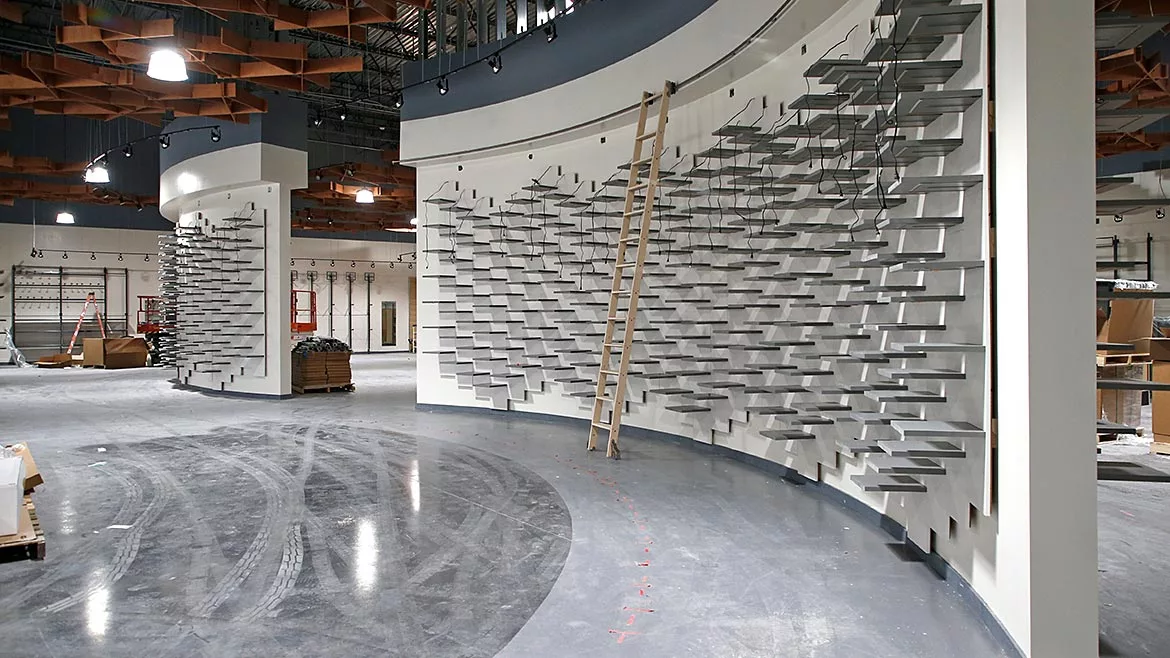
Curves are not a new concept in design: soffits and walls, arches and domes, turrets and barrel vaults—they all have been around for centuries because architects recognize that curves bring a sense of quality and luxury to a design. Curves are used to soften a space, move people through an area, decrease the harsh straight forms of a structure and throw in a sense of playfulness.
“I think that the No. 1 concept that an architect needs to embrace when designing with curves is that curves can solve problems while creating dynamic space. I fit a pediatrician’s office into a 900-square-foot rectangular space with an odd length-to-width ratio by utilizing curved walls. I could not have met the accessibility requirement, fit the program and made the space pleasing for children without curves,” says David Businelli, a chief executive with Studio 16 in Staten Island, N.Y., and a past president of both AIA New York State and AIA Staten Island.
While curves are not new, an evolving concept is the proper installation and creation of curves. Various methods and metal framing products have become available in the market. Some will help contractors quickly and safely create smooth curves without flat or rough spots. As a contractor, research your options and discover how you can control curved applications with steel framing.
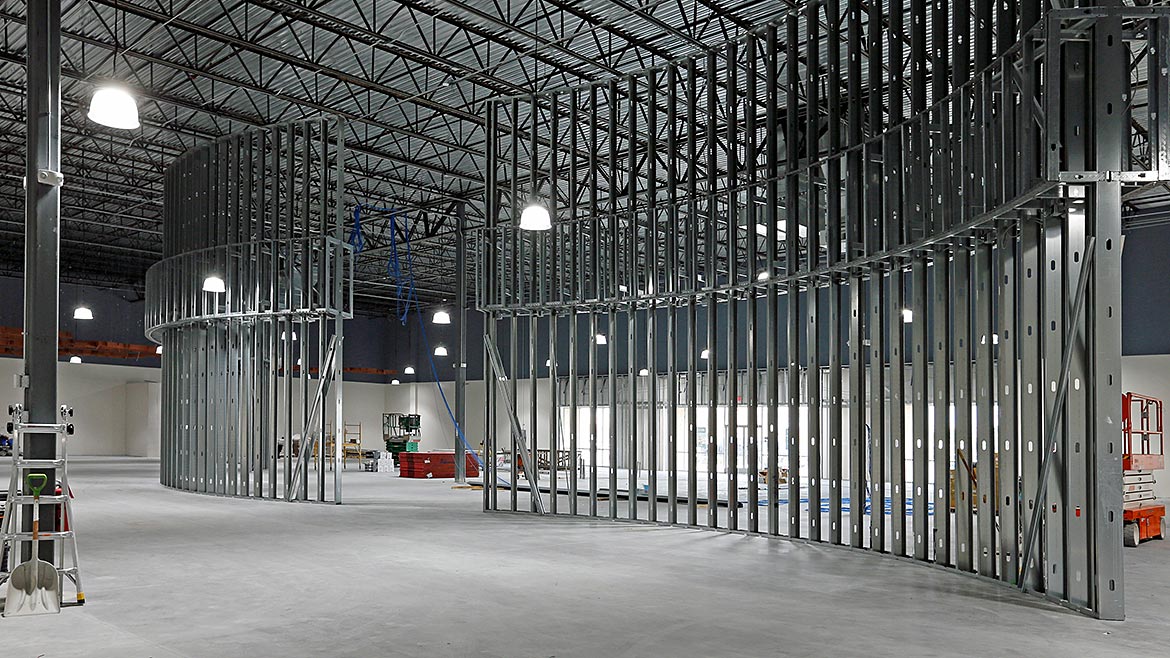 Tejas Contractors turned to a product they had used many times—a steel framing product that can be curved. Photo courtesy of Doug Durkee Photography
Get it Done
When curves are specified by an architect, a contractor typically has the freedom to select the material that meets the specification.
Businelli says, “Curves present challenges in framing and sheathing—neither material in stud form bends easily, of course, and gypsum board and plywood have to be quite wet in order to bend. Getting a curved surface of gypsum board to a Level 5 finish takes a lot of skill and labor.”
The traditional way of creating curves is with a metal track that is cut by hand with tin snips and curved by hand to the appropriate radius. While this method works, there are downfalls such as safety concerns that a worker will cut themselves on the track that becomes sharper when cut, wasting material that is cut off, securing the track to the proper radius and a loss of integrity in the track because it has been cut. The traditional way also is a time-consuming, more labor-intensive process.
Ray Johnson, owner and operator of Tejas Contractors Inc., in Katy, Texas, faced this dilemma when working on a store called Cycle Gear, a motorcycle shop in Katy. The architect incorporated radius soffits and curved walls for a helmet display wall and three feature walls. Heavy-gauge slip track was specified to create the curves, but Johnson relied on his 20 plus years of experience to think of another way. He determine deflection was not needed in this application and reviewed and approved the curving process with the appropriate project team.
“Slip track is designed for snow and wind loads, and we see it used a lot in Dallas and northern Texas,” Johnson explains. “The way it works is the wall goes up to the roof deck, going many feet up to the bottom of the roof joists. Then, we as the framing contractor cut and notch a slip track, which has perforations in it, to create a curved wall. A slip track doesn’t do me any good in a situation like Cycle Gear because it costs me more in labor, my guys can cut their fingers, and we don’t need a product like that because snow and wind loads are not a concern in Katy.”
What Johnson and other contractors have discovered is if a curve is created right the first time, there are no call backs to fix a flat or rough spot in the curve. Drywall contractors do not have to patch and repair curves, and painters can get in right away.
Johnson adds: “I take a job from framing through to paint. I’m not here to come in and butcher a curve that the painter is stuck dealing with, and I’m not creating more work for myself in the end.”
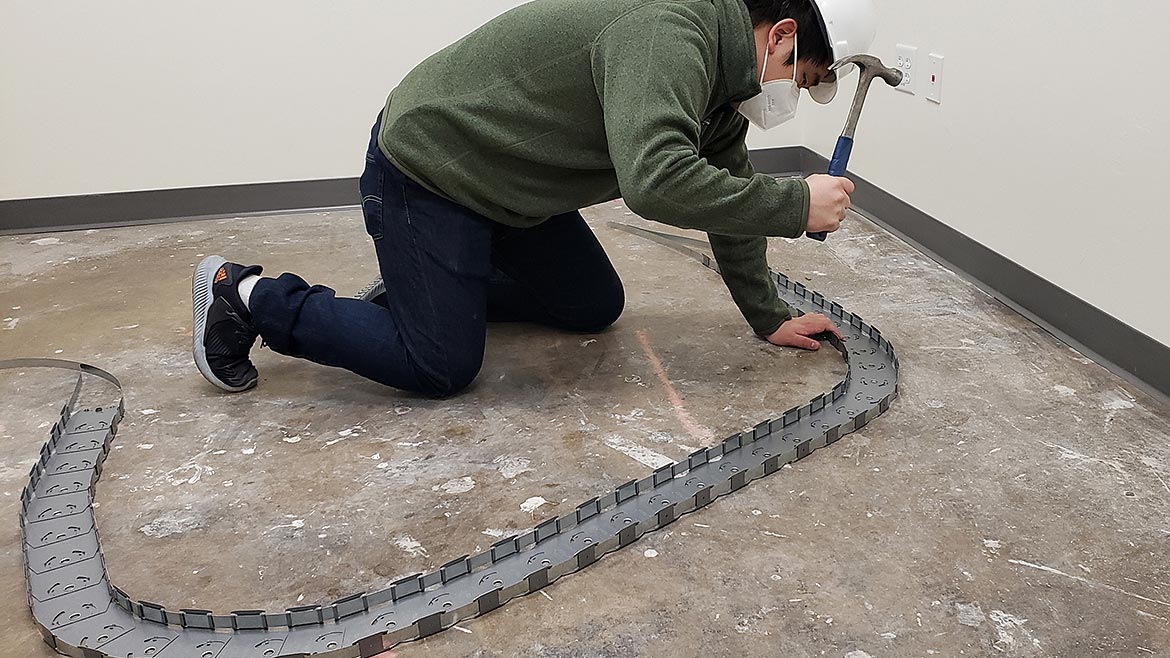
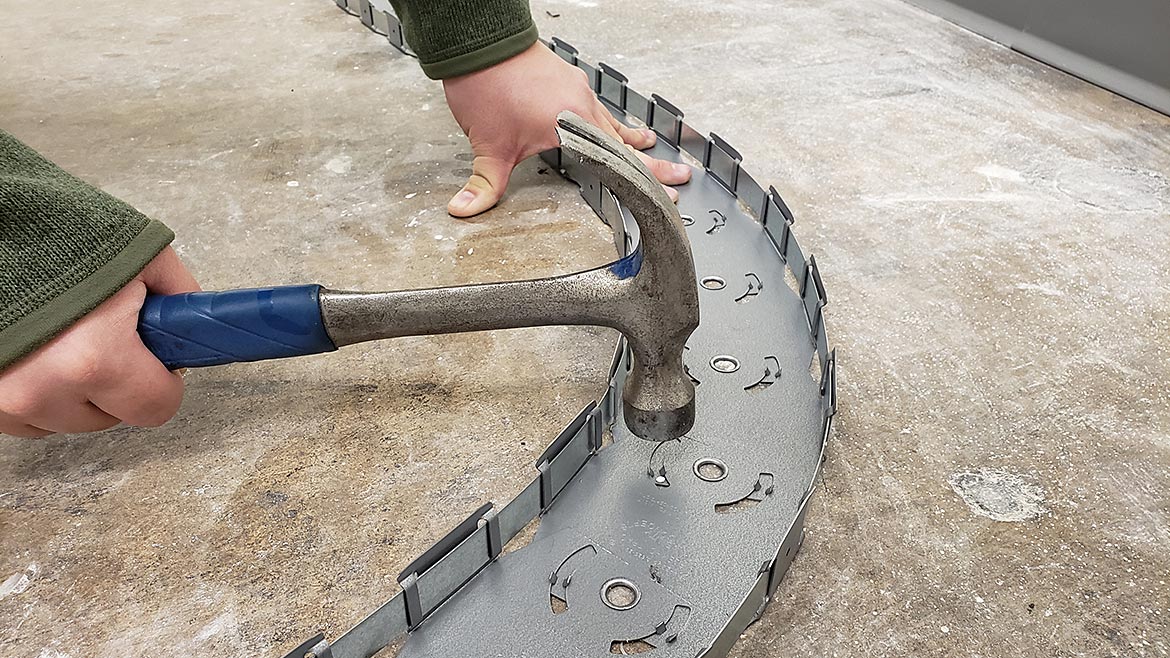
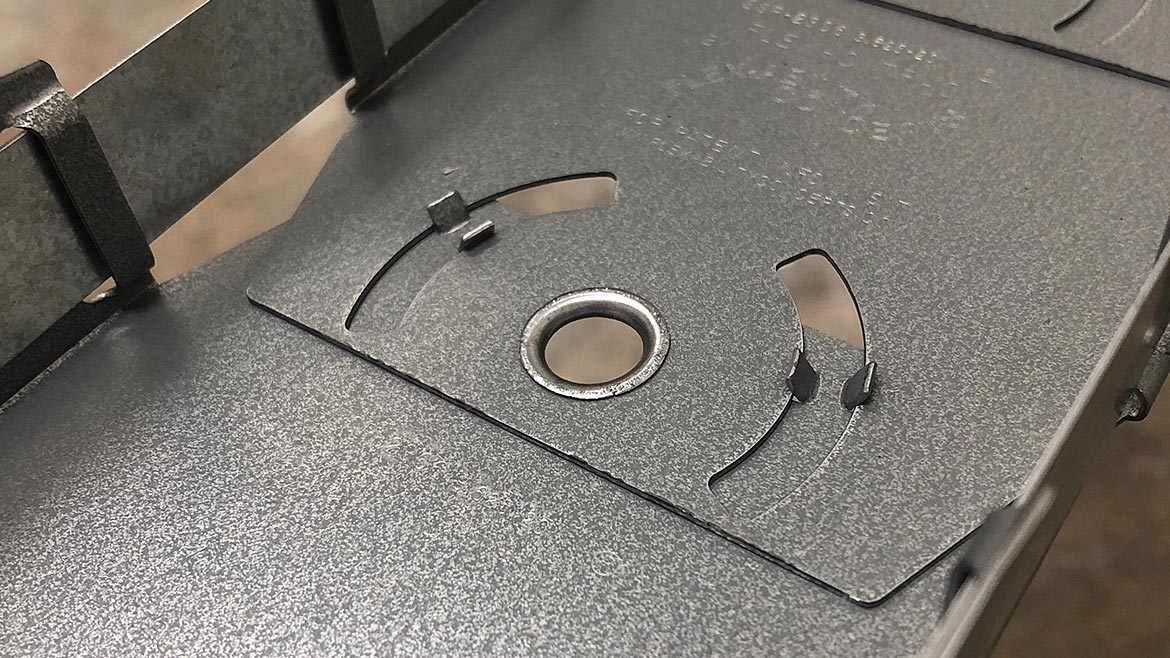
The Hammer-Lock feature makes securing the product in the desired shape significantly easier and faster. Photo courtesy of Flex-Ability Concepts
Tracks That Curve
Johnson selected an alternative to slip tracks and other straight metal framing tracks—“curvable” metal framing tracks. There are several metal framing systems that can be curved on the market. Most are made from 20-gauge steel, and they are manufactured with segments that make the entire track flexible to form a curve. Some designs actually bend the metal to form the curves. They come in a variety of widths and lengths
For these products, once the track is cut to length, the curve needs to be created. This typically is done by drawing the desired radius on the floor, and bending the track to match the radius.
“The greatest challenge with curves is laying them out correctly. You are only as good as your layout,” says Travis Vap, CEO of South Valley Drywall Inc., Littleton, Colo.
The curve needs to be secured so it keeps its integrity when it is fastened to a ceiling, floor or wall. Check with the manufacturer for recommendations about locking in a curved shape. Note that some products cannot be locked into the desired shape. This can cause an installation to take longer, or worse, not hold its shape.
There are variables among these newer products because not all framing products that can be curved are equal. Some hand curvable framing products are difficult to manipulate into the desired shape. Some can only be curved in a “C” shape. When an “S” shape is required, a contractor needs to place “C” shaped pieces end to end to create the “S.” This can cause the transitions to be a challenge.
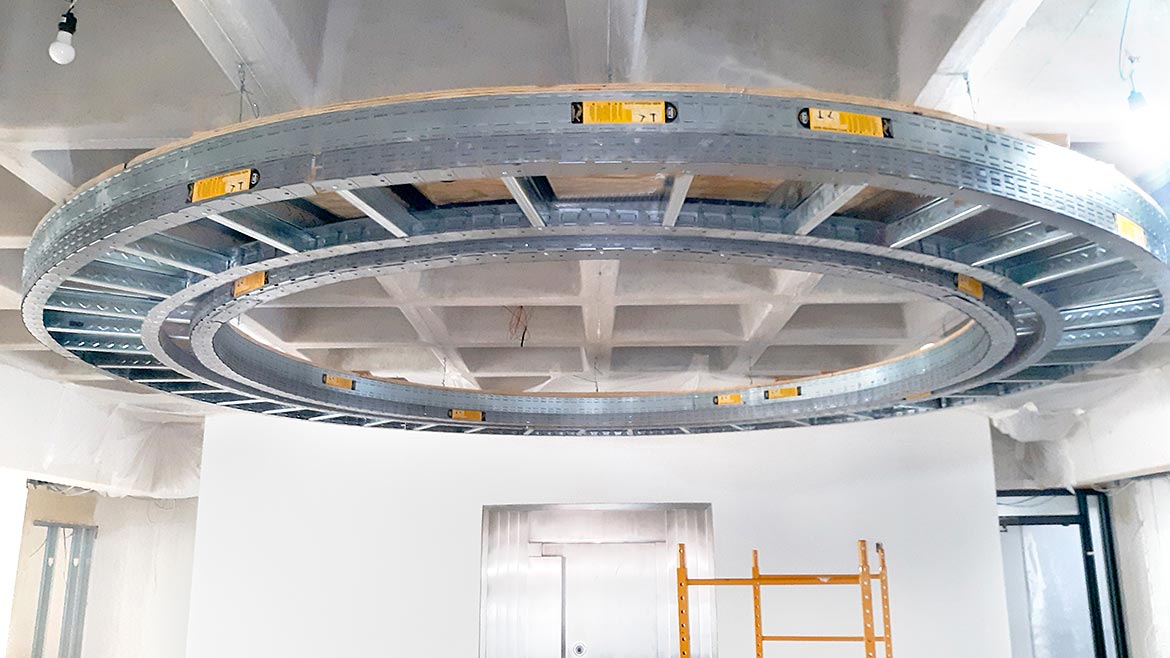 A bank lobby renovation brought life back into a dated branch, with a curved ceiling cloud feature that became a bold focal point. Photo courtesy of Flex-Ability Concepts
Tools for the Trade
Specialty contractors like to do work that has details. They take pride in their quality work, and curves make work interesting. When presented with plans that include a curved wall, soffit or arch, think of the possibilities. Work with the architect to get all the information so your crew can showcase its talents and complete something more exciting than a flat wall.
“Everything that is presented in a design can be done,” Vap says. “Any additional detail that architects can give us is very much appreciated. In addition to giving a radius dimension, we would like dimensions for the radius start and stop points along with the arch height dimension. Curves will cost additional money. Specialty contractors can price them fairly and do a good job for a building owner who is interested in incorporating curves into a design.”
Product representatives, distributors and other contractors are solid sources when researching what manufacturers offer and what products have worked for others. With a little exploration, contractors have the opportunity to control the curves instead of curves overtaking the plans, schedule and budget.
Looking for a reprint of this article?
From high-res PDFs to custom plaques, order your copy today!