The Importance of Lath Embedment in Stucco Cladding Systems
EMBEDMENT IS THE PHENOMENON OF THE LATHING MATERIAL BEING COVERED BY THE PLASTER.
![WC0422-FEAT-ClarkDietrich-p1FT-CJ-EES[1].jpg](https://www.wconline.com/ext/resources/2022/04/12/WC0422-FEAT-ClarkDietrich-p1FT-CJ-EES[1].webp?t=1649794590)
The ClarkDietrich Easy Embedment System, which is comprised of welded wire lath (ASTM C933) and PVC accessories with enhanced open flange areas and built-in backer-rods, reduces the two causes of stucco failure: lack of embedment and proper details at door and window penetrations with sealant joints.
When an architect, engineer or facility owner designs and specifies an exterior plastersystem, they normally focus on colors, textures, and finishes. While these aesthetic features can be created with hard-coat plaster, they don’t address the functionality of the cladding system. To ensure the stucco cladding system performs as it should, it is important to understand how the lathing system selected will interact with the stucco material, particularly the lath’s ability to be embedded, or become covered by plaster.
There are a number of different metal lath materials available on the market today, each with their own pros and cons. Some are more commonly accepted in specific regions due to historical preference and methods of use on the jobsite. Yet, lathing materials not used traditionally may help solve the embedment equation easier than ever. Let’s explore.
What is Embedment?
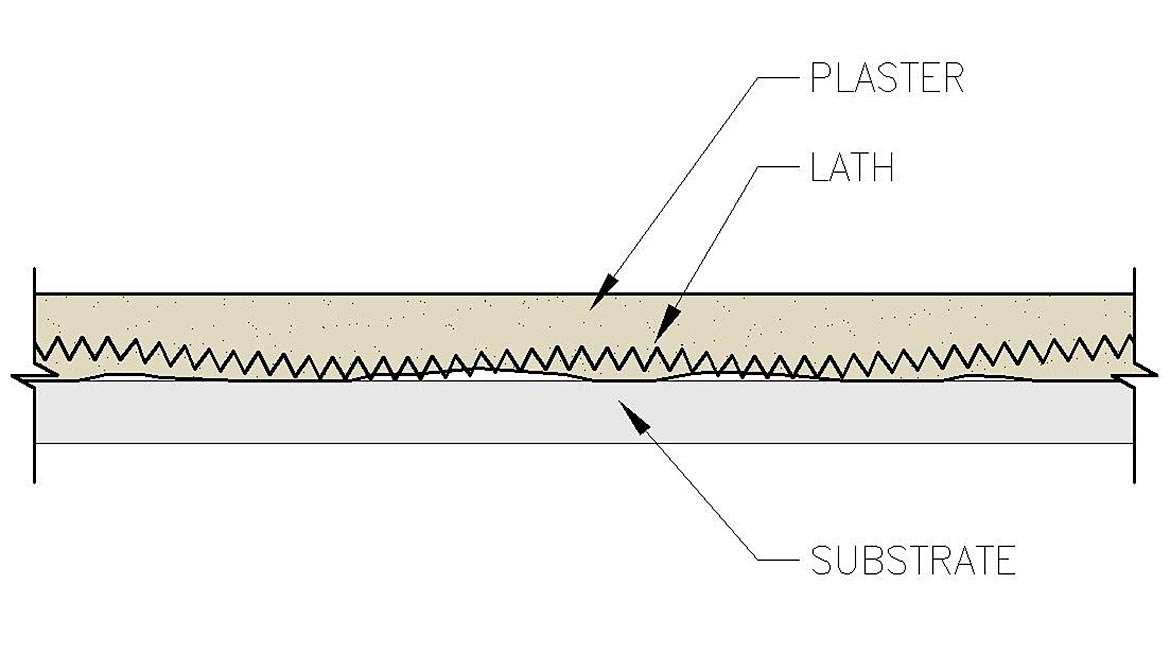
“Embedment” is the phenomenon of the lathing material being covered by the plaster; with the side that touches the substrate partially covered with plaster. Specific to metal laths, the International Code Council’s Acceptance Criteria (AC) 191 states that “metal plaster bases shall provide a minimum 1/4-inch embedment between the back plane of the metal plaster base (lath) and the back plane of the plaster for a minimum of one-half of the area of the metal plaster base.”
For example, when measuring a standard 27-inch by 97-inch sheet (2 square yards) of diamond mesh lath, the metal surface would be covered by 1/4 inch of plaster on the front and back of the diamonds for at least 1 square yard (9 square feet) of that sheet—which is approximately 50 percent of the sheet’s total surface area. While meeting this 50 percent coverage measurement is achievable for code-compliant metal laths, some design styles provide a simpler, less faulty method to improve embedment.
To achieve lath embedment, it is important to maintain consistent tightness and furring of the lath against the base sheathing when attached. Also, the pressure by which the wet plaster is sprayed or hand-troweled into and through the lath improves embedment. So, the size of the lath openings that wet plaster will cover over, under, and all around, will improve this result.
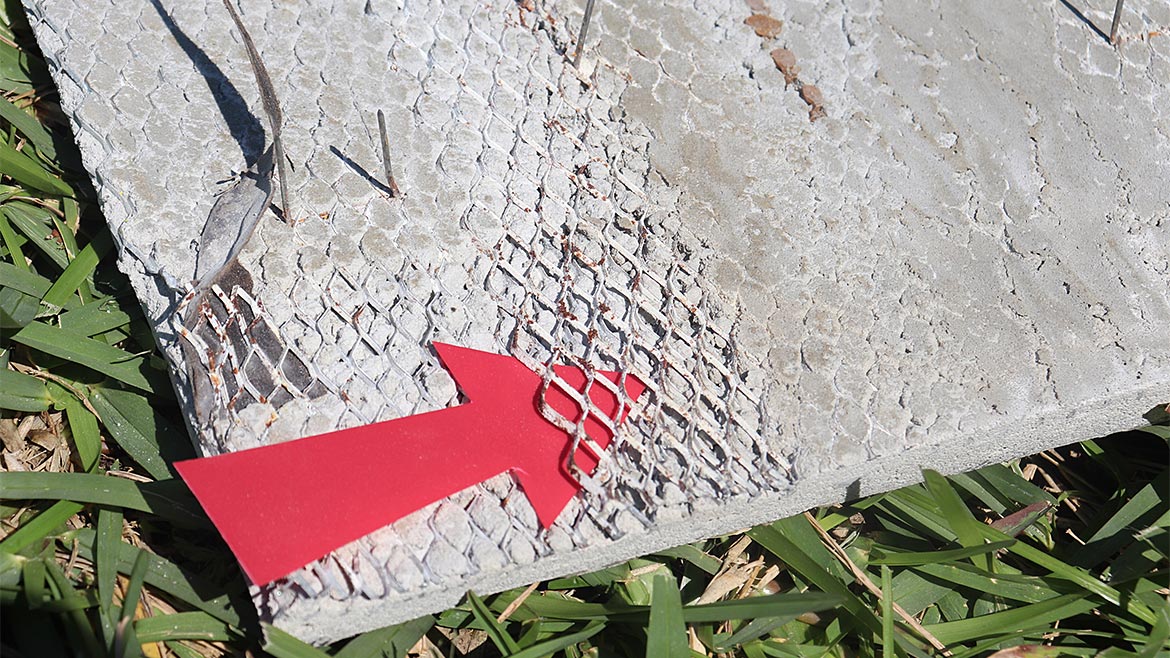
This image shows areas where the lath has been fully embedded on all sides by the stucco—as well as areas (red arrow), where the lath is fully free-floating, with no embedment. The areas where embedment is insufficient are prone to issues from moisture penetration and corrosion.
Potential Problems Resulting from Improper Embedment
Regardless the choice of lath type, the greater the level of plaster embedment achieved during application, the less likely the plaster system is to develop compromised stucco performance. One possible problem that can result from minimal embedment of the lath is cracking. When the scratch-coat does not embed the lath, it’s often only applied on top of the lathing material like icing on cake, rather than covering through the lath. This can cause these materials to move independently of each other when subjected to seasonal weather changes, thus developing stress cracks. Over time, these cracks can allow bulk water can enter through the surface.
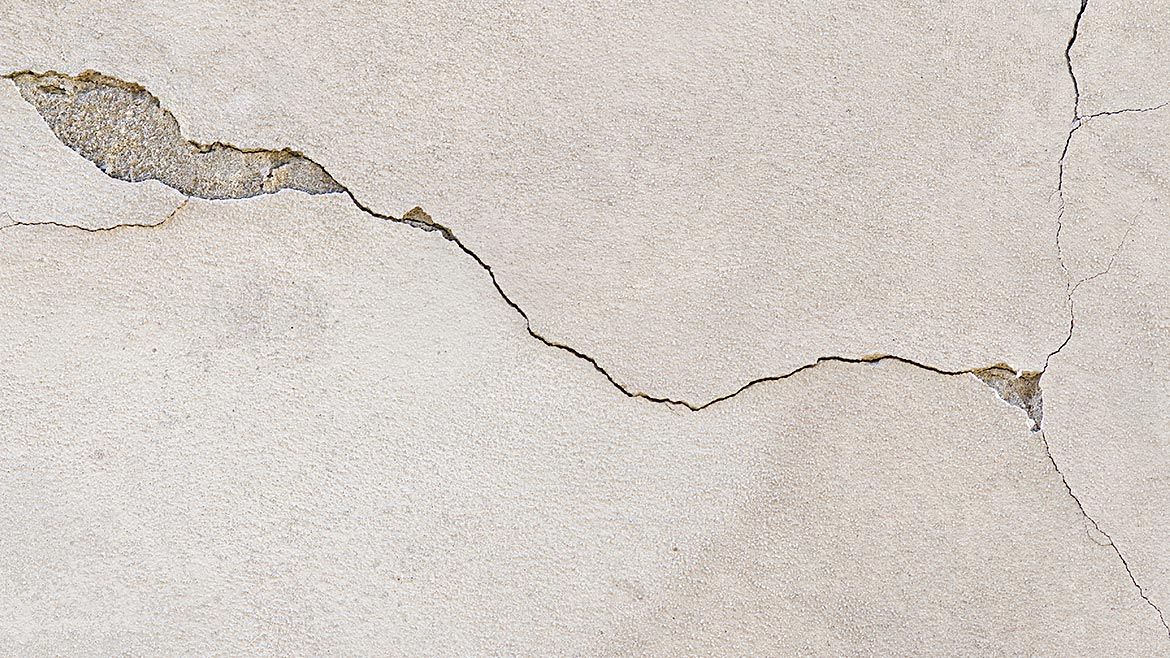
Stress-cracking often seen in corners can be caused by poor embedment, or omission of control joints placed for stucco membrane movement.
Corrosion is another risk resulting from improper stucco embedment. In some cases, incidental moisture that may enter the plaster matrix can cause rusting and corrosion of the metal lath material if plaster is not allowed to dry out. If the moisture persists and plaster cannot dry out, its presence could result in a premature failure of the lath. The better the lath embedment, the less likely it will oxidize and eventually rust under the stucco cladding.
If the plaster scratch-coat sits on top of the diamond lath, the back side of lath is minimally covered and exposed. As wind-driven rain and vapor drives force moisture through the plaster to the weather barrier, vapor condenses adjacent to the bare lath. If not dried out, oxidation begins and the 3 mils of zinc coating protecting the expanded metal lath begins to sacrifice, eventually eroding the zinc to expose the carbon steel. The result is lath corrosion and potential stucco failure.
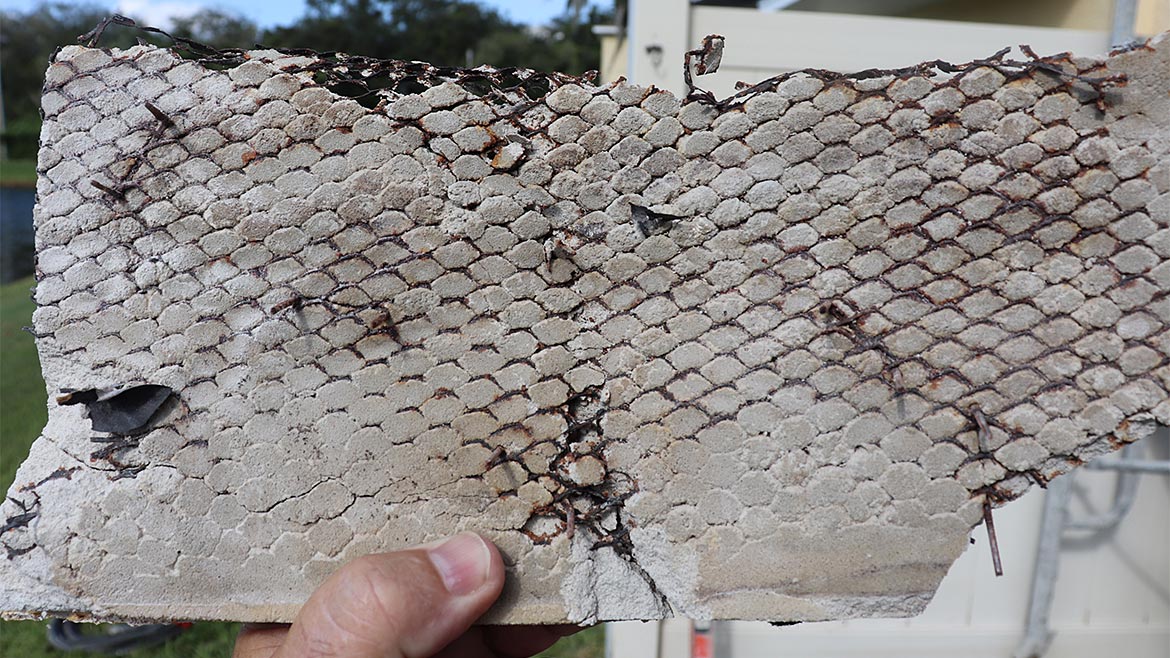
This type of corrosion, resulting from lack of embedment, can stay on the wall for many years and then finally, “give away” from a storm or wind event.
Lath Types and Their Embedment Performance
Diamond Mesh Lath: ASTM C847: Standard Specification of Metal Lath defines sheet lath by weight, expressed in lbs./square yard, and the size of the diamond openings is not standardized. These openings range in size but are approximately 3/8 inch by 1/2 inch in length and width.
Diamond mesh lath manufacturers engineer their sheet products to achieve these specified weights. Expanded metal lath that is over-fastened to the substrate will restrict the passing of plaster through the diamond-shaped openings in the lath, negatively impacting embedment, especially at the edge joints and laps.
Paper-backed lath—where a WRB is glued directly to the diamond mesh—increases the challenge of properly embedding the lath by amplifying these difficulties because they can impede the plaster from spreading through the diamonds to get to the backside of the metal lath for embedment.
Because of this variability in diamond opening size, pressing wet plaster through the lath can be challenging. Plastering contractors often run their plaster “stiff” (i.e., less water in the stucco mixture or use of fibers) to get better surface contact with the diamonds and to assure adhesion. However, this stiff mix increases the difficulty of pushing the plaster through the diamonds, thereby reducing the level of embedment. While it is possible to achieve acceptable embedment with diamond mesh lath, the applicator must know precisely how to mix plaster to achieve a stiffness ideal for penetrating the diamond surface.
Woven Wire Lath: For woven wire lath, ASTM C1032: Standard Specification for Woven Wire Plaster Base defines the gauge of wire, the required galvanization levels, and the opening size. Woven wire is made of 17 to 20 gauge wire that is wound into a hexagon with each adjoining shape woven together.
While woven wire has an open design and provides for easier keying and embedment of the scratch-coat, this style faces different challenges like maintaining uniformity in furring distance on the wall. Some producers of this type lack the self-furring feature in the wire and don't provide the 1/4 inch self-furring needed on the wall. The contractor must then create proper furring depth using a special furring nail or furring wad. The self-furring inconsistency reduces the woven wire’s ability to remain in the center of the scratch-coat. Additionally, over- or under-fastening woven wire lath can restrict its ability to respond appropriately to the pressure of the trowel when applying the scratch-coat. These inconsistencies can result in areas where embedment may not occur.
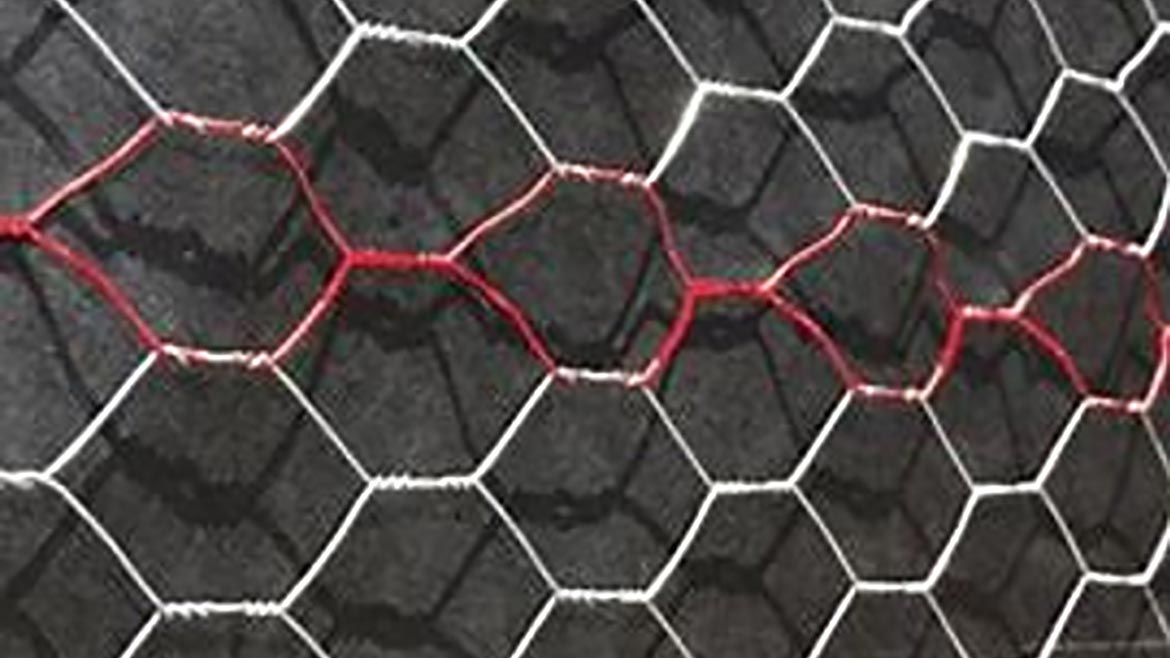
Woven wire offers little furring. The red area is self-furred, but this is often inconsistent.
Welded Wire Lath: Welded wire lath features an open-wire design like woven wire, but the manufacturing process incorporates fuse-welding at every crosswire intersection. The welding improves stiffness of the lath which enhances the wire’s rigidity during installation and plastering. Because of the stiffness created in the intersecting welds, the wires stay uniform during the scratch-coat process that provides embedment.
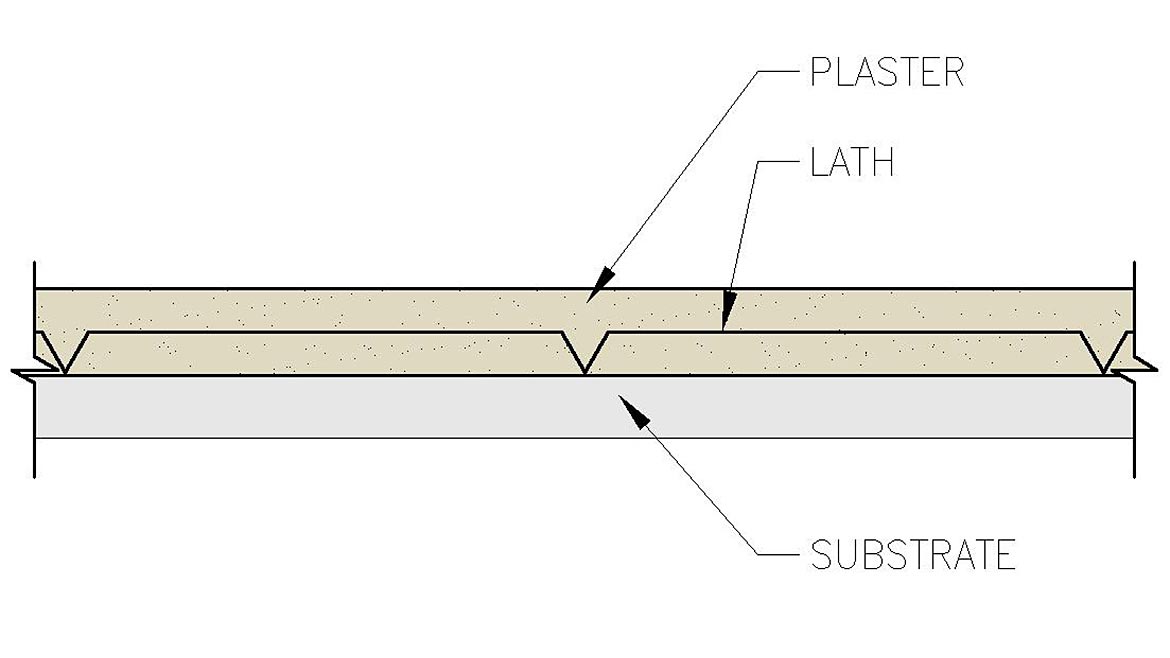
Application issues that do arise are seen when wet plaster mix is hand trowel applied during the scratch-coat. A more “wet” scratch-coat can slump off the wire before it can set. On the other hand, a drier mix may cavitate, or not fully pack around the wires, so it’s important to blend a proper water/cement ratio for welded-wire lath applications.
But despite these nuances, welded wire lath provides a consistent, evenly furred surface that has openings wide enough to apply a proper plaster mix using the trowel to scratch—then horizontal strokes to smooth in the scratch in preparation for the scoring lines before the brown-coat. This complete scratch-coat base will enhance the brown-coat and ultimately cut down on the number of finish-coat issues.
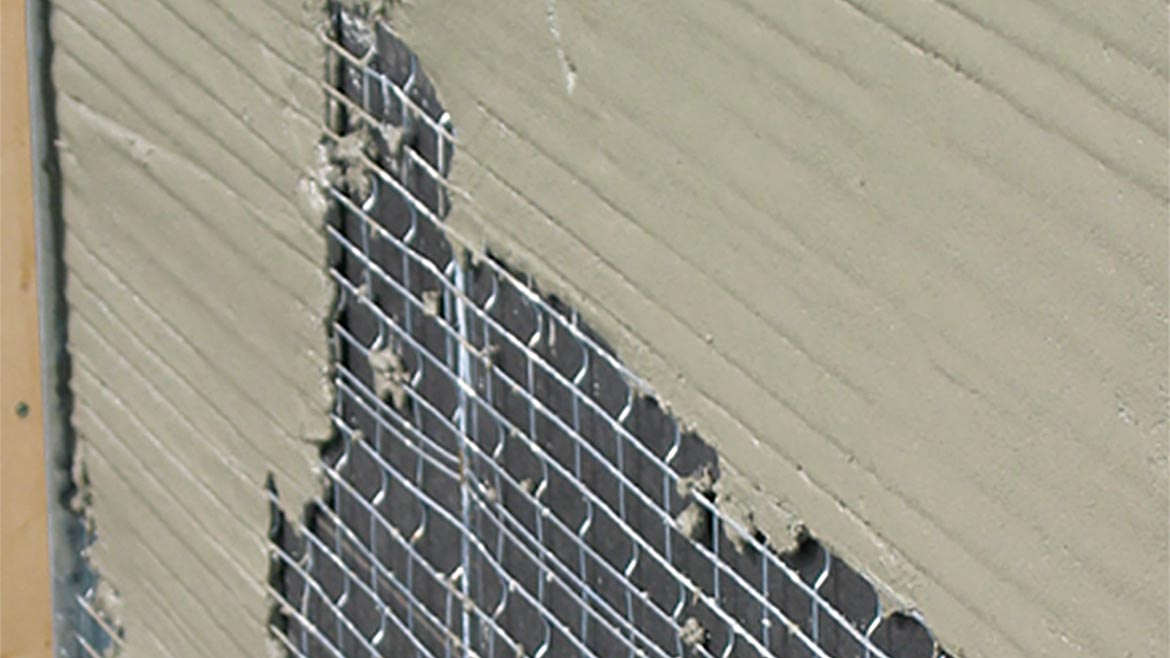
Welded wire lays down evenly with uniform furring.
Regional History and Installation Preferences
When we consider these three types of metal laths, the plastering industry has built historical preference for lath choice based on tradition, familiarity, local availability, and preferred installation methods.
Diamond-mesh lath has historically been the option of choice in the Southeast, Northeast and Midwest. This is because these types of products were manufactured in the eastern U.S. and sheets were installed by multiple trades including plasterers and stone masons. Most all lathing and plastering in these regions is paddle-mixed and troweled directly onto the metal lath. This “hawk and trowel” method of application is often used on smaller projects, or more spotty areas of application that aren’t continuous, and requires the trowel operator to be skilled in placement of wet plaster into and through the metallic laths to embed them.
In Texas and the Mountain states, a hybrid of diamond mesh sheets and woven wire laths makes up most of the market. This is because much work is performed by plasterers who use pumps, and others who follow the mixing and troweling traditions often used by the stone masons.
In the Western and Desert Southwest regions of the U.S., where stucco cladding makes up most of the residential construction and is also used on very large commercial structures, woven wire and welded wire are preferred styles. This is because many of the applications in these regions are spray-applied to the lath and troweled into a finish.
While both pumping/spraying plaster and hand troweling are allowed by ASTM standards and building codes, pumping/spraying is often preferable for larger projects where volume is needed. This method improves the embedment properties of the lath as the spray pressure will penetrate the lath openings.
Summary
Open wire designs tend to make lath embedment easier to achieve, with self-furred welded wire laths maintaining the most consistent furring across the plane of the surface.
Regardless of which metal type is used, uniformly fastened and evenly furred metal lath will greatly improve the embedment of the cladding system and provide the best opportunity for plaster and lath to act compositely, minimize cracking and perform long term.
Careful application and using the right plaster mix for your chosen application method is also imperative for ensuring that various types of metal lath will embed properly and perform for the life of the system. And understanding regional application preferences and material choices can further help you specify the right metal lath system for your project.
Looking for a reprint of this article?
From high-res PDFs to custom plaques, order your copy today!