Walls & Ceilings logo
search
cart
facebook twitter linkedin youtube youtube Spotify Podcasts Apple Podcasts Spotify Podcasts Apple Podcasts
  • Sign In
  • Create Account
  • Sign Out
  • My Account
Walls & Ceilings logo
  • NEWS
  • TOPICS
    • Drywall
    • Stucco/EIFS
    • Ceilings
    • Steel Framing
    • Fireproofing
    • Interior Plaster
    • Building Envelope
    • Insulation
    • Technology
    • Interior
    • Exterior
    • Women In Construction
  • COLUMNS
    • Up Front
    • All Things Gypsum
    • Art & Craft of Plastering
    • Stucco Stop
    • Steel Deal
    • Industry Voices
  • PRODUCTS
    • Buzz Guide
  • EVENTS
    • Industry Events
    • Webinars
    • BUILD Expo
  • MEDIA
    • Videos
    • Podcasts
    • Photo Galleries
    • BUILD26 Videos
    • Take our Quiz!
    • Infographics
  • EXCLUSIVE
    • Newsletters
    • Top 50 Contractors
    • Contractor of the Year
    • State of the Industry
    • W&C Store
    • Market Research
    • CEUs
    • Sponsor Insights
    • Custom Content & Marketing Services
  • DIRECTORY
  • EMAGAZINE
    • eMagazine
    • Advertise
    • Archive Issues
  • SIGN UP!
ExteriorInterior PlasterStucco/EIFS

Best Practices for Water Management for Stucco-Clad Walls
By Steve Easley
rainscreen lath
Images courtesy of Steve Easley & Associates.
January 11, 2023

Water intrusion continues to be the leading cause of callbacks and construction defects. Prescriptive versions of 2021 energy codes will require continuous insulation in climate zones 4-8. The logic behind this is to reduce the energy impacts of thermal bridging through framing members. On average, homes in the U.S. have 25 percent framing factors. This means 25 percent of the walls are wood and 75 percent are cavity insulation. The R-value of a 2x4 is only 4.38, significantly less than cavity insulation, which has an R-value of 13 for a 2x4 wall. Adding exterior continuous insulation can increase the wall’s R-value by almost 50 percent.

The majority of residential buildings also have wood-based sheathing for structural shear support and wind bracing. The majority of continuous insulation products are low-permeability foam sheathing that get installed over the wood sheathing. If water intrusion gets sandwiched between the foam sheathing and the wood sheathing, which is usually OSB, the OSB gets wet and because the foam is not breathable, the OSB will have little chance of drying out. This trapped moisture can create conditions for mold growth, which can lead to structural decay of the wood sheathing in a fairly short period of time. Needless to say, from a building science perspective, this is not ideal.

So, what do we do when the energy codes and the building codes are at odds? Here are some best practices that I use, that I believe are very effective at preventing water intrusion and dealing with these unintended consequences.
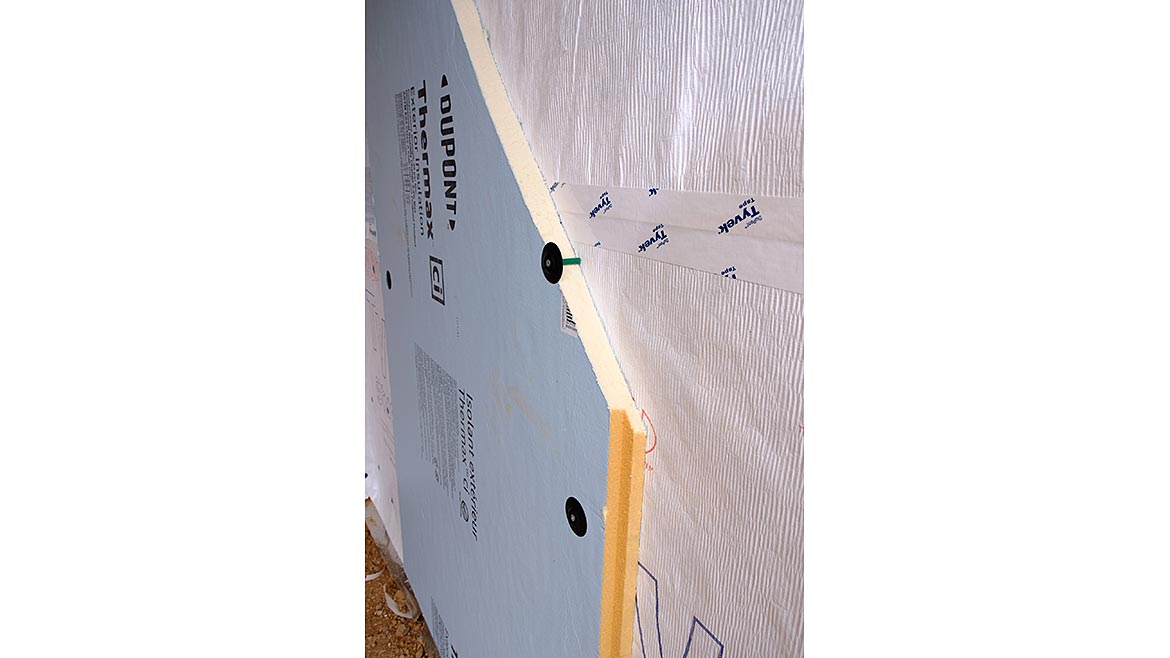
For this project, I used Tyvek DrainWrap For this project, I used Tyvek DrainWrap over OSB sheathing with R-10 Thermax because I wanted a high R-value per inch. The foam is fastened with grip deck tube seal self-sealing fasteners.

The first job is to make sure that the water never reaches the wood sheathing. This starts with covering the OSB with a high-quality drainage wrap. These are products that have grooves to facilitate drainage. The 2018 IRC requires that walls have a drainage efficiency of greater than 90 percent, as tested by ASTM E 2925. Some specialty drainage wraps have an efficiency greater than 90 percent and drain considerably faster than traditional building wraps.

The wrap should be properly installed and shingled over a perforated weep screed at the base of the wall.

I don’t recommend the practice of just taping the joints of the foam as a primary weather barrier because often, the foam can be wet or dirty, thus the tape won’t stick. If the tape fails, it’s a sure-fire pathway for water to get behind the foam.

For my project, I used a moisture barrier over OSB sheathing with R-10 Thermax because I wanted a high R-value per inch. The foam is fastened with Grip-Deck tube seal self-sealing fasteners (more often, extruded polystyrene or Styrofoam is used for exterior insulation).
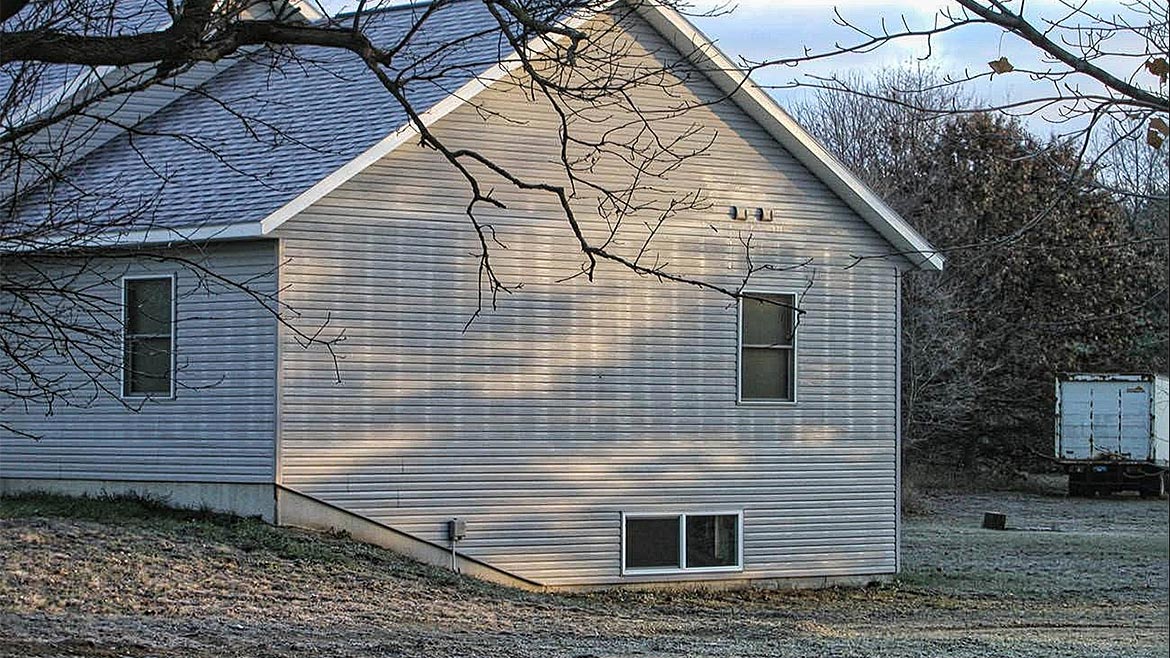
Thermal Bridging Thermal Bridging: Note the frost is melted at the framing members due heat loss at the framing members.

Rainscreens and Drainage Planes to the Rescue

Stucco by nature absorbs water and can transfer that moisture to building materials in the wall by capillary action. Rainscreens are by far the best practice to prevent water intrusion into walls. Rainscreens have been around since Roman times. Today’s rainscreen systems simply provide a small air gap between the cladding and the sheathing/building wrap. This gap provides two functions. One, rainscreens have a gap (1/4-inch or larger) that creates a space where, if water does get behind the cladding, it drains down the backside of the cladding. Water will not jump across the gap. Two, rainscreens prevent water flow by capillary action. Even a small gap, slightly greater than 1/8-inch, provides a capillary break and prevents water bridging. I believe rainscreens are imperative when building walls with foam over OSB sheathing. Building codes in some states require rainscreens.

The wall system in the house I am building will be 1/2-inch OSB covered in Tyvek DrainWrap. I am installing 1 1/2-inches of R-10 Thermax foam sheathing over the wrap (it’s also acceptable to install the moisture barrier or a stucco wrap over the foam sheathing).

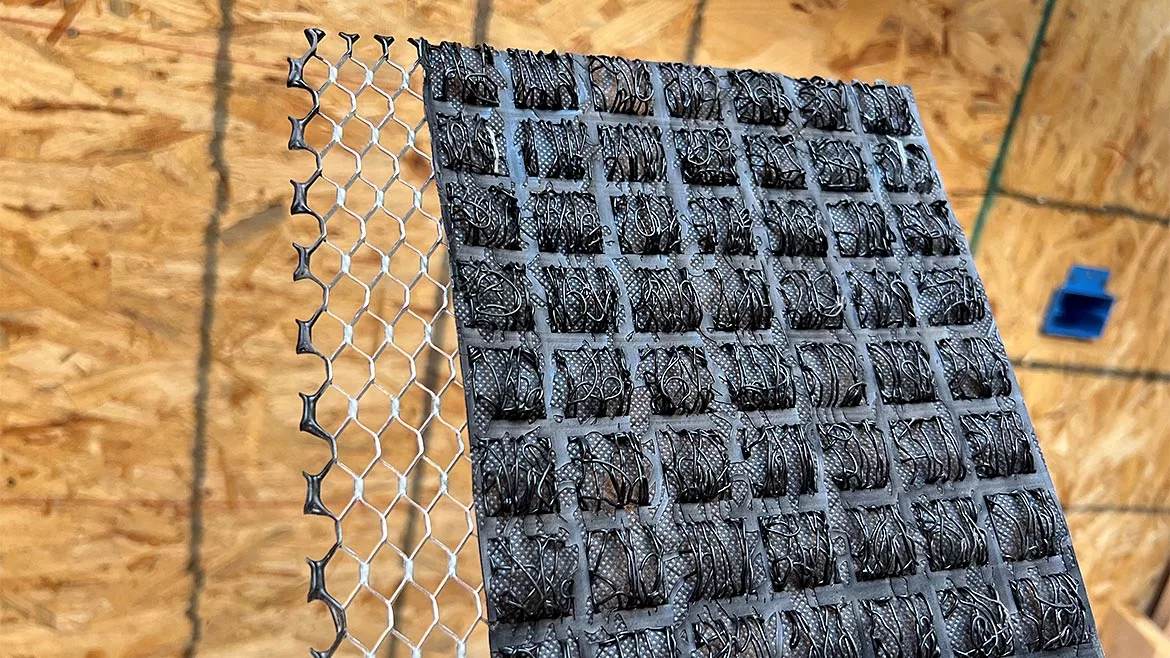
Over the foam sheathing, I'm installing a product called Driwall Lathnet, made by Keene Building Products, a product tested to ASTM 2925 to have 98 percent drainage.

This product combines self-furring metal stucco lath reinforcement with a drainage plane material, with a built-in mortar barrier for drainage and ventilation and the lath holds the mortar. This system provides a 1/4-inch gap between my stucco and foam sheathing. This gap also allows airflow, which promotes drying. This saves labor, as the drainage plane material and lath go up in one step. This product would also work very well with adhered masonry veneer. Fastening the lath and the foam requires thousands of penetrations so I will fasten the foam and the lath with Tube Seal self-sealing fasteners from Tru-Fast to prevent water intrusion at the fasteners.

KEYWORDS: drainage rainscreen stucco

Share This Story

Looking for a reprint of this article?
From high-res PDFs to custom plaques, order your copy today!

Wc0123 feat steve easley p4 author steve easley headshot
Steve Easley is an internationally recognized construction consultant specializing in sustainable building practices, solving building science related problems and helping builders build high performance homes and buildings. In addition to consulting, he provides seminars nationally, educating building industry professionals and their trade partners. His work focuses on increasing quality of construction, sustainability, performance, and reducing costly mistakes that lead to construction defects and call backs. Easley's mission is helping industry professionals build and remodel structures that are durable, energy efficient, healthy and comfortable to live and work in.

Recommended Content

JOIN TODAY
To unlock your recommendations.

Already have an account? Sign In

  • Abercrombie & Fitch

    EIFS in 2026: How Specialty Finishes Are Redefining Exterior Wall Systems

    As building codes, owner expectations, and design demands...
    Stucco/EIFS
    By: Regi Mendoza
  • proper air and vapor control

    From Energy Efficiency to Moisture Management: Why Air and Vapor Control Matter

    How proper air and vapor control within building...
    Building Envelope
    By: Benjamin Meyer AIA, LEED AP
  • Linear Metal Ceiling Beam Baffles

    Top 25 Ceiling Contractors of 2026

    Suspended ceilings demand precision, code compliance and...
    Ceilings
    By: John Wyatt and Tanja Kern
You must login or register in order to post a comment.

Report Abusive Comment

Manage My Account
  • eMagazine Subscription
  • Newsletters
  • Online Registration
  • Manage My Preferences
  • Subscription Customer Service

More Videos

Sponsored Content

Sponsored Content is a special paid section where industry companies provide high quality, objective, non-commercial content around topics of interest to the Walls & Ceilings audience. All Sponsored Content is supplied by the advertising company and any opinions expressed in this article are those of the author and not necessarily reflect the views of Walls & Ceilings or its parent company, BNP Media. Interested in participating in our Sponsored Content section? Contact your local rep!

close
  • medical professionals moving a patient on a stretcher through the halls of a medical building
    Sponsored byNational Gypsum Company

    What Does High Performance Mean When It Comes To Gypsum Boards?

Popular Stories

Wichita Biomedical Campus

Wichita Drywall Worker Dies After Scaffolding Fall

Okan Tower in Miami, Florida

OSHA Opens Investigation Into Fatal Okan Tower Column Collapse

Construction workers in safety vests install drywall

Gypsum Sales Hold Amid Market Shifts in the U.S.

data center and logos

USG, Subzero Engineering Form Data Center Alliance

Events

June 24, 2026

The Bright Side & Benefits of Designing with Integrated Lighting

Credits 1 AIA LU/HSW; 0.1 ICC CEU

This course will explore the pivotal role architects and lighting design play in creating safer, more sustainable spaces. Learn how to avoid common lighting mistakes and make informed decisions that create the best visual environment for occupants. 

January 1, 2030

Webinar Sponsorship Information

For webinar sponsorship information, visit www.bnpevents.com/webinars or email webinars@bnpmedia.com.

See our full library of webinars

View All Submit An Event

Products

2026 National Painting Cost Estimator

2026 National Painting Cost Estimator

See More Products

Related Articles

  • Benjamin Obdyke GettyImages-1064357158-1170x658 JW.jpg

    Best Practices for Weatherizing Low-Rise Multifamily Projects

    See More
  • Benjamin Obdyke.png

    Best Practices for Weatherizing Low-Rise Multifamily Projects

    See More
  • Up Front: A Walls & Ceilings Editorial Column by Mark Fowler

    What Are Best Practices?

    See More

Related Products

See More Products
  • Accidents Waiting to Happen: Best Practices in Workers' Comp Administration and Protecting Corporate Profitability

  • Drywall: Professional Techniques for Great Results, 4th Edition

  • 0470872616.jpg

    Sustainable Renovation: Strategies for Commercial Building Systems and Envelope

See More Products

Related Directories

  • International Institute for Lath & Plaster

×

Connect with the industry’s leading resource for unparalleled insights and education.

Join thousands of industry professionals today. Shouldn’t you know what they know?

JOIN NOW
  • RESOURCES
    • Advertise
    • Contact Us
    • Directories
    • Store
    • Want More
  • SIGN UP TODAY
    • Create Account
    • eMagazine
    • Newsletters
    • Customer Service
    • Manage Preferences
  • SERVICES
    • Marketing Services
    • Reprints
    • Market Research
    • List Rental
    • Survey/Respondent Access
  • STAY CONNECTED
    • LinkedIn
    • Facebook
    • Instagram
    • YouTube
    • X
  • PRIVACY
    • PRIVACY POLICY
    • TERMS & CONDITIONS
    • DO NOT SELL MY PERSONAL INFORMATION
    • PRIVACY REQUEST
    • ACCESSIBILITY

Copyright ©2026. All Rights Reserved BNP Media, Inc. and BNP Media II, LLC.

Design, CMS, Hosting & Web Development :: ePublishing