Walls & Ceilings logo
search
cart
facebook twitter linkedin youtube youtube Spotify Podcasts Apple Podcasts Spotify Podcasts Apple Podcasts
  • Sign In
  • Create Account
  • Sign Out
  • My Account
Walls & Ceilings logo
  • NEWS
  • TOPICS
    • Drywall
    • Stucco/EIFS
    • Ceilings
    • Steel Framing
    • Fireproofing
    • Interior Plaster
    • Building Envelope
    • Insulation
    • Technology
    • Interior
    • Exterior
    • Women In Construction
  • COLUMNS
    • Up Front
    • All Things Gypsum
    • Art & Craft of Plastering
    • Stucco Stop
    • Steel Deal
    • Industry Voices
  • PRODUCTS
    • Buzz Guide
  • EVENTS
    • Industry Events
    • Webinars
    • BUILD Expo
  • MEDIA
    • Videos
    • Podcasts
    • Photo Galleries
    • BUILD26 Videos
    • Take our Quiz!
    • Infographics
  • EXCLUSIVE
    • Newsletters
    • Top 50 Contractors
    • Contractor of the Year
    • State of the Industry
    • W&C Store
    • Market Research
    • CEUs
    • Sponsor Insights
    • Custom Content & Marketing Services
  • DIRECTORY
  • EMAGAZINE
    • eMagazine
    • Advertise
    • Archive Issues
  • SIGN UP!
ColumnsInteriorInterior PlasterArt & Craft of Plastering

More Than Marble

By Patrick Webb
WC0522-CLMN-Plaster-p1FT-Patrick-Webb-1170x658.jpg
March 28, 2023

The highest expression of the plasterer’s art has been created, lost and rediscovered. Yet, for the past two millennia, Scagliola has never ceased to fascinate nor witness its aura of mystery diminish.

Part sculpture, part science, the sophisticated process that gives birth to Scagliola demands the focused mind and precision of a chemist, the hands of an experienced plasterer and the subtle, sensitive eye of an artist.

History

Scagliola results from a meticulously programmed sequence of tinting, blending and arranging plasters to imitate marble. Archaeologists have discovered that the Romans and the Egyptians employed methods, long since forgotten, to imitate marble in plaster. 

However, it was in the late 16th century Renaissance that the contemporary approaches to Scagliola were conceived and perfected to effect intarsia, complicated inlays in furniture surfaces that mimicked the costly marble inlays, pietra dura, that were en vogue amongst the aristocratic courts of the day. Where precisely Scagliola making re-emerged is a point of some controversy; however, it can be narrowed down to one or the other side of the present day Italian and Austrian border, where the tradition continues in unbroken succession.
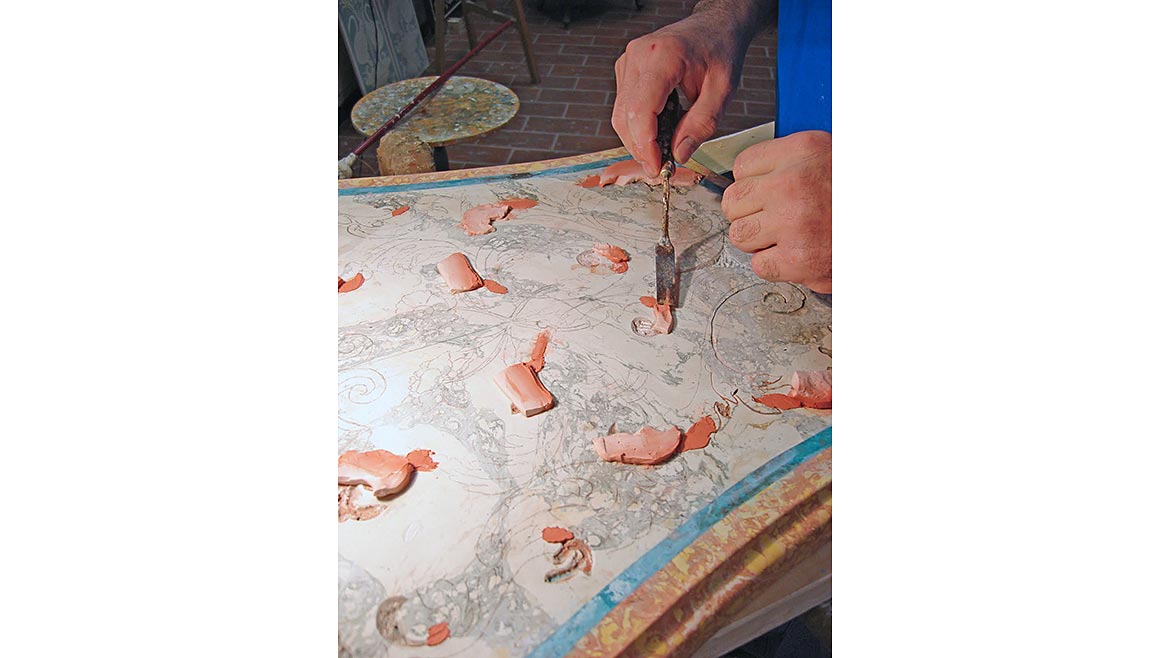
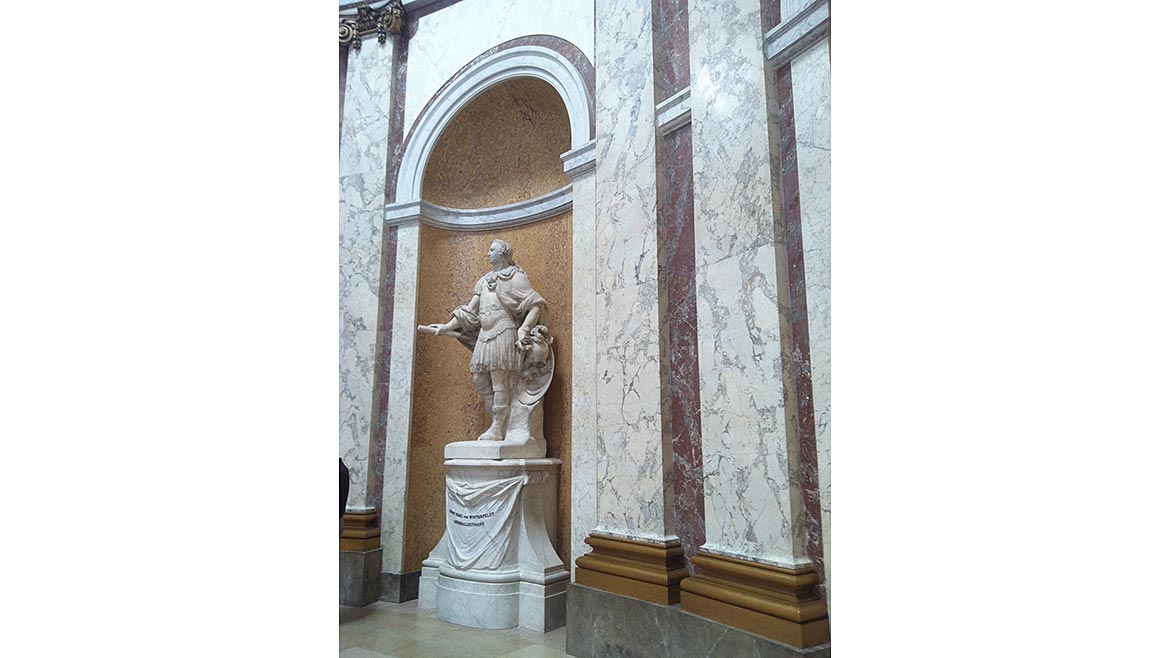
Scagliola results from a meticulously programmed sequence of tinting, blending and arranging plasters to imitate marble.
Images courtesy of Patrick Webb.

By the early Renaissance, many desired marbles were rare or had been exhausted. Scagliola could imitate such marbles as well as create colors and patterns that were not to be found in nature. The use of Scagliola soon expanded to casting in ornament, column shafts and even entire walls, the latter a process that became known in Italy as Stucco Marmo.

The use of Stucco Marmo expanded throughout continental Europe and finally to Britain in the 18th century. Prominent uses of the Stucco Marmo form of Scagliola in England include column and pilaster shafts at Buckingham Palace and the Syon House, designed by the famous architect Robert Adam. A significant breakthrough in plaster technology was achieved in the mid-19th century with the advent of Keene’s cement, which, in spite of the name, is a type of gypsum plaster so named because its compressive strength resembles that of natural cements. Keene’s cement paved the way for a new method for producing Scagliola called Marezzo, known in the United States as American Scagliola due to its ready acceptance and prominent use from the mid 1800’s until the Great Depression.

There are countless recipes, historical and contemporary, in all cases secret and proprietary, for the ingredients and mixing of Scagliola. Let’s attempt to at least partially pull back the curtain of secrecy with a basic explanation of Scagliola manufacture.

Manufacture

Traditional Scagliola can be done in situ (in place) or on a bench. Work performed in situ requires several precautions in preparation of the substrate. In all cases, the work environment should be clean, warm and dry.

Finely ground Plaster of Paris is used as the base material. Animal hide glue, high in collagen, such as rabbit or isinglass, is prepared the day of manufacture to retard the plaster and add strength to the work. Dry mineral pigments can be introduced directly into the dough, mixed with dry gypsum or emulsified, depending on desired effect. Optional ingredients include whiting (ground caulk) or selenite (ground gypsum) as filler, linseed oil to complement the glue as a retarder and aid in workability, and marble chips for decorative effect.

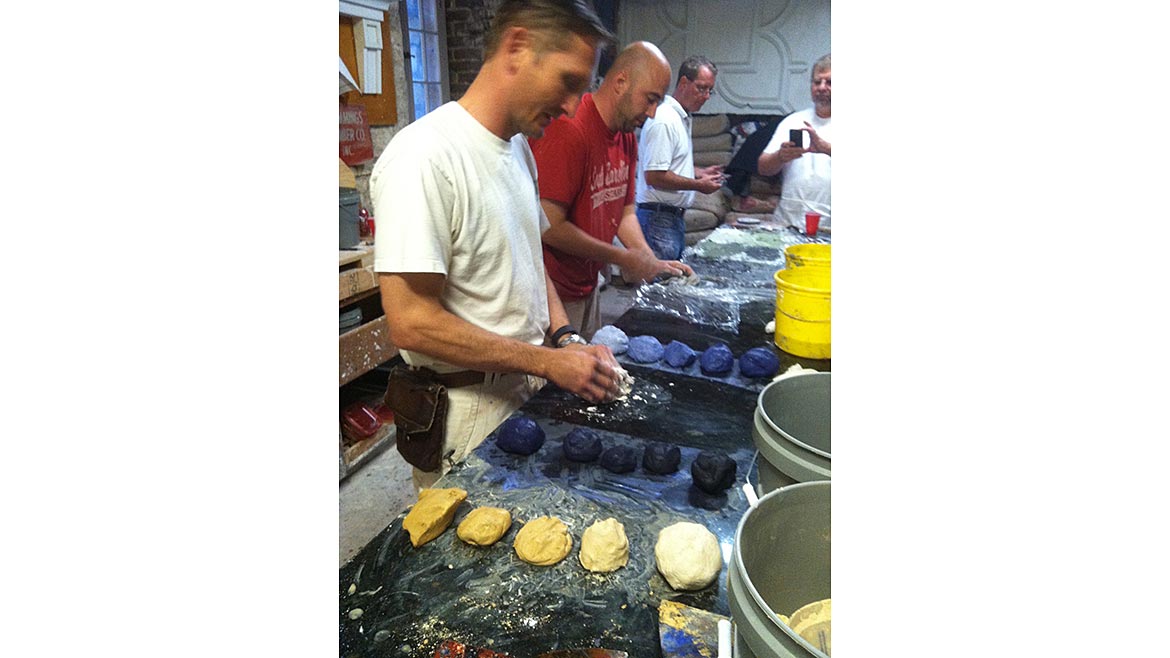
Much like a bread maker working with flour, yeast and water, the artisan kneads Plaster of Paris (molding plaster) and glue water to the consistency of firm dough. This is best accomplished by forming a ring of dry plaster surrounding a central “castle” of plaster. The moat is filled with glue water and the process of cutting and kneading begins.

Through a series of slicing, addition of pigments, folding and re-joining, the whole of the mass is mixed and set aside as large balls placed in ratios and arrangements that achieve the desired result: a counter-type of true marble or a fanciful creation. Depending on the desired outcome, from the initial mixing, colored slurries and other preparations are set aside for decorative effects. Much of the artisanship lies in a process of mental reverse engineering. One must conceive the desired outcome, have all materials on hand and systematically take steps to accomplish the effect.

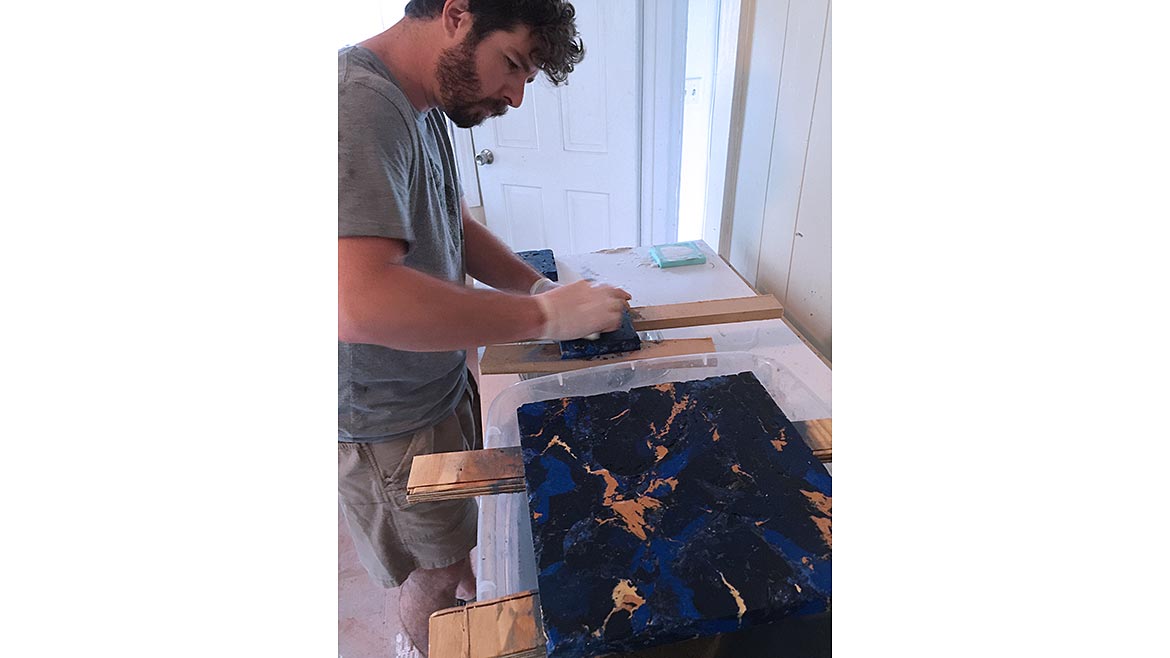
Typically, the plaster is built up to 1/2- to 5/8-inch thickness, leaving 1/8-inch for cutting of the surface. Once the material has achieved an initial set, it can be planed with an appropriate cutting tool, such as a Berthelet (French razor), removing the 1/8-inch excess to realize a flat surface. At this point, the material is still malleable and can be allowed to cure as a flat panel. Alternatively, slices of Scagliola can be pressed into a mold or directly on a keyed plaster substrate in situ. For ornamental work such as balusters, urns and column shafts, the Scagliola can be wrapped around an appropriate base and turned on a lathe.

Once the Scagliola has been allowed to set and dry naturally, the work of polishing can commence. Traditionally, after cutting the Scagliola, natural pumice stones and damp sponges are used to smooth the work. The final smoothing and polishing historically was achieved with Water of Ayr, a natural snake stone from Scotland renowned principally as a hone for polishing barber straight razors. Modern polishing techniques arrive at a similar result with increasingly fine-grit wet/dry sandpaper. The finished surface can be rubbed with linseed oil to increase luster and hardness and add a measure of protection from stains.

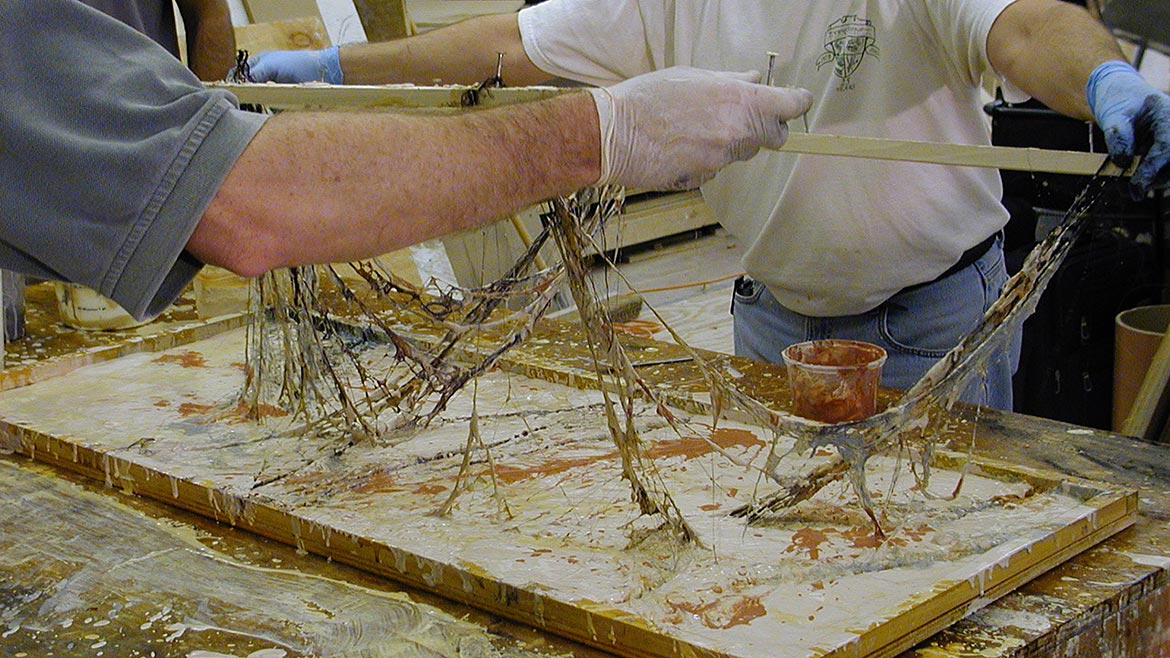
The Marezzo plaster mix is based on Keene’s cement, a slow-setting gypsum cement that does not necessitate the use of retarders or hardeners. Silk threads are used for veining and dry mineral tints can be used to provide color.

Conclusion

Scagliola has enjoyed a rich history adorning many of Europe’s most prestigious works of architecture from the Renaissance through the Neoclassical periods. Likewise, in the 19th century and still admired in the grand entrances of courthouses, state capitols, railway stations and fine hotels across the country.

This article was co-authored with Sloan Houser and Jim Gloria

KEYWORDS: plaster

Share This Story

Looking for a reprint of this article?
From high-res PDFs to custom plaques, order your copy today!

Wc0620 clmn plastering p6 author patrick webb

Patrick Webb is a traditional and ornamental plasterer currently instructing as Adjunct Professor of Architectural Plastering at the American College of the Building Arts in Charleston, S.C. Additionally, he serves as senior technical consultant for heritage plaster manufacturer Plâtres Vieujot, providing services to architects to assist them in properly specifying plaster and plaster systems. He can be reached at webbp@buildingartscollege.us.

Recommended Content

JOIN TODAY
To unlock your recommendations.

Already have an account? Sign In

  • Abercrombie & Fitch

    EIFS in 2026: How Specialty Finishes Are Redefining Exterior Wall Systems

    As building codes, owner expectations, and design demands...
    Stucco/EIFS
    By: Regi Mendoza
  • proper air and vapor control

    From Energy Efficiency to Moisture Management: Why Air and Vapor Control Matter

    How proper air and vapor control within building...
    Building Envelope
    By: Benjamin Meyer AIA, LEED AP
  • Linear Metal Ceiling Beam Baffles

    Top 25 Ceiling Contractors of 2026

    Suspended ceilings demand precision, code compliance and...
    Ceilings
    By: John Wyatt and Tanja Kern
You must login or register in order to post a comment.

Report Abusive Comment

Manage My Account
  • eMagazine Subscription
  • Newsletters
  • Online Registration
  • Manage My Preferences
  • Subscription Customer Service

More Videos

Sponsored Content

Sponsored Content is a special paid section where industry companies provide high quality, objective, non-commercial content around topics of interest to the Walls & Ceilings audience. All Sponsored Content is supplied by the advertising company and any opinions expressed in this article are those of the author and not necessarily reflect the views of Walls & Ceilings or its parent company, BNP Media. Interested in participating in our Sponsored Content section? Contact your local rep!

close
  • medical professionals moving a patient on a stretcher through the halls of a medical building
    Sponsored byNational Gypsum Company

    What Does High Performance Mean When It Comes To Gypsum Boards?

Popular Stories

Wichita Biomedical Campus

Wichita Drywall Worker Dies After Scaffolding Fall

Okan Tower in Miami, Florida

OSHA Opens Investigation Into Fatal Okan Tower Column Collapse

Construction workers in safety vests install drywall

Gypsum Sales Hold Amid Market Shifts in the U.S.

data center and logos

USG, Subzero Engineering Form Data Center Alliance

Events

June 24, 2026

The Bright Side & Benefits of Designing with Integrated Lighting

Credits 1 AIA LU/HSW; 0.1 ICC CEU

This course will explore the pivotal role architects and lighting design play in creating safer, more sustainable spaces. Learn how to avoid common lighting mistakes and make informed decisions that create the best visual environment for occupants. 

January 1, 2030

Webinar Sponsorship Information

For webinar sponsorship information, visit www.bnpevents.com/webinars or email webinars@bnpmedia.com.

See our full library of webinars

View All Submit An Event

Products

2026 National Painting Cost Estimator

2026 National Painting Cost Estimator

See More Products

Related Articles

  • History of plastering art

    See More
  • gypsum plastering

    The Creation of Gypsum

    See More
  • Stucco/EIFS

    Stucco/EIFS Market is Expected to Boom in Coming Years by 2026

    See More

Events

View AllSubmit An Event
  • July 29, 2026

    FWCCA Annual Convention and Trade Show

    The FWCCA will hold its 2026 Southeastern Wall & Ceiling Annual Convention and Trade Show at the Caribe Royale Resort. This year’s show will feature more than 100 exhibitors and approximately 700 attendees, with many new, as well as returning exhibitors. There will be a trade show as in years past, which will be followed by the Association’s annual Industry Awards Luncheon and presentation on incoming officers and directors. Saturday night’s theme party will be another great event. In conjunction with the other festivities, there will be a silent auction throughout the evening to raise funds for the FWCCA Scholarship Program.
View AllSubmit An Event

Related Directories

  • ATAS International Inc.

    More than a manufacturer, our vast product selection comes with industry expertise and technical support.
×

Connect with the industry’s leading resource for unparalleled insights and education.

Join thousands of industry professionals today. Shouldn’t you know what they know?

JOIN NOW
  • RESOURCES
    • Advertise
    • Contact Us
    • Directories
    • Store
    • Want More
  • SIGN UP TODAY
    • Create Account
    • eMagazine
    • Newsletters
    • Customer Service
    • Manage Preferences
  • SERVICES
    • Marketing Services
    • Reprints
    • Market Research
    • List Rental
    • Survey/Respondent Access
  • STAY CONNECTED
    • LinkedIn
    • Facebook
    • Instagram
    • YouTube
    • X
  • PRIVACY
    • PRIVACY POLICY
    • TERMS & CONDITIONS
    • DO NOT SELL MY PERSONAL INFORMATION
    • PRIVACY REQUEST
    • ACCESSIBILITY

Copyright ©2026. All Rights Reserved BNP Media, Inc. and BNP Media II, LLC.

Design, CMS, Hosting & Web Development :: ePublishing