American History
A History of Wall and Ceiling Systems in the U.S.
From plaster to drywall, see how wall and ceiling systems shaped America since 1607
Key Takeaways
- Wall and ceiling systems evolved alongside America’s growth, from hand-built plaster walls to engineered assemblies.
- Not only industry innovation and advanced performance, but skilled tradespeople, remained the driving force behind every breakthrough.
- Modern construction blends digital tools, prefabrication, and craftsmanship to meet increasingly complex building demands.
Cover this industry long enough and a pattern emerges: a wall is never just a wall. Long before gypsum board, cold-formed steel framing, suspended ceilings and high-performance envelopes, America's walls were built by hand—timber frames, wood lath, lime plaster mixed on site and troweled on coat by coat. What began simply has become an industry of engineered assemblies built to demanding standards for fire resistance, acoustics, energy efficiency, and sustainability. But the materials were never the whole story. Behind every one of those advances was someone who knew how to use it. The evolution of wall and ceiling systems mirrors the evolution of America itself.
Long before gypsum board became the standard, before cold-formed steel framing, suspended ceilings and high-performance building envelopes, America’s walls were built by hand using materials gathered from the land itself. What began as simple timber structures with wood lath and lime plaster has evolved into an industry capable of constructing complex assemblies designed to meet demanding requirements for fire resistance, acoustics, energy efficiency and sustainability.
In many ways, the evolution of wall and ceiling systems mirrors the evolution of America itself.
As the nation grew from a collection of colonies into a global economic power, construction methods advanced to meet the needs of a rapidly changing society. Expanding cities required faster building techniques. Industrialization introduced new materials and manufacturing processes. Population growth created demand for housing at unprecedented scales. Along the way, innovations, such as balloon framing, gypsum wallboard, fiberglass insulation, metal framing and digital design tools, transformed the way buildings are designed and constructed.
Today’s wall and ceiling systems are more sophisticated than ever. Contractors routinely install assemblies engineered for structural performance, sound control, thermal efficiency and life safety. Prefabrication, modular construction and building information modeling continue to push the industry forward, improving productivity while helping contractors deliver increasingly complex projects.
Yet for all the changes that have occurred over the last four centuries, one thing remains constant: skilled craftsmanship. Every wall framed, every board hung, every ceiling installed and every finish applied represents the work of tradespeople whose knowledge and dedication have shaped the built environment around us.
As we look back at the history of walls and ceilings in America, we’re also looking at the history of the people who built this country (one assembly, one innovation) and one generation at a time.
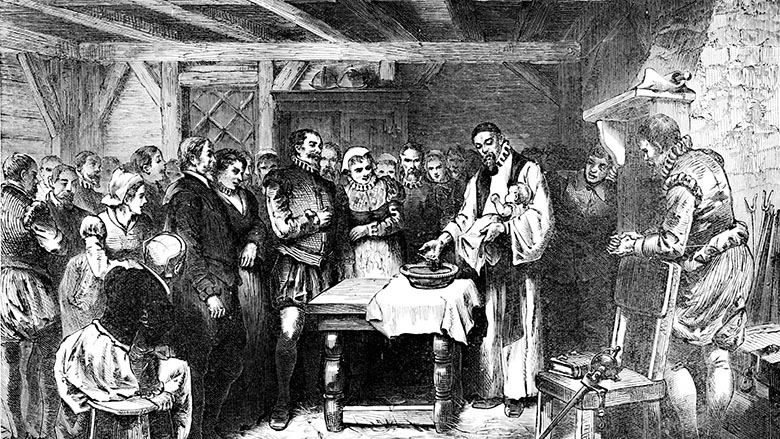
Photo: Christine_Kohler | Getty Images
The 1600s: Colonial Foundations and Early Craftsmanship
The earliest wall and ceiling systems (in what would become the United States) reflected European building traditions adapted to a new and often challenging environment. Beginning with settlements such as Jamestown in 16071 and later colonies along the Atlantic coast, builders depended heavily on timber harvested from nearby forests.
Construction methods varied by region, but timber framing quickly became dominant. Heavy wood posts and beams formed the structural skeleton of buildings. Exterior walls often consisted of wood planks, wattle-and-daub assemblies or timber infill systems adapted from English construction techniques.
Interior wall and ceiling finishes were relatively simple. In wealthier structures, builders installed wood lath strips attached to framing members and applied multiple coats of lime-based plaster2. This process required significant skill. Plasterers mixed lime, sand, water and animal/horse hair to create durable finishes capable of spanning the gaps between wood lath strips.
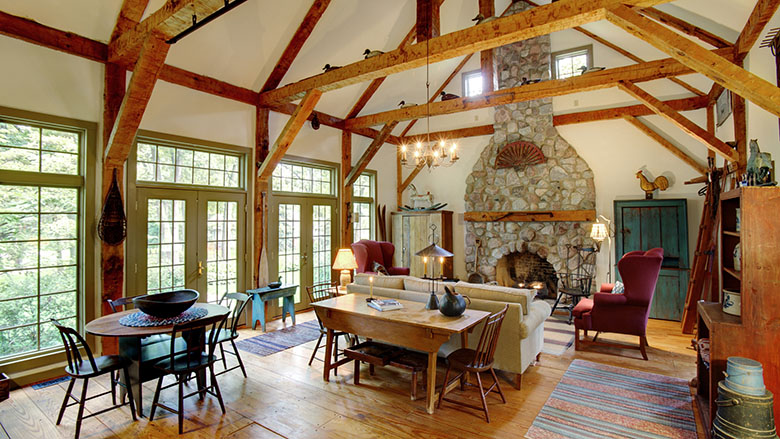
Photo: Brian Brown | Getty Images
The 1700s: Expanding Colonies and Refinement of Plaster Systems
As the American colonies grew throughout the 18th century, wall and ceiling construction became more sophisticated and regionally distinct. Expanding trade networks brought greater access to materials, while increasing prosperity allowed more homeowners and public buildings to incorporate refined interior finishes3.
Timber framing remained the dominant structural system, but builders improved enclosure methods and finish quality. In urban centers such as Boston, Philadelphia and Charleston, S.C., brick construction became increasingly common for commercial buildings and affluent residences because of its durability and fire resistance4.
RELATED
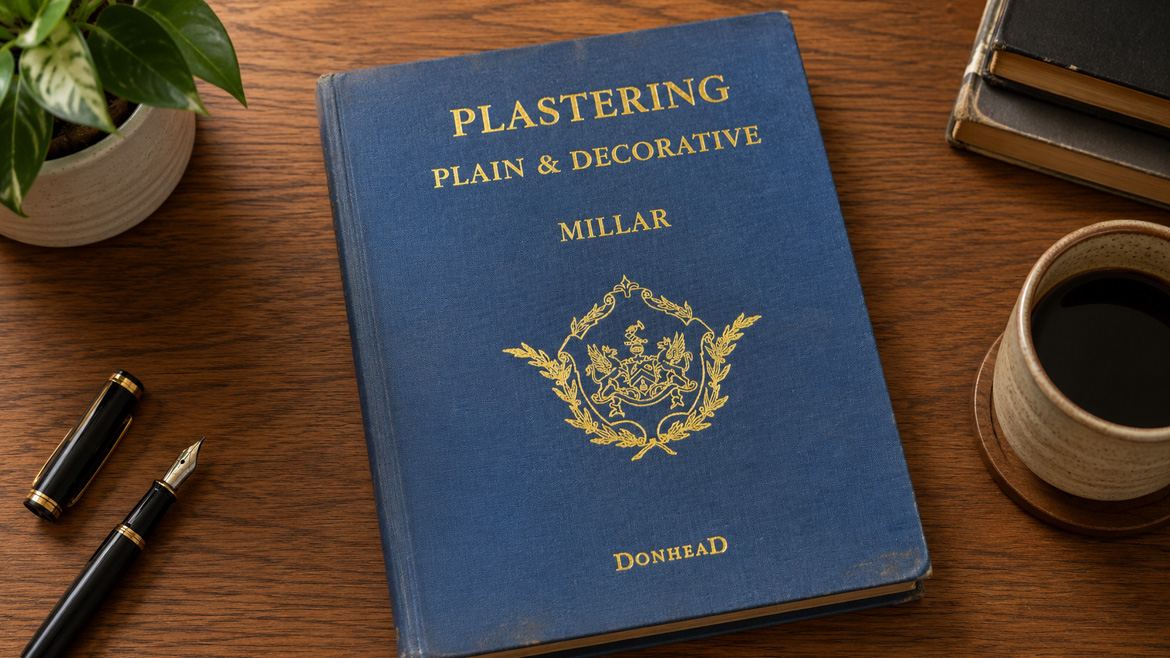
Interior walls and ceilings continued to rely heavily on wood lath and plaster systems. Craftsmen typically applied a three-coat plaster assembly consisting of a scratch coat, brown coat and finish coat5. These systems produced smoother, more durable surfaces than earlier colonial applications and became a hallmark of higher-quality construction throughout the colonies.
Decorative plasterwork also gained prominence during the Georgian and Federal architectural periods. Skilled plasterers created ornamental cornices, ceiling medallions and molded details inspired by European design traditions6.
By the end of the century, many of the wall and ceiling practices that would define early American construction had become firmly established and would remain standard building methods well into the 19th century7.
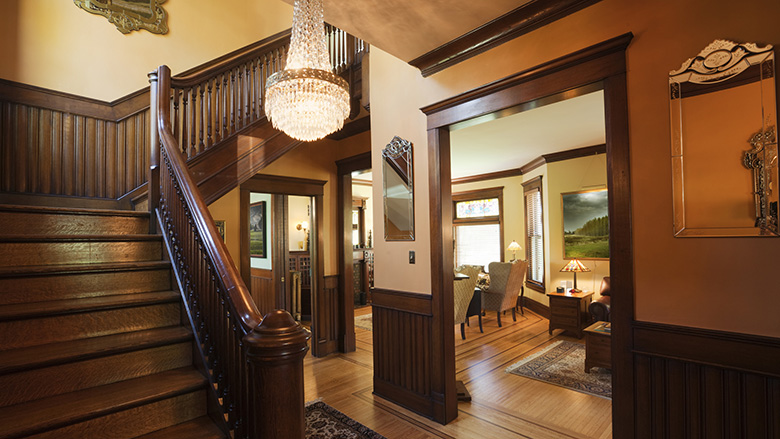
Photo: Yin Yang | Getty Images
The 1800s: Industrial Growth and New Building Methods
RELATED
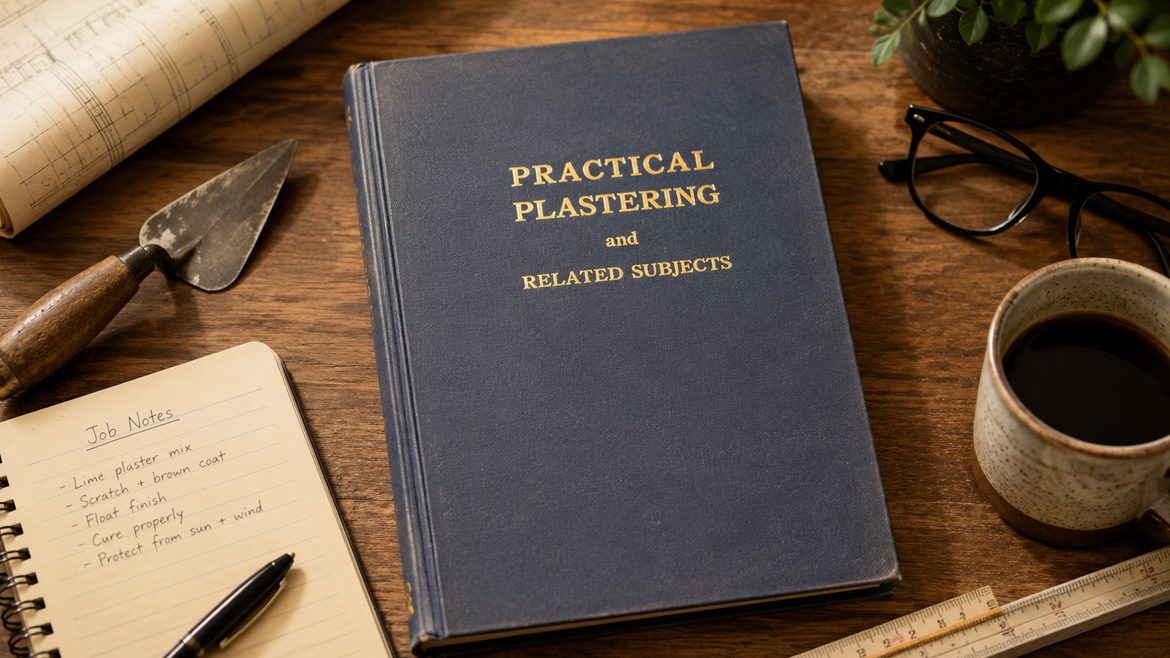
Traditional timber framing remained common during the early decades of the century, but new methods began to emerge. Balloon framing, introduced in the 1830s8, revolutionized residential construction. Rather than relying on massive timber members and complex joinery, builders used dimensional lumber and standardized nails.
Toward the latter half of the century, advances in gypsum technology began attracting attention. Although plaster remained king, manufacturers increasingly explored gypsum-based products as alternatives to traditional lime systems9.
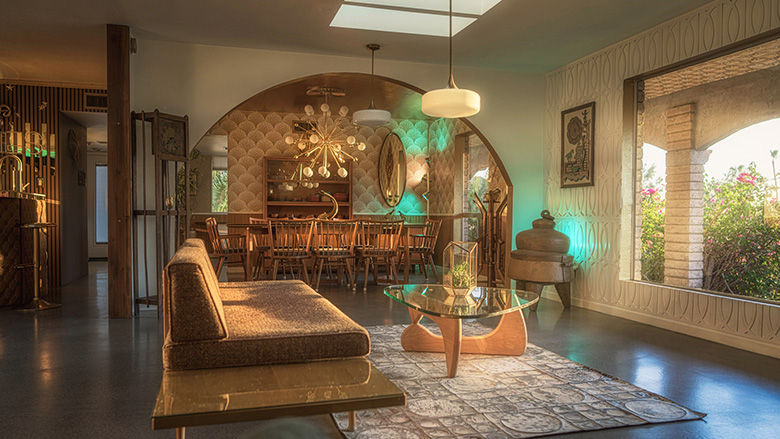
Photo: Gypsy Picture Show | Getty Images
The 1900s: The Rise of Drywall and Modern Contracting
The introduction and widespread adoption of gypsum wallboard changed everything.
Often called drywall, gypsum board offered a faster, more predictable alternative to traditional plaster systems. Early adoption was gradual but demand increased significantly following World War II. The postwar housing boom required construction methods capable of meeting unprecedented production schedules10.
Metal framing also gained popularity throughout the century11. Cold-formed steel framing systems offered dimensional stability, consistency and improved compatibility with commercial construction requirements.
Suspended acoustical ceilings emerged as another major innovation12. Commercial buildings increasingly utilized ceiling systems that concealed mechanical, electrical and plumbing infrastructure while providing access for maintenance and upgrades.
Fiberglass batt insulation became widely adopted13, helping improve energy efficiency and occupant comfort.
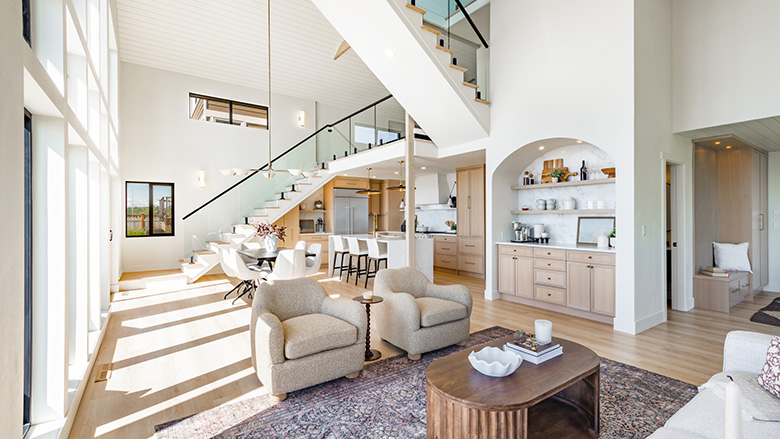
Photo: sheilasay | Getty Images
The 2000s to Today: High-Performance Systems and the Future of Construction
Metal framing systems continue to evolve, supporting taller structures, more complex designs and improved structural performance. Digital design tools and building information modeling14 have transformed project coordination and installation accuracy.
Prefabrication and modular construction represent another major shift15. Contractors increasingly assemble wall panels and framing components off-site, improving quality control, reducing waste and accelerating project schedules.

Photo: thelogocraft_ai | Pixabay
The Tradespeople Who Built America
From 1607 to today, America's walls and ceilings have been shaped by generations of skilled workers16.
Over more than four centuries, materials have changed, technologies have advanced and building methods have evolved in ways the earliest colonial craftsmen could never have imagined. What began with timber framing, wood lath and hand-applied plaster has progressed into an industry defined by engineered assemblies, cold-formed steel framing, high-performance insulation systems, digital modeling and prefabricated construction. Every era introduced new challenges and new solutions, each building upon the knowledge and experience of the generation that came before.
Yet despite all the innovation, the story of walls and ceilings has never been solely about materials. It has always been about people.
Behind every advancement stands a workforce of craftsmen, mechanics, contractors and industry leaders who transformed ideas into reality. They adapted to changing technologies, mastered new products and continuously raised the standards of quality, safety and performance. Whether applying plaster in an 18th-century colonial home, hanging drywall in a postwar subdivision or installing sophisticated wall and ceiling systems in today's commercial buildings, skilled tradespeople have remained the driving force behind the industry's progress.
The walls and ceilings surrounding us today are more than construction assemblies. They are a physical record of American ingenuity, perseverance and craftsmanship. They reflect centuries of problem-solving, innovation and hard work. As the industry looks toward the future, with advances in sustainability, automation and off-site construction already reshaping the landscape, the next chapter will be written by the same force that has carried it this far: the skilled men and women who continue to build America from the inside out.
Footnotes
1 National Park Service. Historic Jamestowne: Establishment of Jamestown Colony, 1607.
2 McKee, Harley J. Introduction to Early American Masonry: Stone, Brick, Mortar and Plaster; U.S. General Services Administration, Preservation Briefs: Historic Plaster.
3 National Park Service. Colonial Architecture and Building Practices in Eighteenth-Century America.
4 Virginia Department of Historic Resources; National Park Service. Colonial Brick Construction and Early American Building Materials.
5 U.S. General Services Administration. Preservation Brief 21: Repairing Historic Flat Plaster Walls and Ceilings.
6 McAlester, Virginia Savage. A Field Guide to American Houses; National Park Service resources on Georgian and Federal architecture.
7 Harley J. McKee. Introduction to Early American Masonry: Stone, Brick, Mortar and Plaster.
8 Walker, Lester. American Homes: The Landmark Illustrated Encyclopedia of Domestic Architecture.
9 Gypsum Association. A Brief History of Gypsum Board.
10 U.S. Census Bureau; National Association of Home Builders historical housing data; Gypsum Association historical publications.
11 American Iron and Steel Institute (AISI). History and Development of Cold-Formed Steel Framing.
12 Ceilings & Interior Systems Construction Association (CISCA). History of Acoustical Ceiling Systems.
13 U.S. Department of Energy. History of Residential Insulation and Energy Efficiency Improvements.
14 National Institute of Building Sciences. Building Information Modeling (BIM) Overview.
15 National Institute of Standards and Technology (NIST); McKinsey & Company reports on prefabrication and modular construction.
16 U.S. Bureau of Labor Statistics; U.S. Department of Labor historical construction workforce data.
Looking for a reprint of this article?
From high-res PDFs to custom plaques, order your copy today!