Walls & Ceilings logo
search
cart
facebook twitter linkedin youtube youtube Spotify Podcasts Apple Podcasts Spotify Podcasts Apple Podcasts
  • Sign In
  • Create Account
  • Sign Out
  • My Account
Walls & Ceilings logo
  • NEWS
  • TOPICS
    • Drywall
    • Stucco/EIFS
    • Ceilings
    • Steel Framing
    • Fireproofing
    • Interior Plaster
    • Building Envelope
    • Insulation
    • Technology
    • Interior
    • Exterior
    • Women In Construction
  • COLUMNS
    • Up Front
    • All Things Gypsum
    • Art & Craft of Plastering
    • Stucco Stop
    • Steel Deal
    • Industry Voices
  • PRODUCTS
    • Buzz Guide
  • EVENTS
    • Industry Events
    • Webinars
    • BUILD Expo
  • MEDIA
    • Videos
    • Podcasts
    • Photo Galleries
    • BUILD26 Videos
    • Take our Quiz!
    • Infographics
  • EXCLUSIVE
    • Newsletters
    • Top 50 Contractors
    • Contractor of the Year
    • State of the Industry
    • W&C Store
    • Market Research
    • CEUs
    • Sponsor Insights
    • Custom Content & Marketing Services
  • DIRECTORY
  • EMAGAZINE
    • eMagazine
    • Advertise
    • Archive Issues
  • SIGN UP!
DrywallInterior

Ensuring Compliance: A Close Look at CBU Installation and Joint Treatment

The importance of strict compliance with ANSI standards and manufacturer guidelines during cementitious backer unit (CBU) installation, highlighting that meticulous framing, fastening, and especially proper joint treatment are essential for achieving durable, high-quality wall systems in construction projects.
By Gabriel Quintana
A Close Look at CBU Installation and Joint Treatment
Photos courtesy of NWCB
December 8, 2025

In the world of construction, the difference between a project's success and failure often lies in the details—particularly in installations that seem as straightforward as those of cementitious backer units. This was vividly illustrated during a site visit by the Northwest Wall and Ceiling Bureau. Tasked with installing CBUs, the union wall and ceiling contractor was scrutinized to ensure that every step met the stringent requirements set forth by ANSI A108.11 and the detailed guidelines from CBU manufacturers. This article delves deep into the steps, observations and industry standards that define a high-quality CBU installation, turning a routine inspection into a lesson in precision and adherence.   

Key Observations from the NWCB Educational Inspection

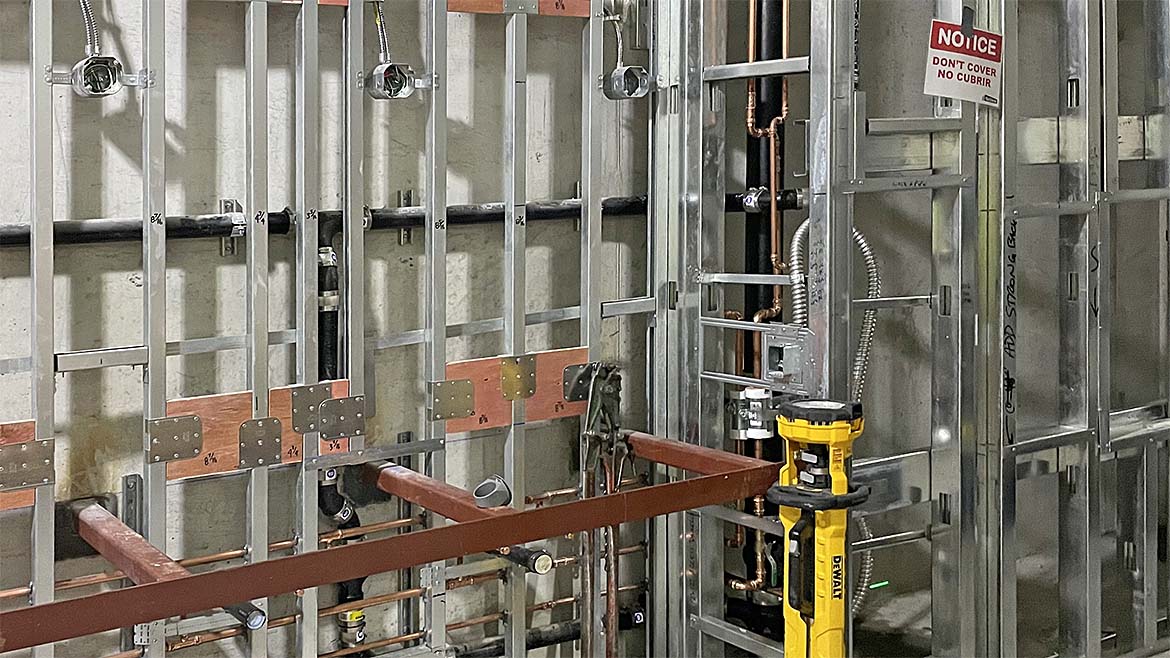
The NWCB inspection involved a detailed examination of the framing and CBU installation. The framing had to meet specific requirements, such as not exceeding L/360 deflection for tile and thin brick and being spaced a maximum of 16 inches on center. Additionally, the framing needed to be 20-gauge (33 mil) equivalent or heavier with a G60 coating.  

  1. Framing Compliance: The framing used was 33mil G60 and thicker in some locations, with proper bracing every four feet, and spaced 16 inches or less on non-composite walls. This ensured a robust structure capable of supporting the CBU panels and other wall-mounted items. 
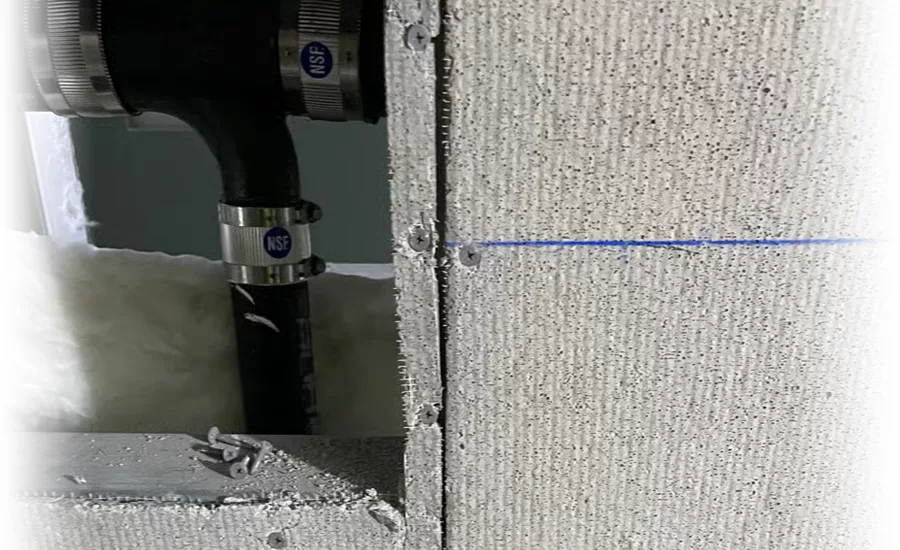
  2. Installation Accuracy: Most of the 4 feet by 8 feet by 5/8-inch CBU panels installed met the ANSI A108.11 and manufacturer’s installation instructions. A minor issue with missing perimeter fasteners at one location was promptly corrected by the union wall and ceiling carpenters. 
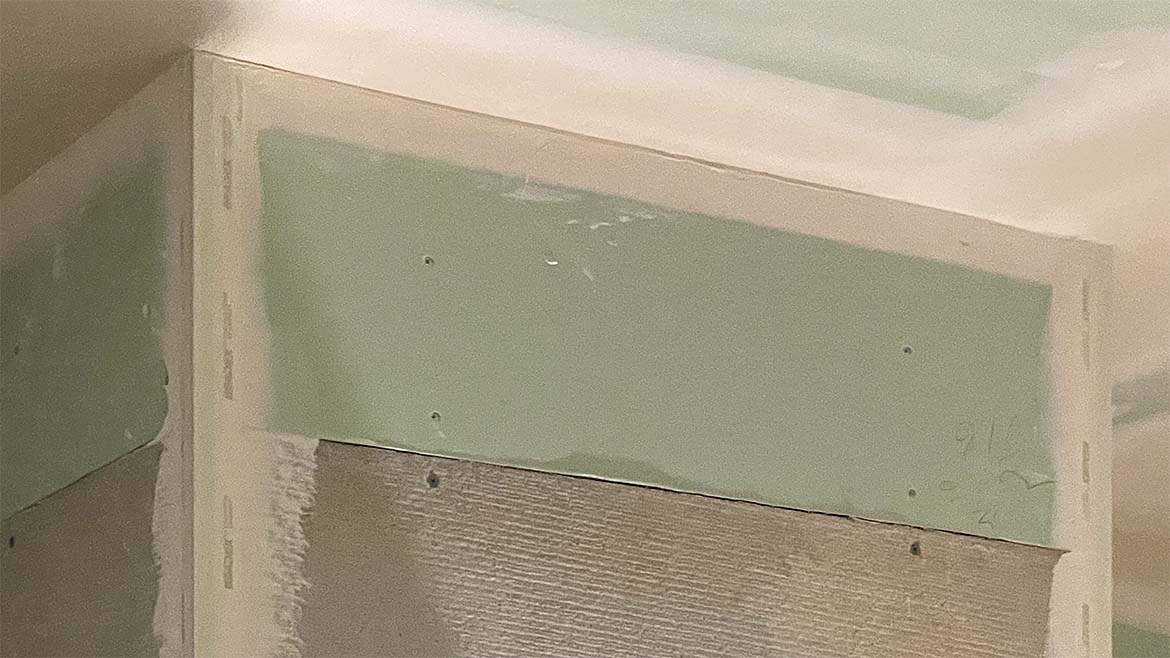
  3. Joint Treatment: Joint treatment was generally lacking, except for a few outside corners treated with typical paper-faced, corner-trim accessories. This highlighted the need for a discussion on proper treatment with alkali-resistant, fiberglass-mesh joint tape and latex-fortified mortar or Type-1 organic adhesive. 
CBU Installation and Joint Treatment

Photo: NWCB

CBU Installation

Proper CBU installation is crucial for the structural integrity and longevity of wall systems. CBU panels ends and edges should fit closely together, with an appropriate gap between panels, as required by the manufacturer. Be sure to stagger the end joints in successive courses and fasten maximum 8 inches on center, with the perimeter fasteners at least 3/8-inch to less than 5/8-inch from any ends and edges. Fasteners used must be the manufacturer’s corrosion-resistant screws or equivalent.  

The adherence to framing requirements and the application of panels demonstrates the union wall and ceiling contractor's commitment to quality. However, joint treatment remains a critical step that requires consistent attention. Ensuring the joints are sealed and treated correctly prevents potential issues with the tile installation and overall joint stability. 

Joint Treatment Practices

Over the years, joint treatment of CBUs has been specified in both drywall and tile specifications but is most often handled by the tile contractor due to the materials needed. The joint treatment materials include an alkali-resistant, fiberglass-mesh joint tape and either a latex-fortified mortar or a Type-1 organic adhesive, as specified in tile guidelines and within the projects tile specifications. 

The joints between CBU and gypsum panels, such as outside and inside corners, are treated in various ways: 

  • Inside Corners and CBU to Gypsum Panel Joints: Typically taped with fiberglass-mesh joint tape and setting-type joint compound by the drywall contractor. 
  • Outside Corners: Either treated with a paper-faced corner trim accessory or with fiberglass- mesh joint tape and setting-type joint compound like the CBU to gypsum panel joints. 

The tile industry accepts these methods because a cementitious bond coat (ANSI A118.6 or better) can be used to install tile over drywall surfaces. However, all the joints between CBU and gypsum surfaces need special attention. Before treating the joint with setting-type joint compound, the CBU panel must be sealed with a latex-fortified mortar or a Type-1 organic adhesive, per the manufacturer’s instructions. 

Before finishing the joints between CBU and gypsum, the NWCB recommends that the responsibilities and procedures for finishing the joints are formalized in the project documents. The project team may also want to consider a mockup to inspect and approve the methods being utilized.   
CBU Installation and Joint Treatment

Photo: NWCB

What We’ve Learned from this Inspection

The NWCB’s inspection of the union wall and ceiling contractor's work highlighted both strengths and areas for improvement in CBU installation. Adhering to standards and promptly addressing any deviations ensures the delivery of high-quality, durable wall systems. This project underscores the importance of meticulous planning, execution, and continuous improvement in the construction industry and was well executed by the union wall and ceiling contractor team.  

For construction professionals, the key takeaways from this project are clear: meticulous adherence to standards and proactive issue resolution are essential for successful installations. Ensuring thorough joint treatment and constant collaboration among trades will elevate the quality and durability of construction projects. The union wall and ceiling contractor’s experience serves as a valuable lesson and a benchmark for future endeavors in the industry.

KEYWORDS: building codes gypsum inspections installation joints NWCB (Northwest Wall and Ceiling Bureau) union

Share This Story

Looking for a reprint of this article?
From high-res PDFs to custom plaques, order your copy today!

Wc1225 feat nwcb p4 author gabriel quintana 2025
Gabriel Quintana is the executive director of the Northwest Wall and Ceiling Bureau. He can be reached at gabriel@nwcb.org.

Recommended Content

JOIN TODAY
To unlock your recommendations.

Already have an account? Sign In

  • Abercrombie & Fitch

    EIFS in 2026: How Specialty Finishes Are Redefining Exterior Wall Systems

    As building codes, owner expectations, and design demands...
    Stucco/EIFS
    By: Regi Mendoza
  • proper air and vapor control

    From Energy Efficiency to Moisture Management: Why Air and Vapor Control Matter

    How proper air and vapor control within building...
    Building Envelope
    By: Benjamin Meyer AIA, LEED AP
  • Linear Metal Ceiling Beam Baffles

    Top 25 Ceiling Contractors of 2026

    Suspended ceilings demand precision, code compliance and...
    Ceilings
    By: John Wyatt and Tanja Kern
You must login or register in order to post a comment.

Report Abusive Comment

Manage My Account
  • eMagazine Subscription
  • Newsletters
  • Online Registration
  • Manage My Preferences
  • Subscription Customer Service

More Videos

Sponsored Content

Sponsored Content is a special paid section where industry companies provide high quality, objective, non-commercial content around topics of interest to the Walls & Ceilings audience. All Sponsored Content is supplied by the advertising company and any opinions expressed in this article are those of the author and not necessarily reflect the views of Walls & Ceilings or its parent company, BNP Media. Interested in participating in our Sponsored Content section? Contact your local rep!

close
  • medical professionals moving a patient on a stretcher through the halls of a medical building
    Sponsored byNational Gypsum Company

    What Does High Performance Mean When It Comes To Gypsum Boards?

Popular Stories

Wichita Biomedical Campus

Wichita Drywall Worker Dies After Scaffolding Fall

Okan Tower in Miami, Florida

OSHA Opens Investigation Into Fatal Okan Tower Column Collapse

Construction workers in safety vests install drywall

Gypsum Sales Hold Amid Market Shifts in the U.S.

Polycon CEO Discusses Spray Foam

Doug Kramer: PolyCon Expands Roofing Foam Solutions

Events

June 24, 2026

The Bright Side & Benefits of Designing with Integrated Lighting

Credits 1 AIA LU/HSW; 0.1 ICC CEU

This course will explore the pivotal role architects and lighting design play in creating safer, more sustainable spaces. Learn how to avoid common lighting mistakes and make informed decisions that create the best visual environment for occupants. 

January 1, 2030

Webinar Sponsorship Information

For webinar sponsorship information, visit www.bnpevents.com/webinars or email webinars@bnpmedia.com.

See our full library of webinars

View All Submit An Event

Products

2026 National Painting Cost Estimator

2026 National Painting Cost Estimator

See More Products

Related Articles

  • PanelRock, S.A. to License Joint Treatment from National Gypsum

    See More
  • Dynamic real-world exposure testing (funded by DuPont)

    Rethinking Magnesium Oxide (MgO): A Fresh Look at a Proven Building Material

    See More
  • Construction Safety Getty Images

    A Historical Look at Building Safety Week

    See More

Related Directories

  • Plastic Components Inc.

    Plastic Components’ PVC trims and accessories include corner beads, control joints, vents, slip joints, reveals, and more – for stucco, drywall, CI/EIFS and hard coat, direct applied (DEFS) and other applications. They deliver good looks, easy handling, moisture management, reduced labor costs and proven compliance with ASTM standards.
×

Connect with the industry’s leading resource for unparalleled insights and education.

Join thousands of industry professionals today. Shouldn’t you know what they know?

JOIN NOW
  • RESOURCES
    • Advertise
    • Contact Us
    • Directories
    • Store
    • Want More
  • SIGN UP TODAY
    • Create Account
    • eMagazine
    • Newsletters
    • Customer Service
    • Manage Preferences
  • SERVICES
    • Marketing Services
    • Reprints
    • Market Research
    • List Rental
    • Survey/Respondent Access
  • STAY CONNECTED
    • LinkedIn
    • Facebook
    • Instagram
    • YouTube
    • X
  • PRIVACY
    • PRIVACY POLICY
    • TERMS & CONDITIONS
    • DO NOT SELL MY PERSONAL INFORMATION
    • PRIVACY REQUEST
    • ACCESSIBILITY

Copyright ©2026. All Rights Reserved BNP Media, Inc. and BNP Media II, LLC.

Design, CMS, Hosting & Web Development :: ePublishing