Avoiding the Dual Vapor Barrier Trap—Why Mineral Wool Is a Smart Choice for Commercial Walls
Why understanding vapor permeability—not just R-value—can make or break the long-term performance of commercial wall assemblies.
Whether you’re a specifying architect, general contractor or facility manager, virtually everyone in commercial construction is under pressure to meet energy codes and build tighter envelopes. The first instinct is often to add insulation or adhere a rigid foam board to the exterior. But without careful consideration, that approach can unintentionally create a dual vapor barrier.
When warm, humid air becomes trapped between two impermeable layers, it has nowhere to go. The moisture condenses, which can lead to mold growth, corrosion on steel studs, and ultimately wall failure.
The real issue isn’t simply achieving a target R-value. It’s understanding how air and moisture move through a wall assembly—and selecting materials that allow moisture to escape rather than sealing it in.
Mineral Wool vs. Polyiso: What They Are and Why That Matters
When it comes to continuous insulation in commercial walls, mineral wool and polyiso are two commonly considered options. The question isn’t which material is “better” but where each makes sense. They are fundamentally different products with very different behaviors inside a wall system.
Polyiso is a non-permeable, foam plastic rigid insulation board. It functions much like a vapor barrier and typically offers a high R-value in a lightweight, easy-to-handle form. However, its lack of permeability can unintentionally trap moisture.
Mineral wool, by contrast, is made from melted rock and slag spun into dense fibrous boards. While it has a lower R-value per inch than polyiso and is heavier to handle, it offers properties that foam plastics do not. Mineral wool is fire resistant, does not support mold growth, and—critically—is vapor-permeable, allowing walls to breathe, drain, and dry.

Photo: Owens Corning
Testing Methods and Performance
Insulation materials are evaluated using different test methods depending on their intended application. Polyiso, for example, is often tested using ASTM C209, a two-hour full submersion test commonly applied to rigid plastic insulation.
Testing methods should reflect real-world conditions. In an actual wall assembly, insulation is not subjected to standing water. If a wall is fully submerged, insulation performance is the least of the concerns. A more relevant test is ASTM C1104, which measures moisture and vapor sorption when a material is exposed to high humidity. This method more accurately represents how insulation behaves in a wall cavity, where moisture moves primarily through vapor diffusion rather than liquid water.
Under high-humidity conditions, mineral wool performs exceptionally well. ASTM C1104 is rarely cited for polyiso, but that omission highlights an important point: these materials are designed for very different applications and should be evaluated accordingly.
Beyond testing, there are several other areas where mineral wool stands out—permeability, fire performance, air movement, and acoustics.

Photo: Owens Corning
Permeability
One of the most significant differences between mineral wool and polyiso is permeability. Polyiso is non-permeable and effectively acts as a vapor barrier. When installed on the exterior of a wall that already includes an interior vapor barrier, moisture can become trapped within the cavity.
Mineral wool behaves differently. Its vapor-permeable structure allows walls to breathe and dry toward the exterior. If an interior vapor barrier or impermeable finish is added later, the assembly can still release moisture safely through the mineral wool and exterior layers.
Moisture will always find its way into a wall—through diffusion, penetrations, or small imperfections. The key is giving that moisture a reliable path out.
Fire Performance
Fire performance is another critical distinction. Mineral wool is tested under ASTM E136 and classified as non-combustible—it does not burn, melt, or contribute fuel to a fire. It is also tested to ASTM E84 and achieves flame spread and smoke developed ratings of 0 and 0.
Polyisocyanurate is tested to ASTM E84 and typically carries flame spread and smoke developed ratings of less than 25 and less than 450.
Air Movement
Air movement is one of the most underestimated sources of moisture intrusion in wall assemblies. Even a small opening in a vapor barrier can transport gallons of water vapor into a wall cavity over time. These openings often come from fasteners, penetrations, or minor gaps—any one of which can allow moisture to enter.
Once moisture becomes trapped between impermeable layers, it can condense and begin damaging the wall from the inside out.
The goal isn’t to eliminate air movement entirely, but to control where it goes. Mineral wool allows air and vapor to move through the assembly and dry safely to the exterior, providing an escape route for unwanted moisture before it can cause damage. Even in well-detailed systems, thousands of fastener penetrations can add up. Vapor-permeable insulation helps manage that reality.
Acoustics
Acoustical performance is often overlooked but it plays a major role in occupant comfort. Mineral wool has long been recognized for its acoustic benefits due to its dense, fibrous structure, which absorbs and dampens sound rather than allowing it to pass through.
This is especially important in hospitals, multifamily buildings, theaters, or projects located near heavy traffic. Mineral wool reduces outside-to-inside noise in ways that foam plastic insulation cannot, delivering quieter interiors alongside its fire safety and moisture-management benefits.
Retrofitting Buildings: Lessons From History
Many of these lessons were learned the hard way during the late 1990s and early 2000s, when walls retrofitted during the energy crisis of the 1970s were opened up. In the push to save energy, buildings were tightened and rigid insulation boards were added to interior or exterior walls. Over time, it became clear those assemblies couldn’t dry.
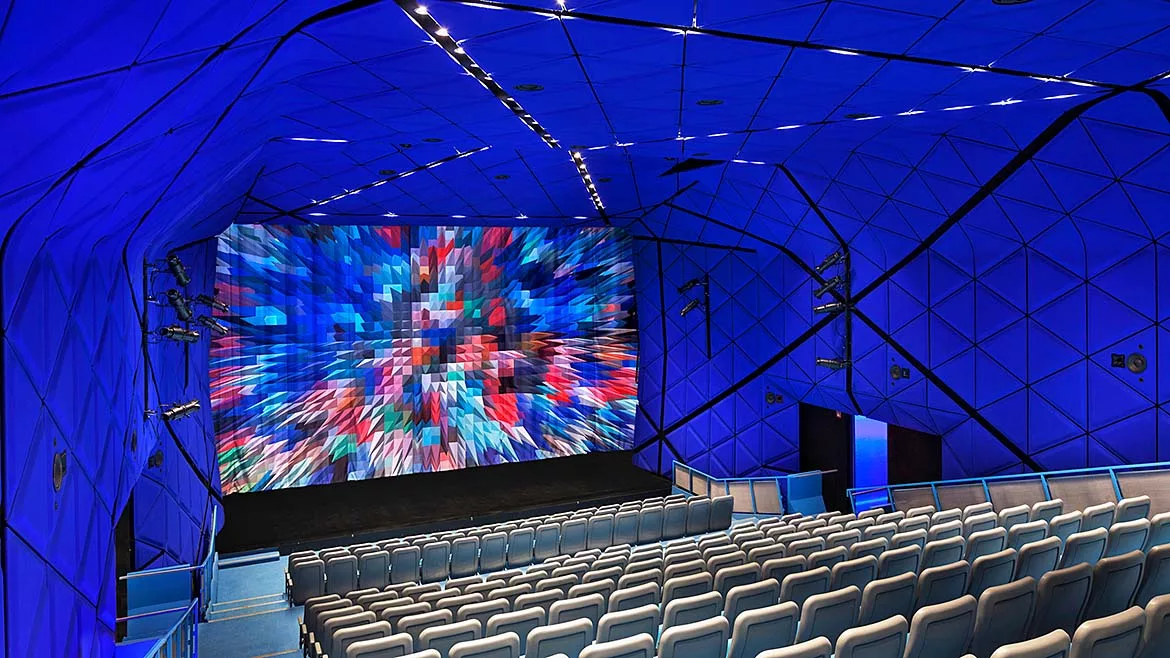
Today, designers apply those lessons more thoughtfully. At the Museum of the Moving Image in New York, mineral wool was installed behind an open-joint façade to maintain continuous insulation while allowing drainage and drying. At the Sidney and Lois Eskenazi Hospital in Indianapolis, the same system performed well even after extended rainfall exposure during construction.
Mineral wool’s flexibility makes it especially effective for retrofit projects. It installs easily allowing crews to work in nearly any weather. Its vapor permeability helps prevent the dual vapor barrier issues that commonly arise when older walls are re-insulated with non-permeable materials. And its thermal, fire and moisture performance supports energy-code compliance without introducing new risks.
That’s why evaluating the entire wall system matters more than comparing R-values alone. Mineral wool delivers dependable thermal performance, consistent moisture control, non-combustible fire protection, and improved acoustics in a single product. When the goal is a wall that performs as designed, stays dry, and endures over time, mineral wool is a solution you can count on.
Looking for a reprint of this article?
From high-res PDFs to custom plaques, order your copy today!





