Using Building Science to Design a High-Performing Building Envelope
Applying building science principles to insulation selection and envelope design helps control water, air, vapor, and heat for improved durability, efficiency, and occupant comfort.

The building envelope is an essential part of any structure. Its primary purpose is to physically separate the conditioned indoor environment from the outdoor climate. This includes components such as windows, walls, foundations, roofs, and flooring. The envelope must also control the movement of water, vapor, air, and heat. Because of these demands, insulation products play a critical role in overall envelope performance.
By applying building science principles, it is possible to design a high-performing building envelope. When considering insulation, many factors come into play, including the effects of temperature, air, and water on exterior walls; how humidity and dew point affect individual materials and overall system performance; and how temperature differentials influence airflow through wall assemblies. By examining and addressing these questions—and selecting the most appropriate insulation products for a project—you can create a robust, durable building envelope.
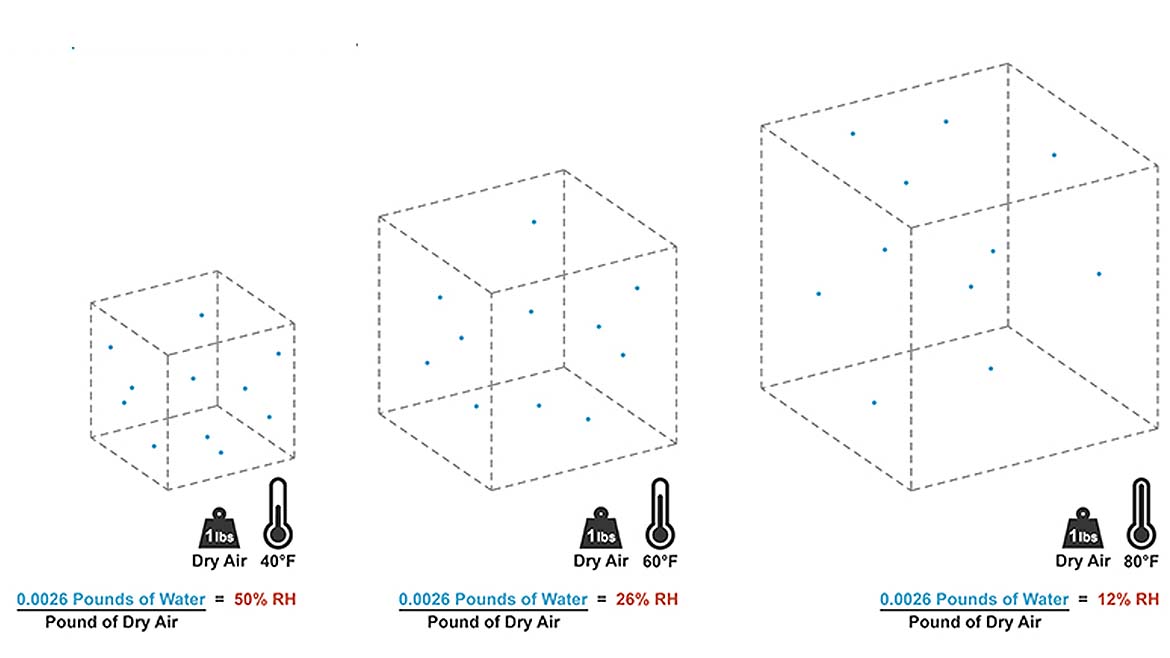
Diagram: Johns Manville
Building Envelope Specifics

Diagram: Johns Manville
Building envelopes begin at the foundation. Most foundations are concrete slabs with very little R-value (a measure of resistance to heat flow), so adding continuous insulation helps reduce heat conduction between the concrete and the surrounding earth. Several insulation options are available, including spray foam, polyisocyanurate (polyiso) foam boards, mineral wool, and polystyrene foam boards.
Above-grade insulation is most effective when it is continuous, particularly when an unbroken line can be maintained from below grade to the roof, interrupted only by windows and other openings. At the critical roof-to-wall transition, spray foam can be used to eliminate air and heat leakage.
For exterior above-grade insulation applications, the priority often shifts from compressive strength to fire resistance. While both polystyrene and polyiso foam boards are commonly used, polyiso offers advantages due to its ability to withstand higher temperatures without melting and its compliance with NFPA 285 fire testing requirements. When fire protection is the primary concern, noncombustible mineral wool stands out. Exterior cladding insulation products also provide strong fire resistance, enhanced acoustic performance, and are designed to shed bulk water while remaining vapor permeable.

Diagram: Johns Manville
The Science of the Envelope
Building envelope performance is measured by how effectively it keeps external conditions out while maintaining a comfortable interior environment. This includes controlling water intrusion, air and vapor movement, and heat transfer, all while supporting structural integrity. Achieving this balance is challenging, as several forces work against envelope performance.
Common challenges include bulk water from rain and leaks, vapor movement that can lead to condensation, air leakage and wind-washing, and heat transfer through conduction, convection, and radiation. In addition, walls must meet structural, fire, and acoustic requirements.
Water is often the most damaging element affecting buildings. It can compromise structural components and reduce insulation effectiveness. Although some water intrusion is inevitable, wall systems must be designed to allow moisture to dry effectively.
Moisture moves through building enclosures in three primary ways: bulk water (from leaks or absorption), vapor carried by air movement, and vapor diffusion driven by pressure differences. To manage rainwater, a continuous drainage plane is essential. Materials used must be water-tolerant, non-wicking, and durable, and assemblies typically include a small air gap to allow drainage. The drainage plane must also integrate seamlessly with flashings at windows, doors, and other penetrations.
Controlling water vapor in air is equally important. Air can hold varying amounts of water vapor depending on temperature, making relative humidity a key factor. At 100% relative humidity, condensation occurs. As a result, it is critical to ensure that all parts of a wall system remain above the dew point of the air they encounter.
Vapor control is influenced by material permeability and how components are assembled. Air leakage plays a significant role, as it transports far more moisture than vapor diffusion alone. Modern building codes emphasize airtightness for this reason. According to Building Science Corporation, a one-inch-square hole can allow more than 90 times the amount of moisture to pass through a wall during a heating season than vapor diffusion through a 4x8 sheet of gypsum board.
Air movement is the dominant mechanism for moisture transport through envelope assemblies and also contributes to heat transfer. Air barriers—such as vapor retarders or exterior membranes—are critical to controlling this movement.
Pressure differences caused by the stack effect also affect building performance. Warm air rises and cold air sinks, creating negative pressure at the base of buildings in winter that draws cold air inside. In summer, this effect can reverse in air-conditioned buildings, pulling hot air in through the roof. HVAC systems and fans can further create localized pressure imbalances. A well-sealed, durable air barrier with minimal penetrations is essential to resisting these forces.
Wind-washing occurs when air bypasses the air barrier and moves through wall cavities. This air exchange can transfer heat and moisture without entering the interior, reducing insulation effectiveness and introducing contaminants.
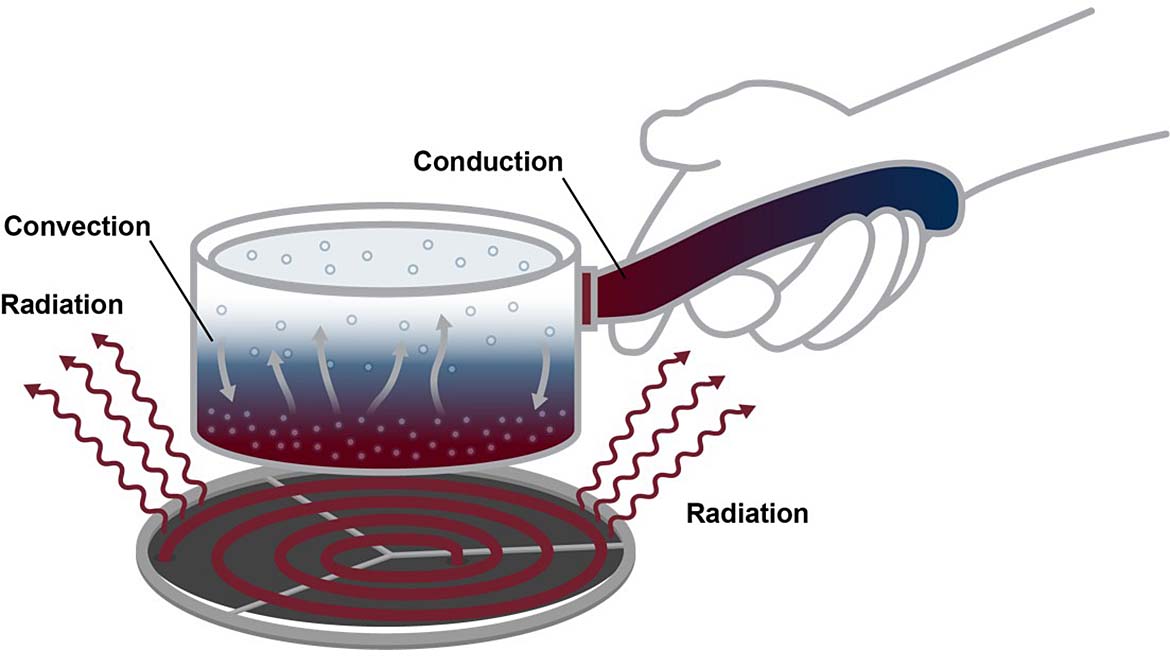
Heat transfer is another major challenge to building efficiency. Heat moves dynamically through radiation, convection, and conduction, all of which must be addressed to optimize envelope performance. In an uninsulated framed wall cavity, radiation accounts for roughly 75 percent of heat transfer, while convection makes up the remaining 25%. Adding insulation significantly reduces both mechanisms, cutting heat transfer by 90% or more.
The remaining heat transfer occurs through conduction via framing and residual radiation—a phenomenon known as thermal bridging. The most effective way to reduce thermal bridging is through continuous insulation on the interior or exterior of the structure. Common solutions include polyiso or polystyrene foam boards, sprayed closed-cell foam, and specially treated mineral wool boards. When installed correctly, these materials significantly enhance overall enclosure performance.

Diagrams: Johns Manville
Conclusion
A high-performing building envelope must effectively control water, vapor, air, and heat. Understanding how these elements interact—and selecting insulation products that work together as a system—can greatly improve durability and efficiency. Modeling and evaluating envelope performance during the design phase can help identify potential issues early, while thoughtful material selection allows designers to balance performance, aesthetics, and long-term value.
Looking for a reprint of this article?
From high-res PDFs to custom plaques, order your copy today!